White, Blue and Pink Lotus: Which Plant Is in the Bottle?
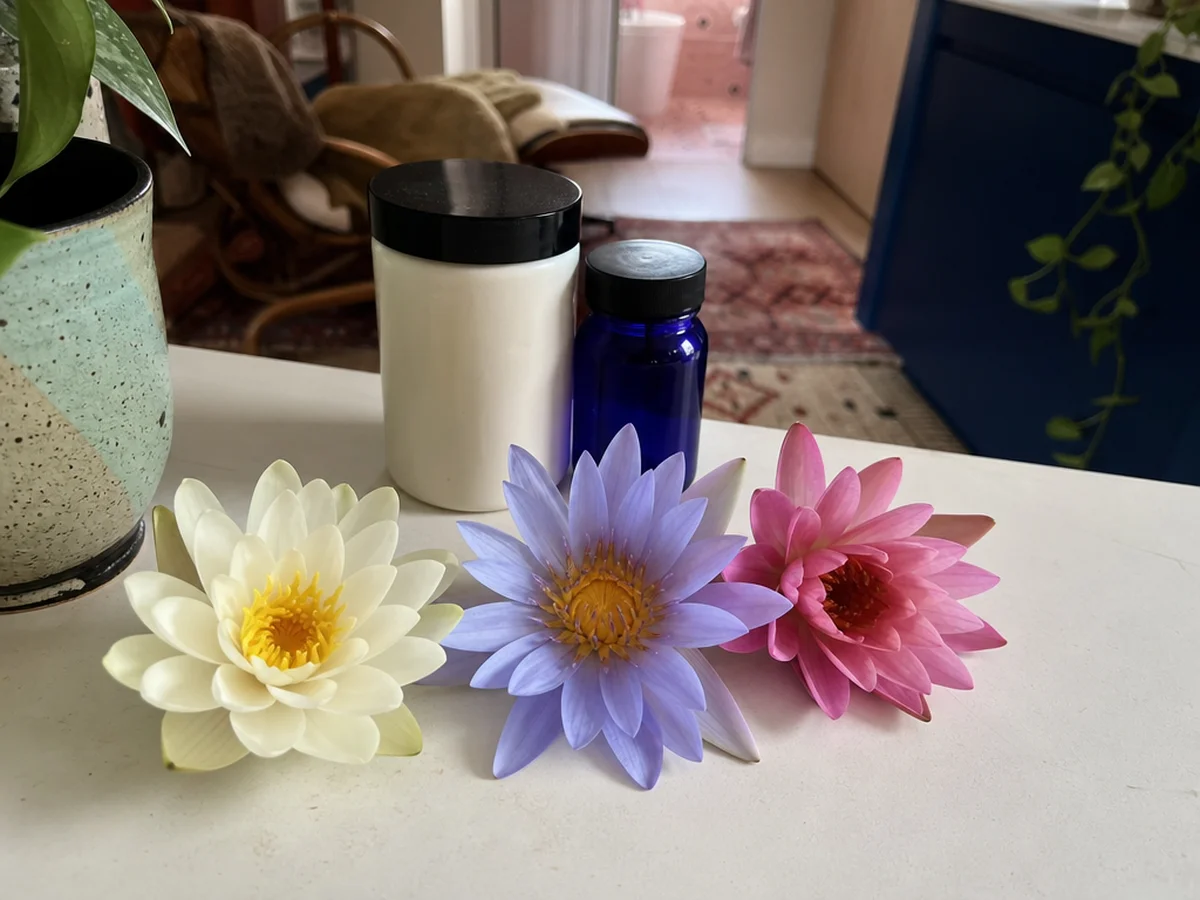
"Lotus oil" is one of those labels that sounds specific and isn't. Behind it can sit a white water lily, a blue one, or the sacred lotus of temple ponds, and those plants are not as closely related as their colour names suggest. A minute spent learning the three makes every lotus label easier to read.
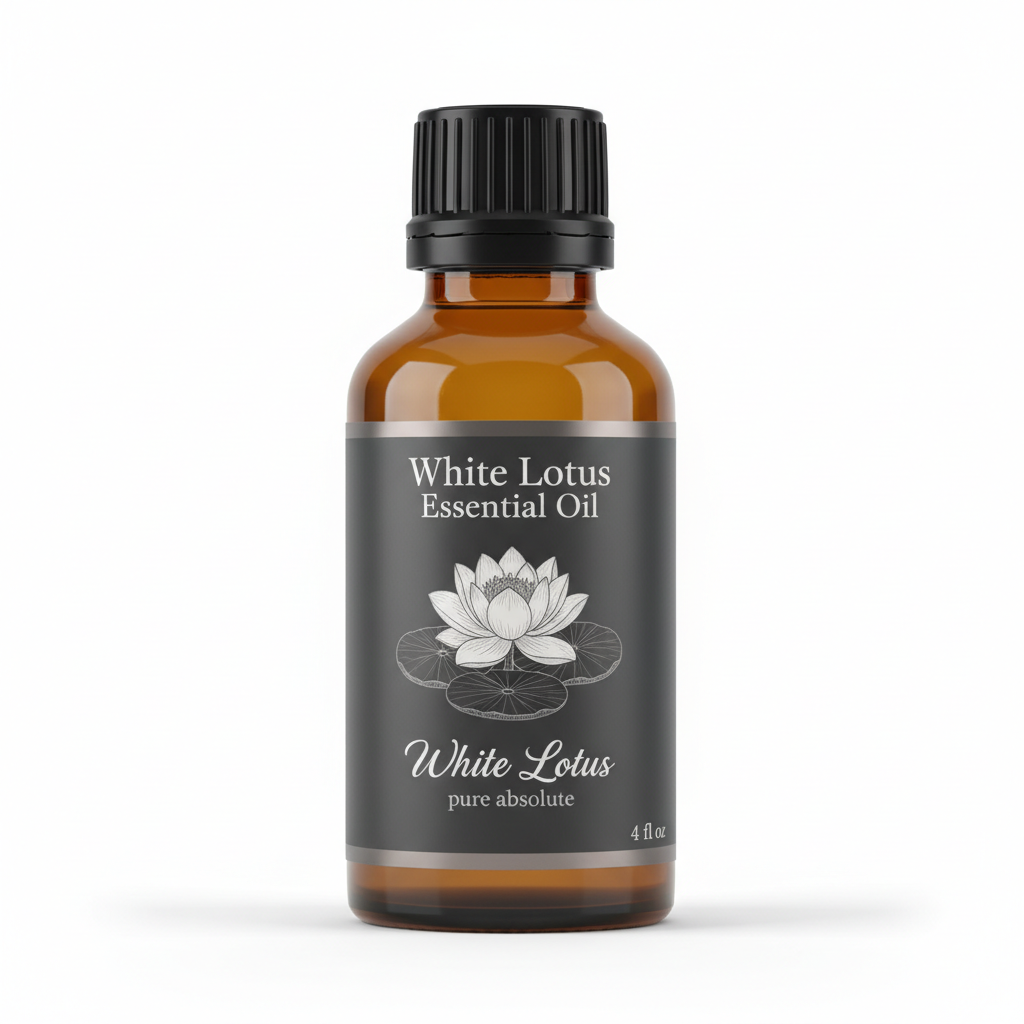
White Lotus Absolute
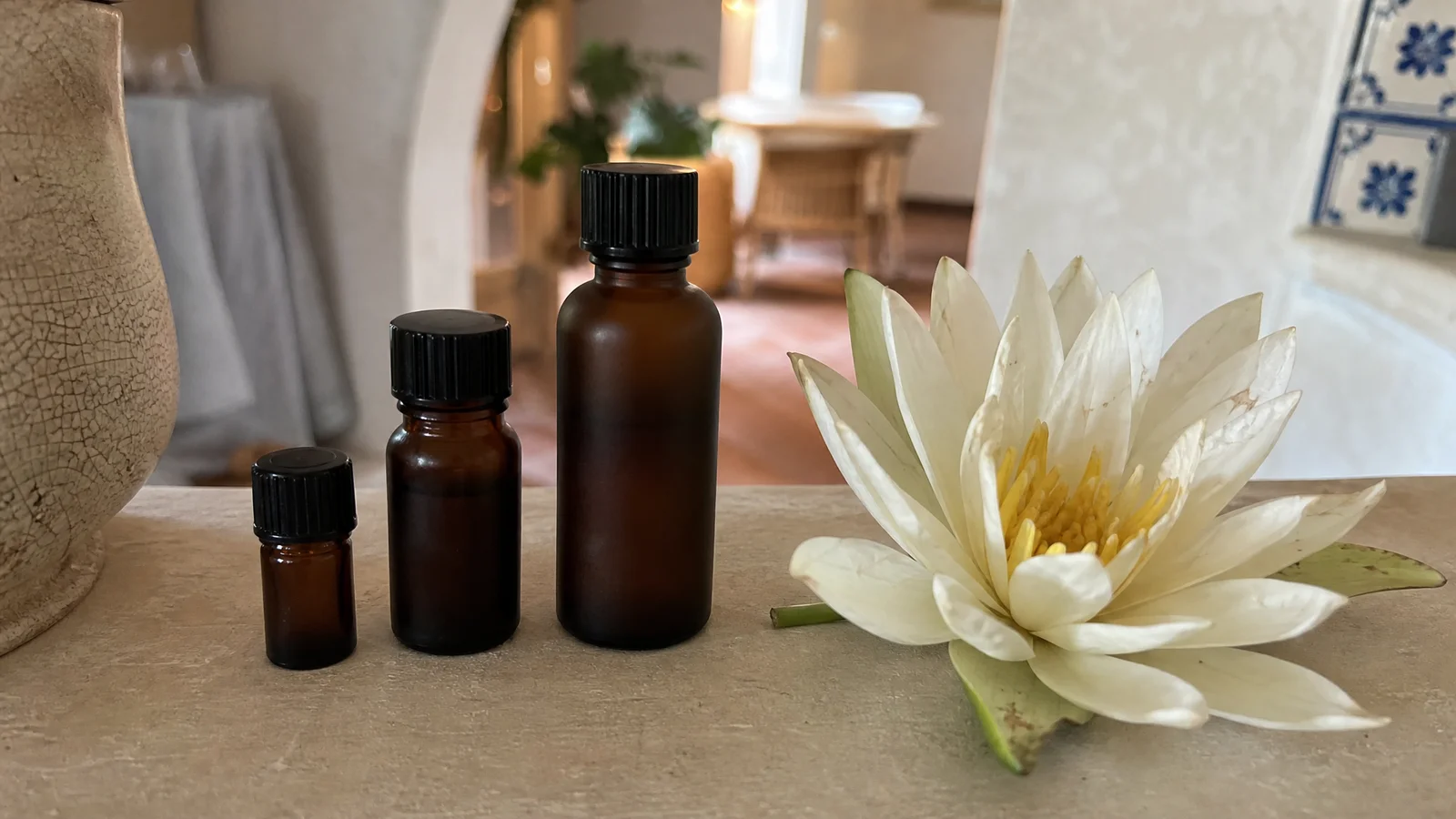
Our own White Lotus Absolute, in sizes from 0.5 oz to bulk.
From $23.99
Shop Now →Two plant families, not three colours
The global biodiversity database GBIF accepts Nymphaea lotus as a species in the water lily family, Nymphaeaceae (GBIF species match, Nymphaea lotus). It accepts Nelumbo nucifera, the sacred lotus, in a different family altogether, Nelumbonaceae (GBIF species match, Nelumbo nucifera). So the sacred lotus is not a water lily in the botanical sense. "Pink lotus" is a market label that sellers apply loosely; it is not a botanical name, so a listing that uses it should come with a Latin name.
Blue lotus has a naming wrinkle of its own. GBIF lists Nymphaea caerulea Andrews as a synonym of Nymphaea nouchali (GBIF species match, Nymphaea caerulea), while the Catalogue of Life treats it as Nymphaea nouchali var. caerulea (ChecklistBank search, Nymphaea caerulea). Checklists disagree, so careful sellers write the name and say which authority they follow.
Which one we sell
We sell one product, White Lotus Absolute. Our label and the Certificate of Analysis we publish both name Nymphaea lotus, and we describe it as solvent-extracted. We do not sell blue or pink lotus. If the exact species documentation matters for your project, ask us in writing through the contact page before ordering, and see our buying guide for the questions worth asking any seller.
Why we bother with the names
We are a small business that sells one lotus absolute, so it matters to us that you know exactly what you are comparing. If you are weighing our bottle against another, the label is the place to start: ours names Nymphaea lotus. We would sooner say plainly what we sell and what we do not than let a colour word do the explaining.
What each extract looks like on paper
The extraction method shapes the material as much as the plant does. The clearest illustration is on the sacred lotus: researchers compared headspace capture, steam distillation and solvent extraction on cultivated and wild Nelumbo nucifera flowers and found the major components changed with the method (Zhang and Guo, 2020). So a "lotus oil" that was steam-distilled, solvent-extracted or captured from the air is a different thing in each case. Our post on absolutes and essential oils explains how to read that part of a label.
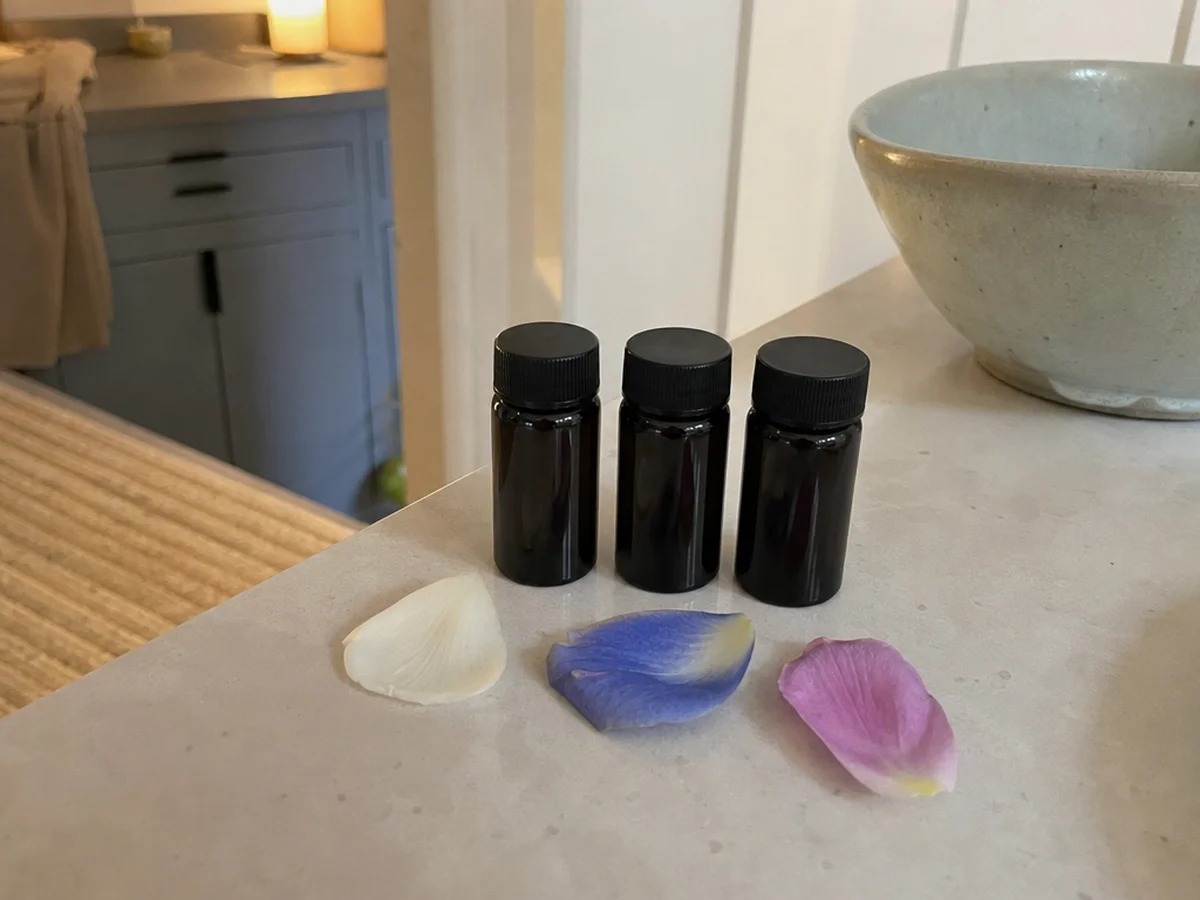
For blue lotus we have a real analysis of an industrially made concrete and absolute: mostly waxes, fatty acids, alkanes and sterols, with the alkaloids nuciferine and apomorphine at trace levels or absent. The same paper bought 11 "blue lotus" products online and found synthetic fragrance components in every one (Dosoky et al., 2023). For white lotus absolute, the Certificate of Analysis we publish for one batch gives density, refractive index and optical rotation, and a GC-MS report is something to ask us for in writing.
Why blue lotus gets extra attention
Blue lotus is also sold as dried flower, tea, resin and vaping liquid, and most safety reporting concerns those products. A forensic lab that tested one confiscated resin and four commercial products found nuciferine in all five and apomorphine in two (Poklis et al., 2017). Clinicians have described five active-duty patients with sedation and altered perception after vaping or drinking blue lotus (Schimpf et al., 2023). Poison Control notes that blue lotus is legal in the US except Louisiana, is not approved by the FDA for human consumption, and is prohibited for military personnel (Poison Control, Blue lotus). Those are stories about teas, resins and vapes. Our absolute is a perfumery material; it is not sold to be swallowed, smoked or vaped. If anyone has taken a lotus product and feels unwell, call poison control at 1-800-222-1222 or see a physician.
Reading a listing at a glance
Next time you scroll through lotus listings, try a simple habit. Look for the Latin name first, before the photo, the colour word or the adjectives. A listing that gives Nymphaea lotus, Nymphaea caerulea or Nelumbo nucifera has told you which plant it means, and one that says only "lotus" has left the question open. It takes about ten seconds and clears up most of the confusion.
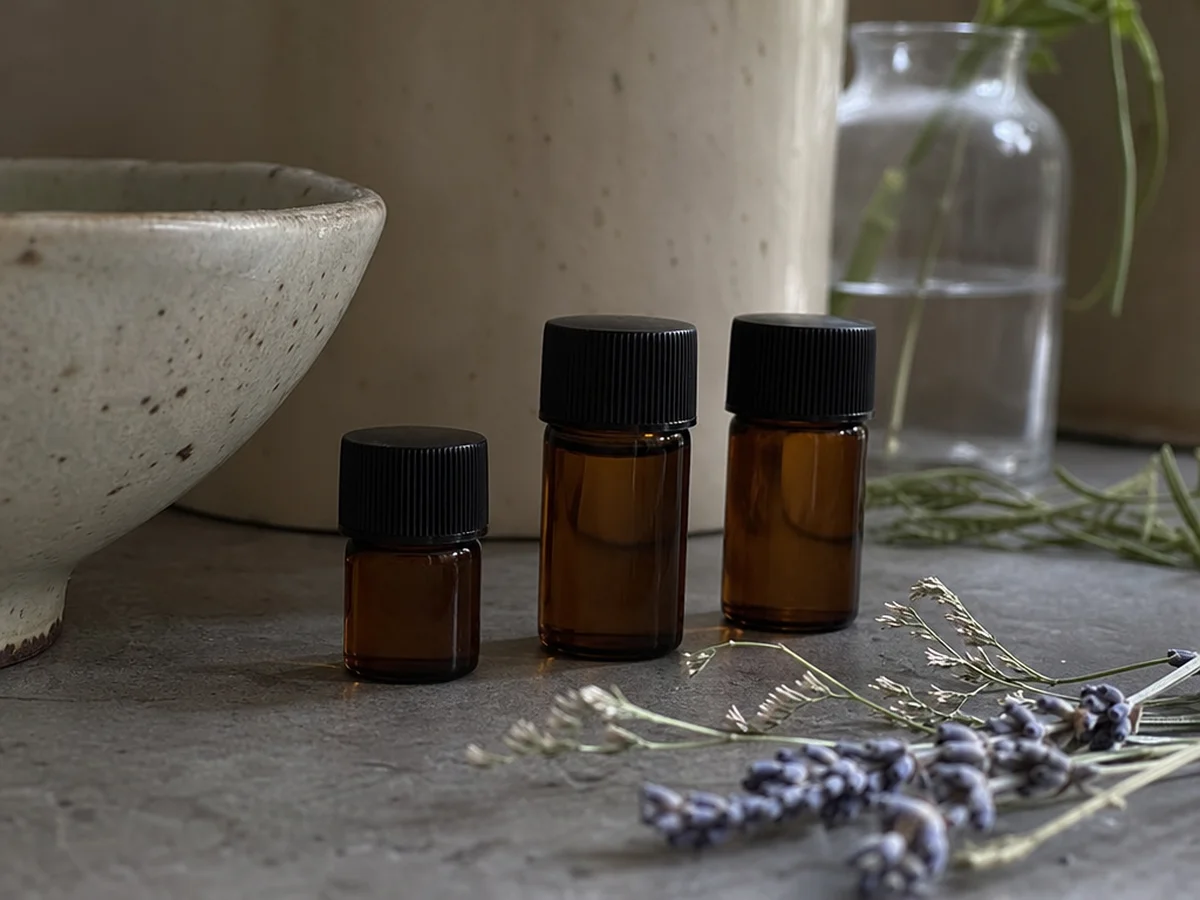
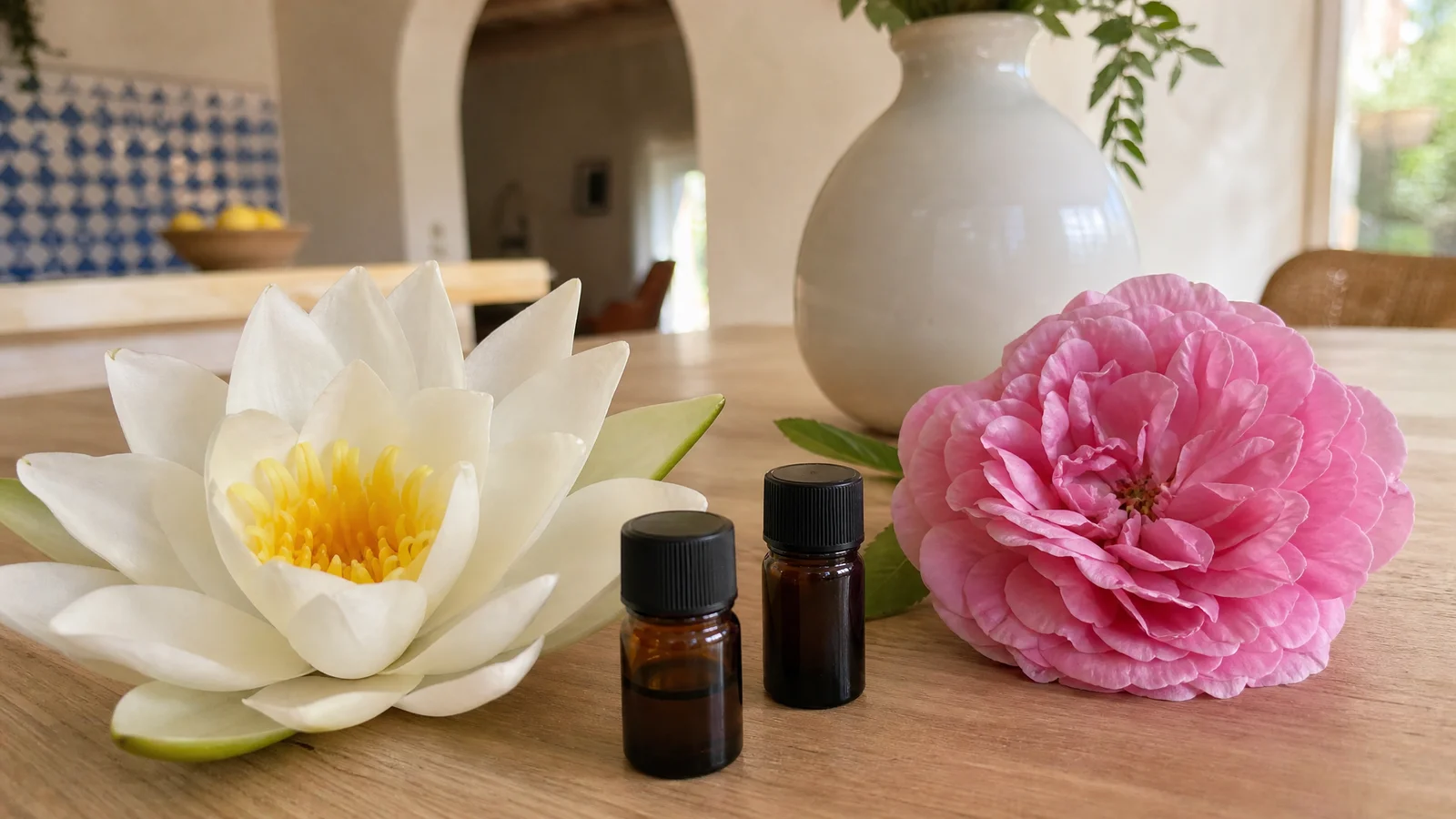
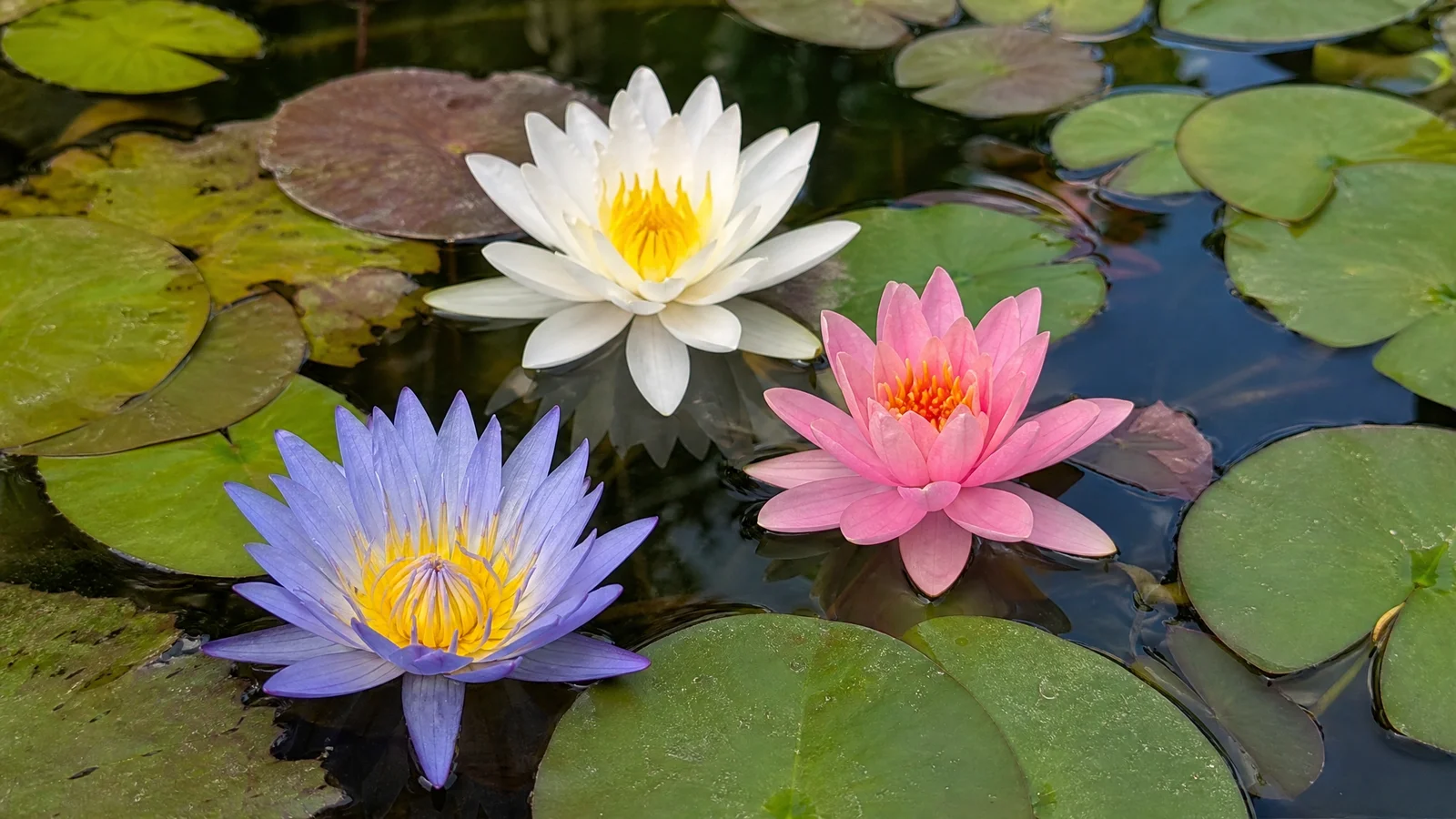
The picture can mislead too. A pretty pink blossom in a product image says very little about what is inside the bottle, since flower photos get reused all over the trade. Read the words, ask the questions and let the petals be decoration.
A short buying checklist
- The Latin name, on the listing and the paperwork.
- The plant part and the extraction method, named by the seller.
- A batch certificate that matches the label, and a clear note on what it covers.
- No sleep, calm or health promises attached to a fragrance material.
Lotus research is also worth reading carefully; our research guide shows how to match each study to its plant, extract and route. And if a seller cannot tell you which plant is in the bottle, the colour on the label is the least of the questions. Our White Lotus Absolute is in the shop, larger sizes are on our bulk page, and our guide to buying white lotus absolute in bulk lists what to check before you buy.
White Lotus Absolute
White Lotus Absolute from our own shop, in sizes from 0.5 oz to bulk.
From $23.99
Shop Now →Sources & Further Reading
- GBIF Secretariat. GBIF Backbone Taxonomy, species match for Nymphaea lotus. api.gbif.org
- GBIF Secretariat. GBIF Backbone Taxonomy, species match for Nelumbo nucifera. api.gbif.org
- GBIF Secretariat. GBIF Backbone Taxonomy, species match for Nymphaea caerulea. api.gbif.org
- Catalogue of Life via ChecklistBank. Name search for Nymphaea caerulea. api.checklistbank.org
- Zhang CY, Guo M, 2020. Comparing Three Different Extraction Techniques on Essential Oil Profiles of Cultivated and Wild Lotus (Nelumbo nucifera) Flower. Life. pmc.ncbi.nlm.nih.gov/PMC7555187
- Dosoky NS et al., 2023. Chemical Composition, Market Survey, and Safety Assessment of Blue Lotus (Nymphaea caerulea Savigny) Extracts. Molecules. pmc.ncbi.nlm.nih.gov/PMC10609367
- Poklis JL et al., 2017. The Blue Lotus Flower (Nymphea caerulea) Resin Used in a New Type of Electronic Cigarette, the Re-Buildable Dripping Atomizer. J Psychoactive Drugs. pubmed.ncbi.nlm.nih.gov/28266899
- Schimpf M et al., 2023. Toxicity From Blue Lotus (Nymphaea caerulea) After Ingestion or Inhalation: A Case Series. Mil Med. pubmed.ncbi.nlm.nih.gov/34345890
- Poison Control (National Capital Poison Center). Blue lotus: Serenity in every petal, but is it safe? poison.org