White Lotus vs Jasmine Absolute: Which Heart Note?
Jasmine absolute is the floral most perfumers reach for first, and white lotus is the quieter newcomer people hold up beside it. They are not substitutes. They behave differently on the bench, they are documented very differently, and the best choice depends on what you want the heart of your blend to do.
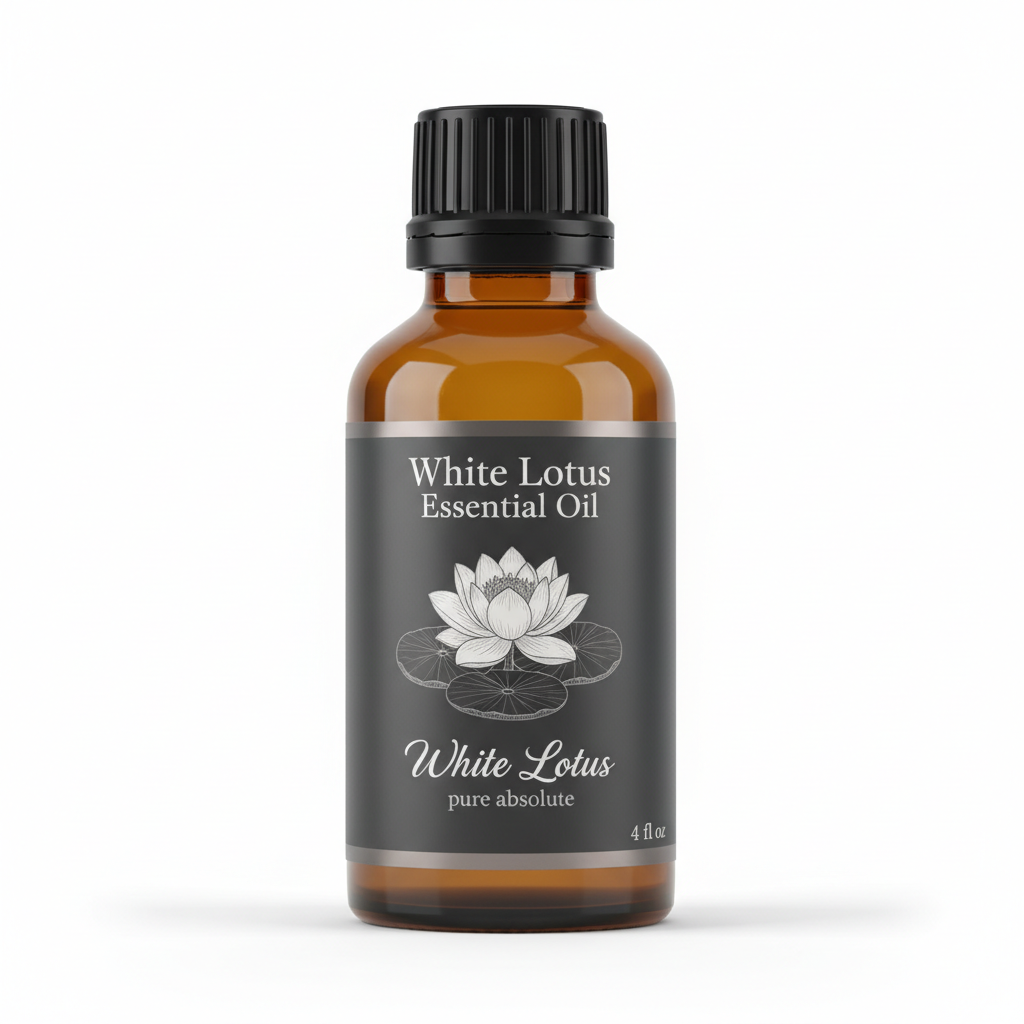
White Lotus Absolute
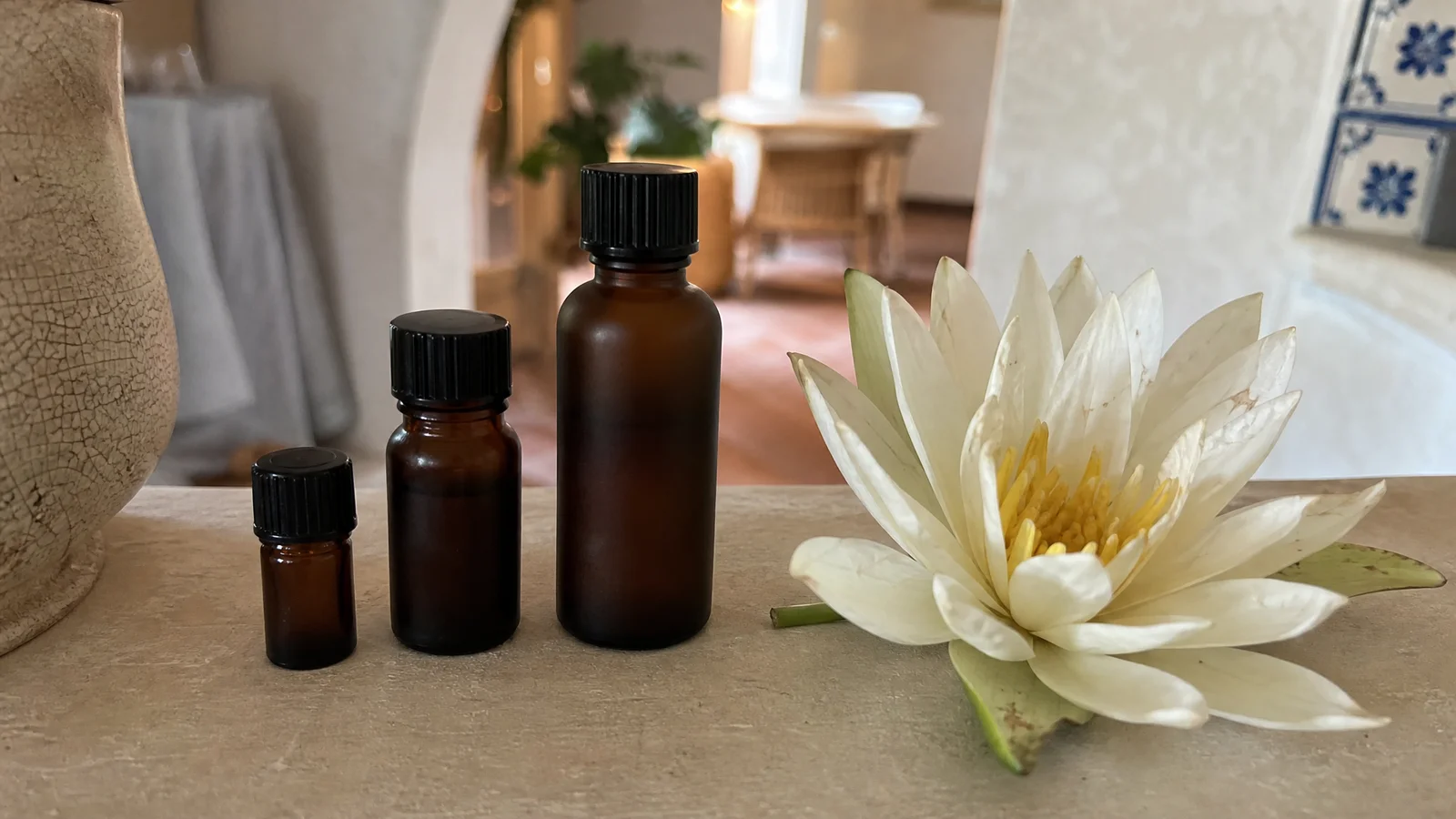
Our own White Lotus Absolute, in sizes from 0.5 oz to bulk.
From $23.99
Shop Now →Two heart notes with different personalities
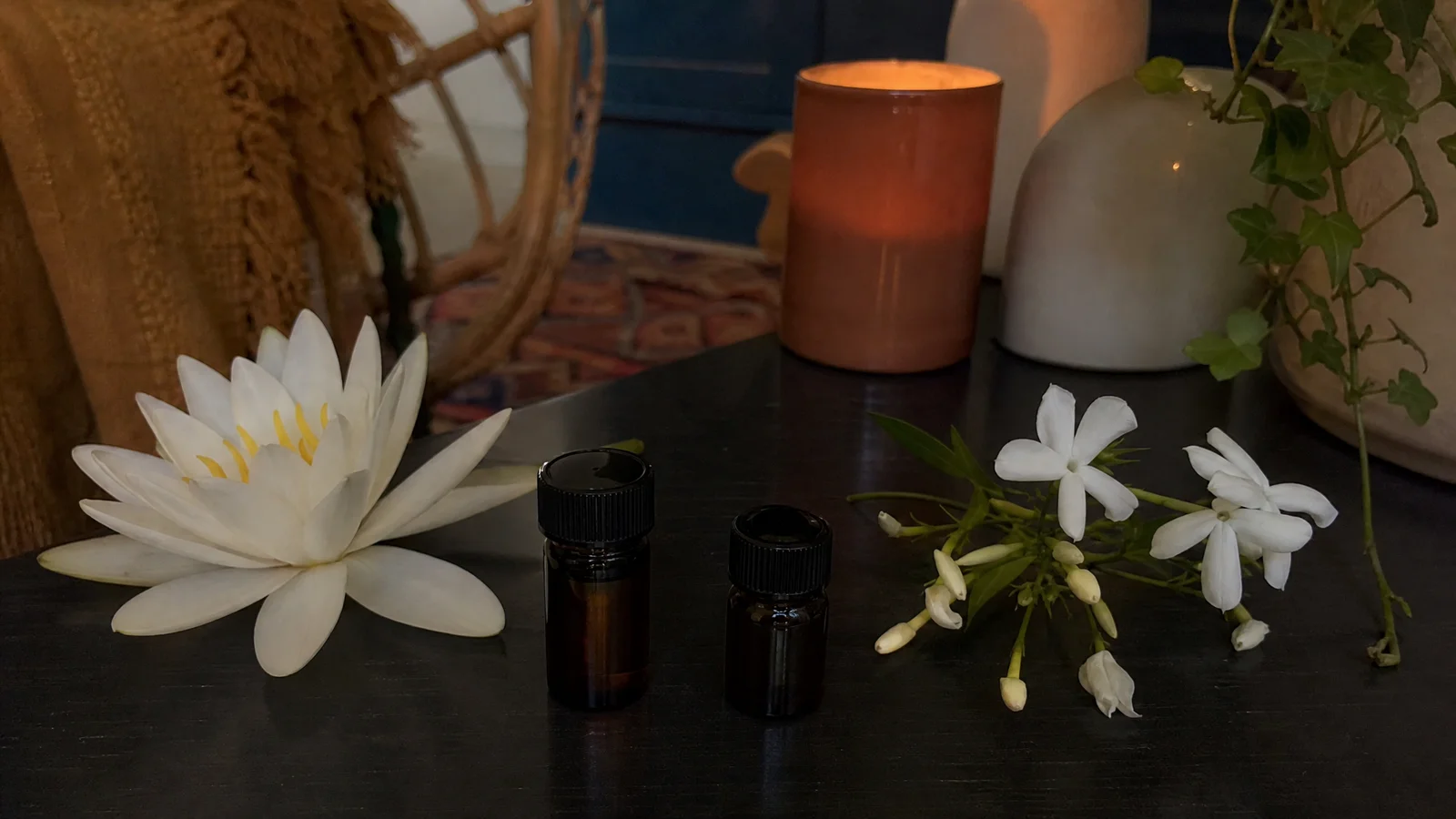
We describe White Lotus Absolute as aquatic, honeyed and serene: watery green florals over a warm, faintly spicy sweetness, settling into a soft leathery hush. We place it as a heart note, and we list jasmine among the materials it blends with, next to sandalwood, frankincense, rose, vetiver and soft musks. So we see the two as partners as much as rivals. Jasmine brings the unmistakable classic floral; lotus brings a cooler, greener, more watery lift. Our post on building an aquatic floral heart shows where lotus can sit in a structure.
Jasmine is a family, and so is lotus
An Egyptian study made hexane concretes and ethanol absolutes from four jasmine species and also looked at purchased material (Yassen et al., 2026). The headline is variety: which molecules lead depends on species and sample, and the authors note that the best aroma comes from flowers that open at night. Even "jasmine absolute" is a family of materials, not one fixed recipe.
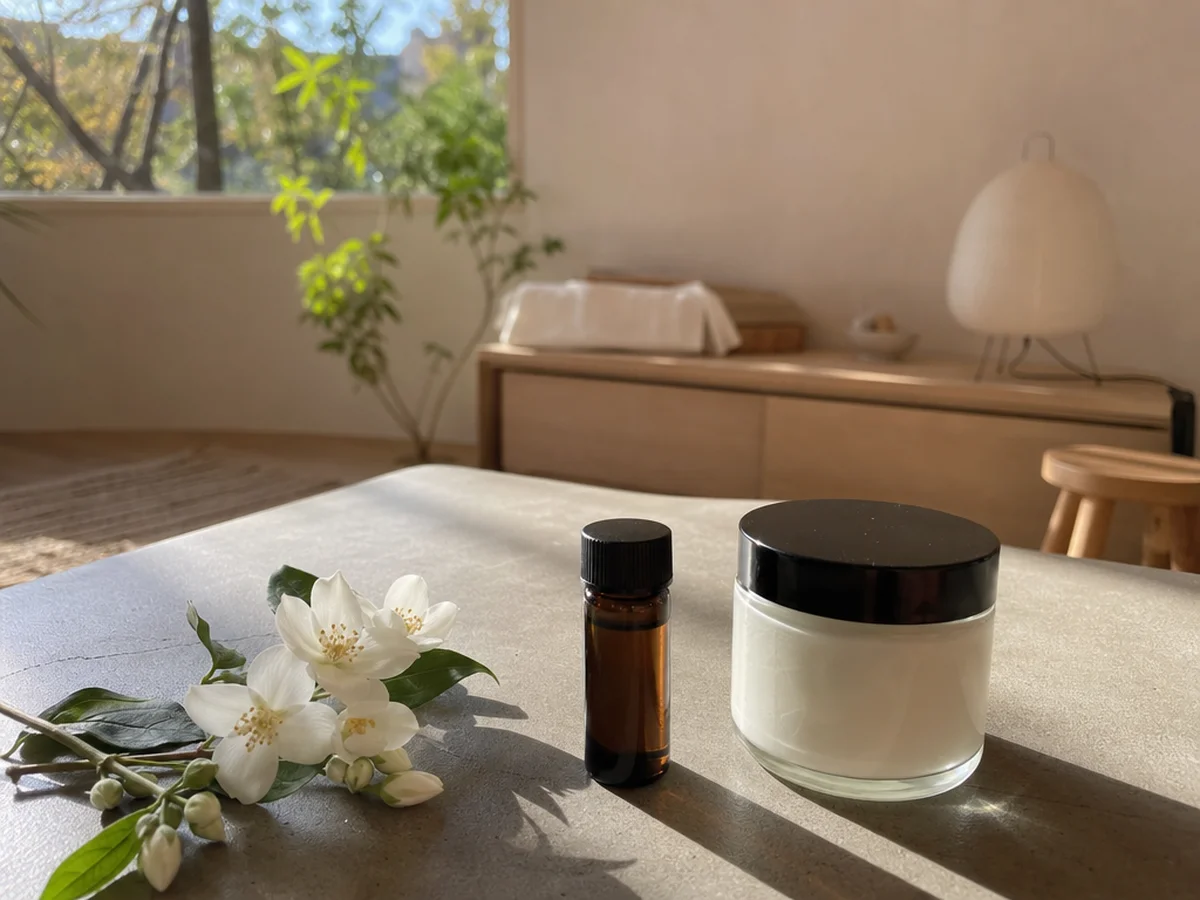
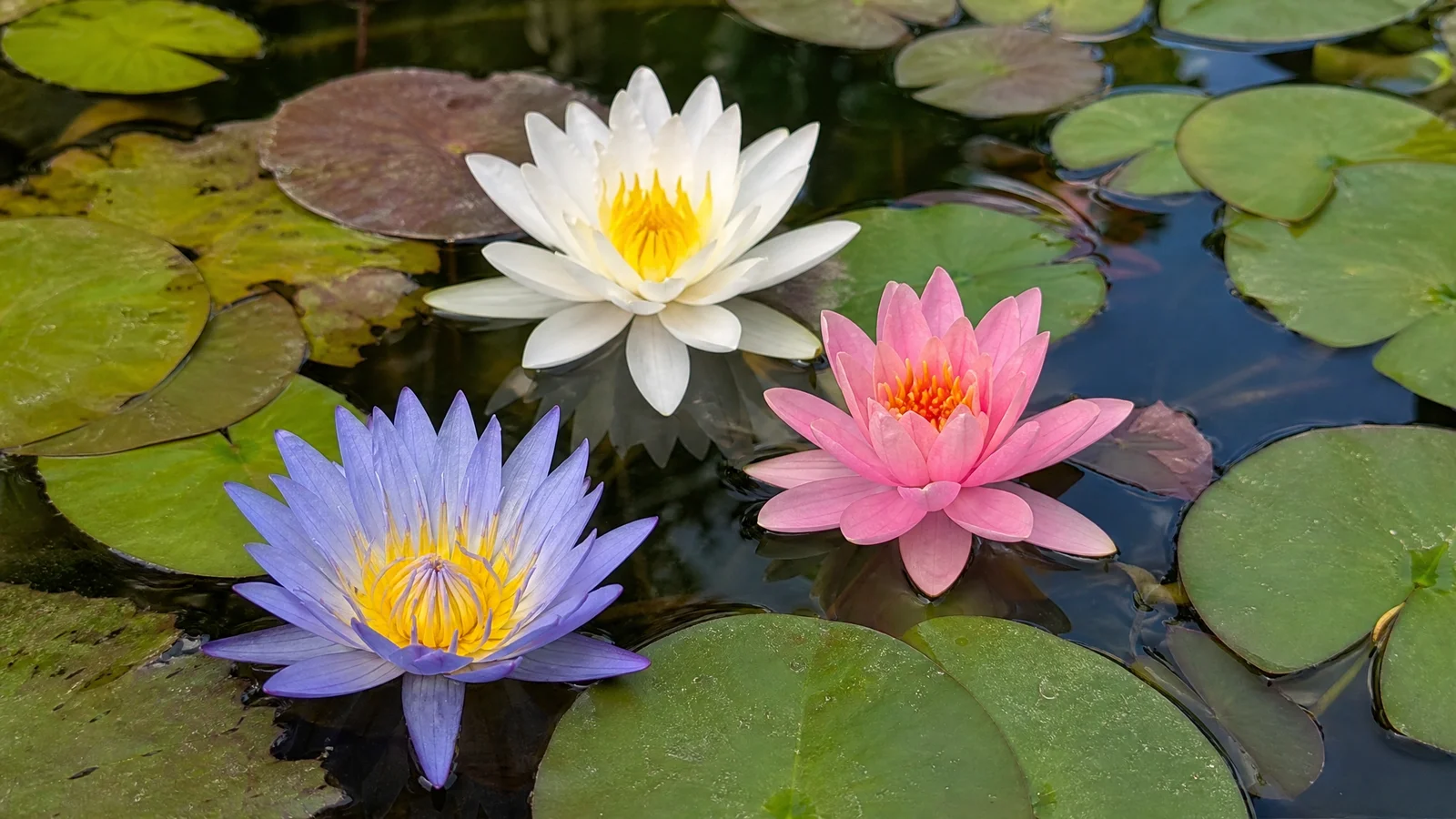
The same is true for lotus, only less is written down. The one detailed analysis of a real lotus concrete and absolute looked at blue lotus (Nymphaea caerulea), not the Nymphaea lotus named on our label and our Certificate of Analysis (Dosoky et al., 2023). Its absolute was mostly waxes, fatty acids, alkanes and sterols, with benzyl alcohol among the leading components. The paper names benzyl acetate and linalool as the chief scent volatiles of jasmine grandiflorum concrete and absolute, a different chemistry from what the lotus analysis found. In practice that means lotus will not drop in for jasmine in a formula; it brings its own character, and a recipe tuned for one needs re-tuning for the other.
Jasmine has a reputation as heady, creamy and warm, and anyone who has smelled a jasmine plant in the evening knows why it earned it. Lotus is a different kind of beauty, cooler and more watery, with a leathery softness at the end. Standing the two side by side is a bit like comparing a warm room with an open window.
How much is written down
Here the gap is wide. Jasmine absolute has far more published analysis and patch-test data behind it. For white lotus, the Certificate of Analysis we publish for one batch lists a relative density of 0.985, a refractive index of 1.485 and an optical rotation of +0.86 degrees, each at 20 C, and no constituent profile. If you are formulating something that will stay on skin, we think that difference deserves as much thought as the scent. Ask any seller of either material for the safety paperwork you need, in writing, before you rely on it. For ours, send your questions through the contact page.
What skin data exists
The patch-test numbers we can point to are for jasmine. In German, Austrian and Swiss clinic data from 2010 to 2019, 908 of 10,930 patients tested with 12 essential oils (8.3%) reacted to at least one, and jasmine absolute gave positive reactions in 1.8% (Geier et al., 2022). These were dermatitis patients tested on purpose, not the general public, so the figure is a signal that a floral absolute can sensitise a small share of people, not a rate for everyone. We have no equivalent figure for lotus, so we handle it the same way: our shop guidance is 0.5% to 2% in a carrier with a patch test first, and we start at 0.5%. Our safety basics post walks through that routine.
How to run your own comparison
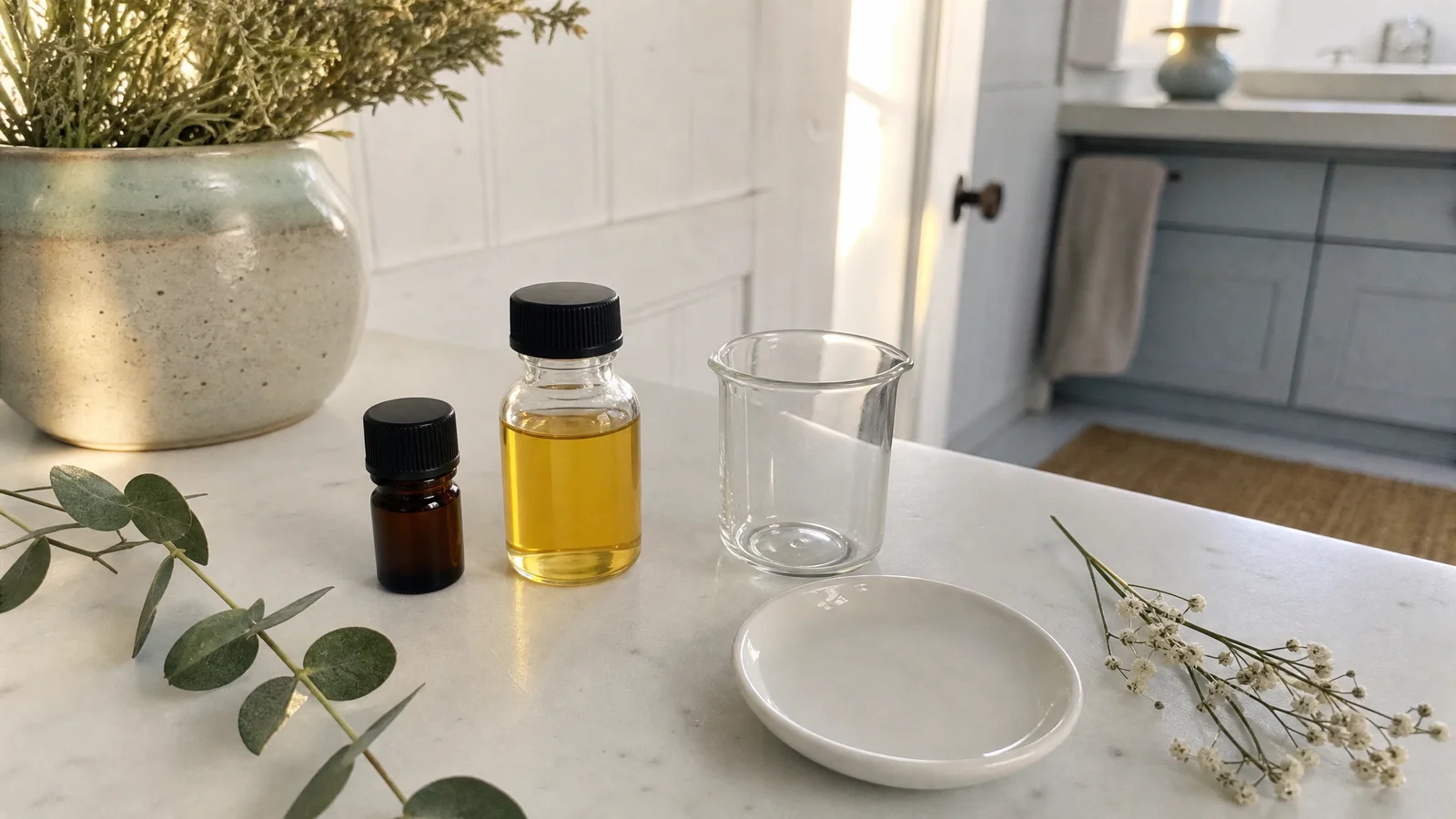
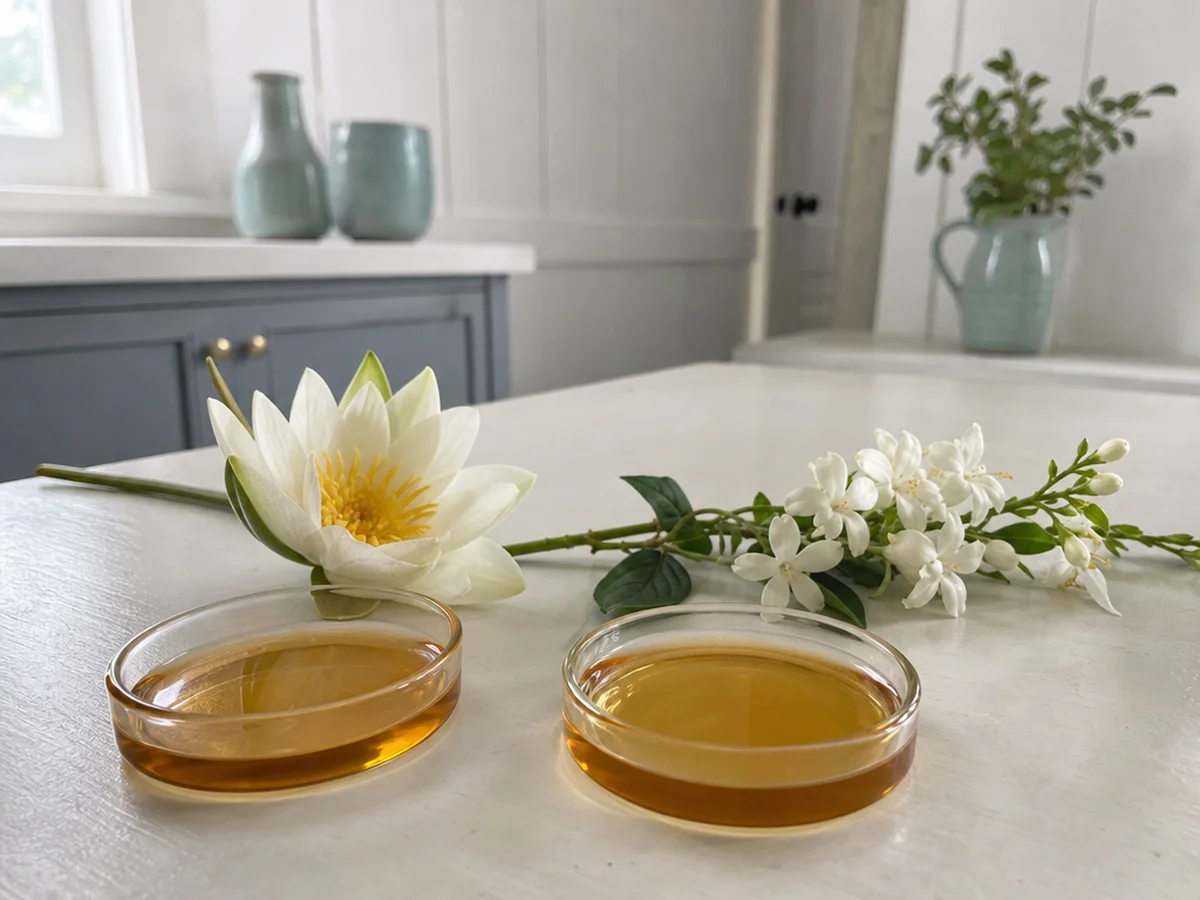
- Weigh a small amount of each absolute into its own labelled cup of carrier at the same percentage.
- Dip a clean paper strip in each, one strip per material, and label the strips.
- Smell each right away, then after ten minutes, an hour and the next morning.
- Now fold the strips together and smell them at once. This shows you how they get along.
- Write down what you notice before you read your own notes the next day.
It takes an afternoon and costs very little in material, and it tells you more than a page of description ever could.
Which one for which project
- Reach for jasmine when you want that classic, instantly recognisable floral, and your supplier can hand you a safety document for your product category. We do not sell jasmine; a perfumery supply house does.
- Reach for lotus when you want an aquatic, honeyed heart note, you are happy to work at low percentages, and you will ask us for anything you need beyond the batch certificate.
- Use both if you enjoy layering: a little lotus can lift and cool a jasmine heart. A small bench trial is the way to find your ratio.
Whichever you reach for first, keep the first trial small. Notice which one you keep going back to without being asked, because that is usually the answer.
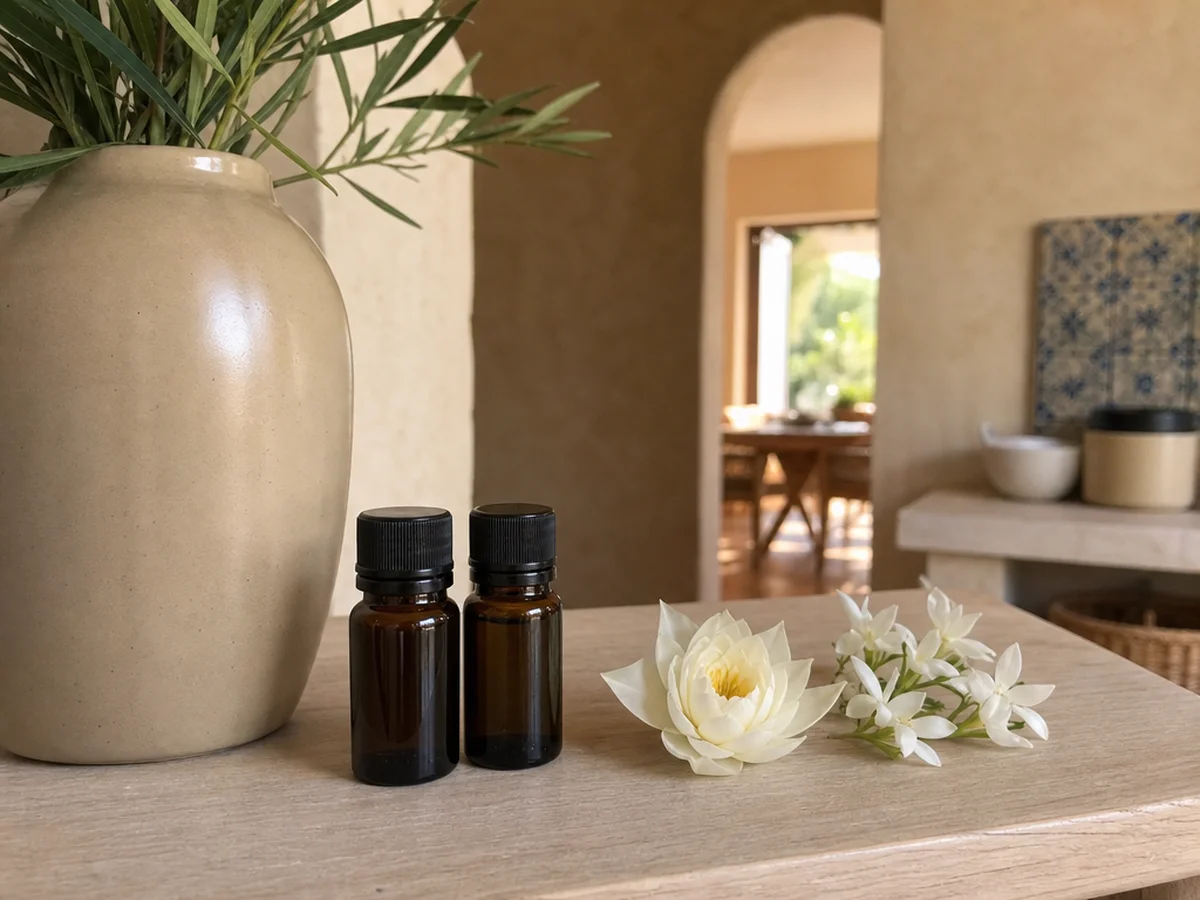
Whatever you choose, compare the two on paper strips at the same percentage by weight, because absolutes are thick and drops are unreliable. Smell them again the next day; florals often speak differently once the first rush has passed. If rose is your other candidate, our rose comparison covers that match-up.
White Lotus Absolute
White Lotus Absolute from our own shop, in sizes from 0.5 oz to bulk.
From $23.99
Shop Now →Sources & Further Reading
- Yassen MS, Ayoub IM, El-Ahmady SH, Singab ANB, 2026. Comparative analysis of flower volatiles from four Jasminum species growing in Egypt using multivariate analysis. Sci Rep. pmc.ncbi.nlm.nih.gov/PMC12988214
- Dosoky NS et al., 2023. Chemical Composition, Market Survey, and Safety Assessment of Blue Lotus (Nymphaea caerulea Savigny) Extracts. Molecules. pmc.ncbi.nlm.nih.gov/PMC10609367
- Geier J et al., 2022. Contact sensitization to essential oils: IVDK data of the years 2010-2019. Contact Dermatitis. pubmed.ncbi.nlm.nih.gov/35417610