Lotus Absolute vs Fragrance Oil: Which Do You Need?
A lotus fragrance oil and a lotus absolute can sit side by side on a supplier's page and look nearly the same, yet they are different things made for different jobs. Which one you need comes down to a question you can answer in thirty seconds: does your finished product need to contain a plant extract, or only to smell like a clean, watery flower?
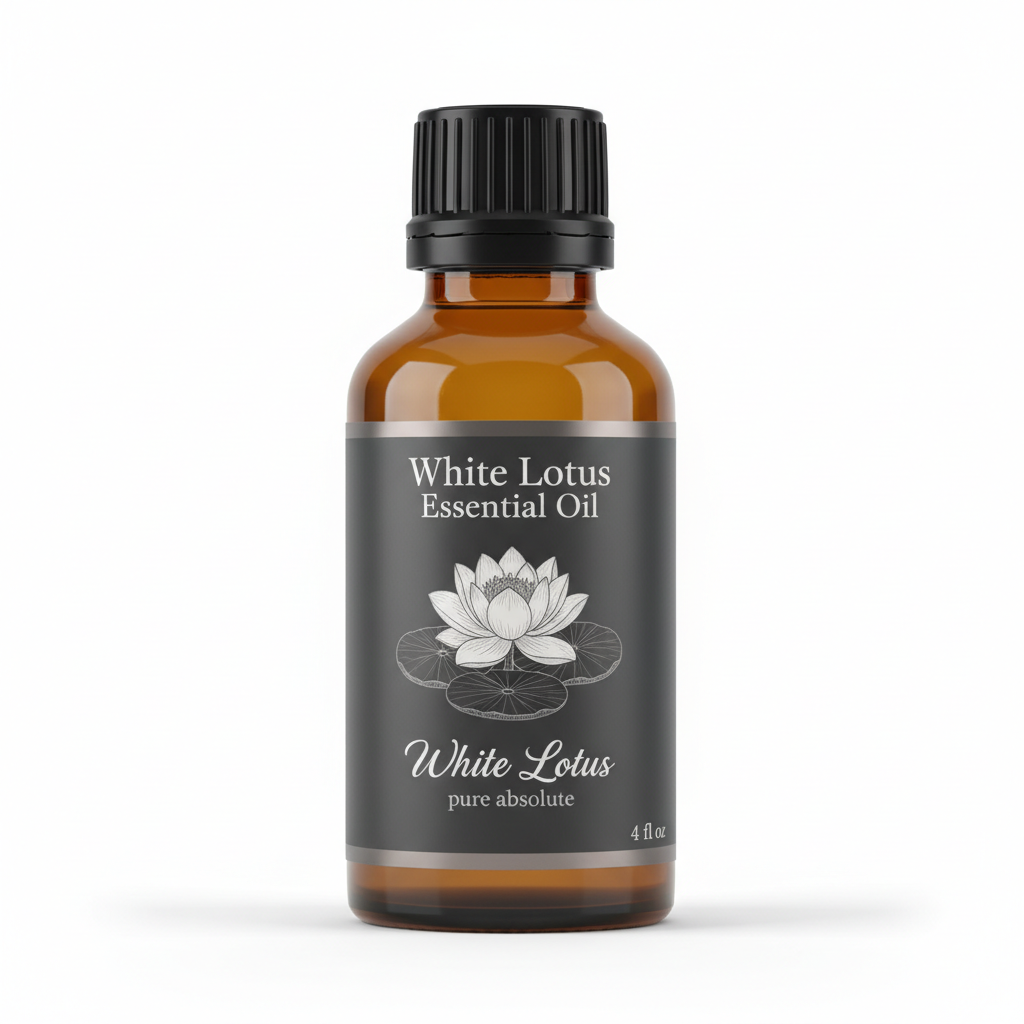
White Lotus Absolute
Our own White Lotus Absolute, in sizes from 0.5 oz to bulk.
From $23.99
Shop Now →When a fragrance oil is exactly right
If you are making a candle, room spray or soap and the label does not need to name a botanical, a fragrance oil is a perfectly honest tool. In everyday trade use it is a compounded scent, a perfumer's blend of aroma materials that may be natural, synthetic or both. It is built to smell the same every time, and that consistency is its whole appeal. We sell the absolute, not fragrance oils, so for that route you will want a craft supplier and their safety sheet.
Sometimes the best way to feel the difference is to smell side by side. If you can get a small fragrance oil sample from a craft supplier, put it on one strip and a trace of the absolute on another, and carry both around for an hour. Notice which one stays the same and which one keeps moving. The consistent one is doing exactly what it was made to do, and the moving one is doing what a plant extract does.
When you want the flower
If you are composing a natural perfume, or you want a botanical on the ingredient list, only an extract will do. ISO 9235 defines an absolute as a product obtained by extraction with ethanol from a concrete, and a concrete as an extract of fresh raw material made with one or more solvents that are then removed (ISO 9235:2021). So an absolute is a solvent-assisted extract, not a steam-distilled oil, and that is how we describe ours.
It also behaves like an extract. The only published analysis of a lotus absolute is of blue lotus, a different species, where the largest components by gas chromatography area were 6,9-heptadecadiene at about 11.5% and benzyl alcohol at about 10.5%, alongside fatty acids and long-chain hydrocarbons (Dosoky et al., 2023). That is a softer, waxier, more layered material than most people expect from "lotus", and it is why we call our absolute a heart note that works in small amounts.
It is not a contest
We do not think one of these is better than the other, and we would not want you to feel foolish for choosing either. Plenty of lovely candles and sprays rely on fragrance oils. We just think people deserve to know which one they are holding. When the choice is made on purpose, both are good tools.
Why the two get confused
The same paper bought eleven products sold online as blue lotus. All eleven contained synthetic fragrance components, and none resembled the authentic extracts in aroma or composition. It was a small survey of one species, so it is no measure of the whole market, but it shows how easily a name can outrun what is in the bottle.
US labelling rules help explain it. The FDA notes that fragrance ingredients can be listed simply as "Fragrance," that the law cannot be used to force a company to disclose trade secrets, and that it lacks the same authority to require allergen labelling for cosmetics as for food (FDA, Fragrances in Cosmetics). A label reading "lotus" can therefore be perfectly legal and still tell you very little.
A quick way to read a listing
- Which plant? Nymphaea lotus, blue lotus (Nymphaea caerulea) and sacred lotus (Nelumbo nucifera) are three different plants. Our guide to the three lotus names untangles them. Our label names Nymphaea lotus.
- Which form? Absolute, concrete, resinoid, oil and fragrance each mean something different.
- What is in it besides the extract? A named carrier with a percentage is a good sign of an honest label.
- What paperwork exists? The Certificate of Analysis we publish is for one batch and lists density, refractive index and optical rotation. If you need species, origin, residual solvent or allergen information, ask us in writing through the contact page before you order. Our guide to reading a lotus absolute report and buying checklist go further.
Questions to ask yourself first
- Do I need a plant name on the ingredient list?
- Do I want every batch to smell identical, or am I happy with a little variation?
- Will the scent sit on skin, in the air or on a candle?
- Who will use the finished product, and have I thought about their comfort?
Your answers usually settle the choice before you have opened a single bottle.
Safety does not follow the name
Neither choice is safer because of the word on the bottle. The FDA points out that many plants contain materials that can irritate or cause allergic reactions on skin (FDA, Aromatherapy), and a fragrance oil has its own supplier's use limits to respect. Our guidance for the absolute is to dilute to 0.5% to 2% in a carrier and patch test first; the safety basics post walks through it.
So the verdict is simple. For a consistent scent at a fixed cost, a fragrance oil is the practical choice. For a flower on the label and a living, variable extract, ask for the absolute and the paperwork that goes with it. Both are fine answers to different questions. If the absolute is your answer, it is in our shop, larger sizes are on our bulk page, and our guide to buying white lotus absolute in bulk explains what to check before ordering.
White Lotus Absolute
White Lotus Absolute from our own shop, in sizes from 0.5 oz to bulk.
From $23.99
Shop Now →