Spotting Lotus Look-Alikes: What a Label Can Tell You
Walk into any online marketplace and you will find lotus "oils" at every price. A price alone cannot tell you what is in the bottle, but a label and a bit of paperwork can tell you quite a lot. Here is how we read them.
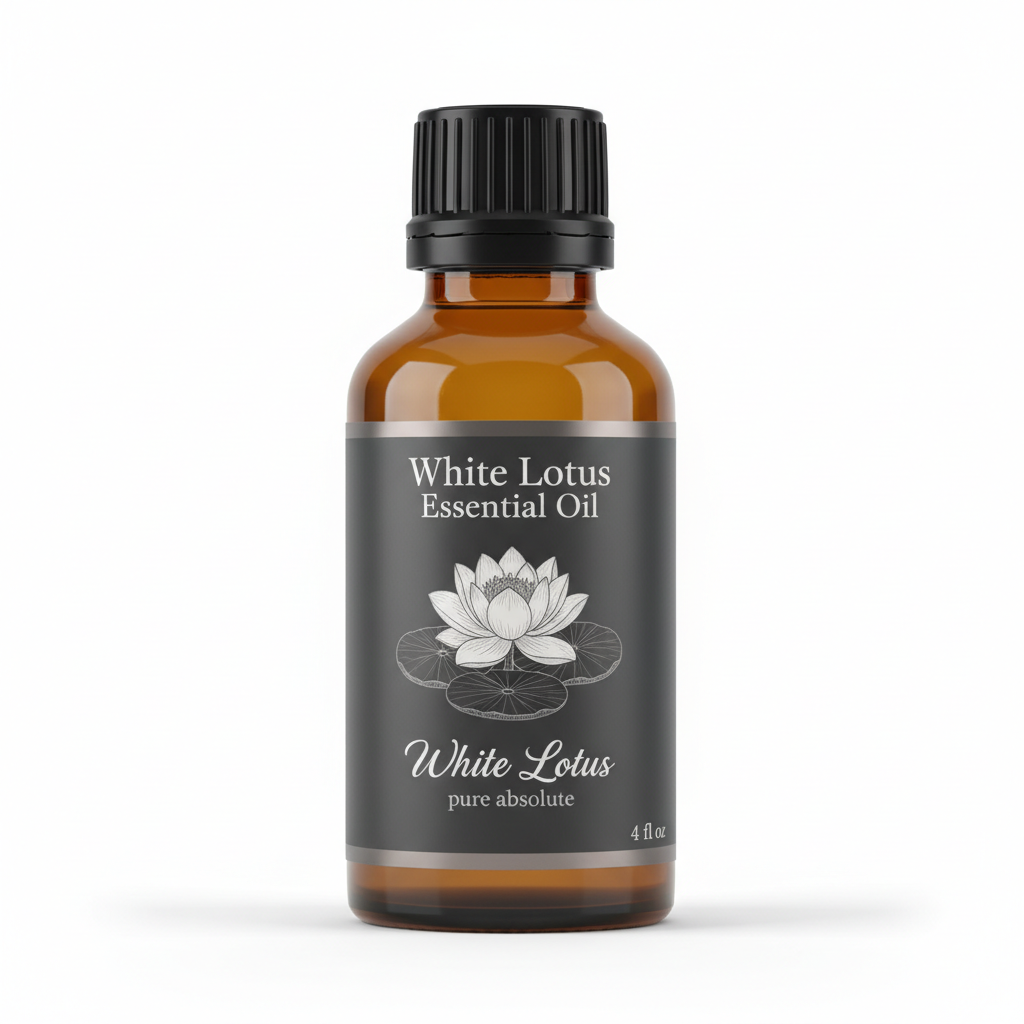
White Lotus Absolute
Our own White Lotus Absolute, in sizes from 0.5 oz to bulk.
From $23.99
Shop Now →The one study that went shopping
Almost nobody has put commercial lotus products on a gas chromatograph and published the results. The exception is a 2023 paper on blue lotus (Nymphaea caerulea, a different species from the white lotus on our label). The researchers made their own concrete and absolute from cultivated flowers, then bought 11 products sold as blue lotus from two online marketplaces and compared them. In their words, none resembled the authentic extracts in aroma or composition. All 11 contained synthetic fragrance components, three showed signs of added citrus, lavender or geranium oil, and the unidentified fraction ranged from about 2% to 33%.
It is 11 products, not a market census, and the authors worked for an essential oil company, so we read it as one careful paper. What it does tell us is that substitution in the lotus trade is not just a rumour.
A thing we like to remind people: smelling is a skill, and it improves with a little practice. Spend a few minutes with a reference scent you trust, then smell an unfamiliar bottle and notice what is different. You do not need to be an expert. Just notice whether the scent feels layered or flat, whether it shifts as it dries, and whether it matches the description on the listing.
Three things people mean by "diluted"
- Thinned with a carrier. An absolute cut with a vegetable oil is still partly lotus, and a pre-diluted product is perfectly fair when the label states the percentage. We sell our absolute undiluted, so the dilution arithmetic is yours to do; our guide to diluting by weight shows how.
- Stretched with other materials. Added essential oils, fixatives or aroma chemicals, the pattern the survey describes.
- Rebuilt from scratch. A lotus-style accord with no lotus extract in it. Our comparison of absolute and lotus fragrance oil covers how that works.
What a label can tell you
The FDA notes that fragrance and flavor ingredients can be listed simply as "Fragrance" or "Flavor", that the labeling law cannot be used to force a company to disclose trade secrets, and that the agency lacks the same legal authority to require allergen labeling for cosmetics as for food. In practice, a bottle labelled "lotus fragrance" is not obliged to say what is inside.
A label that names the plant and the form is making a more specific promise. Ours reads Nymphaea lotus, and we sell it as an absolute. The standard vocabulary for aromatic raw materials, ISO 9235, defines a concrete as an extract of fresh raw material made with one or more solvents, and an absolute as a product obtained by extracting a concrete with ethanol. So a listing that sells a "steam-distilled lotus essential oil" is describing a different kind of product, and that is a fair question to put to the seller in writing.
What a certificate can show
The Certificate of Analysis we publish is for one batch. It lists density (0.985), refractive index (1.485) and optical rotation (+0.86 degrees) at 20 C, each beside a stated range. These are classic screening measurements: they can catch a gross problem such as a heavy mineral oil, and they help show that two batches are consistent with each other. They cannot say how much of a bottle is lotus, because a blended material can sit in the same window.
A gas chromatography trace says far more, and the lotus survey itself rested on one. If you need that level of detail, or a residual solvent result, an allergen declaration or the species and origin for your lot, ask us in writing through the contact page and keep the reply with your records. We also found no published profile of a Nymphaea lotus absolute, so even a good trace has no public reference to be matched against; it can still be checked for consistency and for the warning signs described above.
Trust the questions, not the nose alone
Noses can be fooled, which is why we put questions first. A pleasant smell is not a verdict on what is in a bottle. Use your nose to decide whether you like something, and use the paperwork and the seller's replies to decide what it is. Keeping those two jobs separate makes you a calmer and better buyer.
A short buying routine
- Ask for the botanical name, the form (absolute, concrete or diluted) and, if diluted, the carrier and its percentage.
- Ask what document comes with the bottle and whether it matches the batch you will receive.
- Start with the smallest size, smell it, and patch test before you commit to more.
If a seller ever replies slowly or vaguely, that is useful too. Sellers who care about their products tend to enjoy being asked. Give yourself permission to take your time, ask again and wait for a clear answer before you place an order.
Our longer notes on buying white lotus absolute expand on those questions. A fair price is nice, but a seller who answers plainly in writing is worth more.
White Lotus Absolute
White Lotus Absolute from our own shop, in sizes from 0.5 oz to bulk.
From $23.99
Shop Now →