Absolute vs Essential Oil: What a Lotus Label Tells You
Look at a bottle of lotus and the word on the label tells you less than the way it was made. We sell White Lotus Absolute, and our shop describes it as captured from the petals by solvent extraction rather than by steam. That makes it a different kind of material from a lavender or eucalyptus essential oil, with its own character and its own questions worth asking.
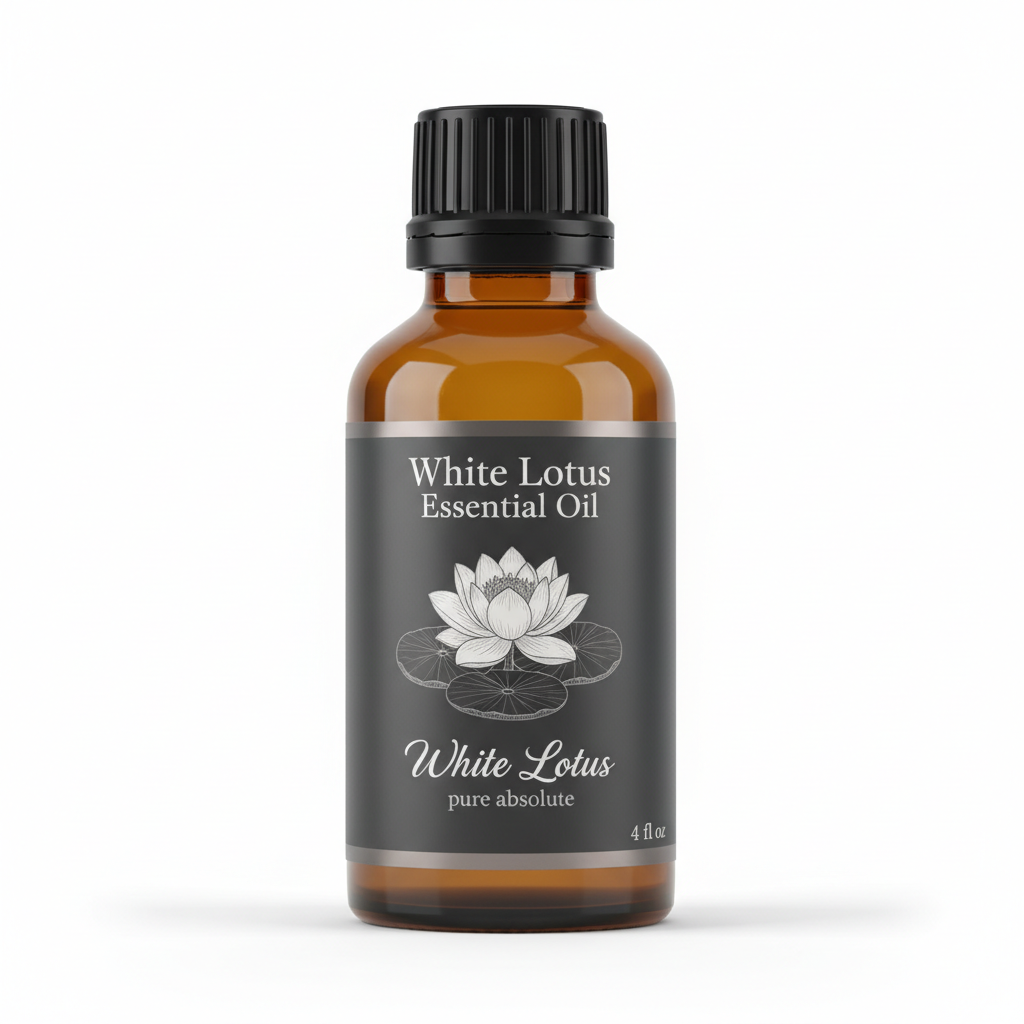
White Lotus Absolute
Our own White Lotus Absolute, in sizes from 0.5 oz to bulk.
From $23.99
Shop Now →Two words, two routes
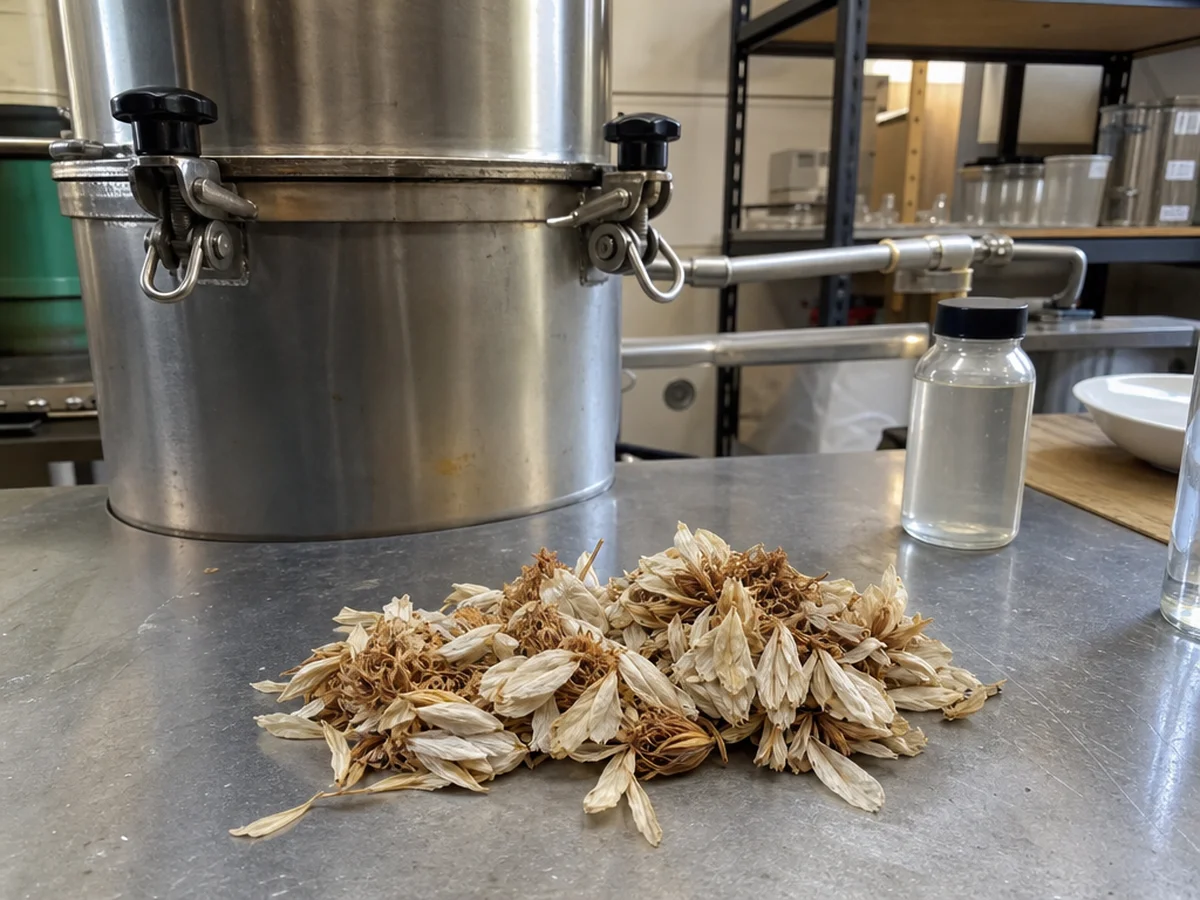
The trade has tidy definitions. The international vocabulary standard describes a concrete as an extract obtained from a fresh natural raw material by extraction with one or several solvents, and an absolute as the product obtained by extracting a concrete with ethanol (ISO 9235:2021 - Aromatic Natural Raw Materials Vocabulary Standard). In practice the ethanol step lifts the aromatic part away from the waxes, and the ethanol is then removed. An essential oil, by contrast, usually comes from steam or water distillation. A review on replacing hexane in extraction puts the split plainly: distillation gives an essential oil, while solvent extraction gives a concrete, and hexane is one of the main solvents used (Towards Substitution of Hexane as Extraction Solvent of Food Products and Ingredients with No Regrets).
Everyday usage is looser, and plenty of brands, ours included, carry the words "essential oil" in the name while the product is sold as an absolute. Read the product description, not just the brand.
Why delicate flowers take the solvent route
Some flowers hold their scent so lightly that steam distillation gives little or none, which is why perfumers have long extracted them with solvents instead. The one published analysis of a lotus concrete and absolute that we know of studied blue lotus (Nymphaea caerulea) grown in China, a different species from the Nymphaea lotus named on our label. The researchers extracted about 1,000 kg of shredded fresh flowers twice with hexane, then dewaxed the concrete with ethanol, and obtained yields of 0.18% for the concrete and 0.09% for the absolute (Chemical Composition, Market Survey, and Safety Assessment of Blue Lotus (Nymphaea caerulea Savigny) Extracts). Those figures are a good reminder of how much flower goes into a small amount of absolute, and they describe one study, not every lotus extract.
What an absolute feels like to work with
In that same analysis the absolute was not a terpene oil. Its main constituents were hydrocarbons, benzyl alcohol, tetradecanol, fatty acids and plant sterols, and the authors described the aroma as floral, fruity, sweet, fig-like, leathery and slightly herbaceous. Our description, watery green florals over a warm sweetness and a soft leathery hush, reads very much in the same spirit. We do not have a composition for our own absolute, so treat the paper as context for the family of material.
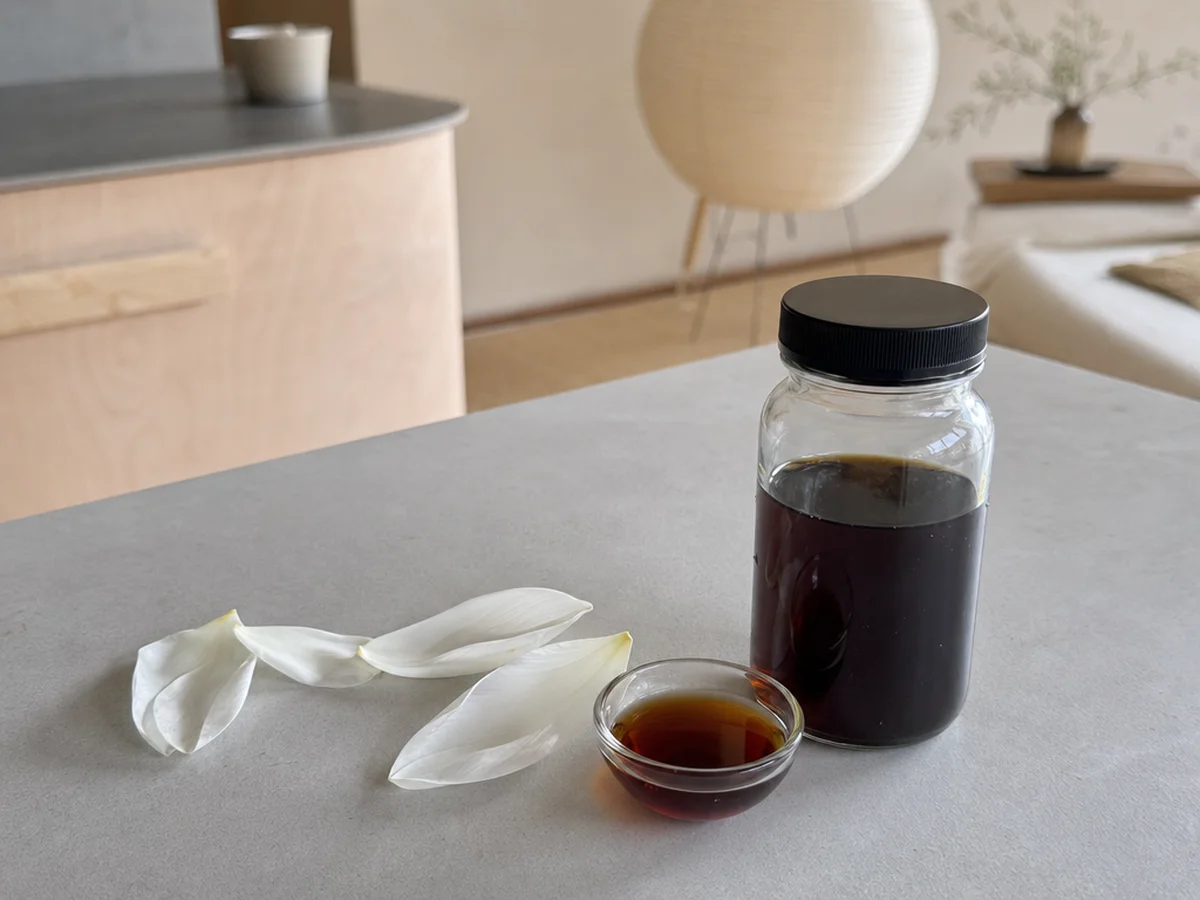
The practical result is easy to see. Absolutes are thick and rich, so they behave differently in a dropper, a carrier and a diffuser than a free-flowing distilled oil does. Our diffuser article and bath article follow that thread. The certificate of analysis we publish covers one batch and lists relative density 0.985, refractive index 1.485 and optical rotation +0.86 degrees at 20 C, which are physical constants rather than a chemical profile.
Questions that follow from the route
A solvent route brings a few sensible questions, and they are the ones a careful perfumer would ask of any absolute.
- Residual solvent. Hexane is the solvent named in the lotus paper. A review notes that n-hexane has been shown to be neurotoxic to humans and that EU rules set limits for it in foods (Towards Substitution of Hexane as Extraction Solvent of Food Products and Ingredients with No Regrets). Those are food rules and do not govern perfumery materials. If you need a residual solvent result for a lot, ask us in writing through the contact page and get the answer in writing.
- Species and origin. Our label names Nymphaea lotus. If species or origin matters to your project, ask before ordering.
- Adulteration. The same blue lotus paper bought eleven commercial blue lotus oils online and found synthetic fragrance components in every one, and none resembled the authentic extracts (Chemical Composition, Market Survey, and Safety Assessment of Blue Lotus (Nymphaea caerulea Savigny) Extracts). It is a small survey of one product type, but it shows why a label alone is a weak guide. Our article on reading a lotus report covers what documents can and cannot show.
- Allergen, IFRA or safety data. If your product needs these, ask for them in writing.
So which is better?
Neither, because they do different jobs. An essential oil is bright and mobile. An absolute is deep, floral and lasting, which is why perfumers reach for it for flowers that will not yield to a still. If you love lotus for its aroma, the absolute is the form that fits. For a seller, calling something an absolute is the start of the conversation, and we are happy to answer questions in writing.
A small habit worth having
Whenever we pick up a bottle of anything floral, we turn it around before we smell it. We read the name, then the form, then whatever the label says about how it was made. It takes ten seconds, and it changes how you smell the thing afterwards, because you know what kind of material you are holding. Try it on your next bottle, lotus or not. Then put a drop on a paper strip, wait a few minutes, and come back to it. An absolute tends to keep changing on the strip long after a distilled oil has said everything it has to say.
Once you know what the word means, a label becomes a lot easier to read, and a bottle of lotus becomes a lot more interesting.
White Lotus Absolute
White Lotus Absolute from our own shop, in sizes from 0.5 oz to bulk.
From $23.99
Shop Now →