Lotus Extract Research: How to Read the Headlines
Type "lotus extract" into a research database and you will find seizure studies in mice, leukaemia cells in a dish and sleep tests in rodents. It makes for dramatic headlines, and almost none of it describes a small amber bottle of absolute sold for scent. Here is how we sort the papers, and why the sorting matters more than any single result.
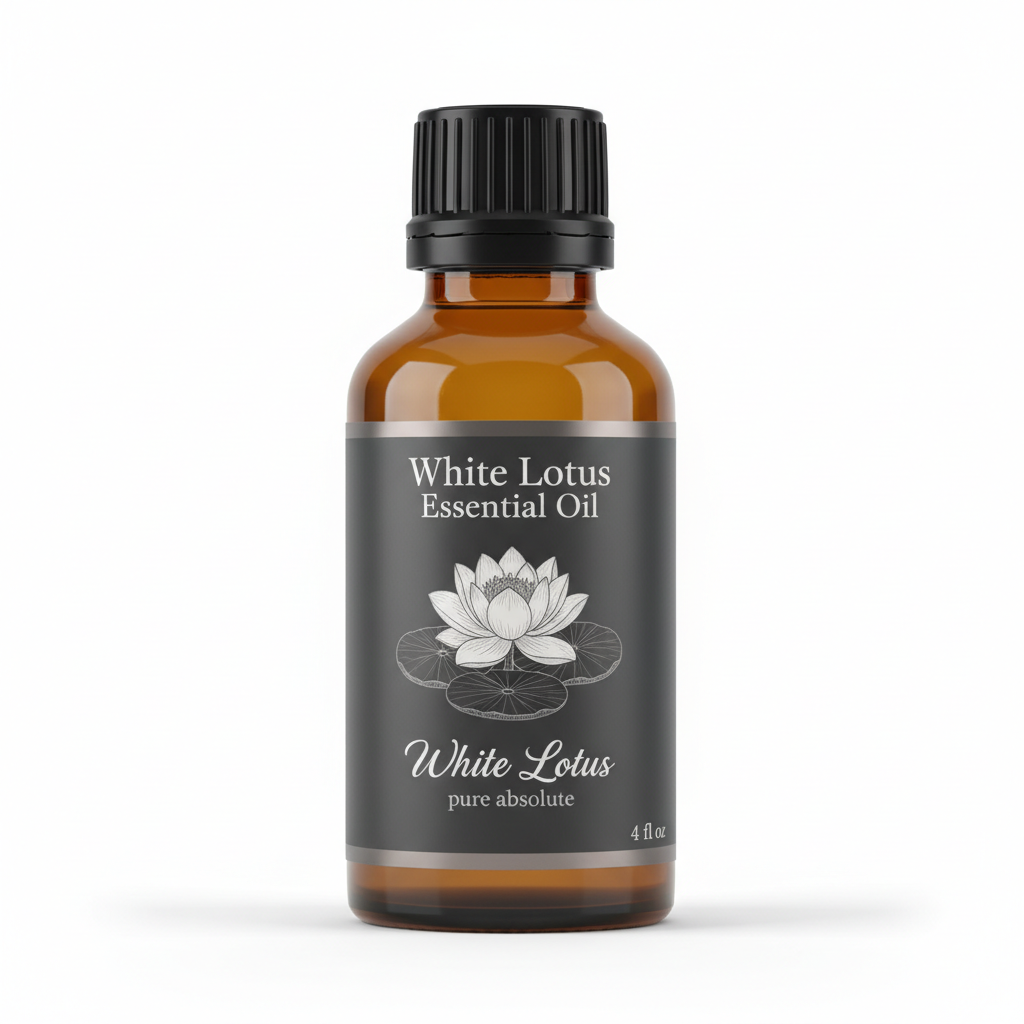
White Lotus Absolute
Our own White Lotus Absolute, in sizes from 0.5 oz to bulk.
From $23.99
Shop Now →Three questions that sort almost every lotus paper
What was the material? Most lotus research uses water or alcohol extracts of leaves, flowers or whole plants. A rat study of an aqueous extract of Nymphaea lotus flowers, fed daily for 28 days, reported no signs of toxicity at the doses tested (Kameni Poumeni et al., 2017). Mouse work on aqueous and ethanol extracts of the same species found that chemically induced seizures started later and ran shorter (Ishola et al., 2022). Those are interesting results about a plant extract given by mouth to rodents. They tell us nothing about drops of absolute in a blend.
Which plant? The label on our bottle and the Certificate of Analysis we publish both name Nymphaea lotus. Blue lotus, Nymphaea caerulea, is a different entry in the databases, and sacred lotus, Nelumbo nucifera, sits in another family altogether. A cell-culture study of a blue lotus flower extract (Chatterjee et al., 2024) and a mouse study of a leaf extract (Fajemiroye et al., 2018) each concern one species and one plant part. Our guide to telling the waterlilies apart untangles the names.
What route? Swallowed, vaped, applied to cells, or used on skin. A case series of five active-duty patients who reached an emergency department with sedation and altered perception after vaping or drinking blue lotus products was managed with supportive care (Schimpf et al., 2023).
The one paper that looks like our shelf
The study closest in kind to what we sell analysed a real lotus concrete and absolute. A team in China shredded about 1,000 kg of cultivated blue lotus flowers, extracted them twice with hexane to make a concrete, then dewaxed that concrete with 95% ethanol and a freezer. Yields were 0.18% concrete and 0.09% absolute (Dosoky et al., 2023). The absolute was mostly not the terpenes that dominate many essential oils. It was a mix of waxes, fatty acids, alkanes and sterols, with 6,9-heptadecadiene (11.5%) and benzyl alcohol (10.5%) leading the chromatogram. The authors describe its aroma as floral, fruity, sweet, fig-like and leathery.
Two more findings from that paper are worth keeping. Nuciferine, one of the compounds behind blue lotus's reputation as a smoked or brewed plant, was only a trace in the absolute and apomorphine was absent, so reports about vaped resin do not describe an absolute. And the team bought 11 "blue lotus" products online: all contained synthetic fragrance components and none matched the authentic extracts, with unidentified material ranging from about 2% to 33%. On skin use, the authors concluded that the available information does not indicate major safety concerns for topical application of authentic blue lotus concrete or absolute when diluted as a fragrance ingredient, while noting that safety data on the plant and its extracts is limited.
That is a paper about blue lotus from one operation, so we treat it as a picture of the class, not a profile of our bottle. The batch certificate we publish lists density, refractive index and optical rotation. If you need a GC-MS report for your own work, ask us in writing through the contact page before ordering, and see our post on reading a lotus absolute report for what good paperwork looks like.
What the health agencies say about scent
The FDA draws a clear line: a perfume intended only to make a person smell good is a cosmetic, while claims that a product will help you sleep or ease pain are drug claims (FDA, Aromatherapy). The National Center for Complementary and Integrative Health adds that aromatherapy is sometimes used for insomnia but nobody knows whether it helps, because little rigorous research has been done (NCCIH, Aromatherapy). That is why we describe our absolute in terms of aroma and craft and leave animal and cell experiments out of our product claims. If a health question is behind your interest in lotus, a physician or pharmacist is the right person to ask, and a poison center (1-800-222-1222 in the United States) is the call if anything is swallowed.
A quick way to read the next lotus headline
- Find the extract: water, alcohol, absolute, dried flower, or "lotus" used as a fragrance word.
- Find the species and plant part.
- Find the model: test tube, cells, rodents or people.
- Find the route: swallowed, vaped, or on skin.
- Ask whether that is the material and dose in the bottle you are holding.
Keep the curiosity
None of this should dull the fun of reading about lotus. It is a fascinating plant, and curiosity about it is a good thing. We just like to keep two shelves in our heads: one for what scientists are learning about the plant, and one for what a small bottle of absolute is for. They can sit side by side without either one pretending to be the other.
Run any lotus claim through those five checks and most of the excitement settles into a more honest picture: a beautiful plant with a growing, mostly preclinical literature, and an absolute that earns its place on the bench for how it smells. Our posts on pregnancy and breastfeeding and on why an absolute is not food take the two most common follow-up questions further.
White Lotus Absolute
White Lotus Absolute from our own shop, in sizes from 0.5 oz to bulk.
From $23.99
Shop Now →Sources & Further Reading
- Kameni Poumeni M et al., 2017. Safety assessment of the aqueous extract of the flowers of Nymphaea lotus Linn (Nymphaeaceae): Acute, neuro- and subchronic oral toxicity studies in albinos Wistar rats. J Complement Integr Med. pubmed.ncbi.nlm.nih.gov/28291734
- Ishola IO et al., 2022. Anticonvulsant activity of Nymphaea lotus Linn. extract in mice: The role of GABAergic-glutamatergic neurotransmission and antioxidant defence mechanisms. Epilepsy Res. pubmed.ncbi.nlm.nih.gov/35144171
- Fajemiroye JO et al., 2018. Evaluation of Anxiolytic and Antidepressant-like Activity of Aqueous Leaf Extract of Nymphaea Lotus Linn. in Mice. Iran J Pharm Res. pubmed.ncbi.nlm.nih.gov/29881419
- Chatterjee D et al., 2024. The Apoptotic Property of Nymphaea Caerulea Flower Extract on Acute Myeloid Leukaemia Cell Line, THP-1. Asian Pac J Cancer Prev. pubmed.ncbi.nlm.nih.gov/38285776
- Schimpf M et al., 2023. Toxicity From Blue Lotus (Nymphaea caerulea) After Ingestion or Inhalation: A Case Series. Mil Med. pubmed.ncbi.nlm.nih.gov/34345890
- Dosoky NS et al., 2023. Chemical Composition, Market Survey, and Safety Assessment of Blue Lotus (Nymphaea caerulea Savigny) Extracts. Molecules. pmc.ncbi.nlm.nih.gov/PMC10609367
- U.S. Food and Drug Administration. Aromatherapy. fda.gov
- National Center for Complementary and Integrative Health, last updated January 2020. Aromatherapy. nccih.nih.gov