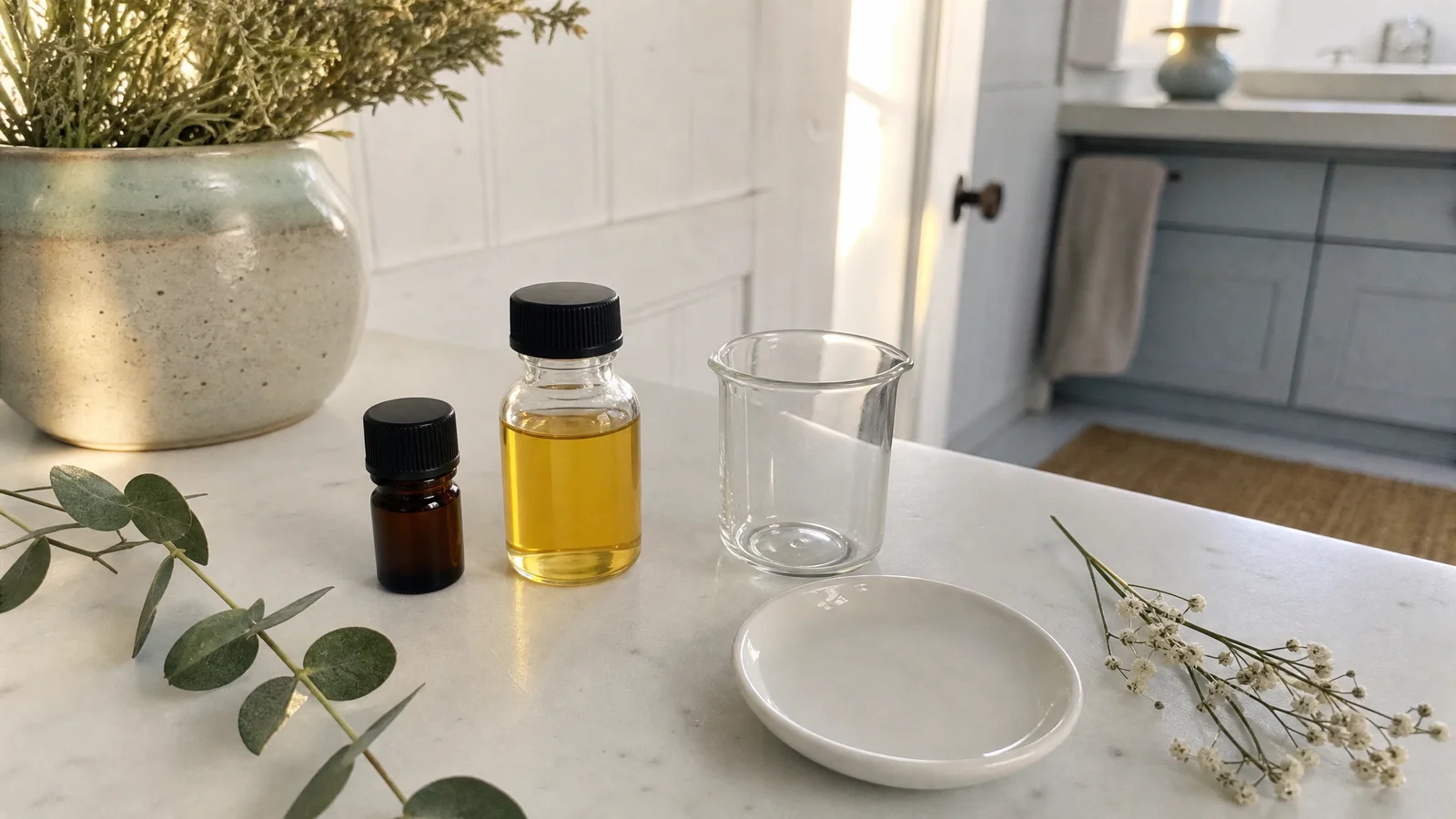
How to Dilute White Lotus Absolute by Weight
Diluting a thick absolute is a weighing job, not a counting job. Drops of a viscous material come out large, slow and uneven, and at the low end of a skin-friendly range a three-drop slip can double your strength. A scale and a little arithmetic solve it, and the numbers are easy.
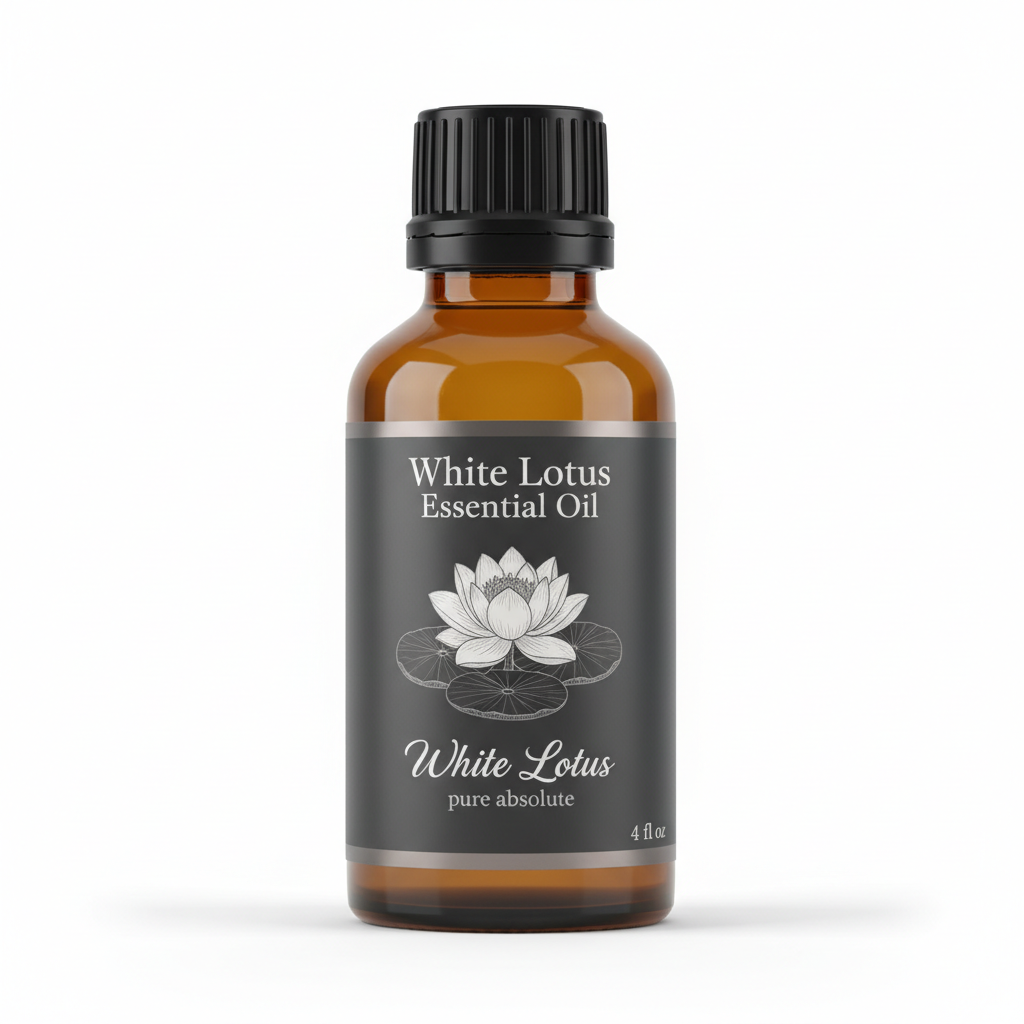
White Lotus Absolute
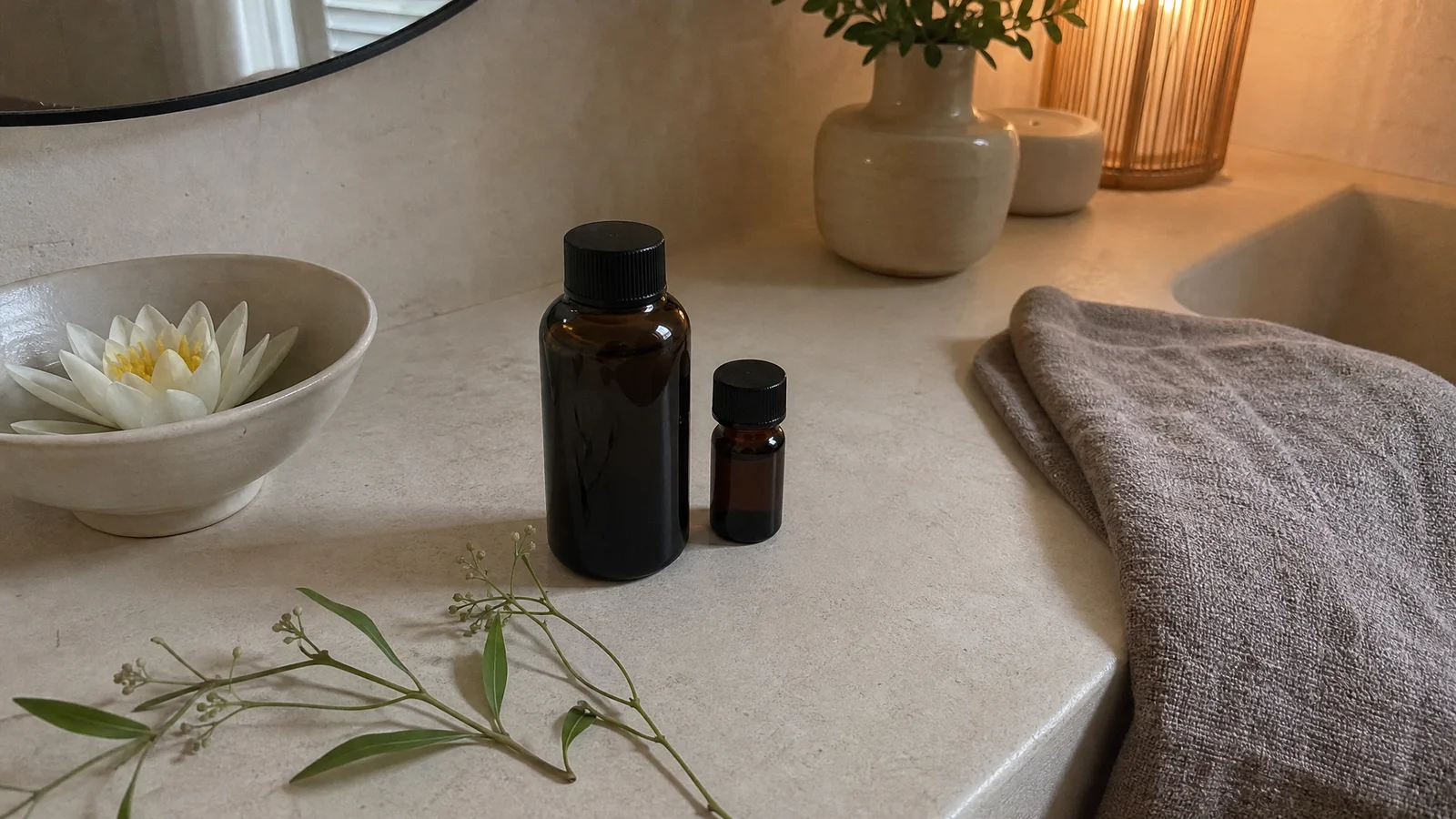
Our own White Lotus Absolute, in sizes from 0.5 oz to bulk.
From $23.99
Shop Now →Decide the finished strength, then work back
Our dilution guidance for this absolute is 0.5% to 2% in a carrier oil such as jojoba or fractionated coconut, with a patch test on a small area first. The Tisserand Institute, writing about essential oils, gives 0.5% to 1.2% for the face and sensitive areas and 1% to 3% for body oils and lotions. Those are yardsticks, not a lotus-specific limit, and no safe maximum is documented for this absolute. So our recommendation is to begin at 0.5% and move up only if you want more scent. Think of the percentage as a ceiling you choose to stay under.
Percent here means percent by weight of the finished blend. For a 30 g batch (about a fluid ounce of light carrier, though you should weigh it):
| Finished strength | Absolute | Carrier | Roughly, in drops |
|---|---|---|---|
| 0.5% | 0.15 g | 29.85 g | 3 |
| 1% | 0.30 g | 29.70 g | 6 |
| 2% | 0.60 g | 29.40 g | 12 |
The drop column uses the Certificate of Analysis we publish for one batch, which gives a relative density of 0.985, so 1 ml weighs about 0.985 g, and the usual convention of 20 drops to the millilitre. It lines up with our shop figure of roughly 3 to 12 drops per fluid ounce, but treat it as a sanity check on your scale, not as the method.
If you have never weighed a perfume ingredient before, set aside ten minutes to get comfortable with the scale. Put a small glass or a clean cup on it, press tare, and add the carrier slowly with a pipette until the number is where you want it. Do it once with water just to feel how the last tenth of a gram creeps up. A thick absolute is no different, only slower, so go gently and expect to wait a moment for the last drop to let go of the pipette.
Make a stock solution
Weighing 0.15 g accurately is hard. A scale that reads to 0.01 g carries about a 7% uncertainty on that amount, and the film of thick absolute left on a pipette is a large share of such a small dose. The fix is a stock. Weigh 1 g of absolute into 9 g of carrier for a 10% stock, then weigh grams of stock instead of hundredths of a gram of absolute:
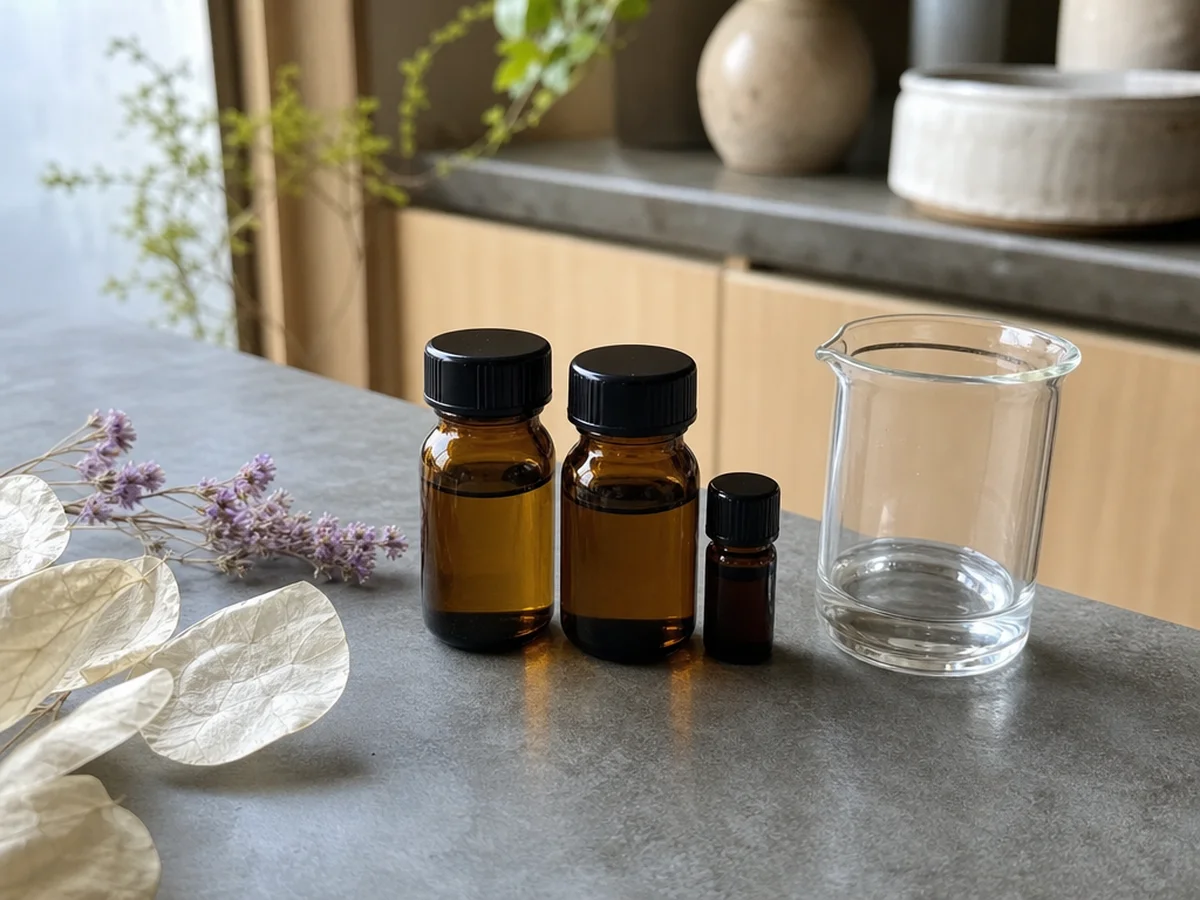
- 0.5% finished: 1.5 g stock plus 28.5 g carrier
- 1% finished: 3 g stock plus 27 g carrier
- 2% finished: 6 g stock plus 24 g carrier
The stock is a concentrated material, so label it "not for skin" with the strength and date, and keep it away from children and pets. A tightly closed, non-reactive container in a cool, dark place is the right home for it.
How far a bottle goes
A 0.5 fl oz bottle holds about 14.8 ml, which at 0.985 g/ml is about 14.6 g of absolute. At 0.5% (0.15 g per 30 g batch) that is roughly 97 one-ounce batches; at 2%, about 24. That is what "sold by the drop" really means, and it is a useful lens when you are choosing among our ten sizes; choosing a size goes further. Check the shop page for current prices.
A word on the feel of the work: a good bench is tidy. Lay out a paper towel, put your scale on a flat surface away from drafts, and keep the cap of the absolute bottle somewhere it will not roll away. The smell of a thick floral lingers on fingers and on the paper towel, which is a pleasure, but it is also a reminder to wipe up as you go and keep the bottle neck clean.
Choosing a carrier
Jojoba and fractionated coconut oil are good carriers for this absolute, and a craft or cosmetic-supply shop sells both. Buy only what you will use in a reasonable time, since a diluted blend is only as stable as its weakest ingredient. Choose a water-free carrier for a roll-on or body oil, because adding water brings in a preservative question we do not cover here. The Tisserand Institute names moisture as one of the three factors that encourage oxidation, so a clean, dry funnel and a dark glass bottle are worth the small effort. Our storage guide has the rest.
Diluting for perfume
An absolute is made by washing a concrete with ethanol, so it makes sense that it should go into perfumer's alcohol. The one published analysis of a lotus absolute, on blue lotus, shows a material rich in waxy and fatty components, so a little cloudiness in cold alcohol would not be surprising. Try 0.1 g in a few grams of alcohol, leave it overnight, and look before committing the rest of your bottle. Balms and oils are often the easier path; see our solid perfume formulation.
Small habits that pay off
Keep a notebook line for each batch: date, grams of each ingredient and the strength you aimed for. Wipe the bottle neck after use. Apply a new blend to a small area first and wait before widening. A blend you like is only repeatable if you wrote it down.
A routine we like to recommend
If you are new to this, our recommendation is to make the smallest batch that makes sense and use it up. Start with the 0.5% blend, write the weights on a label, and wear or use it for a week or two. Notice whether you want it stronger, or whether you would rather it were quieter. Then adjust the next batch by a small step, never a leap. That slow loop teaches you more than any table, and it keeps a precious bottle going for a long time.
A precious drop goes a long way once you weigh it.
White Lotus Absolute
White Lotus Absolute from our own shop, in sizes from 0.5 oz to bulk.
From $23.99
Shop Now →Sources & Further Reading
- Dilution for essential oils, Tisserand Institute.
- Is my bottle of essential oil oxidized or no longer good to use?, Tisserand Institute.
- Chemical Composition, Market Survey, and Safety Assessment of Blue Lotus (Nymphaea caerulea Savigny) Extracts, Molecules, 2023.