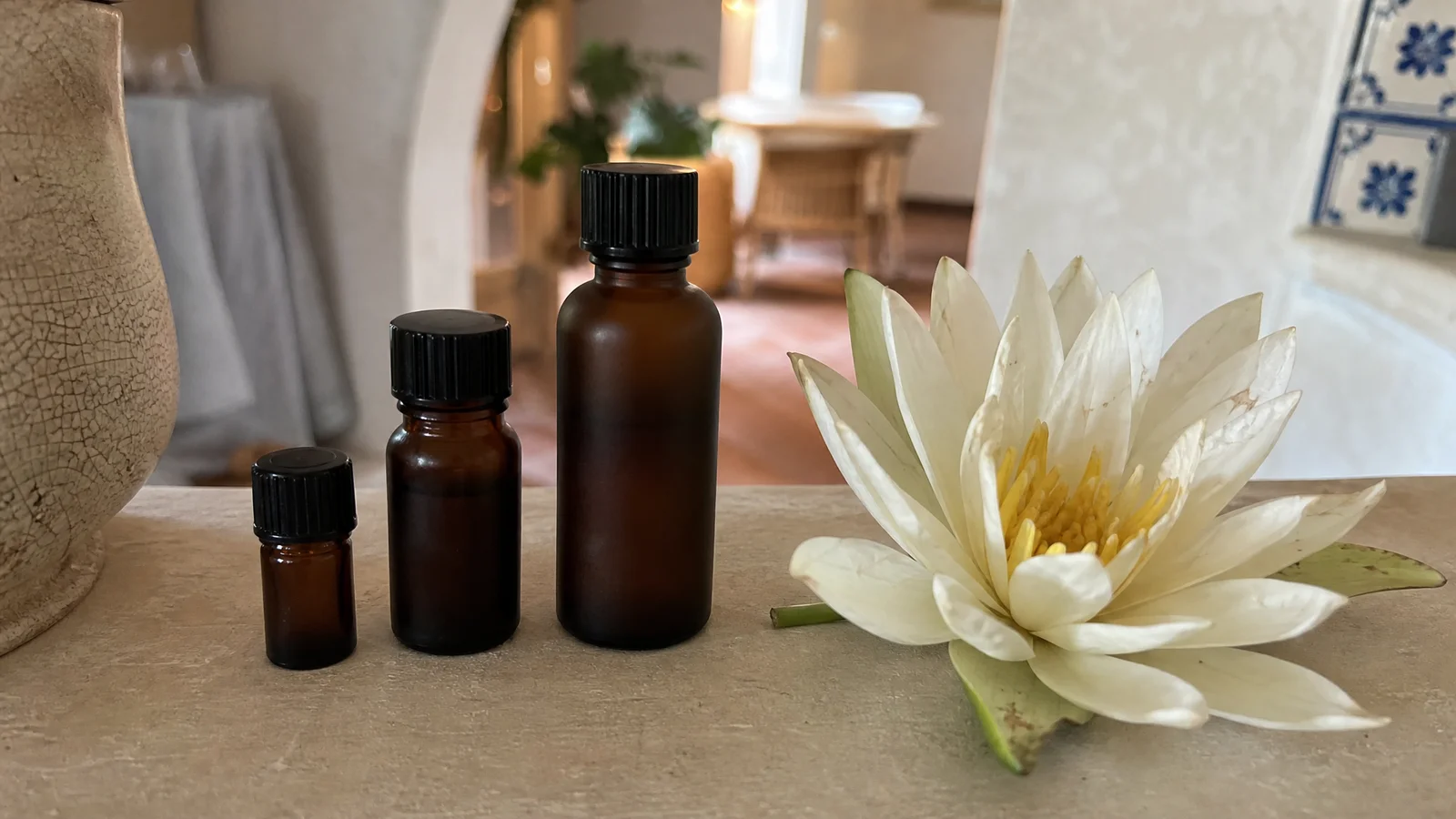
Which White Lotus Absolute Size Should You Choose?
Our honest advice on size is to buy the smallest bottle that covers your next project. White Lotus Absolute is used in traces, so even a half-ounce bottle makes a surprising amount of finished product. The larger sizes are there for people who make things in volume, and the arithmetic below shows where each one fits.
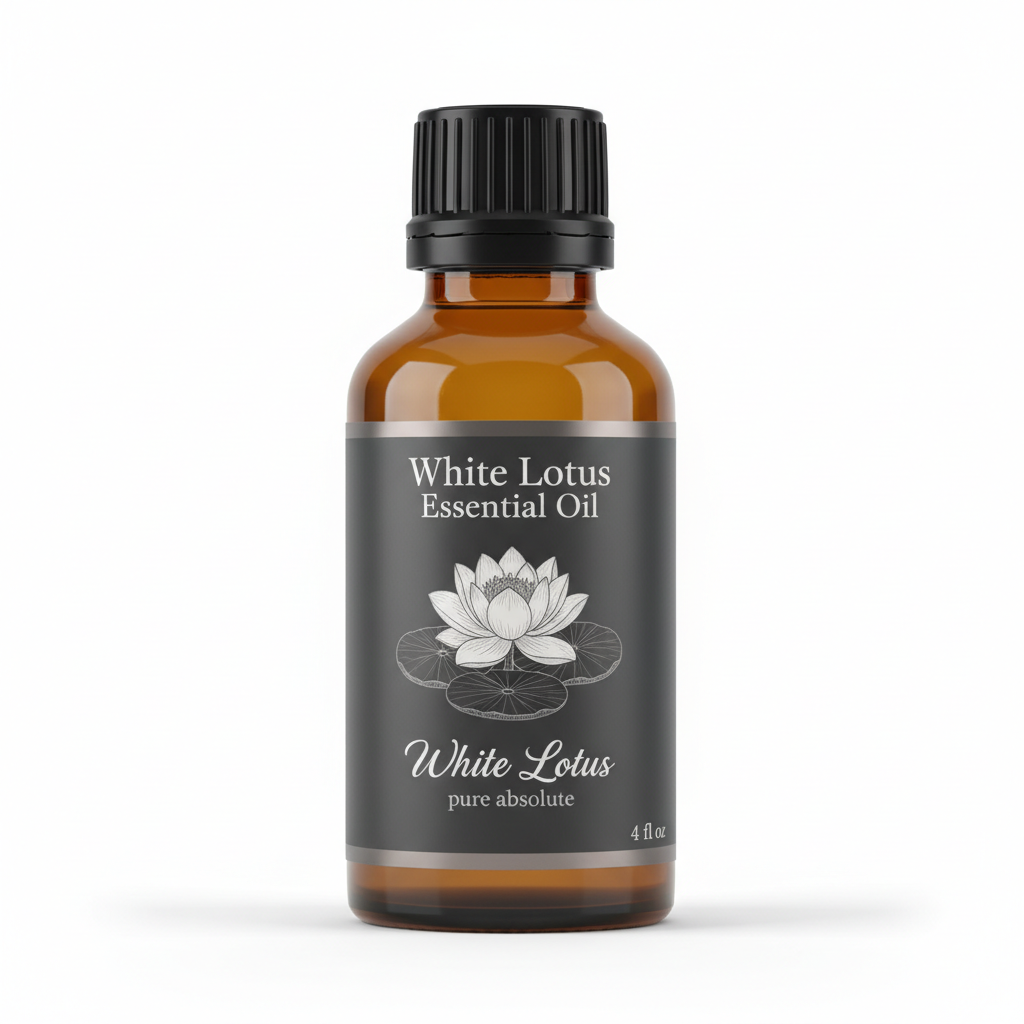
White Lotus Absolute
Our own White Lotus Absolute, in sizes from 0.5 oz to bulk.
From $23.99
Shop Now →What we offer
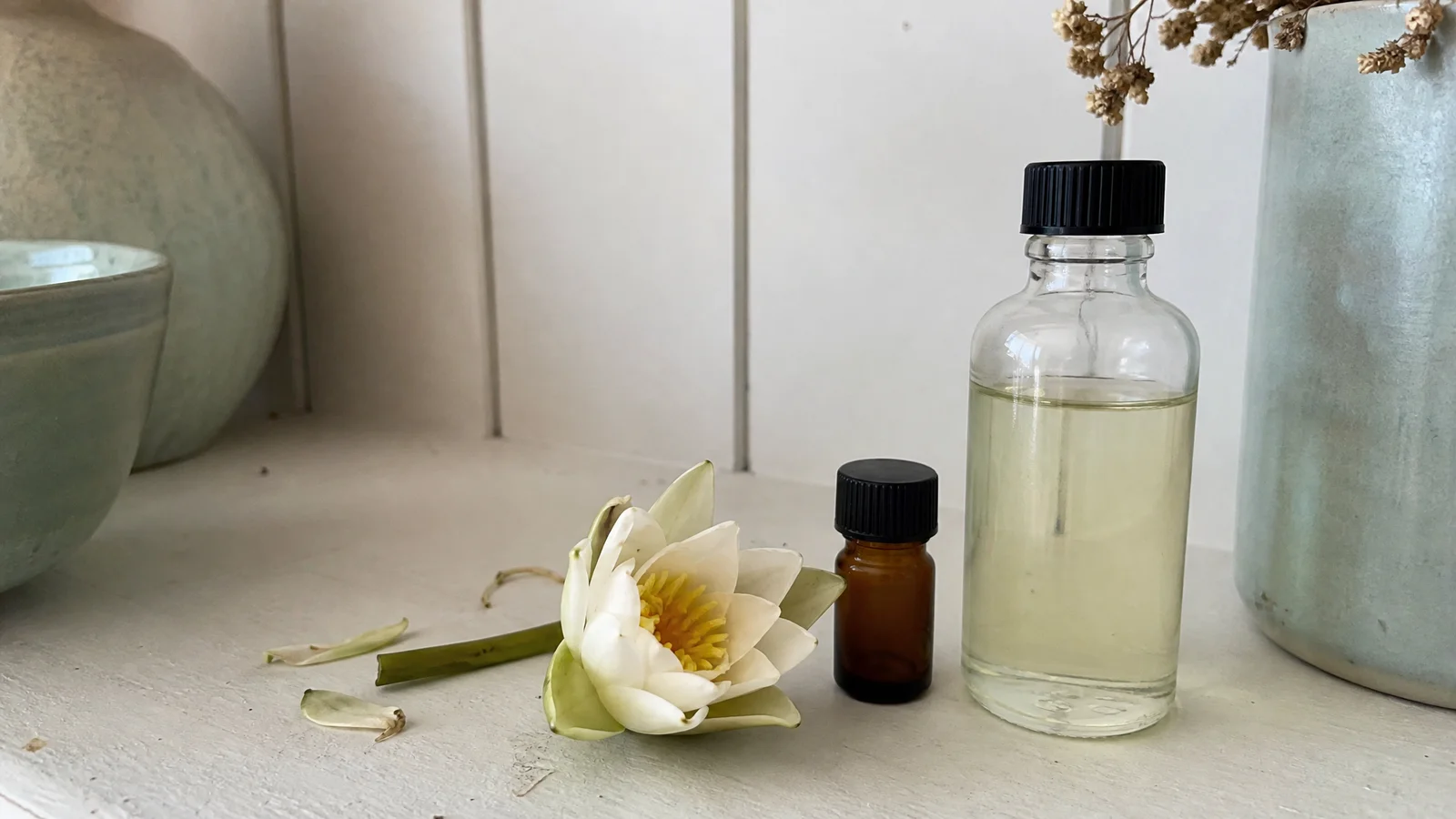
We sell one product, White Lotus Absolute, in ten sizes: 0.5, 1, 2, 4, 8 and 16 oz, then 5, 25, 100 and 400 lb. Every size comes from the same standard, so a bigger bottle is not a different grade. Our shop page lists current prices for each size. We describe the absolute as solvent-extracted, sold under the grade "Botanical", with a typical shelf life of 2 to 3 years for floral absolutes, kept tightly capped in a cool, dark place. That shelf life shapes the size question more than anything else, because a bottle you cannot finish in time is not a bargain at any size.
Turning ounces into drops
Absolutes are thick, so a scale beats a dropper, but drops are how many small makers think. The one batch on our certificate of analysis has a relative density of 0.985 at 20 C, so a millilitre weighs about 0.985 g. At a rough 20 drops to the millilitre, which varies with the bottle tip and temperature, one drop is about 0.05 g. Everything below is arithmetic from that one batch, assuming fluid ounces (1 oz is 29.57 ml).
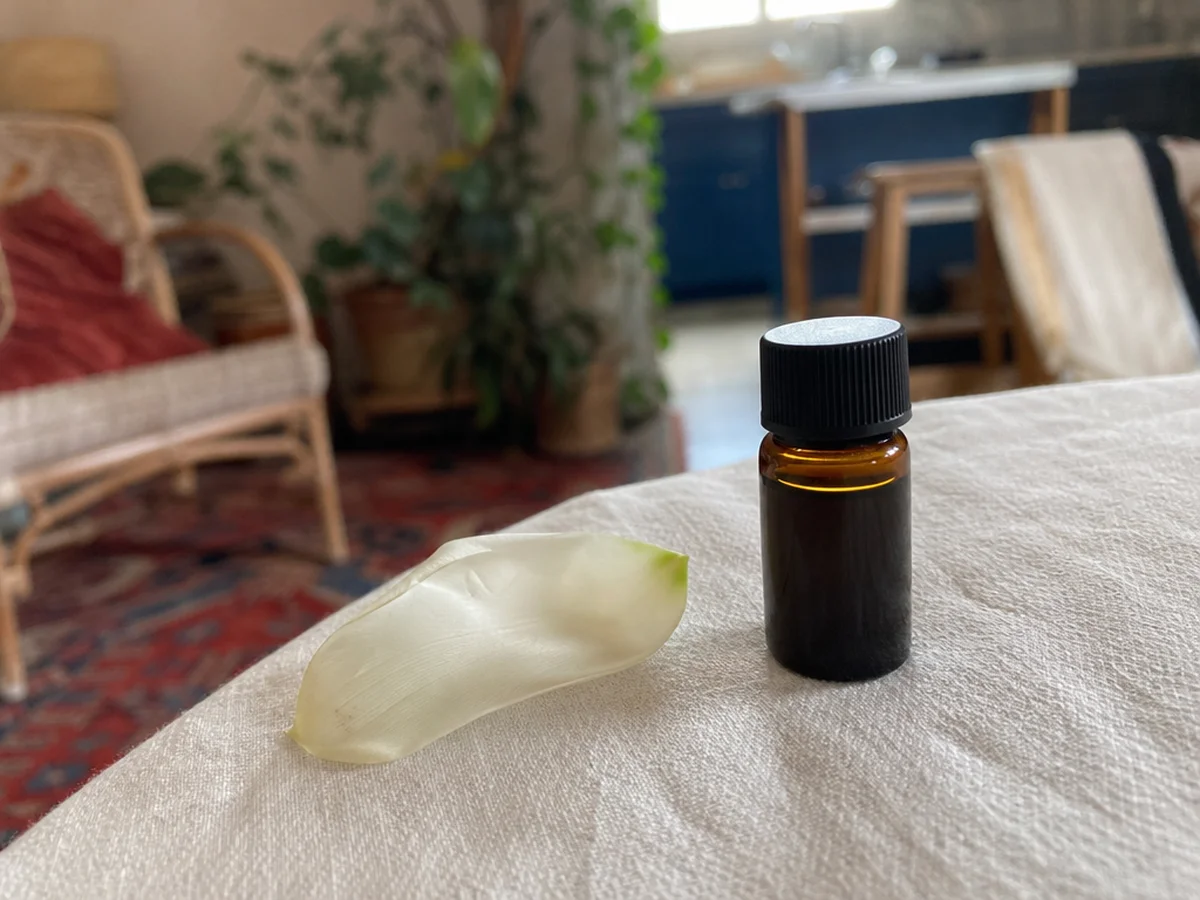
- 0.5 oz: about 14.8 ml, 14.6 g, 295 drops.
- 1 oz: about 29.6 ml, 29.1 g, 590 drops.
- 2 oz: about 59.1 ml, 58.3 g, 1,180 drops.
- 16 oz: about 473 ml, 466 g, 9,460 drops.
Weighing also makes the math portable. A percentage by weight is the same for a 30 g batch as for a 30 kg one, and only the grams change. A thick absolute clings to a dropper tip, so a count can drift by a drop or two. At 0.5% in 30 g, that drift is the difference between 0.15 g and 0.25 g, a big swing for a small batch.
How far does a bottle go?
Our dilution guidance is 0.5% to 2% in a carrier, roughly 3 to 12 drops per fluid ounce, and we suggest starting at the lower end. Using that as a yardstick, a 0.5 oz bottle at about 6 drops per ounce (around 1%) could scent roughly 49 ounces of finished product. Put that beside real projects. A one-ounce roller takes about 6 drops. A 200 g jar of the butter in our body butter formulation at 1% takes about 41. A tin of solid perfume uses a fraction of that. By this arithmetic, a 0.5 oz bottle covers dozens of rollers, and 1 oz is generous for a single maker. See our dilution article and safety basics before choosing a strength.
Shelf life is the ceiling
Take 2 to 3 years as the window. A 16 oz bottle at about 6 drops an ounce supports roughly 1,580 ounces of finished product, around 46 litres, which only makes sense if you will fill that many bottles within the window. The certificate we publish shows a best-by of 07/18/2028 for one batch, and the date for your own lot is the one on the paperwork you receive. Our storage article covers keeping an opened bottle in good shape. A common practical idea is to decant a large purchase into smaller, well-filled bottles so you open the big one less often, which is reasoning on our part and not something we have measured.
When a larger size makes sense
Bigger sizes suit a business with a product in production, where weekly use is measured in grams. The useful question there is how many months of production a size covers, not which size looks cheapest per millilitre. We offer samples and a free consultation for wholesale and private label, and the bulk page lists the larger sizes. A sample first is wise with any natural extract, since the only way to know a formula works is to make it with the material.
A small-business habit worth borrowing
If we were starting a project with an ingredient we had never used, our recommendation would be to order the smallest size, make the thing a few times and only then think about a bigger bottle. Write each batch's weights in a notebook with the date. By the third batch you will know how much you really use in a month, and that number is a far better guide to size than any chart, including ours. Keep the notebook next to the bottle so the two stay together.
Questions worth asking before any size
The certificate of analysis we publish covers one batch and gives physical constants: density, refractive index, optical rotation, appearance and smell. If you need a residual solvent result, origin, an allergen declaration or an IFRA certificate, ask us in writing through the contact page before ordering and get the answer in writing. That matters more at 25 lb than at 0.5 oz. A lotus absolute is also not a simple material. The one published analysis of a related lotus absolute (blue lotus, from China) found mostly waxes, fatty acids, alkanes, sterols and benzyl alcohol rather than terpenes (Chemical Composition, Market Survey, and Safety Assessment of Blue Lotus (Nymphaea caerulea Savigny) Extracts), which helps explain its thick body. That is a different species, so it describes the family and not our bottle.
If you have one project in mind and have never worked with an absolute, take the smallest size, weigh your first dilution, and let the result tell you whether you ever need the next one up.
White Lotus Absolute
White Lotus Absolute from our own shop, in sizes from 0.5 oz to bulk.
From $23.99
Shop Now →