White Lotus in Perfumery: Using It as a Heart Note
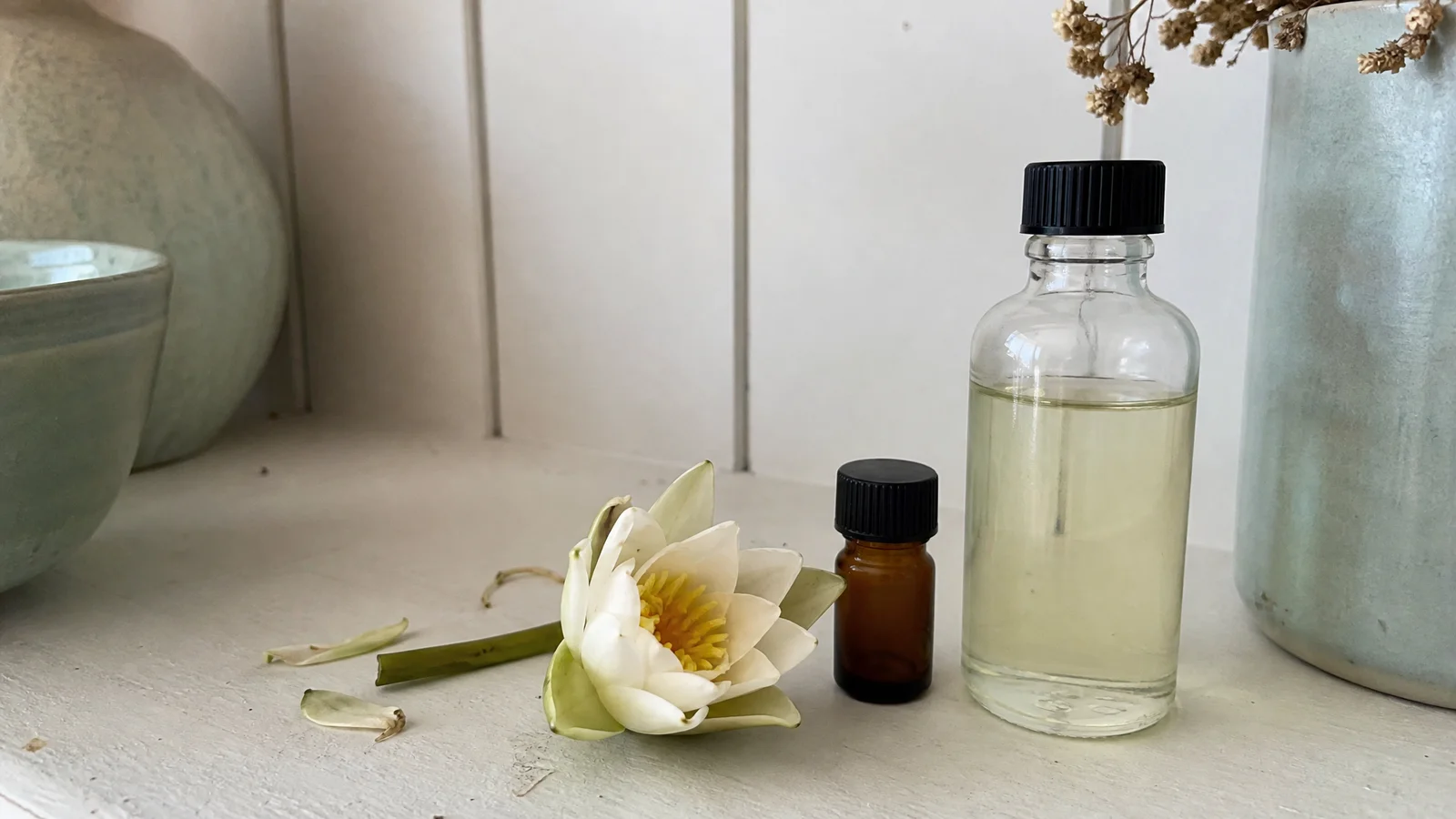
Lotus is the flower perfumers reach for when they want a composition to feel like cool water and green stems, and it is also a material that rewards patience. A lotus absolute is a viscous, waxy extract, not a thin distilled oil, and it does its best work as a trace in the heart of a perfume. Here is how we would think it through before you reach for the scale.
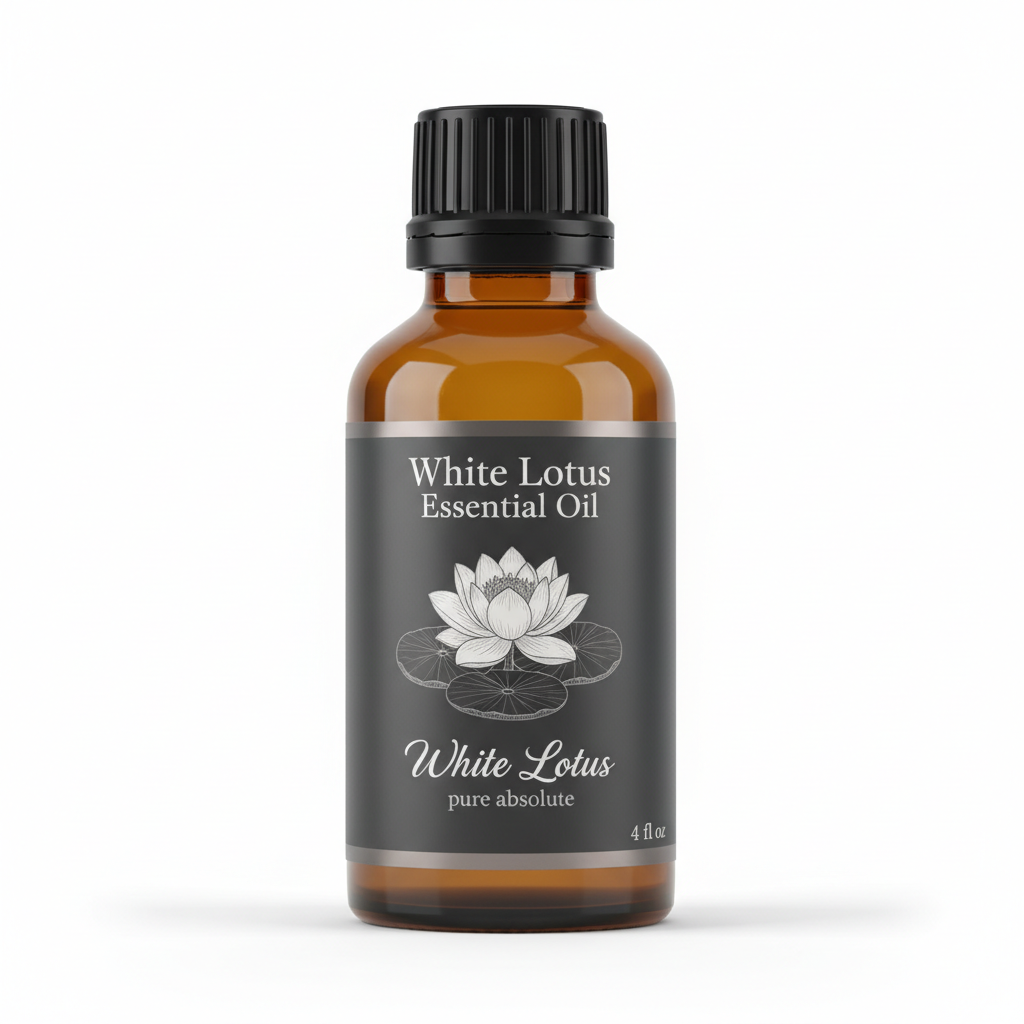
White Lotus Absolute
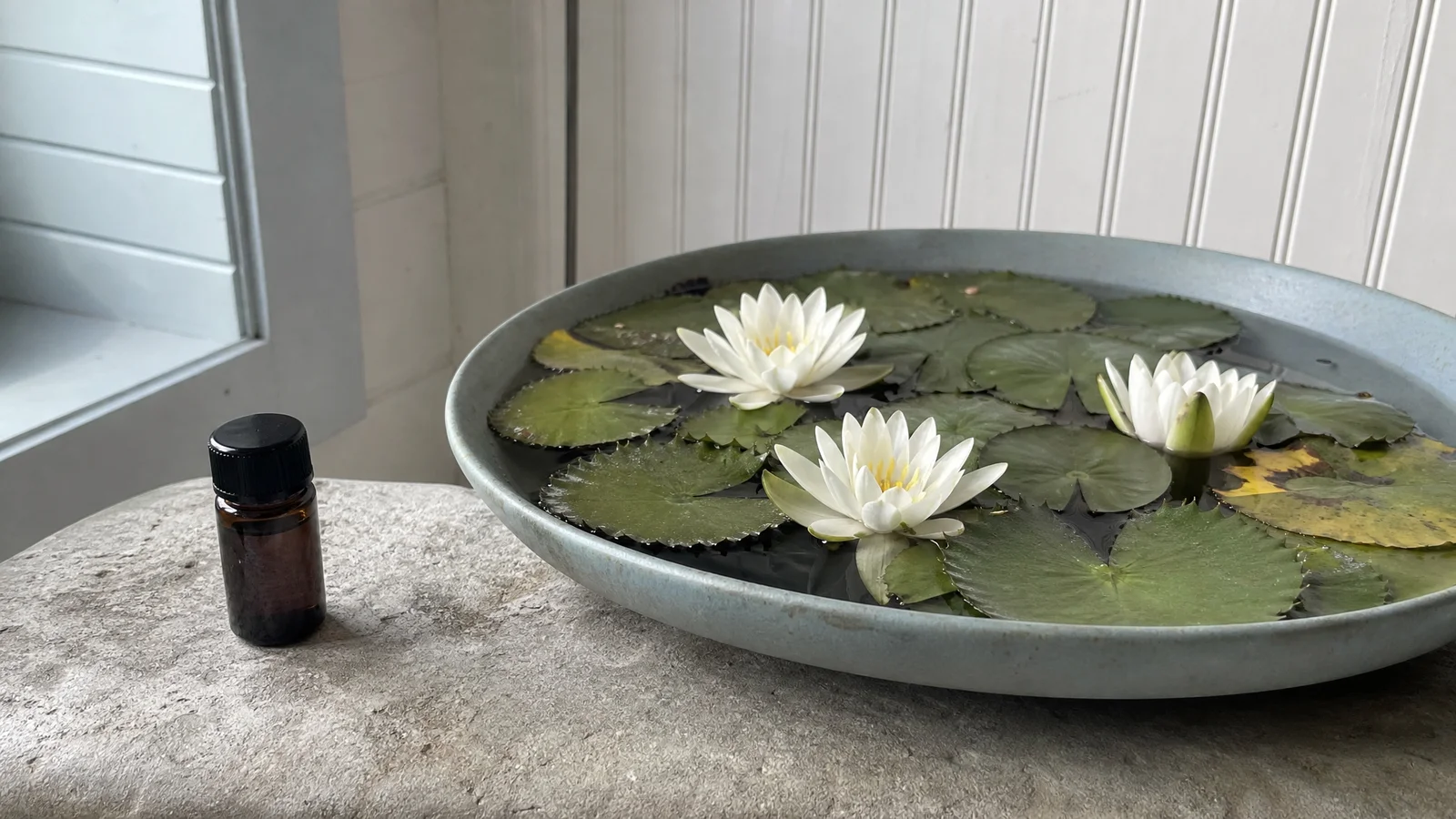
Our own White Lotus Absolute, in sizes from 0.5 oz to bulk.
From $23.99
Shop Now →Know what you are holding
We sell one product, a white lotus absolute that we describe as solvent-extracted, as a middle note for natural perfumery. By ISO 9235, an absolute is made by extracting a concrete with ethanol, and the ethanolic solution is generally cooled and filtered to remove waxes (ISO 9235:2021). The Certificate of Analysis we publish gives physical constants for one batch and no composition, so for chemistry we have to look at a related plant.
The one published GC-MS study of a real lotus concrete and absolute was on blue lotus grown in China. In the absolute, the biggest peaks by area were 6,9-heptadecadiene (about 11.5%), benzyl alcohol (about 10.5%) and tetradecanol (about 5.3%), with fatty acids, hydrocarbons and sterols making up much of the rest (Dosoky et al., 2023). Percentages like these are GC area, not weight. It is a very different profile from a terpene-rich distilled oil, and a different species from ours, so it describes the type of material rather than our bottle.
Where "aquatic" comes from
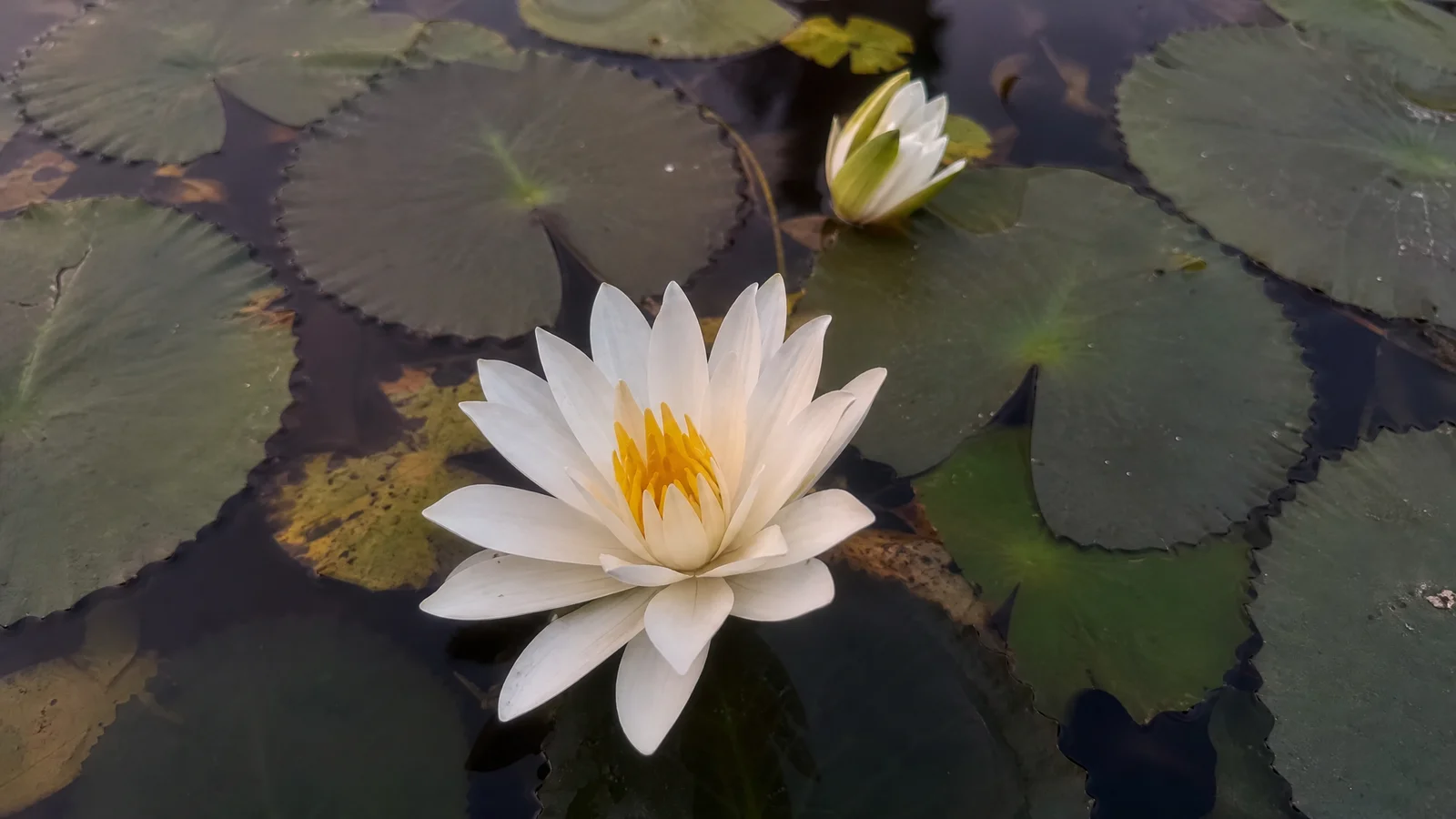
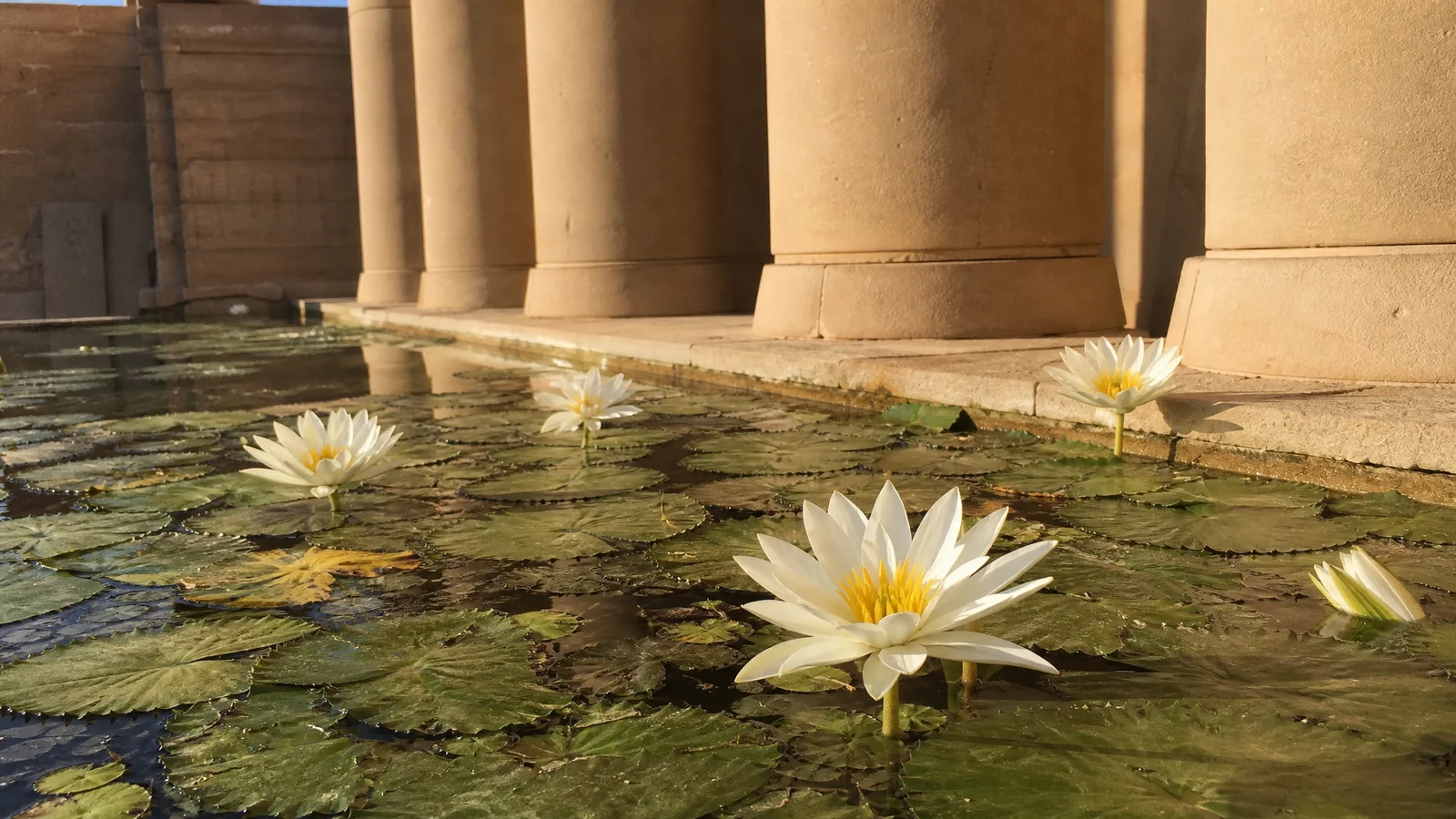
We describe our absolute as aquatic, honeyed and serene, with watery green florals over a warm, faintly spicy sweetness. Fresh waterlily flowers give a clue about why such a description is plausible. A 2024 study of the cultivar Nymphaea 'Eldorado' found benzyl alcohol rising to 23.43% and benzyl acetate to 12.15% of the scent at full flowering, with long-chain hydrocarbons alongside (Zhou et al., 2024). That is a garden cultivar sampled from the air around living flowers, so it is not our extract. Our reasoning is simply that alcohols, esters and green hydrocarbons are the building blocks of a waterlily scent, and that a perfumer's framing around the absolute will add to the effect.
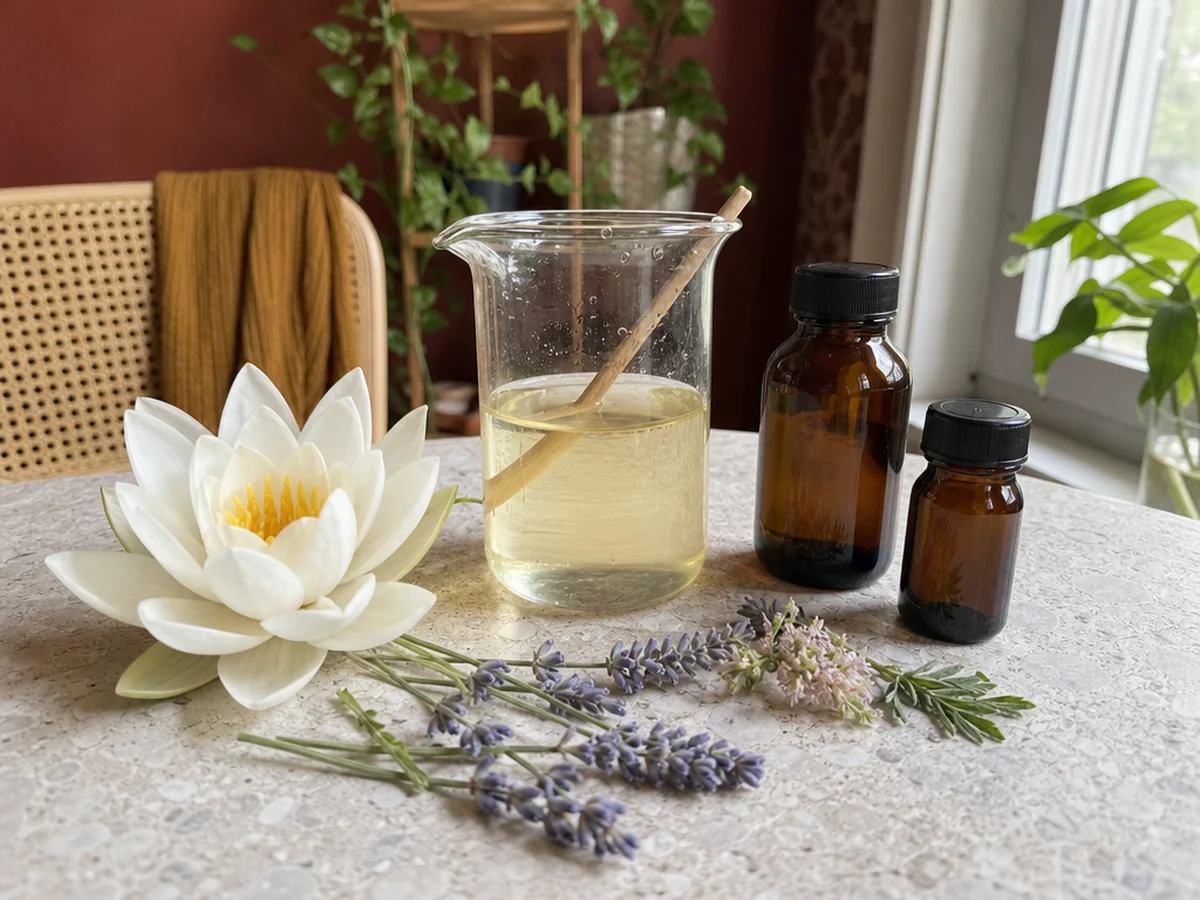
The practical advice follows: smell the absolute on a blotter and in a small trial blend before you design around the word aquatic.
What it does in a formula
As a heart note, it adds a green, slightly leathery floral lift and works as a supporting player beside jasmine or rose. We list sandalwood, frankincense, jasmine, rose, vetiver and soft musks as natural partners. Our jasmine comparison and rose comparison show how it differs from the leading florals.
Because it is viscous, drops are a poor measure. Because the analysed absolute was largely waxes and fatty acids, we would expect a dilution in perfumer's alcohol to need a trial run, since it may cloud or leave a little residue that needs filtering. That is reasoning from composition, so test a small amount first. A solid perfume in wax and carrier sidesteps the issue, and our solid perfume formulation works it through.
Smelling before composing
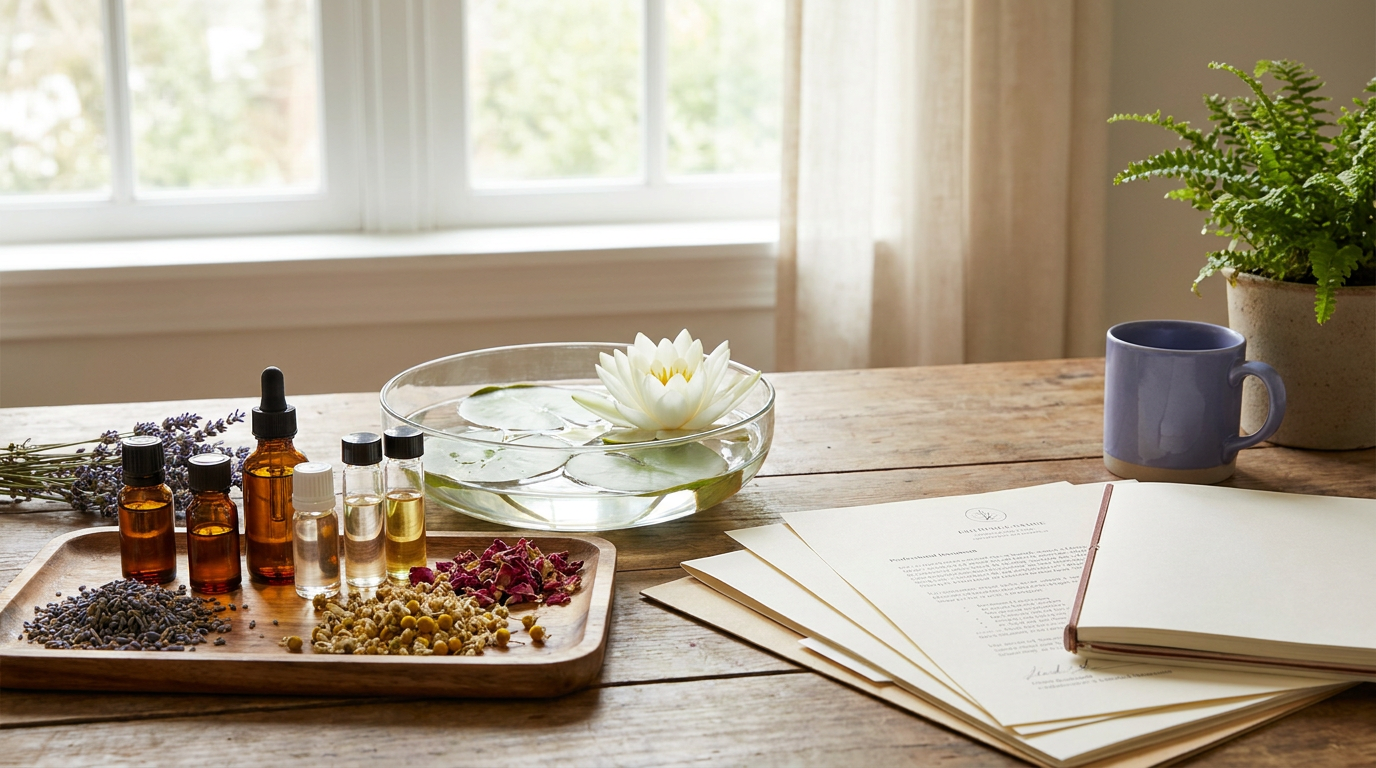
Before you write a formula, spend an afternoon with the material alone. Dip a blotter, wave it gently, and smell it at arm's length, then again after ten minutes and after an hour. Write down what you notice at each stage. A heart note rarely arrives all at once, and your notes will tell you which materials you want beside it.
Then hold it in a fan with blotters of sandalwood, rose and a soft musk from a perfumery supplier, and learn how the pairs sit together before you commit anything to a bottle. Keep your first accord to two or three materials. Lotus will not shout, and a crowded formula can bury it.
The arithmetic for 10 g of perfume
Our skin guidance is 0.5% to 2% in a carrier, and we are applying it here by analogy to a finished perfume, which is our judgment rather than a rule from a standards body. For 10 g of finished perfume: 0.5% is 0.05 g, 1% is 0.1 g and 2% is 0.2 g. For the one batch on our certificate, relative density is 0.985, so a drop of about 0.05 ml weighs roughly 49 mg, making those amounts about one, two and four drops. Weigh instead of counting if you plan to repeat the formula, and write down the percentage.
Give it time
Let any trial blend rest for a few days before you judge it, and judge it on a blotter before you judge it on skin. Write down the weights, the date and the percentage as you go. A perfume you can repeat is worth far more than one you can only describe.
A note on skin and selling
Floral absolutes can sensitise some people. In clinic patch testing from 2010 to 2019, jasmine absolute gave positive reactions in 1.8% of 10,930 patients (Geier et al., 2022). Those were dermatology patients and lotus was not tested, so it is a reminder rather than a rate. Patch test first; our safety basics and dilution post cover the steps.
If you plan to sell what you make, we do not publish an IFRA certificate, safety data sheet or allergen declaration for our absolute, so ask us in writing through the contact page for what you need, and get the answer in writing.
Lotus will not shout. Used lightly, it gives a perfume a cool, green hush in the middle, and that quiet is exactly why perfumers love it.
White Lotus Absolute
White Lotus Absolute from our own shop, in sizes from 0.5 oz to bulk.
From $23.99
Shop Now →Sources & Further Reading
- ISO 9235:2021 - Aromatic natural raw materials - Vocabulary (preview copy)
- Dosoky NS et al., "Chemical Composition, Market Survey, and Safety Assessment of Blue Lotus (Nymphaea caerulea Savigny) Extracts." Molecules, 2023
- Zhou Q et al., "Variation in the Floral Scent Chemistry of Nymphaea 'Eldorado', a Valuable Water Lily, with Different Flowering Stages and Flower Parts." Plants, 2024
- Geier J et al., "Contact sensitization to essential oils: IVDK data of the years 2010-2019." Contact Dermatitis, 2022