Egyptian Lotus Flower: History vs Today's Absolute
The tomb painting is familiar: someone at a banquet lifts a lotus blossom to their nose. It is easy to leap from that picture to a tidy story in which the white flower of the Nile was captured in a precious oil and the bottle on your desk is its descendant. The flower story is wonderful on its own, and it is worth telling it accurately.
White Lotus Absolute
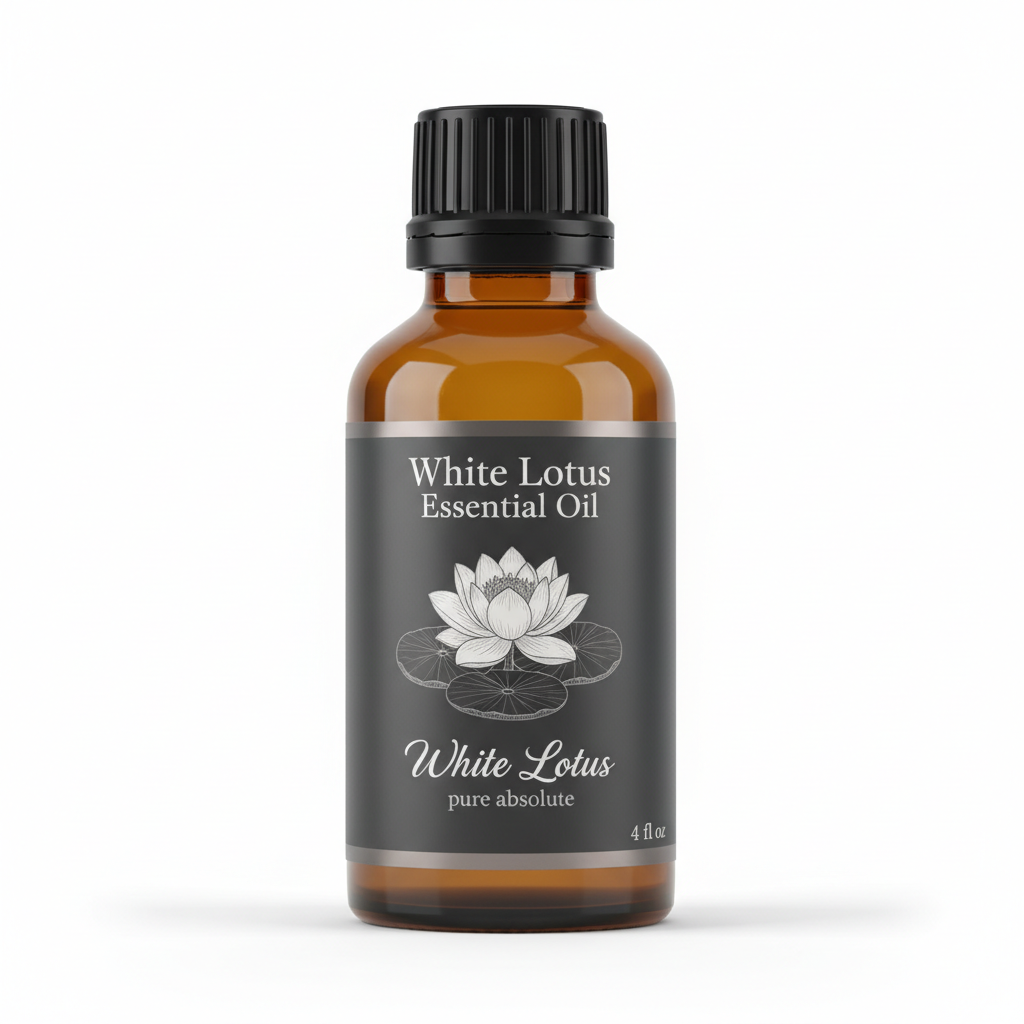
Our own White Lotus Absolute, in sizes from 0.5 oz to bulk.
From $23.99
Shop Now →Which lotus is in the pictures?
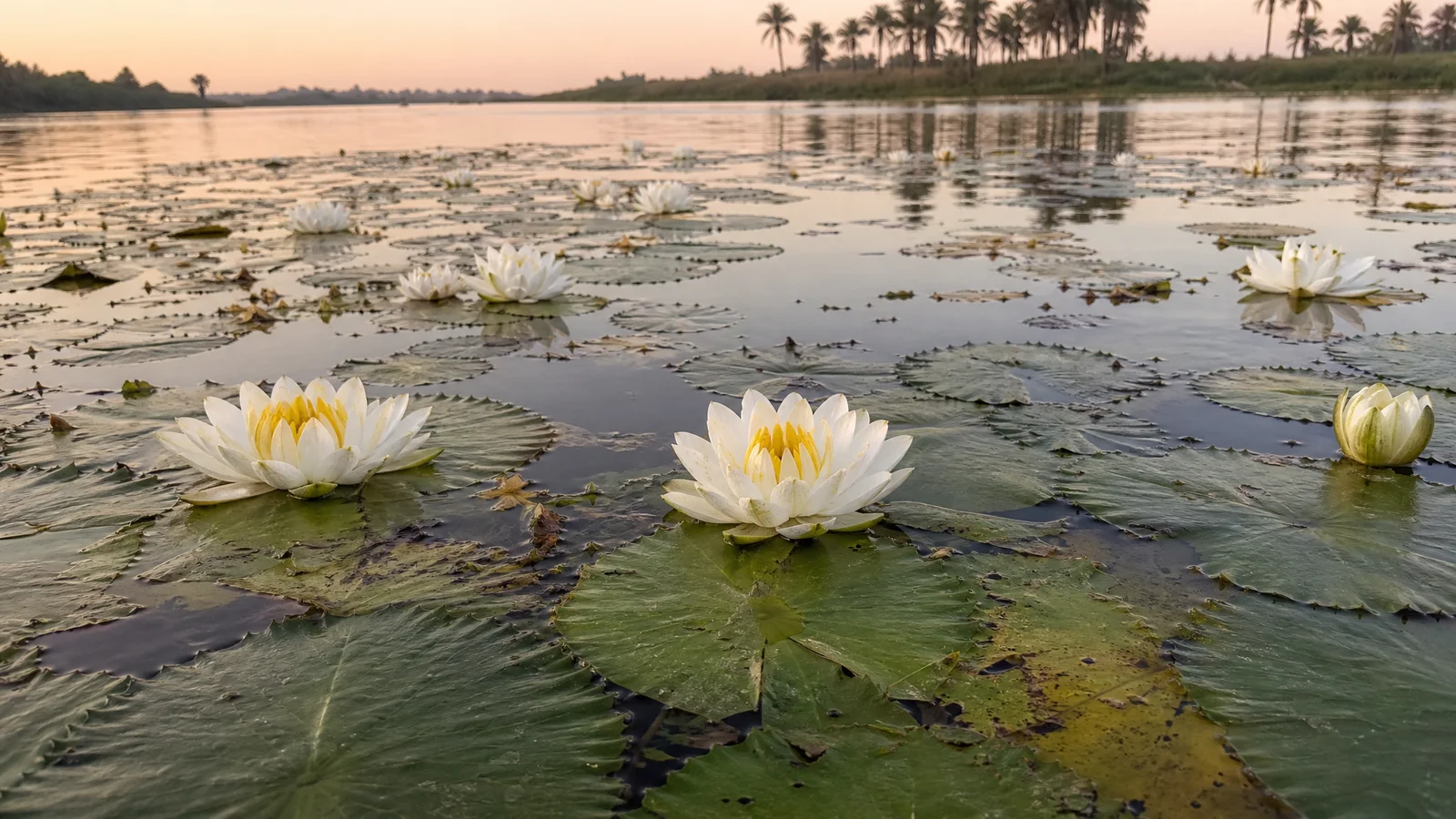
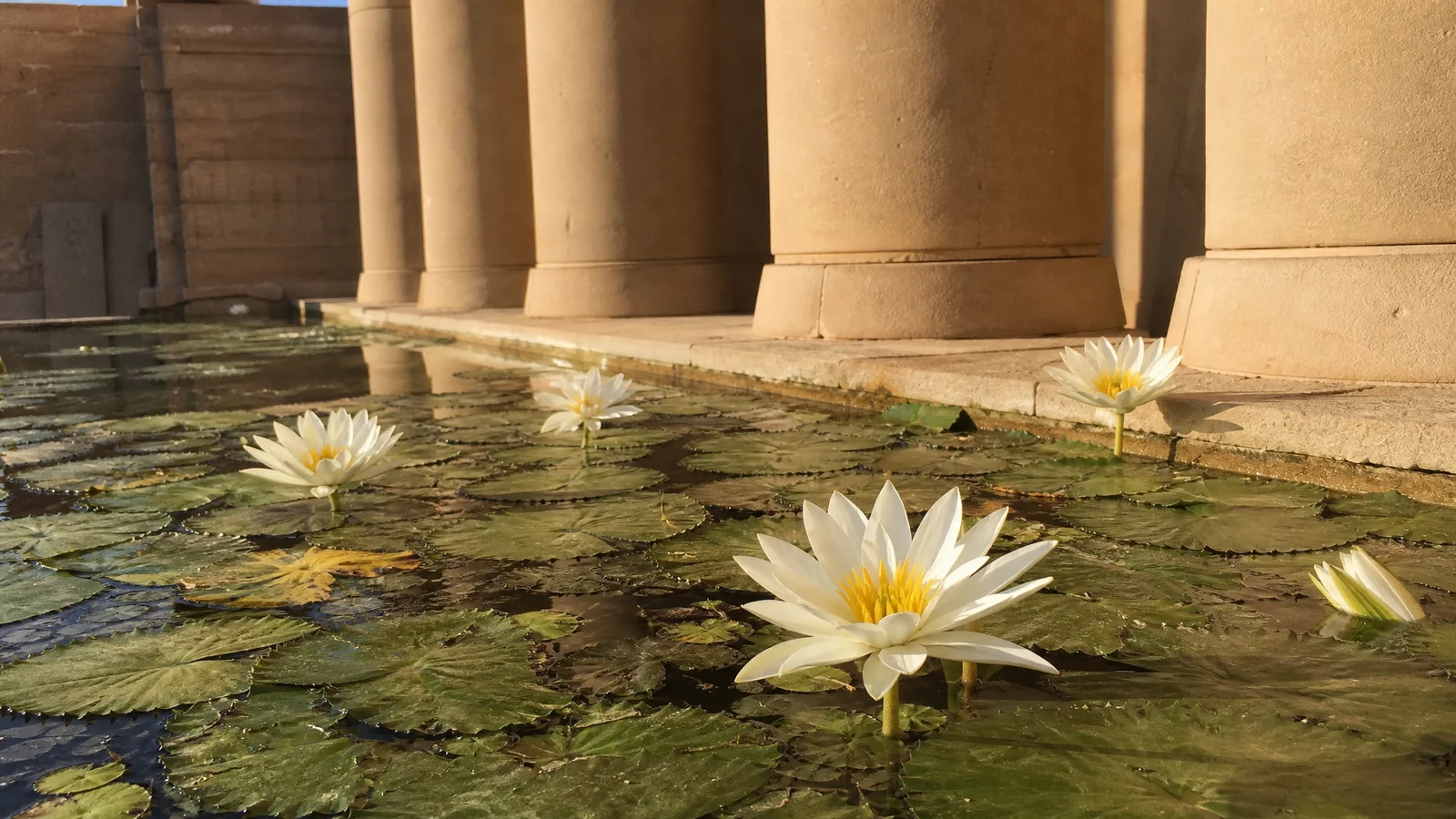
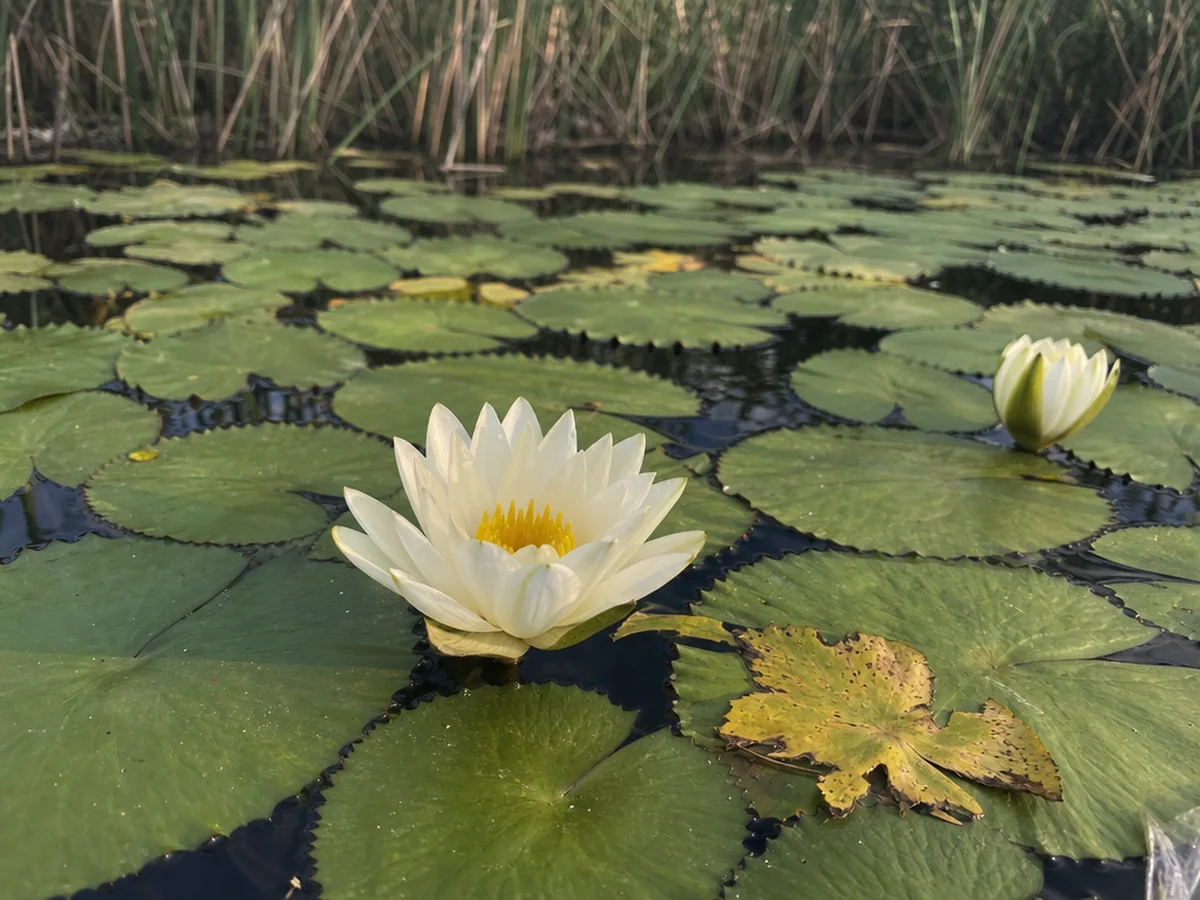
Ancient Egypt knew two waterlilies. One Egyptology source, drawing on standard reference works, describes the white Nymphaea lotus, with bluntly pointed petals and very large flowers, and the blue Nymphaea coerulea, with pointed petals and a slightly smaller flower. It adds that the blue lotus is the variety most commonly shown in art (The Curious Egyptologist, 2021). So when you see a blossom held to a nose in a tomb scene, the odds favour the blue species. That is a likelihood from one secondary source, not a count of paintings.
A third plant joins the muddle. Sacred lotus, Nelumbo nucifera, is the lotus of India and East Asia, and the same source says it reached Egypt around 525 BC. When any page says "lotus", it is fair to ask which plant it means. Our comparison of white, pink and blue lotus goes through the names.
What a banquet scene shows
One well-documented example is a banquet fragment from the tomb-chapel of Nebamun, a scribe at Thebes around 1350 BC. The British Museum's teacher notes describe the tomb owner's friends, colleagues and relatives attended by musicians and "waited on with food, wine and perfume," and mention lotus flowers in the marsh scene and bunches of lotuses held by Nebamun and his wife (British Museum, Notes for teachers: the Nebamun tomb paintings). The Egyptology source adds that guests are shown receiving blossoms, raising them to smell and wearing them on their heads, and that Nefertem is the god of the lotus blossom and, secondarily, of perfumes.
That picture is vivid: whole flowers, worn and smelled, with perfume as part of the setting. The sources we read do not describe a process for turning petals into a concentrated aromatic, and so we would not claim that anyone in the pharaohs' world made a lotus absolute.
If you want to smell the story
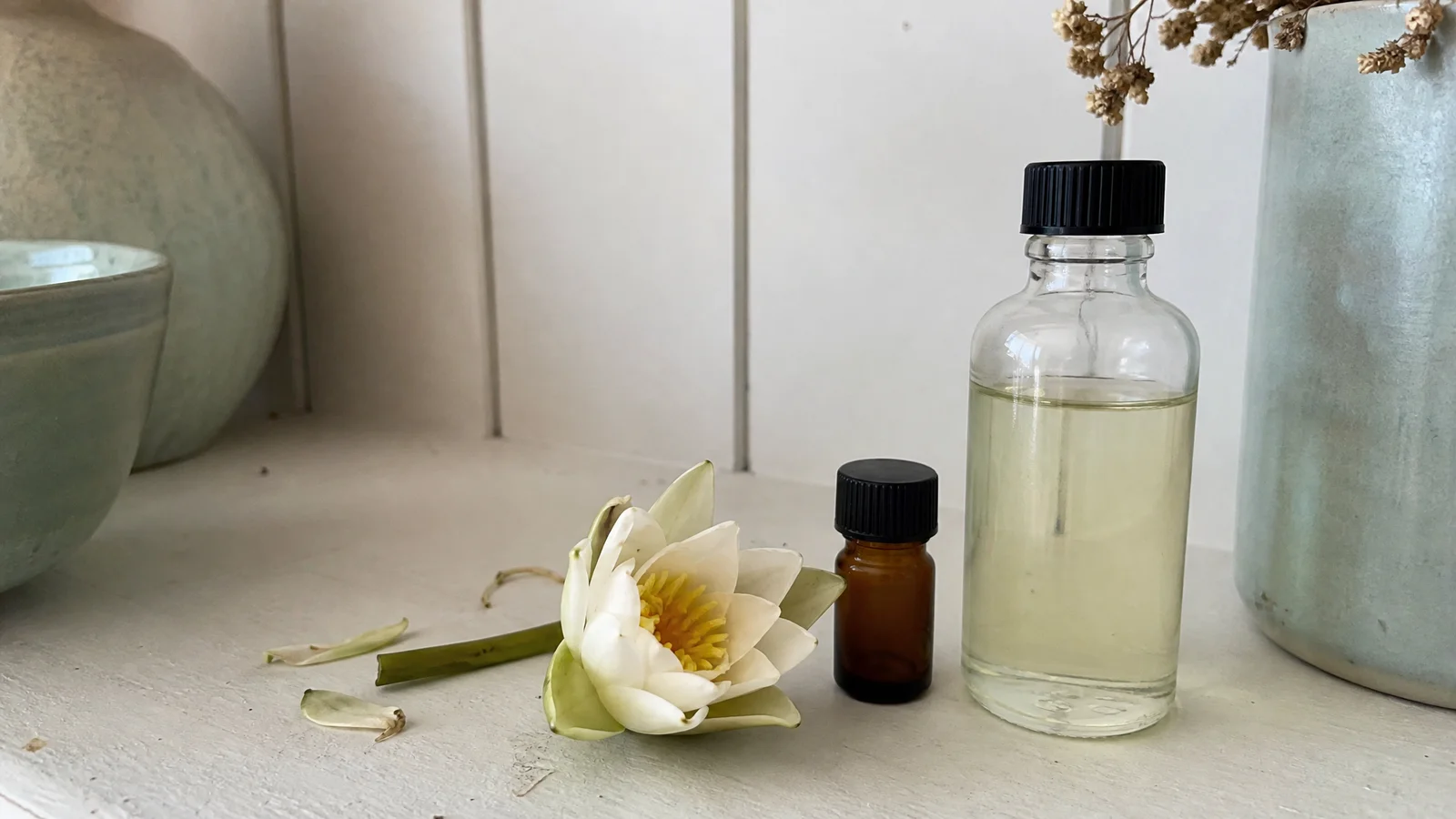
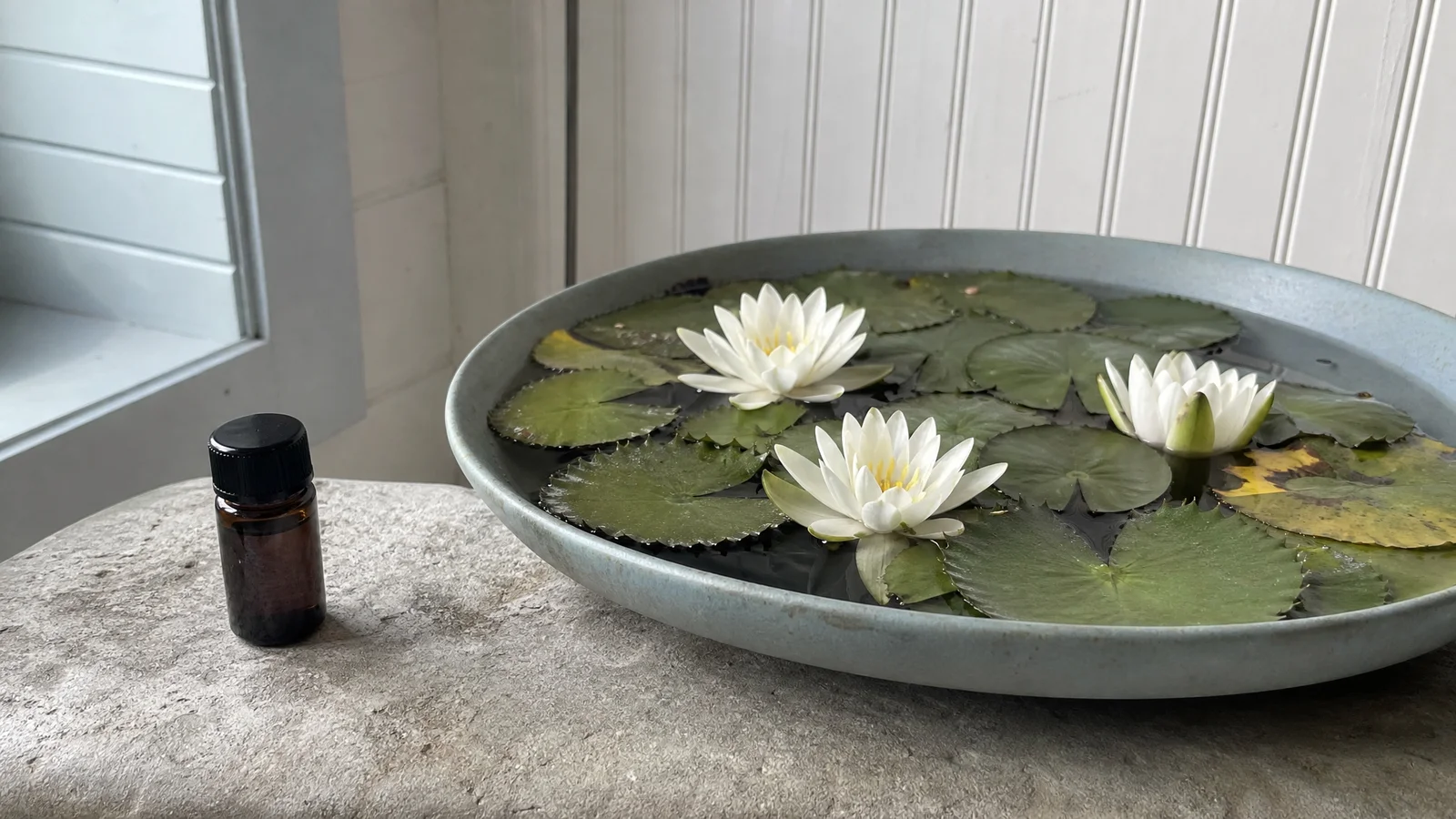
History is more fun when you can bring a little of it into the room. If you have a pond with waterlilies nearby, or a botanical garden, go and smell a blossom in the morning and see what you notice. Scents vary a good deal from one waterlily to another. Then open a bottle of absolute and smell it on a blotter. You are comparing a living flower with a concentrated extract, and the difference between them is the whole point.
Why an absolute is a modern craft
The word has a precise meaning. ISO 9235 defines an absolute as a product obtained by extraction with ethanol from a concrete, and a concrete as an extract of fresh plant material made with solvents that are then removed (ISO 9235:2021). We describe ours as a solvent-extracted absolute. That is a modern industrial route, which is exactly what makes it a different object from a flower in a hand.
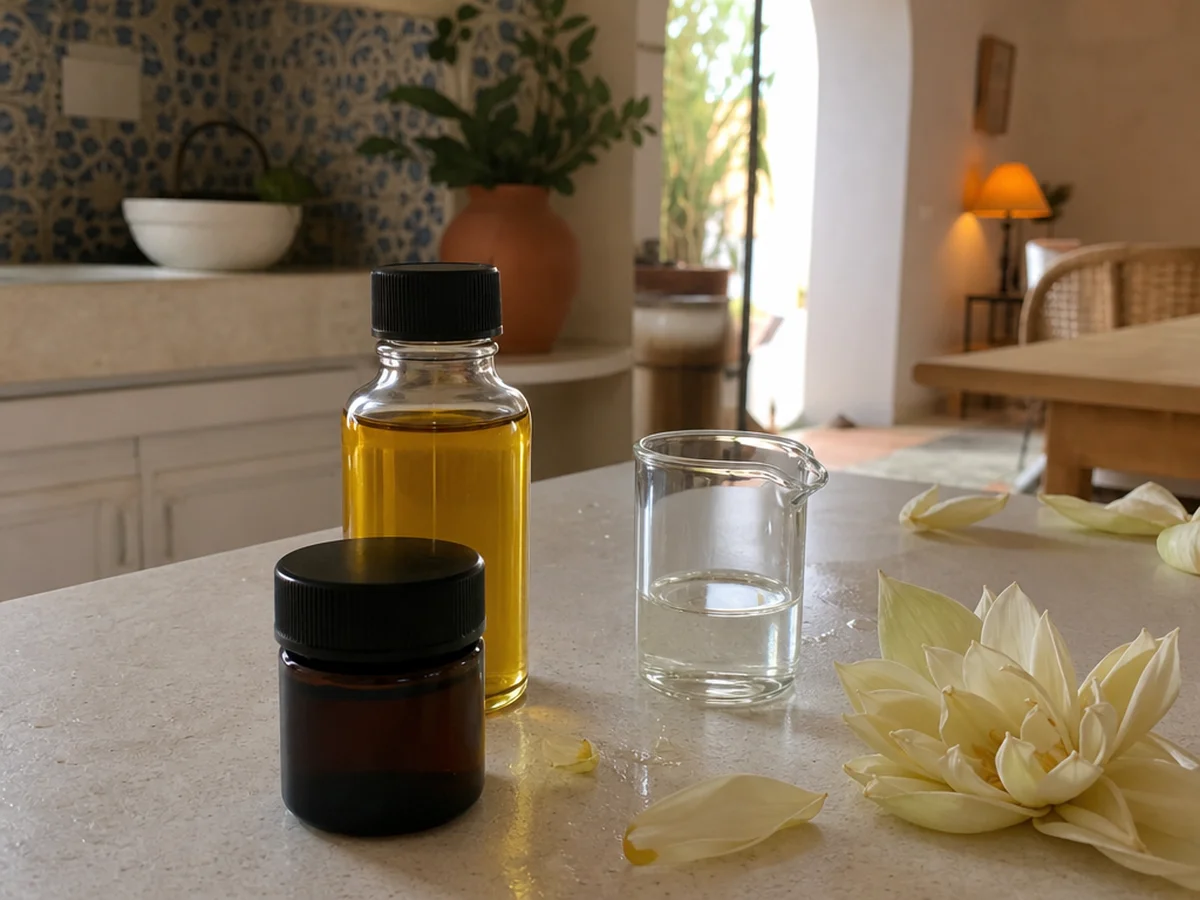
It also smells different from the flower. The only published analysis of a lotus concrete and absolute, made from cultivated blue lotus in China, describes the extract as "floral, fruity, sweet, fig-like, leathery, and slightly herbaceous," and found it was largely waxes, fatty acids, hydrocarbons and alcohols (Dosoky et al., 2023). It also found no apomorphine and only trace nuciferine, 10 to 72 parts per billion, so nothing in that paper supports the stories about psychoactive lotus. We make no health claims for ours, and the history does not change that.
Telling the story straight
If you write about lotus on your own label, blog or gift card, the same care applies. Name the plant, say what the product is and let the banquet scene work as a picture rather than as proof. We think the flower deserves that respect, and it makes the story easier to trust. A short, accurate line about a tomb painting is more charming than a long claim nobody can check.
Using the history well
Treat history as colour and context. A wedding-banquet flower, a god of perfumes and a marsh scene are lovely backdrops for a scent you enjoy. They are not a certificate for what is in a bottle. For that, the question to ask any seller, us included, is which plant, which form and which batch, and what document backs it up. The Certificate of Analysis we publish is for one batch and lists density, refractive index and optical rotation; for anything more, ask us in writing through the contact page.
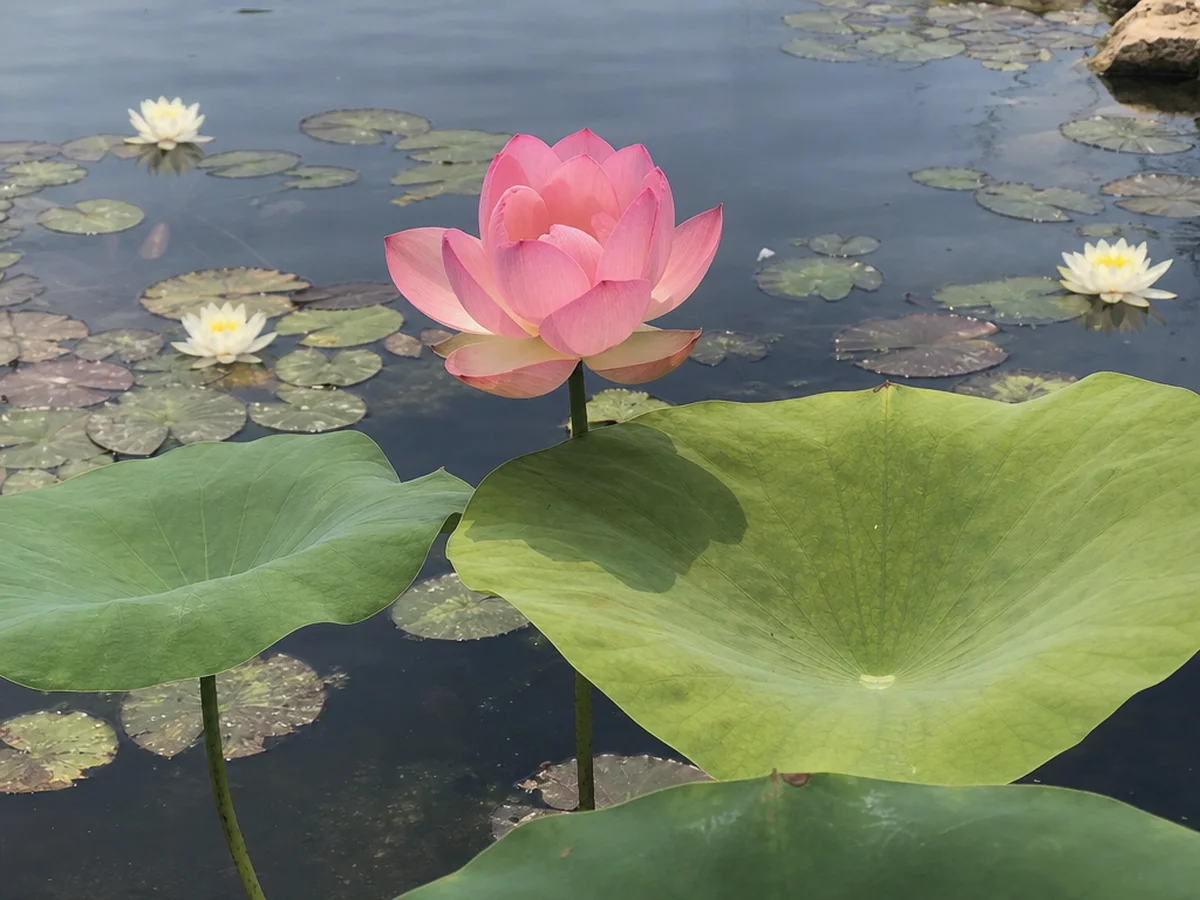
If the aroma is what draws you, our aquatic floral profile describes how we hear it, and white lotus in perfumery shows where it sits in a composition.
The Nile flower earned its fame without any help from marketing. Enjoy the story as a story, and enjoy the absolute for its own aroma.
White Lotus Absolute
White Lotus Absolute from our own shop, in sizes from 0.5 oz to bulk.
From $23.99
Shop Now →Sources & Further Reading
- The Curious Egyptologist, "The Lotus in Ancient Egypt" (2021)
- British Museum, "Notes for teachers: the Nebamun tomb paintings"
- ISO 9235:2021 - Aromatic natural raw materials - Vocabulary (preview copy)
- Dosoky NS et al., "Chemical Composition, Market Survey, and Safety Assessment of Blue Lotus (Nymphaea caerulea Savigny) Extracts." Molecules, 2023