Therapeutic Grade Lotus Absolute: What to Ask Instead
A "therapeutic" grade looks like a rank, the way "extra virgin" does on olive oil. It is not. We could not find a regulator, a government agency or a standards body that defines it, and we do not use it for the white lotus absolute we sell. What buyers can do instead is ask better questions, and that is a more useful skill for choosing any absolute.
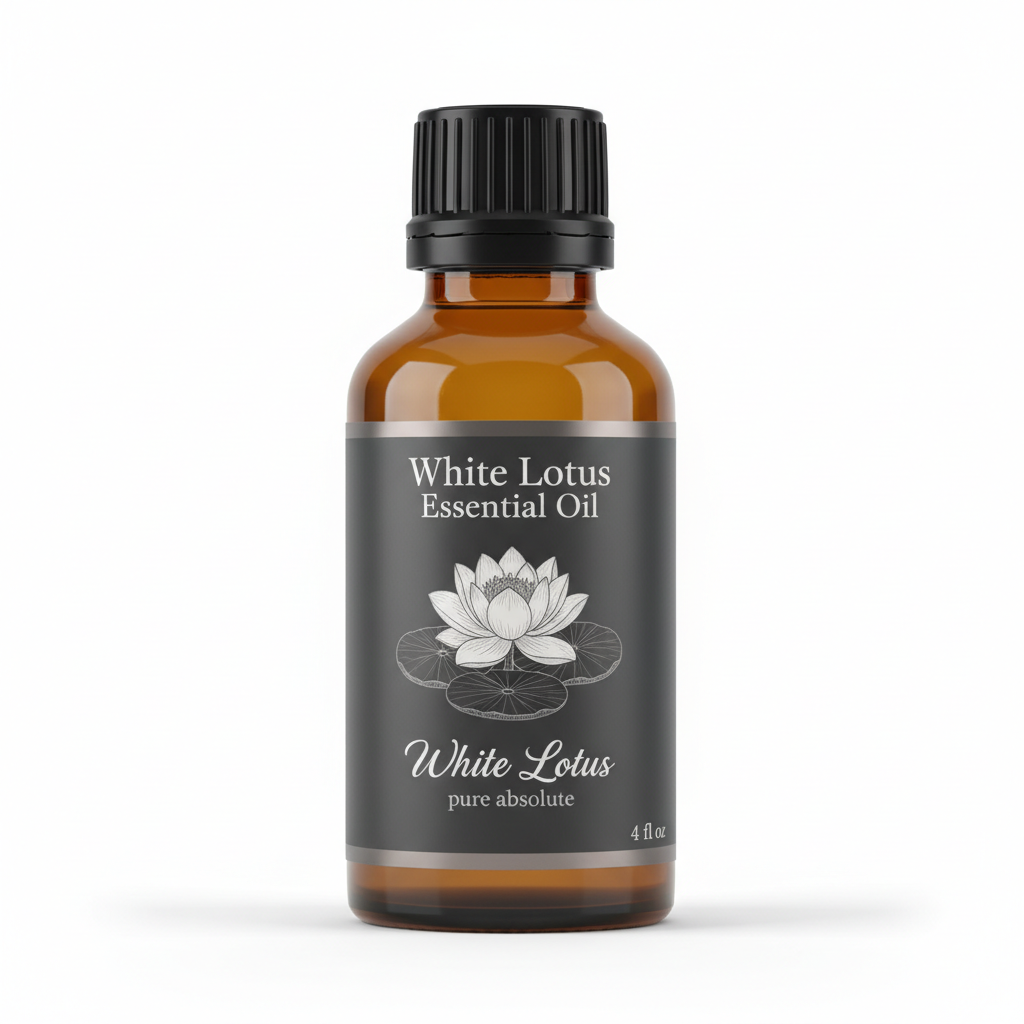
White Lotus Absolute
Our own White Lotus Absolute, in sizes from 0.5 oz to bulk.
From $23.99
Shop Now →What regulators actually look at
The FDA's aromatherapy page never uses the phrase. What it does explain is how a product is classified. A product intended only to cleanse or improve appearance is a cosmetic, and the FDA gives perfume as an example: if a perfume or cologne is intended only to make a person smell good, it is a cosmetic. A product intended for a therapeutic use, such as treating or preventing disease, is a drug, and the agency notes that even massage oils and soaps sold as "aromatherapy" are treated that way when they carry claims like easing pain or relieving colic. Its companion page on cosmetics and drugs adds that intended use is judged from labeling, websites and advertising.
So the classification rests on what a seller says the product does, not on a quality tier. The practical reading, which is ours, is that a listing that pairs a grand-sounding grade with promises about the body or mind is making things harder for itself, whatever is in the bottle. We keep our claims to aroma and cosmetic use for that reason.
The words that do have meaning
Perfumery has its own precise vocabulary. ISO 9235:2021 defines an absolute as an ethanol extract made from a concrete, a pomade, a resinoid or a supercritical-fluid extract, where the solution is chilled and filtered to remove waxes and the ethanol is then distilled off. A concrete is itself an extract of fresh natural raw material made with one or several solvents that are then fully or partly removed. Those terms describe a process. They are useful because they tell you which family of product you are looking at, and a sensible seller will use them accurately. They do not say how well the process was carried out.
The same goes for our grade label. We list our absolute under a grade we call Botanical, the same from the smallest bottle to the largest drum. It is our descriptive category for a plant-derived material, and not a regulatory term, so we would rather you judge the absolute by the answers below than by the label.
Why a document beats an adjective
Labels and contents can differ. In a survey of blue lotus products, researchers bought eleven commercial products online, mainly from large marketplaces, and found that all of them contained synthetic fragrance components; the authors concluded that none resembled authentic extracts in aroma or composition. It is one species, a small sample and a study by authors with an essential-oil business, so it is a reason to read labels carefully and not a ranking of sellers. It is also a good reminder that a confident word on a listing and the bottle itself are two separate things.
Five questions for any absolute seller, us included
| Ask | A useful answer | Worth a second look |
|---|---|---|
| Which species and plant part? | A Latin name and the part used, matching the batch document | "Lotus" alone, with no species |
| How was it extracted? | A named method, consistent across the seller's pages and paperwork | "Natural methods" or answers that vary by page |
| What residual solvent, measured how? | A figure, a method and a lab report for your lot | A reassuring adjective in place of a number |
| What batch document exists? | A document for your lot that shows what was measured | A conclusion line that asserts standards without values |
| What dilution, and is it sold neat? | A stated range and a clear answer on whether it is diluted | Health benefits offered in place of guidance |
On residual solvents, be realistic about what a number means. We looked for a regulatory limit for hexane in cosmetic or fragrance absolutes and did not find one. If a seller says a product "meets the standard", the polite follow-up is asking which standard.
How we answer them
We sell our absolute neat, and our skin guidance is to dilute to 0.5% to 2% in a carrier oil and patch test first, starting at the low end. The Certificate of Analysis we have is for one batch, and it lists the name Nymphaea lotus, the plant part, and three measured physical constants at 20 C: relative density 0.985, refractive index 1.485 and optical rotation +0.86 degrees, each within the range printed beside it. That tells you about the physical character of that batch. It does not tell you the chemical makeup, so for things like species detail, origin, residual solvent, an allergen declaration, an IFRA certificate or a safety data sheet, please ask us in writing through the contact page and get the answer in writing before you rely on it.
If you are comparing sellers, our guides on buying a white lotus absolute and reading a lotus absolute report go further, and diluted and synthetic lotus oils covers substitution. For how an absolute is made, see concrete, wax and ethanol.
If you have been burned by a confident label before, you are in good company, and it is not a failing on your part. Keep the table of questions somewhere handy and use it for every new material. You will gradually find that good sellers answer the same plain questions in the same plain way.
The short version is that an absolute is best judged by its paperwork and by how plainly a seller answers you, not by a grade word. Put these questions to us the same way you would to anyone else.
White Lotus Absolute
White Lotus Absolute from our own shop, in sizes from 0.5 oz to bulk.
From $23.99
Shop Now →Sources & Further Reading
- FDA, Aromatherapy
- FDA, Is It a Cosmetic, a Drug, or Both? (Or Is It Soap?)
- ISO 9235:2021, ISO 9235:2021 - Aromatic Natural Raw Materials Vocabulary Standard (preview)
- Dosoky NS et al., 2023, Chemical Composition, Market Survey, and Safety Assessment of Blue Lotus (Nymphaea caerulea Savigny) Extracts, Molecules