Scenting a Letter With Lotus: Keep the Page Clean
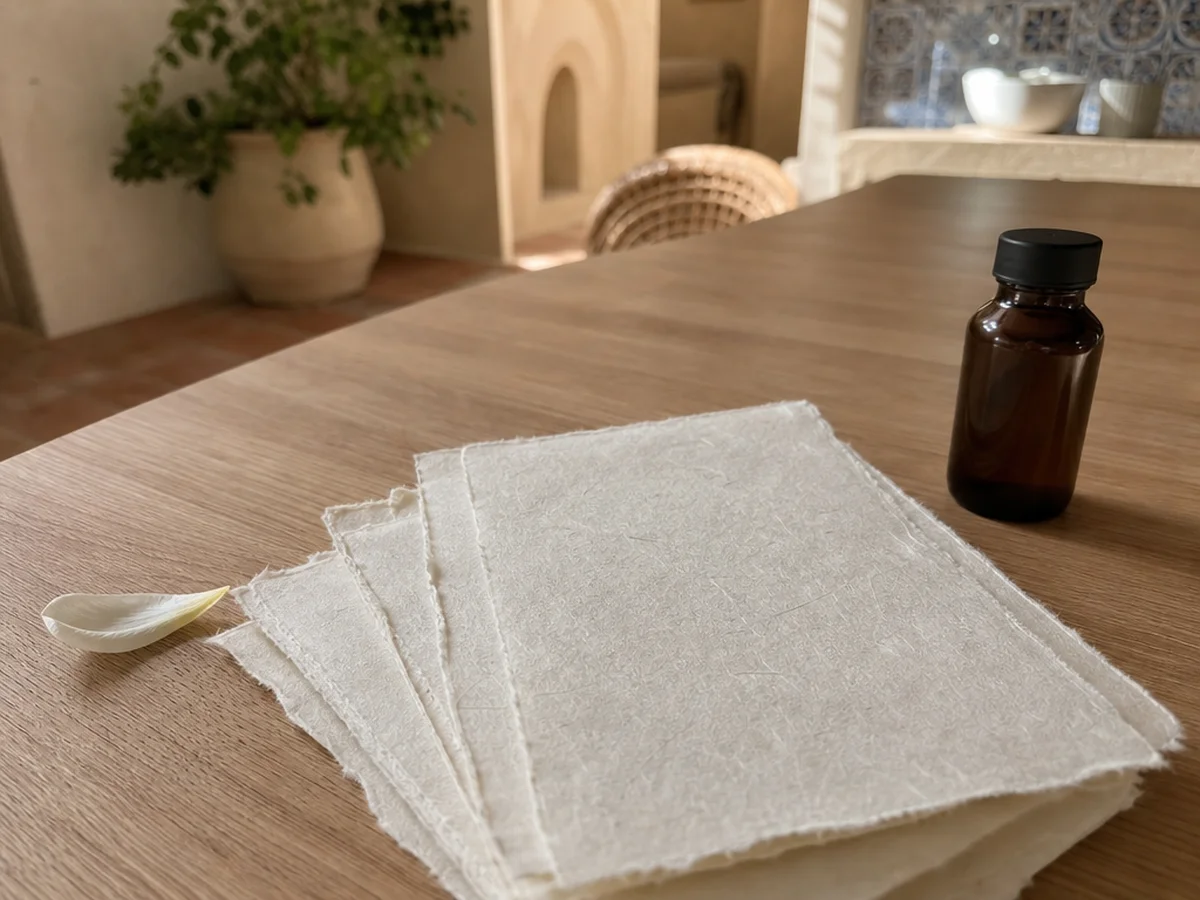
There is a lovely old habit of dabbing perfume on a letter before it goes in the post. With a thick, waxy absolute like white lotus, it is a habit worth adapting. Paper behaves like a wick for oil, so the kindest thing you can do for a letter you care about is to scent the space around the page and leave the page itself alone.
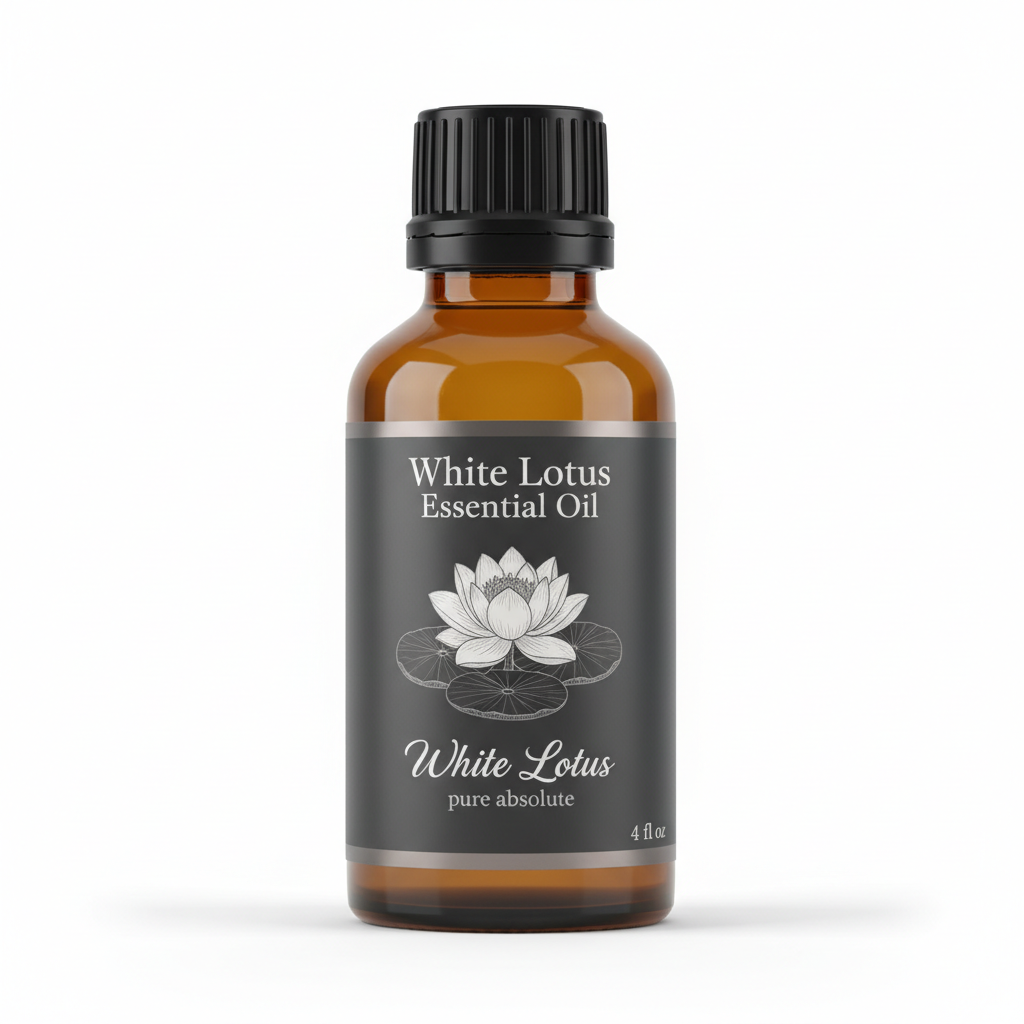
White Lotus Absolute
Our own White Lotus Absolute, in sizes from 0.5 oz to bulk.
From $23.99
Shop Now →What oil does to paper
Conservators think about this far more carefully than most of us. The Canadian Conservation Institute notes that handling paper with bare hands transfers "oils, salts and possibly minute amounts of soiling" from the fingertips, deposits that build up and mar the sheet over time. That is the faintest trace of body oil. A drop of an extract is a far bigger dose, and the cellulose fibres in paper take up oil readily and hold on to it.
It helps to remember what an absolute is. In the one lab analysis we know of on a lotus absolute (blue lotus, a different species from the one on our label), the extract was a mix of waxes, fatty acids, alkanes and sterols along with benzyl alcohol, with a sizeable portion that does not evaporate quickly. From that we reason that a drop on paper will stay where you put it, probably as a translucent patch. That is a prediction, not a measured result, so a scrap of the same paper is the honest test before anything touches a real letter.
Three ways to carry the scent without marking the page
If you want the recipient to smell something the moment the envelope opens, give the scent its own small carrier that travels with the letter.
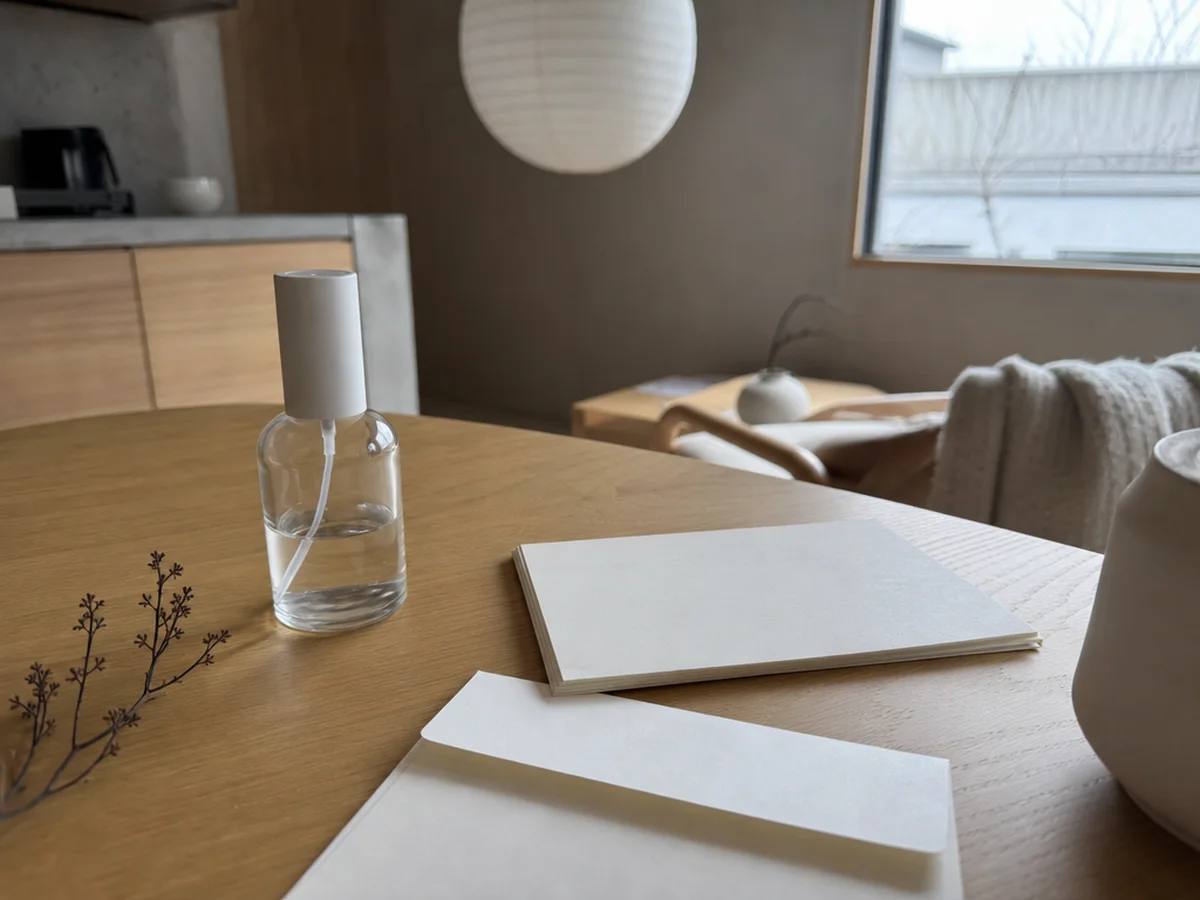
- A scent card. Cut a blank of thick, absorbent card, put a dilute dab on the card only, and let it rest for a day before it goes in the envelope. If anything spreads, the card takes it, not your writing.
- A small sachet. A tiny cotton or paper pouch holding a scented cotton ball keeps liquid off the sheet. Oil can still travel through thin paper over time, so it is worth testing the pouch on a scrap too.
- The outside of the envelope. The flap or the back never touches the writing. The postal journey will mute the scent, so think of it as a hint rather than a statement.
Cotton wool, card stock, a carrier oil and perfumer's alcohol are craft-shop and pharmacy items. We sell the absolute and nothing around it.
Keep it away from the pen
We would leave ink out of this entirely. A fountain pen feed is a narrow channel built around one kind of liquid, and a thick, waxy absolute is the opposite of what it expects. If you want the whole letter to feel scented, a card tucked inside gives you that without risking a favourite pen.
Think about who opens it
A scented letter hands a fragrance to someone who did not choose it. Fragrance sensitivity is real: in a review of patch-test data from German, Austrian and Swiss skin clinics between 2010 and 2019, 8.3% of 10,930 patients tested with twelve essential oils reacted to at least one, and jasmine absolute, the nearest floral absolute in the study, reacted in 1.8%. Those are people already being seen for dermatitis, so they do not describe the general population, and the study says nothing about lotus specifically. The practical takeaway is a courtesy: skip scented mail for anyone who has mentioned a fragrance reaction, for households with young children or pets, and for anything that will be held up to the face. We say the same about the absolute itself: keep it away from eyes, children and pets.
The pleasure of the unwrapping
Part of what makes a scented letter lovely is the moment of opening. A faint note of watery green florals and honeyed warmth arrives just as the card slides out, and then it is gone. Keep that in mind and you will see why a little goes a long way. A hint is a gift, and a cloud is a burden.
A simple test run
- Cut a scrap from the same sheet and envelope stock you plan to use.
- Dilute the absolute in a carrier oil within our 0.5% to 2% skin guidance. We would start at the low end, and a dilution at 1% holds about 0.01 g of absolute per gram.
- Put one small dab on a scrap card, not the sheet, and leave it flat overnight.
- Next day, hold it against a window and look for a translucent patch, a halo or yellowing. Smell it again after a week.
- If a mark shows, move the scent to the card or sachet and keep the oil off the writing paper.
Weigh your dilutions on a kitchen scale that reads to 0.01 g rather than counting drops, because an absolute is viscous and drops vary. For the single batch on our Certificate of Analysis the relative density is 0.985, so a gram is close to a millilitre. Storage keeps the bottle at its best in the meantime, and our storage guide covers it.
If you want to make a small set of cards ahead of time, store them in a closed tin or a lidded box so the scent does not drift onto other papers on your desk. Label the tin with the date you scented them, and use them within a few weeks.
If you would rather wear the scent than mail it, our posts on diluting the absolute, patch tests and sensible use and a solid perfume formulation are the next stops. A lotus letter is best done lightly: a card, a hint, and a page that stays clean.
White Lotus Absolute
White Lotus Absolute from our own shop, in sizes from 0.5 oz to bulk.
From $23.99
Shop Now →Sources & Further Reading
- Canadian Conservation Institute, Caring for paper objects - Preventive conservation guidelines for collections
- Dosoky NS et al., 2023, Chemical Composition, Market Survey, and Safety Assessment of Blue Lotus (Nymphaea caerulea Savigny) Extracts, Molecules
- Geier J et al., 2022, Contact sensitization to essential oils: IVDK data of the years 2010-2019, Contact Dermatitis