A Lotus, Sandalwood and Bergamot Blend, in Grams
Lotus for the heart, sandalwood for the base and something bright on top: on paper, it is a lovely idea for a skin-scent blend. The part worth working out carefully is not the lotus at all. It is the sandalwood you choose and the bergamot, because those two decide how comfortable the blend is to wear. So here is the formula in grams, with the checks that matter.
White Lotus Absolute
Our own White Lotus Absolute, in sizes from 0.5 oz to bulk.
From $23.99
Shop Now →The short version
Make it with bergapten-free (FCF) bergamot, pick your sandalwood species on purpose, keep the total aromatic load at the low end of our 0.5% to 2% skin guidance, and patch test. If you would rather skip that homework, scent a candle or a room instead of your skin.
What each ingredient brings
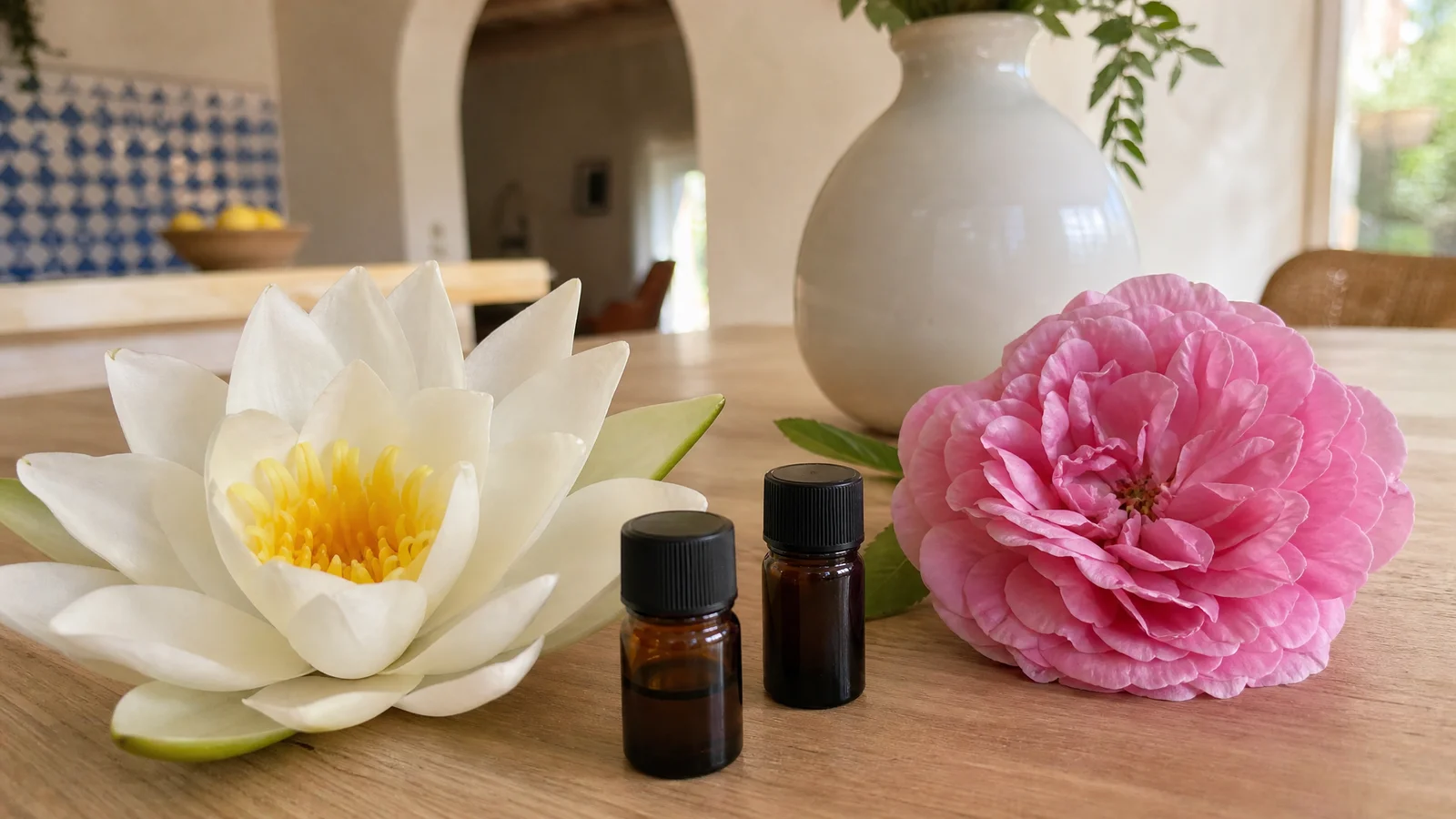
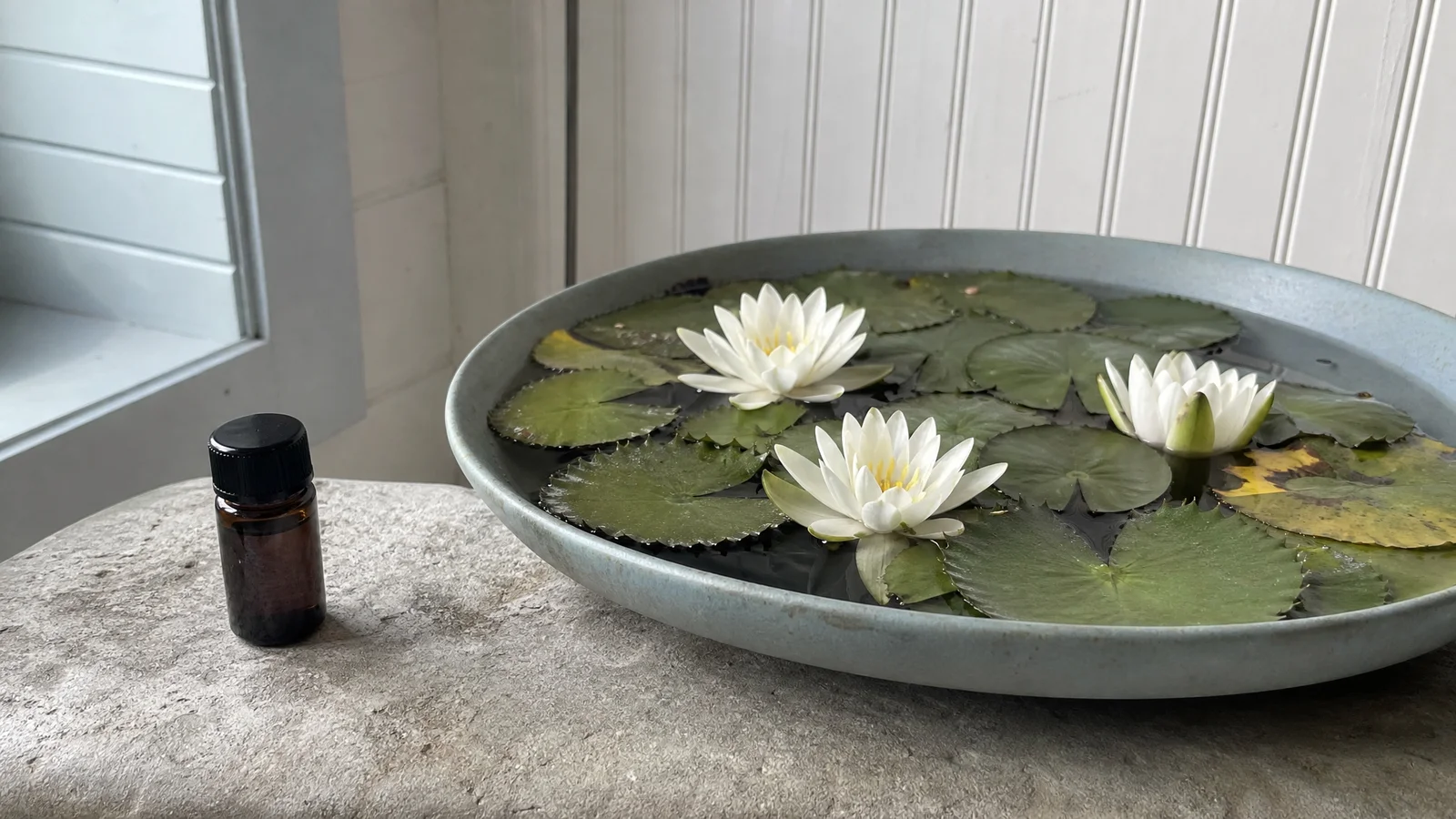
Lotus absolute, the heart. We describe it as a middle note with an aquatic, honeyed, faintly spicy character, and sandalwood is one of the materials we list as a good partner for it. We do not have a constituent breakdown for our absolute, which is one more reason it is the smallest part of this blend by weight.
Sandalwood, the base. Two things are worth knowing. First, sandalwood oil is a documented contact allergen at the clinic level. In patch tests across German, Austrian and Swiss skin clinics from 2010 to 2019, 1.8% of the patients tested with sandalwood oil reacted, the same as jasmine absolute, and below ylang ylang at 3.9% and lemongrass at 2.6%. These were people already being seen for dermatitis, so it is not a general-population rate, but it is a good reason to patch test.
Second, the species changes the oil. A 2024 review lists alpha-santalol, the compound most associated with true sandalwood character, at 41 to 55% in Indian sandalwood (Santalum album) and 15 to 25% in Australian sandalwood (Santalum spicatum), and says S. spicatum oil falls short of the standard partly because of a high level of an E-farnesol isomer, which it calls a suspected allergen. That does not make Australian sandalwood a poor choice for every project, but it does mean the two are different materials. Ask your supplier which one you are buying.
Bergamot, the top. Ordinary bergamot oil contains furanocoumarins, notably bergapten, and is phototoxic on skin that goes into the sun. The Tisserand Institute reports that bergamot oil normally contains 0.11% to 0.33% bergapten, that the IFRA guideline caps bergamot oil at 0.4% in a leave-on product for sun-exposed skin, and that bergapten itself is capped at 15 ppm, which for a bergamot with 0.33% bergapten works out to about 0.45% oil. It adds that bergapten-free bergamot is considered non-phototoxic. That is why we choose FCF here. We took these figures from the Tisserand page, so check the current IFRA standard if you plan to sell a blend.
The grams
Take 30 g of jojoba or fractionated coconut oil, both carriers you will find at a craft or supply shop. Set the total aromatics at 1%, in the middle of our range, which is 0.30 g in all.
| Ingredient | Share of aromatics | Weight | Share of finished blend |
|---|---|---|---|
| Lotus absolute | 20% | 0.06 g | 0.2% |
| Sandalwood | 50% | 0.15 g | 0.5% |
| Bergamot FCF | 30% | 0.09 g | 0.3% |
| Carrier oil | n/a | 29.70 g | 99% |
As arithmetic, 0.06 g is roughly one drop of the absolute if a drop is about 0.05 ml and the density is the 0.985 measured on our Certificate of Analysis batch. A thick absolute drops unevenly, so weigh it on a scale reading to 0.01 g or better.
It is worth checking the bergamot against the numbers above. If you used ordinary bergamot at the top of the range, 0.3% oil carrying 0.33% bergapten comes to roughly 10 ppm, just under the 15 ppm figure. It would pass, but only narrowly, and bergapten content varies from lot to lot. FCF takes that question off the table.
It helps to picture the blend as a little chord. Bergamot is the bright first note that greets you, lotus is the watery, honeyed middle, and sandalwood holds the bottom steady. When you smell the blend on a strip, try to find each note in turn and see how the three overlap. If one seems to shout, you know which share to adjust next time.
Changing the blend
- No sandalwood. Swap it for a soft musk, another partner we list for the absolute, and keep the lotus share where it is.
- More scent. Raise the total load, not the lotus share. 2% is the top of our range, and we would start well below it and let a patch test guide you, because it is a ceiling, not a recommendation.
- Room or candle instead of skin. Skin limits no longer apply, but a thick absolute does not diffuse like a distilled oil, so read our diffuser post first.
Mixing and wearing
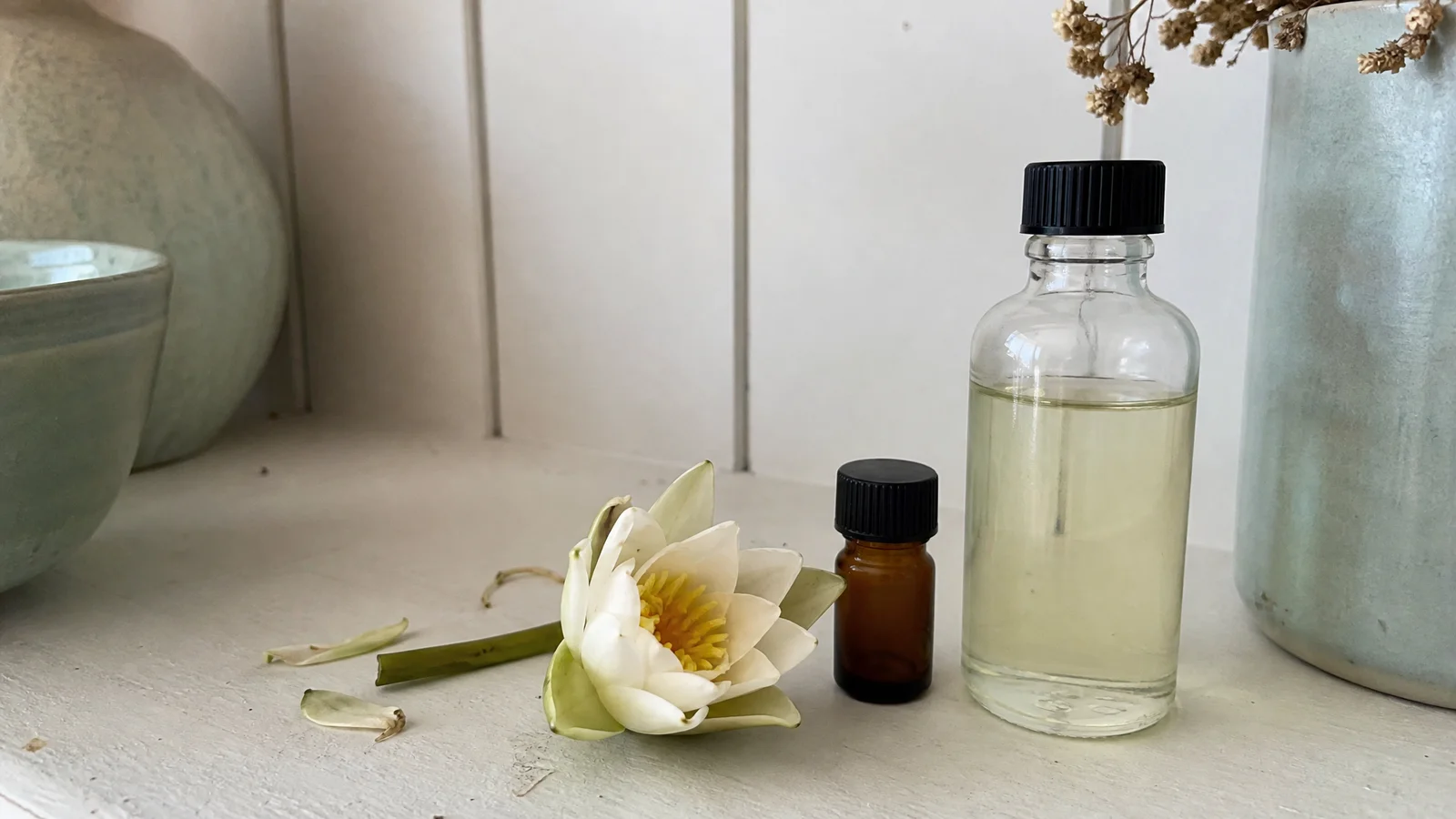
Weigh the carrier into a clean glass bottle, add the sandalwood and bergamot, and put the lotus in last so the thick absolute is rinsed into the oil rather than left on the sides of a beaker. Tilt gently for a minute and let the blend rest a few days before you judge it. Smell it on a blotter first, then on skin only after a patch test. If you change an ingredient, change one at a time and write the weights down so you know what moved.
Keep the blend away from eyes, children and pets, and check with a physician first if you are pregnant, nursing or have a skin condition. Our pregnancy and breastfeeding post and dilution guide go into more detail. Ask your sandalwood and bergamot sellers for species and a gas chromatography report, and whether the bergamot is FCF; with those answers in hand, the blend is a plan and not a guess.
White Lotus Absolute
White Lotus Absolute from our own shop, in sizes from 0.5 oz to bulk.
From $23.99
Shop Now →Sources & Further Reading
- Geier J et al., 2022, Contact sensitization to essential oils: IVDK data of the years 2010-2019, Contact Dermatitis
- Yan X et al., 2024, Biological Properties of Sandalwood Oil and Microbial Synthesis of Its Major Sesquiterpenoids, Biomolecules
- Tisserand Institute, Phototoxicity: essential oils, sun and safety