8 Ways Perfumers and Crafters Actually Use White Lotus Absolute
White lotus absolute has a reputation for being precious, and it is. A single milliliter can represent hundreds of hand-picked blossoms, tinctured and extracted with a patience that most modern raw materials skip entirely. That reputation sometimes scares people away from actually using the bottle they bought. It sits on a shelf, opened once for a sniff, then saved for some undefined "special occasion" that never quite arrives.
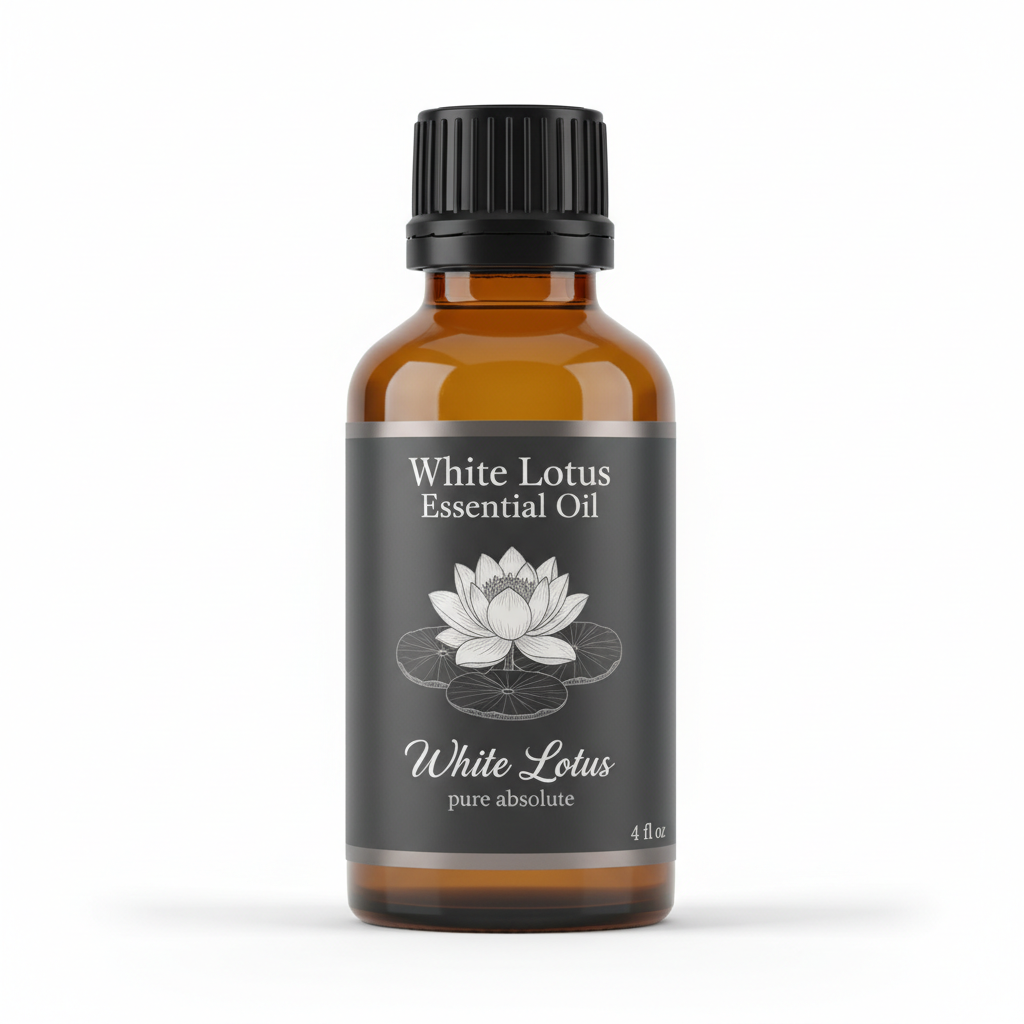
White Lotus Absolute
Our own White Lotus Absolute, in sizes from 0.5 oz to bulk.
From $20.99
Shop Now →Talk to people who work with this absolute regularly, independent perfumers, soap makers, candle crafters, stationers, and the picture changes. They treat it less like a museum piece and more like a working ingredient, one that rewards a light hand and a bit of technique. Below are eight ways crafters actually put white lotus absolute to use, with the practical details that make each project worth attempting. For background on what makes this absolute different from a diluted essential oil in the first place, our guide on why true white lotus is never a simple essential oil is a useful starting point.
1. Anchoring a Floral Perfume Accord
Perfumers reach for white lotus absolute when a composition needs a floral note that reads as watery rather than sweet. Unlike jasmine or rose, which tend to project a rounder, warmer floral character, white lotus carries a green, aquatic quality that sits closer to a lily pad than a bouquet. In a heart accord, even a small percentage can shift the whole composition toward something that smells like still water at dawn rather than a florist's counter.
Because the absolute is so concentrated and so expensive per drop, most independent perfumers work with it at 1 to 3 percent of the total formula, sometimes less. It gets built into a perfumer's alcohol dilution first, typically a 10 percent solution in perfumer's alcohol, before being blended into the larger accord. That dilution step matters: adding the raw absolute directly to a finished blend makes it nearly impossible to control the dose, and a single miscalculated drop can overwhelm notes that took weeks to balance. Our piece on making a precious drop go further through proper dilution walks through the ratios in more detail, and the broader framework for building an accord around this note is covered in building an aquatic floral heart.
Practical takeaway: Start with a 10 percent alcohol dilution and add it to your accord in single-drop increments, waiting a few minutes between additions before smelling again. The note develops on the strip, and rushing the process is the most common way to overdose a blend.
2. Cold-Process and Melt-and-Pour Soap Scenting
Soap makers who work with white lotus absolute generally fall into two camps: those doing cold-process batches, where the absolute meets raw lye and oils before saponification even begins, and those working with melt-and-pour bases, where it's stirred into an already-formed soap at a lower temperature. Cold-process is the harder environment. The alkaline saponification stage can alter delicate floral notes, and white lotus is delicate by nature, so many soap crafters reserve it for melt-and-pour or for a light top-note addition near trace, when the batch has cooled enough that heat and pH swings won't strip the aromatics.
Fragrance load is the other consideration. Because white lotus absolute is not a synthetic fragrance oil built for soap stability, it behaves more like other natural absolutes: it can fade over the curing weeks, and it doesn't always hold up to the full recommended usage rates people associate with stronger essential oils. Crafters who want the scent to survive a four to six week cure tend to layer it with a fixative, something like a small amount of benzoin resinoid or a base note absolute, so the lotus has something to cling to as the bar dries.
Practical takeaway: Add white lotus absolute at light trace or into a melt-and-pour base below 130°F, and pair it with a fixative note if you want the scent to still be noticeable after curing. Always run a small test batch before committing a full mold.
3. Candle Making: Cold-Throw and Hot-Throw Considerations
Candle crafters talk about scent in two stages: cold throw, how strong the wax smells before it's ever lit, and hot throw, how it fills a room once burning. White lotus absolute tends to perform better on cold throw than hot throw, which is worth knowing before you build a whole product line around it. The aquatic green facets that make it so interesting in a bottle can thin out considerably once the wax reaches full melt pool temperature.
For candle crafters for candles and soap projects generally, the fix isn't more absolute, since overloading a wax blend with a delicate absolute usually just wastes material without meaningfully improving throw. Instead, experienced crafters pair a modest percentage of white lotus absolute with a complementary base note, sandalwood is a popular partner given the brand's own white lotus and sandalwood pairing, so the candle has presence in the room even after the top note fades. Soy and coconut wax blends tend to hold natural absolutes a bit better than pure paraffin, which burns hotter and can volatilize the lighter aromatic compounds faster.
Practical takeaway: Test your wax blend at full burn, not just in the pour, before finalizing a recipe. If hot throw is weak, add a fixative base note rather than doubling the lotus absolute.
4. Layering in Botanical Room Sprays and Linen Mists
Room and linen sprays are one of the more forgiving ways to work with white lotus absolute, since there's no heat, no lye, and no wax to compete with. A basic formula is simple: an emulsifier or high-proof alcohol to help the absolute disperse in water, distilled water as the carrier, and the absolute itself at a low percentage, often under half a percent of the total volume, since a mist is meant to be a light suggestion of scent rather than a strong statement.
Crafters who make these sprays for gifting or small-batch sale often blend white lotus with something citrus-forward at the top, like bergamot, to open the spray with brightness before the aquatic floral settles in underneath. The result reads less like a single-note perfume and more like a small atmospheric shift, the kind of thing people notice about a freshly made bed without quite placing why.
Practical takeaway: Use a solubilizer (not just alcohol alone) to keep the absolute from separating out of a water-based spray, and shake before each use since natural absolutes can settle over time.
5. Blending into Bath Oils and Body Oils
Because white lotus absolute is prized in skin-focused formulations, many crafters blend it into a carrier oil base for bath or body oils rather than diluting it in alcohol. A neutral, low-scent carrier like fractionated coconut oil or sweet almond oil lets the lotus note come through clearly instead of competing with a heavier base oil's own aroma. Typical dilution for a leave-on body oil sits well under 1 percent of the total blend, since this is a case where more absolute doesn't read as more luxurious, it just reads as overpowering.
Anyone making these for personal use or for sale should patch test before applying a new blend broadly, and should be especially mindful of dilution math when working with something this concentrated. Our detailed breakdown on patch tests and sensible use covers the testing process step by step, and it's worth reading in full before scaling up a batch for other people rather than just yourself.
Practical takeaway: Keep leave-on skin blends under 1 percent absolute in a gentle carrier oil, patch test on the inner forearm 24 to 48 hours before wider use, and always list the full ingredient percentage if you're gifting or selling the blend.
6. Potpourri and Sachets for Drawers and Closets
Dried botanical potpourri is one of the oldest crafts in the book, and white lotus absolute gives it a modern lift. Rather than relying only on the faint scent of dried petals, crafters add a few drops of absolute directly onto a neutral base, dried orris root is a traditional fixative, then let the mixture cure in a sealed container for a week or two so the scent distributes evenly through the whole batch.
Sachets work on the same principle at a smaller scale. A few drops on a cotton pad or a small scrap of muslin, tucked into a drawer or a closet corner, can carry a light scent for weeks longer than most synthetic sachet fillers, since the absolute doesn't flash off as quickly as a lighter fragrance oil. This is a low-cost way to use small amounts left in a nearly empty bottle, which matters given how costly this absolute is per bottle to begin with.
Practical takeaway: Let potpourri and sachets cure in a sealed container for one to two weeks after adding the absolute so the scent has time to bind to the dried material evenly, rather than sitting only on the top layer.
7. Reed Diffusers and Aromatic Home Blends
Passive diffusion, reed diffusers, clay diffuser discs, and similar low-tech tools, suits white lotus absolute better than most electric diffusers do. Ultrasonic diffusers rely on water and vibration to disperse a scent, and thick, resinous absolutes like this one don't always disperse evenly through that mechanism. A reed diffuser, by contrast, works through simple capillary action: a carrier base, usually a light oil or a diffuser base blend, wicks up through the reeds and releases scent gradually into the room.
Crafters building their own reed diffuser blends typically keep the absolute concentration modest, in the range of 5 to 10 percent of the total diffuser liquid, and pair it with a lighter top note so the blend doesn't feel one-dimensional as it evaporates over the following weeks. For anyone deciding between diffuser formats, our comparison on why absolutes need a different diffuser approach than standard essential oils explains the mechanics in more depth.
Practical takeaway: Choose a reed or passive diffuser format over an ultrasonic one for absolutes, and flip the reeds every few days to refresh the scent throw as the top notes fade.
8. Scenting Paper, Stationery, and Keepsakes
One of the more unusual but genuinely popular uses among small-batch crafters is scenting paper goods: letterpress cards, wax seals, journal pages, and gift wrap. A tiny amount of white lotus absolute, diluted first, then applied with a cotton swab to the underside or edge of a sheet of paper, can carry a faint scent for months, since paper holds aromatic compounds differently than fabric or skin does.
This works especially well for correspondence meant to feel considered, wedding invitations, condolence cards, or a note tucked into a gift box. The scent isn't meant to be loud; it's meant to be discovered when the recipient opens the envelope. Crafters doing this at any scale should read through our dedicated guide on scenting paper, ink, and letters with white lotus, since paper behaves differently than wax or oil and the application technique matters more than the dose.
Practical takeaway: Dilute before applying to paper, use a light touch (a single swab pass, not a saturated dab), and let the paper air out for a full day before sealing it in an envelope so the scent settles rather than transferring wet.
Working with a Precious Material
What ties all eight of these projects together is restraint. White lotus absolute rewards crafters who treat it as a concentrated accent rather than a bulk ingredient, and nearly every failed batch we've heard about traces back to the same mistake: using too much, too fast, without a proper dilution step first. Start small, keep notes on your ratios, and let each project teach you how this particular absolute behaves in that specific medium, since wax, soap, water, and paper all carry scent differently.
If you're new to the material entirely, our general overview of white lotus uses across perfume, ritual, and craft is a good next stop, and understanding what white lotus actually smells like before you start blending will save you a fair amount of trial and error.