
White Lotus Safety Basics: Patch Tests and Sensible Use
White lotus oil has a devoted following among fragrance enthusiasts and botanical skincare lovers, and for good reason. Its scent is genuinely extraordinary: soft, aquatic, slightly waxy, with a warmth that lingers long after application. But every conversation about this rare absolute should include an honest look at white lotus oil safety. The questions below are ones we hear regularly from new and experienced users alike.
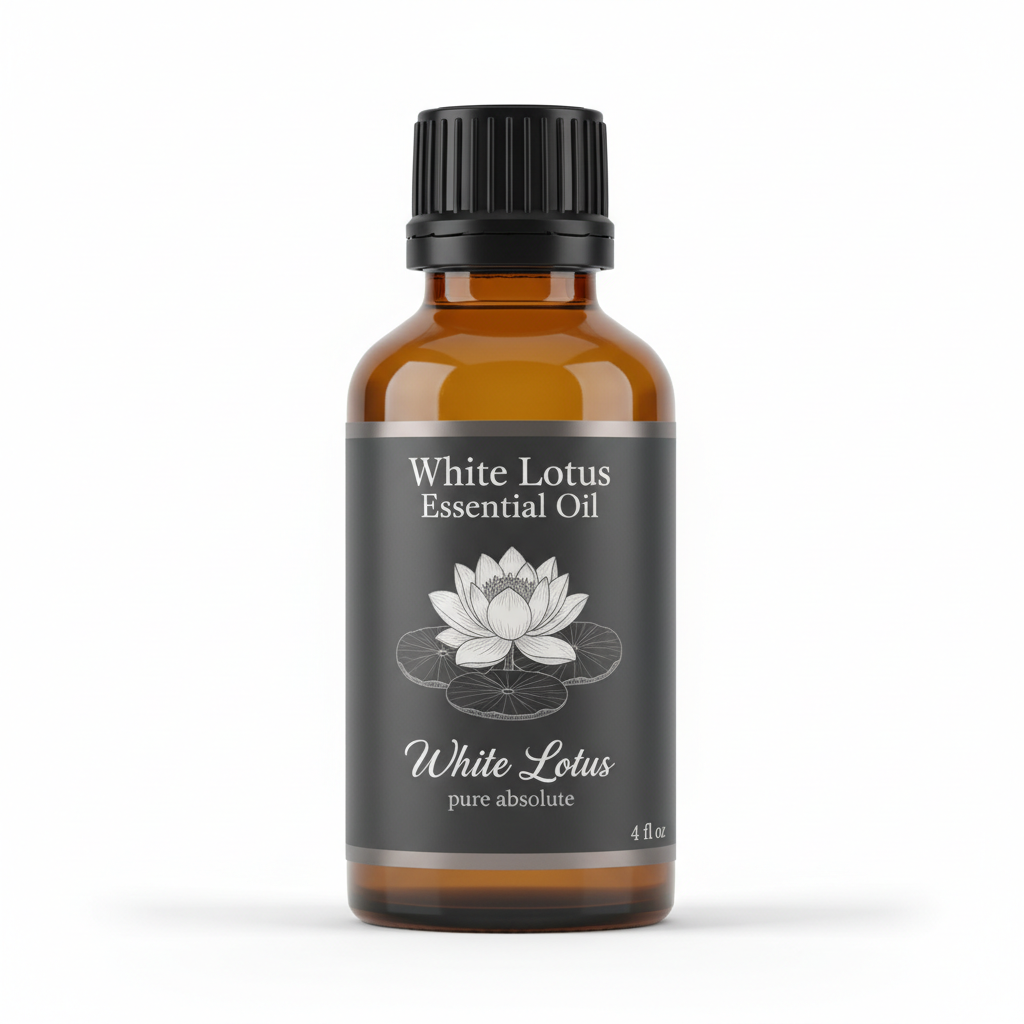
White Lotus Absolute
Our own White Lotus Absolute, in sizes from 0.5 oz to bulk.
From $23.99
Shop Now →We have grouped them by theme so you can jump to what matters most to you. If you want a broader introduction to this oil first, our complete guide to white lotus oil is a good starting point.
Part 1: Understanding What White Lotus Oil Actually Is
1. Is white lotus oil a true essential oil?
In most cases, no. Genuine white lotus (Nymphaea lotus or Nymphaea alba) is almost always produced as a solvent-extracted absolute rather than a steam-distilled essential oil. The petals are too delicate for steam distillation to yield a meaningful volume of aromatic material. This distinction matters for safety discussions because absolutes carry trace solvent residues and behave differently on skin than conventional essential oils. Our article on why true white lotus is never a steam-distilled essential oil explains the production process in full.
2. What is the difference between a white lotus absolute and a white lotus-scented fragrance blend?
A genuine white lotus absolute is extracted directly from the plant and contains the actual aromatic compounds of the flower. A white lotus-scented product is typically a synthetic reconstruction or a blend of other aromatic materials designed to approximate the lotus scent. The safety profile of each is quite different: synthetics may contain components that a true absolute does not, and vice versa. Always check the botanical name and the production method on the label before making assumptions about what you are applying to your skin.
3. Does the sourcing region affect white lotus oil safety?
Sourcing does influence quality and, by extension, safety considerations. Lotus grown in regions with heavy agricultural chemical use may carry residue risks that well-sourced material does not. Reputable suppliers will provide gas chromatography and mass spectrometry (GC/MS) reports that give you a detailed breakdown of the oil's chemical constituents. Asking for that documentation is a reasonable step before committing to any new supplier.
Part 2: Is White Lotus Oil Safe? Core Safety Questions
4. Is white lotus oil safe for most adults?
For most healthy adults, white lotus oil is considered well-tolerated when it is properly diluted and used as directed. That said, "safe for most" is not the same as "safe for everyone," and individual skin chemistry varies considerably. A patch test before any new application is the most practical first step you can take.
5. Can white lotus oil cause skin reactions?
Like any concentrated botanical extract, white lotus absolute may cause sensitization or irritation in some individuals, particularly those with reactive or sensitive skin. People with known sensitivities to floral absolutes or fragrance components are encouraged to proceed with extra caution. Redness, itching, or a burning sensation after application are signals to wash the area with mild soap and water and discontinue use.
6. Is white lotus oil safe to use undiluted on skin?
No. Applying any concentrated absolute undiluted directly to skin is not recommended and is one of the most common mistakes new users make. Undiluted application significantly increases the risk of sensitization, even if no reaction occurs the first time. Always blend white lotus absolute into a suitable carrier oil, lotion, or other cosmetic base before it contacts your skin.
7. What dilution rate is appropriate for white lotus oil in a skin product?
A general starting point for leave-on skin products such as facial serums or body oils is 0.5% to 1%. For rinse-off products like body wash or shampoo, slightly higher percentages are often used because contact time is shorter. These figures are general guidelines. Formulation goals, the specific carrier base, and your own skin's tolerance should all factor into your final choice. When in doubt, start lower and adjust.
8. Does white lotus oil carry photosensitivity risk?
White lotus absolute is not widely documented as a photosensitizer in the way that cold-pressed citrus oils are. However, if you are blending it into a formula that also contains known photosensitizing ingredients, the combination warrants caution before sun exposure. As a general practice, apply any new botanical skin product to areas that will not be immediately exposed to strong sunlight until you understand how your skin responds.
Part 3: Patch Testing Step by Step
9. What exactly is a patch test and why does it matter for absolute skin safety?
A patch test is a simple preliminary step in which you apply a small amount of a diluted product to a discrete area of skin and observe the site over 24 to 48 hours before wider use. It is the most accessible way to assess your individual skin's response before committing to a full application. Absolute skin safety starts here: no laboratory test can fully predict how your particular skin will react, so direct observation is irreplaceable.
10. Where on my body should I do a patch test?
The inside of the forearm or the soft skin behind the ear are the most commonly recommended sites. These areas tend to be reasonably sensitive without being so reactive that they generate false positives for most users. Avoid testing on broken, sunburned, or already-irritated skin, as those conditions will skew your results.
11. How do I perform the patch test correctly?
Prepare the product at its intended use dilution, not at full concentration. Apply a small amount (roughly the size of a 10-pence coin or a dime) to the chosen site, allow it to dry, and leave it undisturbed for at least 24 hours. Do not wash the area during that window unless you notice a reaction. At the 24-hour mark, check for redness, swelling, bumps, or itching before proceeding.
12. What should I do if my patch test shows a reaction?
Wash the area thoroughly with a mild, fragrance-free soap and lukewarm water. Do not continue using the product, and do not assume that a lower dilution will resolve the issue without further testing. If a reaction is severe, spreads rapidly, or does not settle quickly, please seek guidance from a qualified healthcare provider promptly.
13. Do I need to patch test every single time I use white lotus oil?
Not necessarily every single use, but you should repeat the patch test whenever you open a new batch or bottle, switch to a different supplier, or change your formulation. Skin sensitivity can also shift over time due to seasonal changes, hormonal fluctuations, or changes in your skincare routine, so periodic re-testing is wise even with familiar products.
Part 4: Special Populations and Sensible Precautions
14. Is white lotus oil safe during pregnancy?
The safety of concentrated botanical absolutes during pregnancy has not been comprehensively studied in clinical settings. Out of an abundance of caution, most aromatherapy safety references recommend avoiding non-essential concentrated botanicals during the first trimester and advise consulting a qualified healthcare provider before use at any stage of pregnancy. This is not a restriction specific to white lotus: it applies broadly to most concentrated aromatic extracts.
15. Is white lotus oil safe for children?
Children's skin is thinner and more permeable than adult skin, which means they absorb topical ingredients more readily. Most concentrated aromatic absolutes are best kept away from young children entirely unless you have specific guidance from a qualified healthcare provider who is familiar with botanical safety. Keep bottles securely stored out of reach as a basic precaution.
16. Can people with sensitive or reactive skin use white lotus oil?
Some people with sensitive skin do use white lotus absolute with no issues, provided they dilute it carefully and perform a thorough patch test first. Others find that floral absolutes in general do not suit their skin, regardless of dilution. If your skin reacts frequently to fragrant products, approaching any new absolute with a lower-than-usual starting dilution (around 0.25%) gives you more room to assess your tolerance gradually.
17. Is white lotus oil safe for pets?
Pets, particularly cats and dogs, metabolize aromatic compounds very differently from humans. Diffusing any concentrated aromatic absolute in a space that pets regularly occupy is generally not recommended without veterinary guidance. Always ensure pets can leave the room freely if you are diffusing any aromatic product, and keep bottles completely out of reach of animals.
18. Can white lotus oil interact with topical medications or prescription skincare?
If you are using any topical product prescribed by a healthcare provider, please discuss adding new botanical ingredients to your routine with that provider before doing so. Some active skincare ingredients (retinoids, for example) can alter the skin barrier in ways that affect how other ingredients are absorbed. This is a good general rule that applies well beyond white lotus oil alone.
Part 5: Safe Use in Diffusers, Baths, and DIY Blending
19. Can I diffuse white lotus absolute?
Diffusing a true white lotus absolute is not always straightforward because absolutes are thicker and more viscous than steam-distilled oils, and they may not disperse cleanly in standard ultrasonic diffusers. Many users prefer to add a very small quantity to a diffuser blend or use it in a personal inhaler instead. If you do add it to a diffuser, use it in a well-ventilated room and limit session length to 30 to 60 minutes.
20. Is it safe to add white lotus oil to a bath?
Adding any concentrated absolute directly to bathwater is not advisable because oil and water do not mix: the absolute will pool on the surface and may come into contact with sensitive areas of skin at a much higher concentration than intended. If you want a lotus-scented bath, disperse a properly diluted blend first in a carrier such as a fragrance-free liquid soap, full-fat milk, or a purpose-made bath dispersant, then add that mixture to the water.
21. What carrier oils work well with white lotus absolute for skin applications?
Light, skin-compatible carriers such as jojoba, rosehip seed, squalane, or a fractionated coconut oil are popular choices among formulators working with white lotus absolute. The carrier you select will also influence the finished scent profile: jojoba, being largely odourless, lets the lotus character come through clearly, while rosehip seed adds its own subtle nuttiness. Match the carrier to your skin type and the intended use of the finished product.
22. How should I store white lotus absolute to keep it safe and stable?
Store it in a tightly sealed, dark glass bottle away from heat and direct sunlight. A cool, dark cupboard or a dedicated refrigerator used only for cosmetic materials works well. Properly stored white lotus absolute can retain its character for several years, while exposure to heat, light, and air will degrade it more quickly and may alter its skin compatibility profile over time.
23. Can I use white lotus oil near my eyes or on my lips?
The eye area has particularly thin, delicate skin and mucous membranes that are far more reactive than the skin on your arm or torso. Avoid applying any diluted or undiluted aromatic absolute directly around the eyes or on the lips. If accidental eye contact occurs, flush the area thoroughly with clean, lukewarm water and seek medical advice if irritation persists.
Part 6: Buying Well and Staying Informed
24. How do I know if the white lotus oil I am buying is genuine?
Genuine white lotus absolute is expensive and relatively rare, so a product priced significantly below market rate deserves scrutiny. Look for suppliers who provide the full botanical name, country of origin, extraction method, and a GC/MS report. Our FAQ on white lotus as a rare absolute covers the adulteration issue in more depth and explains what to look for on a product specification sheet.
25. Where can I learn more about white lotus oil before I buy?
A good foundation starts with understanding what this oil actually is, how it is produced, and what distinguishes a quality absolute from an inferior one. Our complete guide to white lotus oil covers those fundamentals clearly. From there, the absolute vs. essential oil comparison will help you understand why sourcing and production method matter so much for both quality and absolute skin safety. Consulting a qualified aromatherapy practitioner or dermatologist is always a worthwhile step if you have specific skin concerns.
A note on safe practice: The information on this page is educational and intended to support informed personal care decisions. It does not constitute professional medical or dermatological advice. Always consult a qualified healthcare provider before making changes to any skincare routine, particularly if you have a skin condition, are pregnant, or are taking any medication. Individual responses to botanical ingredients vary and cannot be fully predicted in advance.