
White Lotus FAQ: 15 Questions About This Rare Absolute
White lotus flower oil generates more questions than almost any other botanical extract we work with. That makes sense. It is genuinely rare, frequently misrepresented, and surrounded by romantic mystique that sometimes obscures practical information. This page collects the most common white lotus oil questions we receive, grouped by theme, and answers them as plainly and honestly as we can.
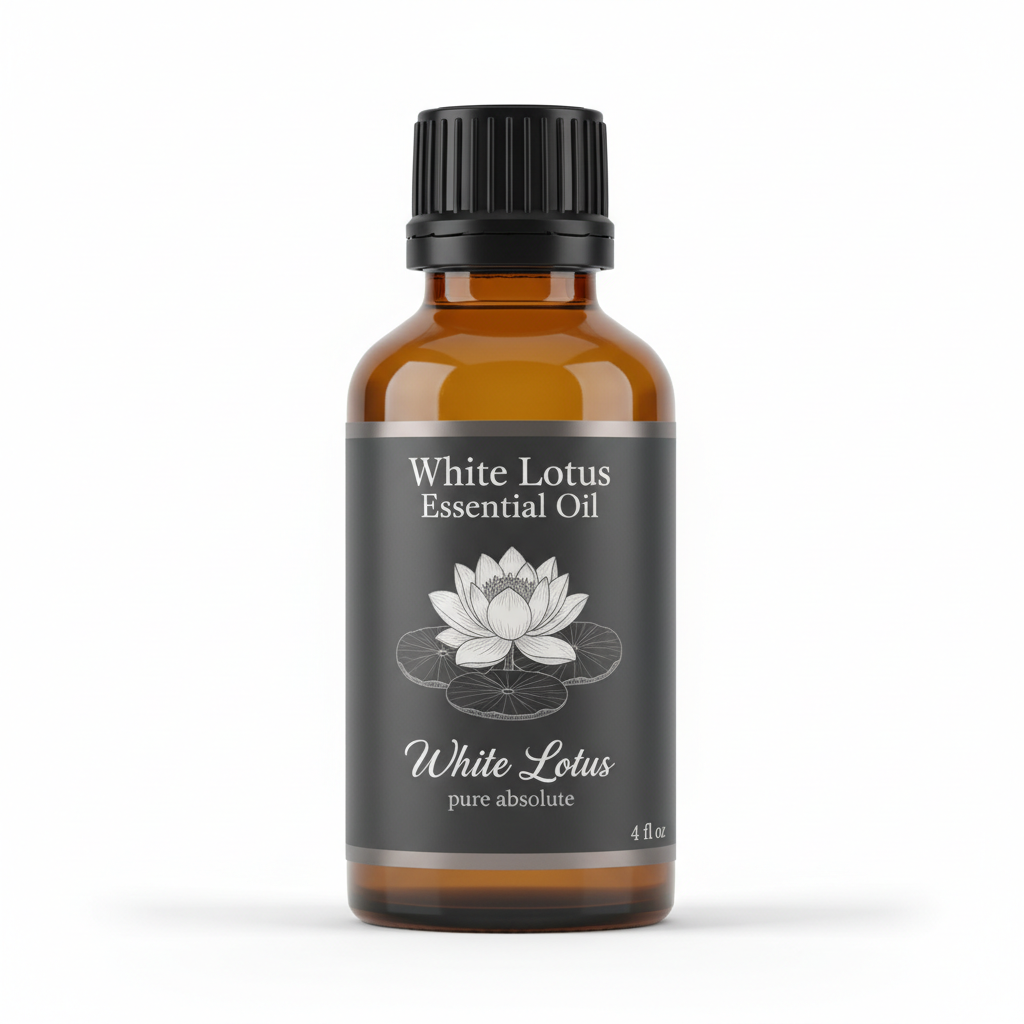
White Lotus Absolute
Our own White Lotus Absolute, in sizes from 0.5 oz to bulk.
From $23.99
Shop Now →For deeper reading on any topic, follow the internal links throughout. This FAQ is meant as a quick, reliable reference rather than a replacement for the full guides.
What It Is and Where It Comes From
1. What exactly is white lotus absolute?
White lotus absolute is a concentrated aromatic extract obtained from the flowers of Nymphaea lotus or related white-flowering water lily species. Because the delicate petals cannot withstand the heat of steam distillation, the extract is produced through solvent extraction, yielding what the industry correctly calls an absolute rather than a steam-distilled essential oil. The result is a thick, highly fragrant material that captures the living flower far more faithfully than distillation could. It is valued in both fine fragrance and premium cosmetic formulation.
2. Is white lotus the same as blue lotus or pink lotus?
No. They are different species with meaningfully different aromatic profiles and traditional histories. White lotus (Nymphaea lotus) carries a cool, aquatic floral quality, while blue lotus (Nymphaea caerulea) leans more earthy and green. Pink lotus (Nelumbo nucifera) belongs to an entirely different botanical genus and produces a warmer, more powdery scent. Sourcing and regulatory considerations also differ across the three, so it matters which species you are purchasing.
3. Where is white lotus grown and harvested?
Most commercial white lotus absolute originates in Egypt and India, where water lily cultivation has centuries of history along major river and delta systems. Egyptian production tends to be closely associated with traditional floral markets, particularly around the Nile Delta region. Harvesting is done by hand, early in the morning before the flowers close, which is one reason the material is so costly to produce. Some smaller quantities also come from South and Southeast Asia.
4. Why is white lotus oil so expensive?
Several factors converge to make this one of the pricier botanical absolutes available. The flowers must be harvested within a short daily window, the extraction yield is very low relative to the quantity of raw flowers needed, and the water-grown crop is inherently limited by available cultivated area. Transport and cold-chain handling add further costs. A genuine, unadulterated white lotus absolute will always command a premium price. If you encounter a product priced similarly to lavender oil, that is a strong signal to investigate its authenticity.
5. What is the difference between a white lotus absolute and a white lotus essential oil?
This distinction is important and worth reading in full detail. The short answer is that a true steam-distilled white lotus essential oil essentially does not exist in commercial quantities because the flower's aromatic compounds degrade under heat. What is sold as white lotus "essential oil" is almost always either an absolute, an enfleurage extract, a diluted absolute, or a synthetic fragrance. Our complete guide on absolutes versus essential oils explains the chemistry and the marketing landscape clearly.
Scent, Quality, and Authentication
6. What does white lotus smell like?
The scent is one of the most discussed aspects of this extract, and descriptions vary more than you might expect. In general, white lotus absolute opens with a clean, watery floral note that some describe as simultaneously green and aquatic. A light powdery quality often develops in the dry-down, and the overall impression is softer and more translucent than heavier florals like jasmine or ylang ylang. Our dedicated scent profile article walks through the full aromatic arc with comparisons to help calibrate your expectations.
7. How can I tell if white lotus absolute is authentic?
Authentic white lotus absolute is typically a pale yellow to amber-colored viscous liquid at room temperature. It should have no sharp chemical or alcohol top notes, and the scent should persist and evolve rather than dissipate quickly. Gas chromatography mass spectrometry (GC/MS) testing is the gold standard for verification. Ask your supplier for a current GC/MS report. Reputable suppliers will provide one without hesitation.
8. What adulterants are commonly added to white lotus oil?
Because genuine absolute is costly, adulteration is common. Typical additions include synthetic fragrance compounds that mimic the aquatic floral character, carrier oil dilutions that are not disclosed on the label, or blends with cheaper floral absolutes. Some suppliers also sell reconstituted products (built from isolated aromatic chemicals) under the white lotus name. None of these are inherently dangerous in proper cosmetic use, but they are not the genuine botanical material, and the price should reflect that difference.
9. Does white lotus absolute have a shelf life?
Yes. Stored properly in a sealed, dark glass container at cool temperatures (away from heat and direct light), most white lotus absolutes remain in good aromatic condition for two to four years. Because absolutes are generally more stable than many steam-distilled oils, oxidation tends to be slower. Signs of degradation include a noticeably sharper or more chemical scent and changes in color or viscosity. When in doubt, perform a scent evaluation against a benchmark sample.
Safety and Skin Use
10. Is white lotus absolute safe to use on skin?
White lotus absolute can be used in leave-on and rinse-off cosmetic products when properly diluted in a suitable carrier. Because it is an absolute (meaning trace solvent residues from extraction may be present), it is especially important to use it at low concentrations and to perform a patch test before broader application. A common starting point for leave-on formulations is 0.5 to 1 percent of the finished formula. Anyone with known sensitivities to floral aromatics should proceed cautiously and consult a qualified skincare professional.
11. Can I apply white lotus absolute directly to my skin without dilution?
No. Absolutes should not be applied neat (undiluted) to skin. The concentration of aromatic compounds in an undiluted absolute is far higher than what is appropriate for direct skin contact, and sensitization reactions are a real risk with repeated undiluted exposure. Always blend your absolute into a carrier oil, lotion, cream, or other appropriate cosmetic base before applying. This recommendation applies even if a product looks or feels mild.
12. Are there specific groups who should avoid white lotus absolute?
As with all concentrated botanical extracts, extra caution is appropriate during pregnancy and breastfeeding. Children and individuals with sensitive or compromised skin should use products containing floral absolutes only after consulting a healthcare provider. People with known allergies to water lily plants or closely related botanicals should be especially careful. This is general cosmetic guidance rather than medical advice, and a qualified provider is the right person to assess your individual circumstances.
13. Can white lotus absolute be used in a diffuser?
Technically yes, though it is not the most practical choice for diffusion. Absolutes are viscous, may not atomize well in standard ultrasonic diffusers, and their cost per milliliter makes heavy diffusion use expensive. A more common approach is to add a single drop to a personal inhaler, a diffuser jewelry pendant, or a small amount of unscented carrier for a room diffuser blend. Their aromatic impact at very small quantities is notable, so a little goes a long way.
Blending and Formulation
14. What does white lotus absolute blend well with?
White lotus pairs beautifully with other aquatic and soft florals: think rose, violet leaf, orris, and ylang ylang used sparingly. Woody bases such as sandalwood and cedarwood provide a grounding quality that allows the lotus note to lift and shine. Light musks, whether natural or cosmetic-grade synthetics, also complement it well. Green notes like violet leaf or galbanum can emphasize the watery aspect of the profile. Start with white lotus as a heart note at 5 to 15 percent of your total aromatic blend.
15. At what percentage should I use white lotus absolute in a finished product?
Usage rates depend heavily on the product type. In a fine fragrance (parfum or eau de parfum), white lotus absolute might appear at 1 to 5 percent of the total formula. In a leave-on skin product such as a face serum or body oil, 0.5 to 1 percent is a reasonable starting range. In rinse-off products like body wash, lower concentrations (0.1 to 0.5 percent) are typical because extended contact time is reduced. Always cross-reference with current International Fragrance Association (IFRA) guidelines for the specific product category you are formulating.
Sourcing and Purchasing
16. What should I look for when buying white lotus absolute?
Prioritize suppliers who provide a current GC/MS certificate, clearly state the botanical species (Nymphaea lotus or similar), and disclose the country of origin. The listing should specify that the product is an absolute, not an essential oil. Pricing that seems too low for a genuine absolute warrants scrutiny. A supplier who answers sourcing questions directly and provides documentation is a strong indicator of transparency. Read our complete guide to white lotus oil for a full sourcing checklist.
17. Is organic certification available for white lotus absolute?
Certified organic white lotus absolute does exist, though it is significantly less common than conventional material and commands an even higher price. The certification process for water-grown crops in Egypt and India has its own logistical complexities. If organic status matters to your formulation or brand story, ask your supplier for the certifying body name and certificate number, and verify directly. Not every supplier uses the word "organic" with the same rigor.
18. Can I request a sample before committing to a larger quantity?
Any reputable botanical supplier should offer samples of white lotus absolute, typically as one- or two-milliliter vials. Given the cost of the material and the variation in aromatic profiles across different origins and batches, sampling before a larger purchase is strongly advisable. Use the sample to assess scent fidelity, viscosity, and compatibility with your existing formulas before committing to a larger order.
Cultural and Botanical Context
19. What is the cultural history of white lotus in perfumery?
White lotus has held a place in Egyptian aromatic culture for thousands of years, with depictions appearing in tomb paintings and references in ancient texts describing its use in ritual and personal fragrance preparations. It occupies a similar position in Hindu and Buddhist traditions across South and Southeast Asia, where it carries associations with purity and ceremonial significance. In modern perfumery, it began appearing more prominently as naturals-forward fragrance houses sought aquatic florals with genuine botanical provenance. Its history is part of what makes it compelling as a formulation ingredient.
20. Is white lotus a sustainable botanical?
Sustainability varies considerably by sourcing region and supplier. Water lily cultivation generally requires significant freshwater resources and careful management of aquatic ecosystems. Some producers operate within traditional cultivation systems that have maintained ecological balance for generations, while others use more intensive methods. Asking your supplier specific questions about harvest practices, water use, and community relationships is the best way to assess the sustainability profile of a specific lot. Certification programs like Fair for Life or Fair Trade can provide additional assurance where they apply.
21. Is white lotus absolute the same material used in ancient Egyptian kyphi?
The historical record is fascinating but not entirely clear-cut. Ancient Egyptian kyphi formulas, some of which have been reconstructed from hieroglyphic texts, did incorporate blue and white lotus materials. However, the extraction methods available in antiquity (primarily enfleurage and maceration in fats or oils) would have produced a very different type of extract than a modern solvent-extracted absolute. What we call white lotus absolute today is a modern refinement of a very old aromatic relationship between this flower and human culture.
Still Have Questions?
The world of white lotus flower oil rewards careful attention. If your question was not answered here, explore our complete white lotus guide, the absolute versus essential oil explainer, and the detailed scent profile for more depth on each topic. For formulation-specific questions, consulting a certified cosmetic chemist is always the most reliable path forward.