
Absolute vs Essential Oil: Why True White Lotus Is Never Steam-Distilled
Walk into any well-stocked aromatics supplier and you will find shelves lined with bottles labeled "white lotus essential oil." Some cost eight dollars. Some cost eighty. A few cost several hundred. The price variance alone should prompt a question: what exactly is in those bottles? Because genuine white lotus (Nymphaea lotus or Nymphaea caerulea, depending on the species) cannot be steam-distilled. The flower simply will not cooperate with that process. If a product is marketed as a true white lotus "essential oil" at a suspiciously low price, something in the story does not add up.
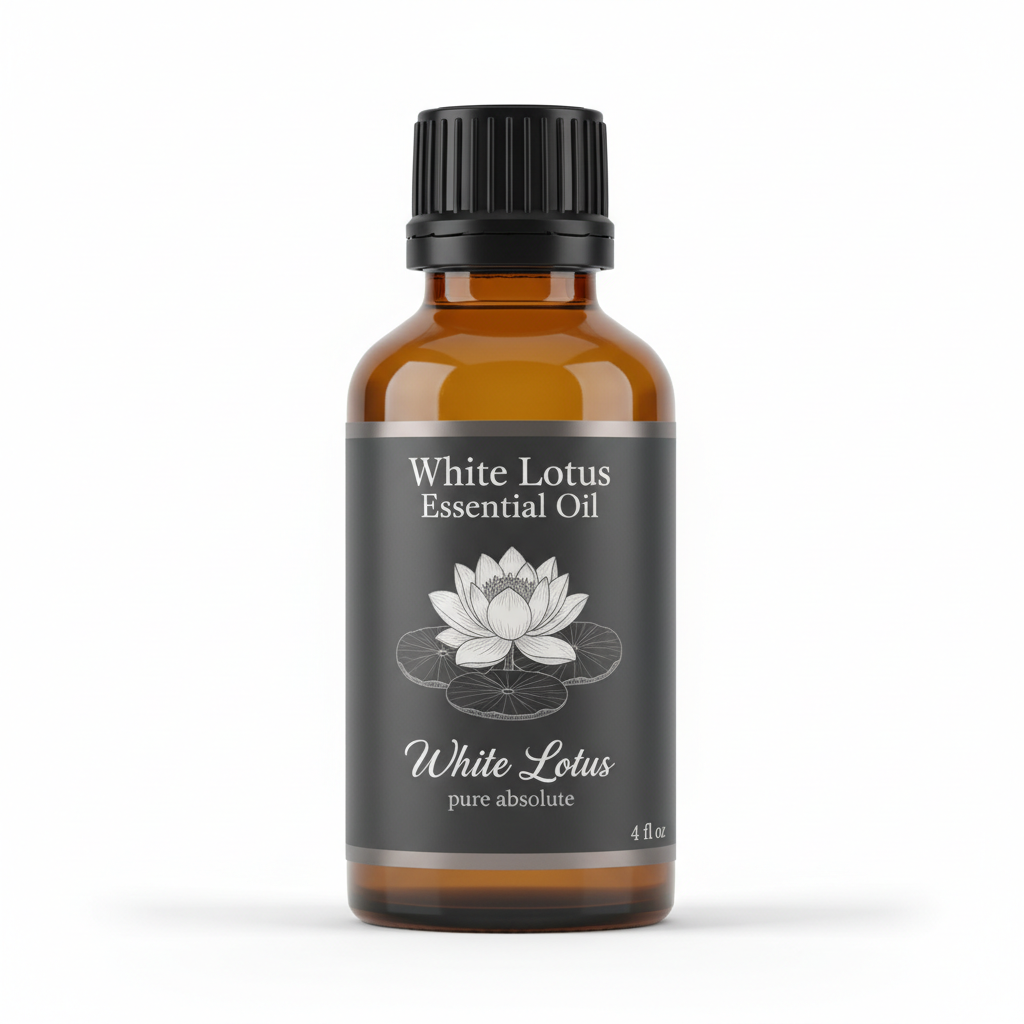
White Lotus Absolute
Our own White Lotus Absolute, in sizes from 0.5 oz to bulk.
From $23.99
Shop Now →This deep dive unpacks the chemistry behind that claim, explains what a white lotus absolute is and how it is made, and gives you the sourcing knowledge to tell the genuine article from a fragrant imitation.
Why Steam Distillation Fails with White Lotus
Steam distillation works beautifully for botanicals that hold their aromatic molecules in glands, resin ducts, or robust cell structures: lavender, eucalyptus, rosemary. The heat and pressure rupture those structures and carry the volatile compounds upward with the steam, which then condenses into a hydrosol and a floating layer of essential oil.
White lotus blossoms do not work this way. Their aromatic compounds are present in concentrations so low, and are so structurally delicate, that the heat required for steam distillation degrades or destroys them before they can be captured. You would process kilograms of blooms and collect almost nothing of olfactory value. What little you might collect would bear little resemblance to the living flower.
This is not a new or contested observation in natural perfumery. It is simply a chemical reality rooted in the volatility and heat sensitivity of lotus aromatic compounds. Roses face a similar challenge, which is why true rose absolute commands prices that genuinely extracted products justify. Jasmine, tuberose, and gardenia share this trait. These flowers belong to a category sometimes called "concretes and absolutes" flowers, and white lotus sits squarely among them.
For a broader orientation to the plant itself, the complete guide to true white lotus oil covers species identification, historical use, and regional sourcing context.
The Solvent Extraction Process: What Actually Happens
Producing a genuine white lotus absolute requires two stages of extraction.
Stage One: The Concrete
Freshly harvested blossoms are immersed in a hydrocarbon solvent, typically hexane, at low temperatures. The solvent pulls out a broad spectrum of aromatic and non-aromatic compounds: the fragrant molecules you want, but also waxes, pigments, and plant fats. The solvent is then evaporated under controlled vacuum conditions, leaving behind a semi-solid, waxy mass called the concrete. White lotus concrete is typically a pale cream to golden color with a rich, diffuse floral scent that already hints at what the absolute will become.
Stage Two: The Absolute
The concrete is then washed repeatedly with high-purity ethanol. Alcohol preferentially dissolves the aromatic molecules while leaving the waxes and fats behind. The ethanol solution is chilled, filtered to remove precipitated waxes, and then the alcohol is evaporated at very low pressure. What remains is the absolute: a concentrated, often viscous liquid that captures the scent of the living flower with remarkable fidelity.
Yields are extremely low. It can take several hundred kilograms of fresh lotus blossoms to produce a single kilogram of absolute. This yield reality is the single most important factor explaining why genuine white lotus absolute costs what it does, and why cheap substitutes are almost always synthetics, diluted carrier blends, or unrelated botanical materials relabeled for market appeal.
Chemical Composition of White Lotus Absolute
The aromatic profile of white lotus absolute is shaped by a layered ensemble of compounds. Researchers studying Nymphaea lotus and related species have identified several key chemical families using gas chromatography and mass spectrometry (GC-MS) analysis. It is worth noting that composition varies meaningfully depending on species, growing region, harvest timing, and extraction conditions, so the following represents a general picture drawn from published observations rather than a fixed universal fingerprint.
Sesquiterpenes
Sesquiterpenes are a dominant class in lotus absolute. Compounds such as alpha-selinene, beta-selinene, and caryophyllene-related structures contribute depth, earthiness, and what perfumers sometimes describe as a "wet stone" or aquatic undertone. These heavier molecules are part of what gives white lotus its distinctive opacity as a scent: it never reads as purely floral.
Monoterpenes and Monoterpenoids
Lighter terpene fractions contribute brighter, more volatile top notes. Linalool, a widely studied aromatic alcohol found across many floral botanicals, has been identified in lotus species and is associated with soft, slightly powdery floral character. Some research suggests that linalool may contribute to the calming sensory atmosphere that many people associate with floral scents used in evening wind-down routines, though these observations should be understood as preliminary and not as statements of established efficacy.
Alkaloids: The Compounds Unique to Lotus
White lotus is unusual among aromatic botanicals in containing aporphine alkaloids. Nuciferine is the most studied. Research observations on nuciferine are genuinely interesting and somewhat complex: some in vitro and animal studies have explored its interactions with various receptor pathways, but it is critical to understand that this research is early-stage and does not translate into claims about what white lotus absolute does for human users. The alkaloid content in a properly prepared cosmetic-grade absolute is low, and its relevance to topical or aromatic application is not established by current evidence.
Other alkaloids identified in lotus species include nornuciferine and anonaine. Their presence is part of what makes white lotus an object of genuine scientific interest, even if that interest is still largely at the investigational stage.
Fatty Acid Esters and Wax Components
Even in a well-prepared absolute, trace amounts of fatty acid esters and long-chain wax components can remain. These contribute to the characteristic viscosity of lotus absolute and can affect how it blends in formulation. High-quality absolutes will have had the bulk of these removed during the ethanol washing stage, but some remain, which is one reason lotus absolute often benefits from gentle warming before use.
What Research Suggests (And What It Does Not)
Published studies on lotus species have explored a range of biological observations, primarily in laboratory and animal models. Some research suggests that compounds isolated from lotus plants may interact with oxidative stress pathways in cell cultures. Other observations have focused on the alkaloid fraction and its receptor affinity profiles.
None of this research constitutes clinical evidence that white lotus absolute, used aromatically or topically in cosmetic formulations, produces specific physiological outcomes in humans. It is important to hold both ideas at once: the chemistry is genuinely interesting, and the gap between interesting chemistry and demonstrated human benefit is wide. Readers should always consult a qualified healthcare provider regarding any specific wellness concerns.
What can be said with more confidence is that the scent profile of white lotus absolute is complex, distinctive, and widely valued in perfumery and natural cosmetics for the sensory experience it creates. If you are curious about how that scent profile is actually described by those who work with it, the aquatic floral scent profile guide goes into considerable depth on olfactory character, scent families, and blending behavior.
Safety Profile and Contraindications
White lotus absolute is generally considered to have a favorable safety profile when used at appropriate concentrations in cosmetic applications, but several considerations deserve attention.
Skin Sensitization
All absolutes carry a potential for skin sensitization because of their concentrated nature and the range of compounds they contain. White lotus absolute should always be diluted before any skin contact. For general cosmetic use, a dilution of 0.5% to 1% in a carrier oil or formulation base is a reasonable starting point for most adults. Before applying any new absolute to a larger skin area, a patch test on a small area of inner forearm skin is strongly recommended. Wait 24 hours and observe for any response before broader use.
Solvent Residue Considerations
Because white lotus absolute is solvent-extracted, questions about residual hexane are legitimate. Reputable producers test their finished absolutes for solvent residues and can provide certificates of analysis confirming that residue levels fall within accepted safety thresholds. When sourcing white lotus absolute, requesting this documentation is a reasonable quality assurance step.
Pregnancy and Nursing
Use of any concentrated botanical absolute during pregnancy or while nursing should be discussed with a qualified healthcare provider before proceeding. The alkaloid content in lotus absolute, while low, has not been studied in these populations in the context of cosmetic use, and caution is appropriate.
Photosensitivity
White lotus absolute is not widely flagged as a photosensitizer in the way that citrus-derived oils are, but formulations containing any concentrated botanical extract intended for skin-exposed areas should be used with awareness of sun exposure. This is a general cosmetic formulation principle rather than a lotus-specific concern.
General Contraindication Reminder
Essential oils and absolutes are not substitutes for professional healthcare guidance. If you have specific health considerations, please consult a qualified healthcare provider before incorporating concentrated botanical products into your routine.
Sourcing and Quality Indicators
The market for white lotus products is unfortunately crowded with misrepresented goods. Here is what to look for when evaluating a supplier.
Species Transparency
A credible supplier will name the species clearly: Nymphaea lotus (white lotus) or Nymphaea caerulea (blue lotus, sometimes called blue Egyptian lotus). These are distinct botanicals with different scent profiles. Vague labeling that simply says "lotus oil" or "lotus absolute" without a Latin name is a flag worth noting.
Country of Origin
Traditional cultivation centers for lotus used in aromatic extraction include Egypt (particularly along the Nile delta region), India, and parts of Southeast Asia. Egyptian-origin white lotus absolute, sometimes marketed with reference to its ancient Nile provenance, has a particular cachet in natural perfumery. That provenance matters for scent character as well as cultural and agricultural traceability.
GC-MS Documentation
Reputable producers of botanical absolutes routinely conduct gas chromatography and mass spectrometry analysis on their batches. This analysis produces a compound-by-compound fingerprint of the material and helps confirm authenticity. Ask for a GC-MS report and, if possible, compare the identified compounds against published research profiles for lotus species. Significant deviation or a suspiciously simple compound profile can indicate adulteration.
Organoleptic Evaluation
If you have access to a genuine reference sample, scent comparison remains a powerful tool. Authentic white lotus absolute has a profile that perfumers describe as simultaneously aquatic, green, warmly floral, and faintly earthy. It does not smell sharply floral or predominantly sweet. Products that present an aggressive, synthetic-smelling floral note are almost certainly not genuine absolute.
Color and Viscosity
Quality white lotus absolute is typically pale golden to amber in color, semi-viscous at room temperature, and becomes more fluid when gently warmed. Very pale, watery, or water-clear products claiming to be lotus absolute warrant skepticism. Very dark or murky products may indicate quality control issues in extraction or storage.
Price Realism
Given the yield realities discussed above, white lotus absolute at gram-level pricing that seems implausibly low is almost never the genuine article. This is not to say the most expensive option is always the best, but price is a meaningful signal in a market where production costs are genuinely high.
Why the "Essential Oil" Label Matters
The labeling distinction between absolute and essential oil is not marketing pedantry. It reflects a real difference in extraction method, chemical profile, solvent history, and sensory character. Steam-distilled products, by definition, cannot capture what makes white lotus white lotus. When you see a true white lotus absolute labeled with honesty about its production method, species origin, and chemical documentation, you are looking at a product that represents a genuine commitment to quality in a category where shortcuts are common and the real thing is genuinely rare.
Understanding the chemistry is not just an academic exercise. It is the foundation for making informed purchasing decisions, formulating with integrity, and appreciating why a small bottle of authentic white lotus absolute represents something worth the care that went into producing it.