How White Lotus Absolute Is Made: From Nile Blossom to Bottle
Most essential oil lovers have heard of steam distillation. Lavender, peppermint, eucalyptus: these oils submit willingly to heat and water vapor, releasing their aromatic molecules with relatively little fuss. White lotus is a different matter entirely. The blossoms of Nymphaea lotus are so delicate, and their fragrance compounds so heat-sensitive, that steam would destroy the very qualities that make the oil worth having. This is why white lotus is produced as an absolute, not a true essential oil, and why understanding the lotus absolute extraction process matters if you care about what you are actually buying.
White Lotus Absolute
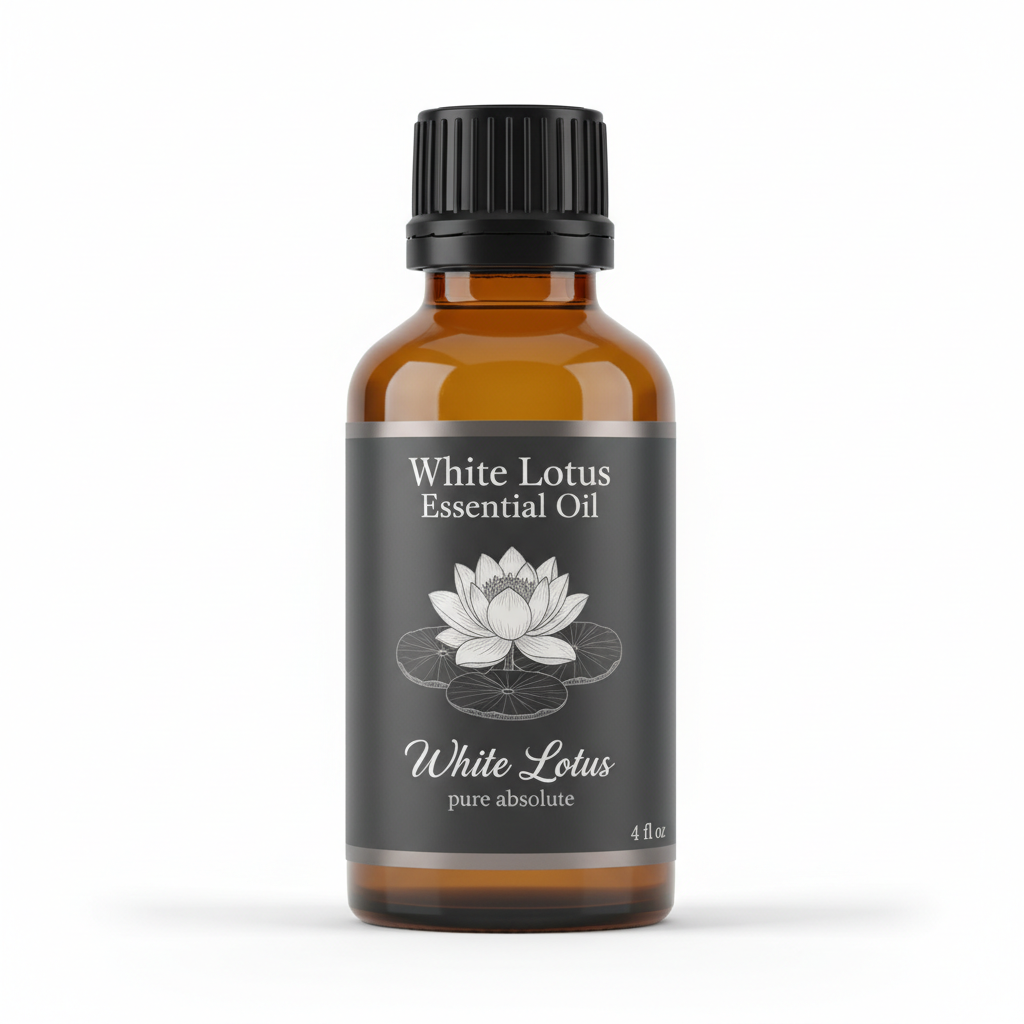
Our own White Lotus Absolute, in sizes from 0.5 oz to bulk.
From $23.99
Shop Now →If you are new to the world of lotus oils, you may want to start with our complete guide to what white lotus oil actually is before diving into the production details. For those already curious about the flower's remarkable cultural past, our piece on white lotus in history offers rich context for why this blossom has been prized for thousands of years.
Why White Lotus Cannot Be Steam Distilled
Steam distillation works by passing hot vapor through plant material, volatilizing aromatic compounds, and then condensing them back into liquid form. The process requires sustained heat, often well above 100 degrees Celsius. Delicate floral aromatics, particularly the esters and sesquiterpenes responsible for the characteristic white lotus scent, break apart or simply evaporate away under those conditions. What remains after steam distillation of lotus petals tends to be a thin, watery distillate with almost none of the richness you expect.
Solvent extraction solves this problem. By using a chemical solvent at or near room temperature, producers can pull fragrant compounds from fresh petals without exposing them to damaging heat. The result is an absolute: a highly concentrated, semi-solid or viscous aromatic product that retains the full aromatic profile of the living flower far more faithfully than any distillate could.
Materials and Equipment Used in Commercial Lotus Absolute Production
This process is carried out at commercial and artisan scales, not in a home kitchen. Understanding the materials involved helps you evaluate quality and ask better questions of your suppliers.
- Fresh white lotus blossoms, harvested at peak bloom, typically between early morning and mid-morning when aromatic concentration is highest
- Food-grade or pharmaceutical-grade hydrocarbon solvent, most commonly hexane (industry standard) or, in some cleaner operations, ethanol used in a two-stage process
- Extraction vessel or percolator, a sealed stainless steel or glass-lined container designed to circulate solvent through the plant material without oxygen exposure
- Rotary evaporator (rotovap), used to gently remove solvent from the crude extract under reduced pressure and low temperature
- Ethanol (food-grade), for the second wash, if using the traditional concrete-to-absolute method
- Filtration equipment, including fine mesh and cold filtration apparatus to remove waxes
- Dark glass storage vessels, amber or violet glass, to protect the finished absolute from light degradation
Note that hexane residue is regulated in finished cosmetic absolutes. Reputable producers test final products to confirm residual solvent levels fall within internationally accepted safety limits. Always request a Certificate of Analysis (COA) from your supplier.
Step-by-Step: How White Lotus Absolute Is Made
Step 1: Harvesting the Blossoms
The process begins before most people are awake. White lotus flowers open at night and reach their aromatic peak in the early morning hours. Harvesters working along the Nile delta or in cultivated ponds in Egypt and India collect blossoms by hand, cutting stems close to the flower head and placing them into shallow baskets or trays. Bruising and compression reduce aromatic quality significantly, so careful handling is not optional.
Speed matters. Once picked, the blossoms begin losing volatile compounds almost immediately. The window between harvest and extraction is short, ideally under a few hours. This logistical reality is one of the reasons white lotus absolute is genuinely expensive. There is no shortcut in the field.
Step 2: Loading the Extraction Vessel
Fresh blossoms are loaded loosely into the extraction vessel to allow adequate solvent flow around and through the petals. Packing too tightly reduces contact between solvent and plant material. Producers typically work in batches, calculating a solvent-to-flower ratio based on the specific equipment and expected yield.
The vessel is then sealed, and temperature is kept low, often at or slightly below room temperature. Some operations use a slight chilling to further protect sensitive aromatic compounds during this first extraction phase.
Step 3: First Solvent Wash (Creating the Miscella)
The hydrocarbon solvent (hexane is most common in large-scale operations) is circulated through the plant material, dissolving aromatic compounds, waxes, pigments, and other lipophilic substances. This liquid mixture is called the miscella. The solvent does not discriminate: it pulls everything soluble, including things you ultimately do not want in the final product, such as plant waxes and chlorophylls.
This first wash typically runs for a set period, after which the miscella is drained away from the spent plant material. Some producers run a second or third wash of the same batch to maximize yield, though subsequent washes tend to extract lower-quality compounds.
Step 4: Solvent Recovery and the Concrete
The miscella is transferred to the rotary evaporator. Under reduced pressure, the boiling point of the solvent drops significantly, allowing it to be removed at temperatures low enough to protect the aromatics. The evaporated solvent is condensed and recovered for reuse, which is both an economic and an environmental consideration for responsible producers.
What remains after solvent removal is called a concrete. A lotus concrete is typically a waxy, semi-solid mass with a dense, sweet, and slightly green-tinged aroma. It contains the full aromatic profile of the flower, but also all those plant waxes that make it unsuitable for direct use in fine fragrance or skin-care formulations. Concrete has its own uses and market, but most buyers want the absolute.
Step 5: Washing the Concrete with Ethanol
To convert concrete into absolute, producers mix the waxy concrete thoroughly with food-grade ethanol. The aromatic compounds dissolve readily into alcohol, while the heavier plant waxes do not. This mixture is then chilled, typically to around minus 20 degrees Celsius, in a process sometimes called winterization or cold filtration. The waxes solidify and can be filtered out, leaving behind an alcohol solution rich in fragrant compounds.
This step is repeated if necessary to reduce wax content further. The more thorough the filtration, the cleaner and more fluid the final absolute will be.
Step 6: Ethanol Removal and Final Absolute
The filtered ethanol solution goes back into the rotary evaporator for a second, very gentle evaporation. Ethanol has a lower boiling point than water and evaporates efficiently under reduced pressure at low temperatures. As the alcohol drives off, what remains is the finished white lotus absolute: a deeply concentrated, viscous liquid ranging in color from pale golden yellow to rich amber, depending on the specific batch, harvest season, and producer techniques.
The aroma at this stage is extraordinary. People consistently describe fresh white lotus absolute as possessing a warm, honeyed, slightly aquatic quality with soft powdery undertones. It is rounder and more complex than many other floral absolutes, which is part of what makes it such a prized ingredient in natural perfumery and prestige skin-care formulations.
Step 7: Quality Testing and Bottling
Reputable producers submit each batch to gas chromatography-mass spectrometry (GC-MS) analysis before bottling. This testing confirms the presence of key marker compounds and verifies that residual solvent levels meet regulatory standards. Some producers also conduct optical rotation and refractive index testing as additional identity checks.
The finished absolute is filled into dark glass vials or bottles, sealed, and labeled with batch information, country of origin, and botanical name. Storage recommendations universally include a cool, dark environment, away from direct sunlight and heat sources that can degrade aromatic quality over time.
Tips for Evaluating Lotus Absolute Quality
- Ask for a GC-MS report. Any serious supplier will provide one. If they cannot or will not, treat that as a significant red flag.
- Check the viscosity. Genuine lotus absolute is noticeably thick at room temperature. Watery or very thin products may be diluted.
- Evaluate the aroma at different temperatures. Warm a small drop between your fingertips and assess how the scent evolves. Adulterated products often smell flat or synthetic when warmed.
- Look for country of origin disclosure. Egyptian-origin lotus absolute, particularly from the Nile delta region, is generally considered benchmark quality. Indian production also exists. Know where your product comes from.
- Compare price against reality. Yields are extremely low. A kilogram of white lotus absolute typically requires hundreds of kilograms of fresh blossoms. If a price seems too good to be true, it almost certainly involves dilution or synthetic blending.
Common Mistakes to Avoid When Working with Lotus Absolute
Lotus absolute is used in cosmetic formulations, personal fragrance blending, and aromatic rituals. A few practical cautions apply regardless of your application.
- Do not apply undiluted to skin. As with all absolutes, direct skin application without dilution is not recommended. Dilute in a carrier oil such as jojoba or fractionated coconut oil at a rate of 1 to 2 percent for most skin applications. Perform a patch test on a small area of skin and wait 24 hours before broader use.
- Do not use during pregnancy or while nursing without consulting a qualified healthcare provider first. This applies broadly to concentrated aromatic products.
- Do not confuse white lotus with blue or pink lotus. These are distinct botanical species with different aromatic profiles and chemical compositions. If you are unsure about the differences, our comparison of white, pink, and blue lotus covers the key distinctions in detail.
- Store properly. Exposure to heat, light, and air accelerates oxidation and degrades aroma quality. Keep bottles tightly sealed in a cool, dark location.
- Do not rush acclimatization. Viscous absolutes sometimes need gentle warming to become workable. Set the sealed bottle in warm (not hot) water for a few minutes rather than applying direct heat.
What to Expect from a Quality White Lotus Absolute
When you open a well-sourced white lotus absolute for the first time, the aroma is immediately distinct from anything produced synthetically. People familiar with the flower often describe a momentary recognition, something close to the experience of standing near a pond in bloom at first light. The scent has depth without heaviness, a honeyed sweetness balanced by a clean, slightly green aquatic note.
In cosmetic blending, a very small quantity goes a long way. Start at 0.5 percent in your formulation and adjust upward cautiously. In personal fragrance work, lotus absolute functions beautifully as a heart note, adding warmth and floral complexity that synthetic alternatives rarely replicate convincingly.
The journey from Nile blossom to finished bottle is genuinely labor-intensive, technically demanding, and dependent on factors, including harvest timing, flower quality, and extraction precision, that vary from season to season. That variability is part of what makes each batch of authentic white lotus absolute a small seasonal artifact. Knowing how it was made gives you a much better lens for evaluating what is in the bottle you hold.