
White Lotus in History: Sacred Flower of the Nile and Beyond
Few botanical ingredients carry a history as layered as white lotus. Revered across ancient Egypt, India, China, and Greece, Nymphaea lotus and its close relatives have appeared in sacred art, royal cosmetic rituals, and early botanical writings for more than four thousand years. Today, the extracted oil and absolute of white lotus are sought by perfumers and skincare formulators for reasons that mirror why ancient cultures prized the flower in the first place: the scent is singular, the cosmetic profile is compelling, and the sourcing story is genuinely fascinating.
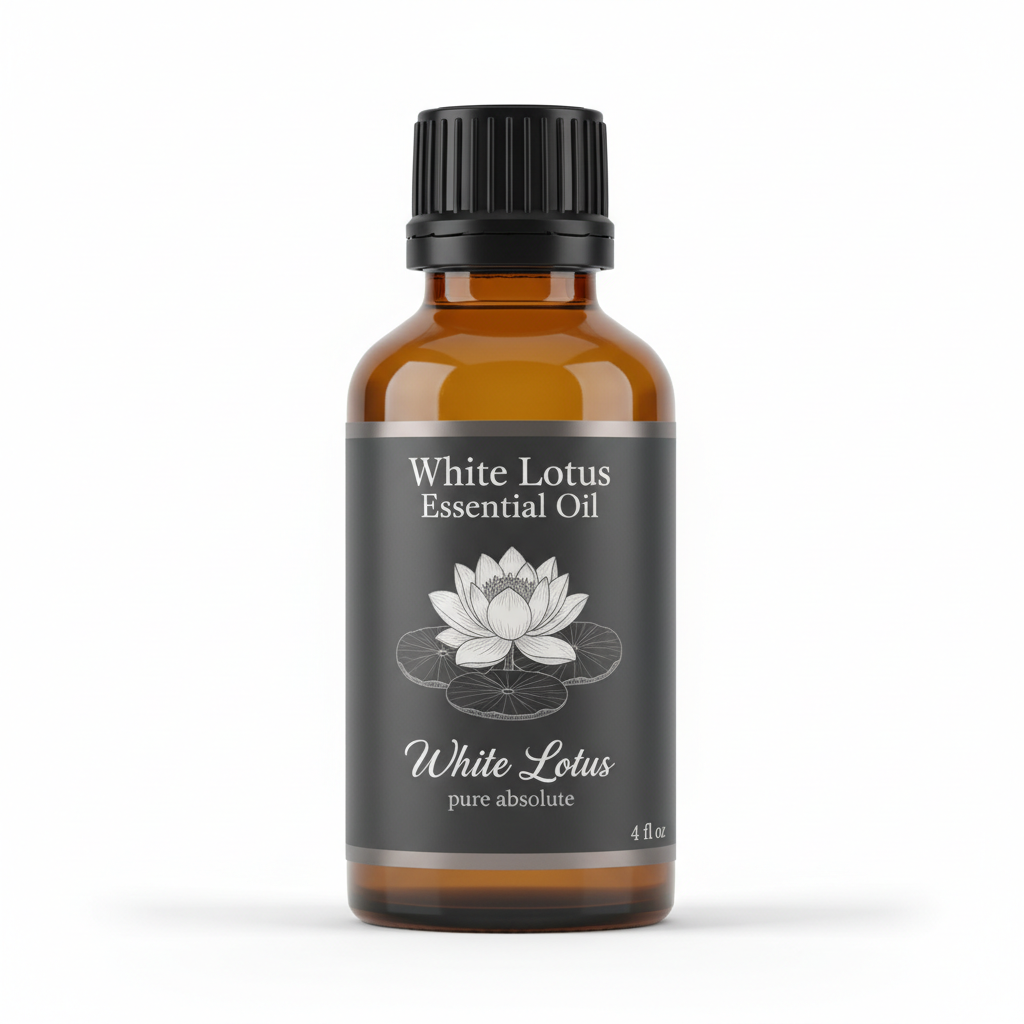
White Lotus Absolute
Our own White Lotus Absolute, in sizes from 0.5 oz to bulk.
From $23.99
Shop Now →This deep dive traces that story from the banks of the Nile to the modern supply chain, pausing along the way to examine what contemporary research actually observes about the flower's chemical constituents.
Lotus Flower History: A Sacred Botanical Record
The white lotus earned its sacred status early. In ancient Egypt, Nymphaea lotus (the white lotus, sometimes called the Egyptian white water lily) was a symbol of creation itself. The Heliopolitan creation myth describes the sun god Ra rising from a white lotus at the beginning of time. That image repeated across temple reliefs, tomb paintings, and decorative objects with remarkable consistency from the Old Kingdom through the Ptolemaic period.
Egyptian priests and noblewomen used lotus flowers in ways that blurred the line between ritual and personal adornment. Carved stone cosmetic jars shaped like lotus pods have been found in New Kingdom tombs. Wall paintings at Karnak and Luxor depict figures holding lotus blossoms directly beneath their noses, an act scholars now interpret as intentional aromatic inhalation during ceremonies. The flower was, in a very practical sense, both a sacred object and a cosmetic one.
White lotus symbolism also penetrated the classical Mediterranean world. Greek writers noted the lotus in descriptions of Egypt, and Lotus-Eaters appeared in Homer as inhabitants of a dreamy, fragrant land. The symbolic weight of the flower carried even into Roman botanical texts, where Pliny the Elder described the Nile lotus as a plant of notable aromatic and cosmetic distinction.
In the Indian subcontinent, the broader lotus family (including the sacred Nelumbo nucifera, though botanically distinct) held an equivalent position. Sanskrit texts dating to roughly 1500 BCE reference lotus flowers in ritual bathing preparations and anointing oils for royalty. The Sanskrit word for lotus, padma, appears over a thousand times in Vedic and post-Vedic literature, almost always in contexts of purity, beauty, or divine presence.
White Lotus Oil Chinese Traditions and East Asian Contexts
The intersection of white lotus oil in Chinese traditions is historically rich, though it requires careful taxonomic attention. China has long cultivated both Nymphaea species (true water lilies, including white and blue varieties) and Nelumbo nucifera (the sacred lotus with pink or white blooms), and historical texts sometimes use the same poetic term, lian hua or he hua, for both.
In the context of white lotus oil Chinese aromatic traditions, classical texts like the Bencao Gangmu (Compendium of Materia Medica, compiled by Li Shizhen in the 16th century) note lotus flowers, stamens, and seeds as ingredients in preparations used for personal fragrance and cosmetic care. The stamens of white lotus varieties were particularly noted for their delicate, powdery-sweet scent and were infused into carrier oils for hair and skin applications among wealthy households.
By the Tang and Song dynasties, lotuses were cultivated ornamentally in palace gardens across China, and their aromatic qualities were celebrated in poetry. The Song dynasty poet Zhou Dunyi famously wrote about lotus purity in his prose poem Ai Lian Shuo ("On Loving the Lotus"), framing the flower as an emblem of integrity and refinement. That cultural resonance shaped how lotuses were incorporated into cosmetic and aromatic products in the region for centuries.
For a deeper comparison of lotus species and how their oils differ, our guide to white lotus versus pink and blue lotus walks through the key botanical distinctions that matter for both fragrance and cosmetic sourcing.
Chemical Composition: What Research Observes
Modern analytical chemistry has given us tools the ancients obviously lacked. Gas chromatography and mass spectrometry studies of Nymphaea lotus flower extracts have identified a range of volatile and semi-volatile compounds that help explain the flower's distinctive aromatic and cosmetic profile.
Key Identified Compounds
| Compound Class | Example Constituents | Aromatic or Cosmetic Role |
|---|---|---|
| Monoterpenes | Linalool, geraniol | Contributes floral, slightly citrus top notes |
| Sesquiterpenes | Beta-caryophyllene, germacrene D | Adds depth and longevity to the scent profile |
| Aliphatic aldehydes | Nonanal, decanal | Contributes waxy, clean floral character |
| Esters | Benzyl acetate, methyl benzoate | Soft, powdery sweetness; critical to the signature lotus note |
| Alkaloids | Nuciferine, aporphine derivatives | Unique to lotus species; studied for cosmetic and biological activity |
| Flavonoids | Quercetin, kaempferol glycosides | Observed in extracts; of interest to formulators |
Research published in journals including Phytochemistry and Natural Product Research suggests that benzyl acetate and methyl benzoate are among the dominant contributors to the recognizable white lotus scent profile. Linalool, present in many floral oils, appears in white lotus extracts but at lower relative concentrations than in, say, lavender, which keeps the scent distinctly rooted in the lotus character rather than veering generic.
The alkaloid nuciferine has attracted particular scientific attention in recent years. Some research suggests it may play a role in the flower's observed effects on cellular behavior in laboratory settings, though these observations are preliminary and conducted under controlled in-vitro conditions. They are not a basis for cosmetic efficacy claims, and formulators should interpret them as directional research only.
Flavonoid content in lotus extracts is a consistent finding across multiple studies. Quercetin and kaempferol are well-characterized compounds across many botanical sources, and their presence in white lotus extracts is noted, though the concentration and bioavailability in a cosmetic-grade absolute vary considerably based on extraction method.
How Extraction Affects the Chemical Profile
White lotus is not steam-distilled in the traditional sense. The flower's delicate aromatic compounds degrade under sustained high heat, making solvent extraction or supercritical CO2 extraction the standard approaches for high-quality material. The resulting product is typically an absolute (solvent-extracted) rather than a true essential oil.
This distinction matters. Solvent extraction captures a broader range of both volatile and heavier aromatic molecules, which is why white lotus absolute often reads as richer and more complex than many steam-distilled florals. It also means trace solvent residues are a quality concern worth investigating. Reputable suppliers will provide residual solvent testing data.
For a full primer on product forms and what to look for on a specification sheet, our complete guide to white lotus oil covers the technical distinctions in detail.
Safety Profile and Contraindications
White lotus absolute is generally considered safe for use in cosmetic formulations when properly handled, but several points deserve clear attention.
Dilution
White lotus absolute is potent and concentrated. It should never be applied to skin at full strength. Standard cosmetic dilution guidelines suggest a maximum of 0.5 to 1 percent in leave-on skin preparations. In rinse-off products or diffuser blends, slightly higher concentrations may be appropriate, but always within recognized fragrance safety guidelines from organizations like IFRA (the International Fragrance Association).
Formulator's note: Because white lotus absolute is both expensive and highly concentrated, working with a pre-diluted version in a carrier such as jojoba or fractionated coconut oil is practical and reduces handling risk. See our guide on how to dilute white lotus absolute for step-by-step ratios and carrier oil recommendations.
Patch Testing
As with any botanical absolute, patch testing before first use is strongly advised. Apply a small amount of your diluted preparation to the inner forearm, leave it for 24 hours, and check for any skin response before broader application. Individuals with known sensitivities to floral fragrances or related plant families should exercise additional caution.
Pregnancy and Other Considerations
Pregnant or nursing individuals should consult a qualified healthcare provider before incorporating new botanical absolutes into their routines. The alkaloid content of lotus extracts, while modest in cosmetic concentrations, makes professional guidance a sensible step. Similarly, individuals with complex health histories or those taking ongoing medications should seek professional advice before use.
Quality and Adulteration Risk
White lotus absolute is expensive to produce. Genuine material requires large quantities of fresh flowers and a careful extraction process. This creates commercial pressure for adulteration with synthetic aromachemicals (particularly synthetic linalool, benzyl acetate, or ionone-based compounds that approximate the lotus note) or dilution with cheaper floral absolutes.
Requesting a GC/MS (gas chromatography/mass spectrometry) report from your supplier is the most reliable way to verify authenticity. A credible supplier will provide this without hesitation.
Sourcing and Quality Indicators
The primary sourcing regions for authentic white lotus absolute are Egypt (particularly the Nile Delta, where Nymphaea lotus grows wild and is cultivated), India (especially West Bengal and Uttar Pradesh), and parts of Southeast Asia. Each region produces material with subtly different aromatic character, reflecting differences in soil, water chemistry, and local microclimate.
Egyptian-sourced white lotus absolute is often considered the benchmark for the classic "Nile lotus" scent: slightly green on the opening, deeply floral in the heart, with a warm, powdery drydown. Indian material tends to run slightly sweeter. These are generalizations, and batch-to-batch variation is real within any region.
What to Look For When Evaluating a Supplier
- Clear botanical identification on the specification sheet: Nymphaea lotus (white lotus) versus Nelumbo nucifera (sacred lotus) or Nymphaea caerulea (blue lotus). These are distinct species with different profiles.
- Country of origin and harvest season documentation.
- Extraction method disclosed (solvent type for absolute; CO2 parameters if applicable).
- GC/MS report available on request, ideally from a third-party laboratory.
- Residual solvent testing data, particularly for hexane or ethanol.
- Realistic pricing. Genuine white lotus absolute at current market rates is expensive. Unusually low prices are a reliable warning sign.
White lotus symbolism has always been tied to rarity and purity: the flower rises from muddy water to bloom untouched above the surface. In a practical sense, sourcing genuine white lotus absolute demands a similar discernment. The product at the end of a careful supply chain is worth the attention.
A Botanical Legacy Still Unfolding
Four thousand years of lotus flower history, from Egyptian temple reliefs to Tang dynasty palace gardens to modern GC/MS laboratory reports, describe a plant that has consistently earned its reputation. The chemical composition observed by researchers today maps neatly onto the aromatic and cosmetic qualities that ancient perfumers and cosmetic formulators prized intuitively.
What contemporary science adds is precision: named compounds, measurable ratios, extraction parameters, and quality benchmarks. What it does not do is replace the need for thoughtful sourcing, proper formulation practice, and honest communication about what this botanical ingredient is and is not. White lotus absolute is a remarkable fragrance and cosmetic material with a storied lineage. That lineage is worth knowing, and knowing it well makes for better decisions at every stage of the supply chain.