White Lotus vs Pink and Blue Lotus: Telling the Waterlilies Apart
Walk into any well-stocked botanical apothecary and you will likely find at least one lotus absolute on the shelf. Look closer and you may find three. White lotus, pink lotus, and blue lotus are all sold under the broad romantic umbrella of "lotus oil," yet they come from botanically distinct plants, extracted by different methods, and they smell nothing alike. Confusing them is an easy mistake, and an expensive one.
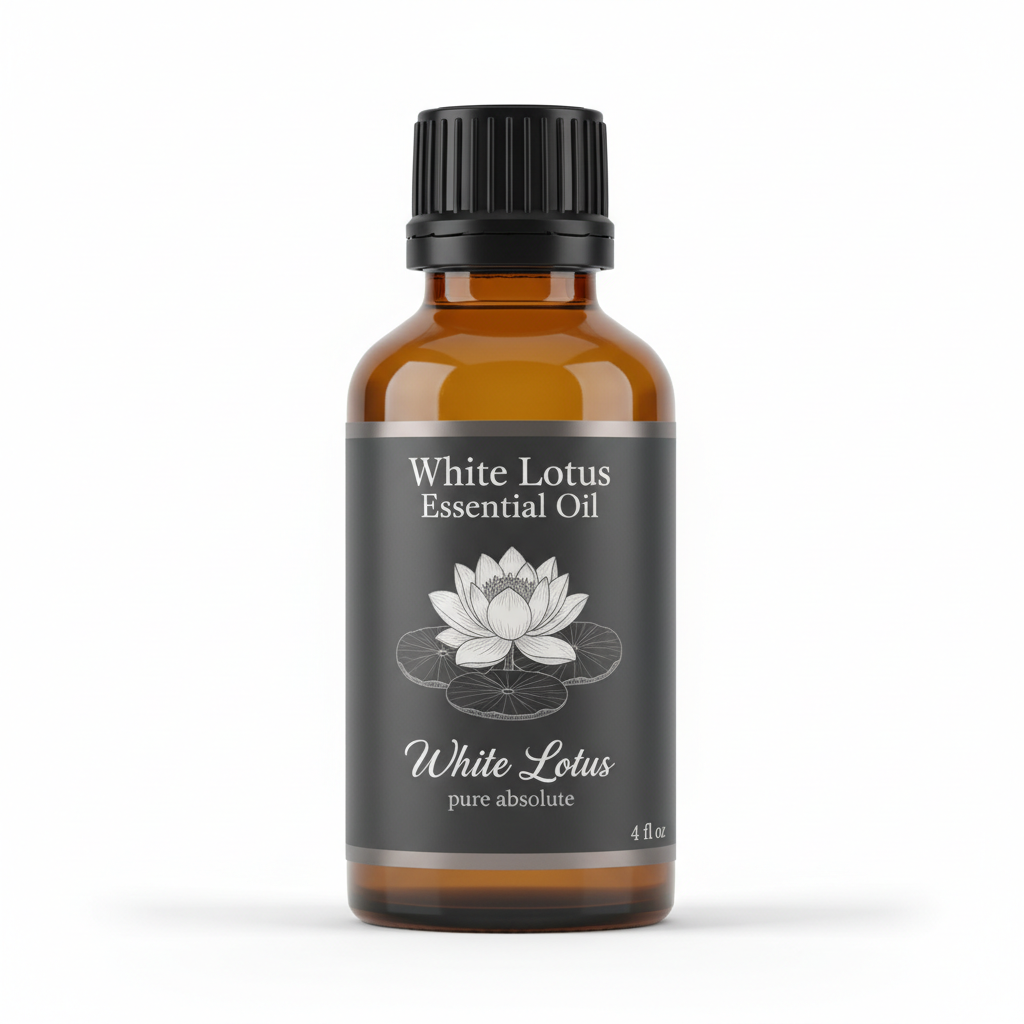
White Lotus Absolute
Our own White Lotus Absolute, in sizes from 0.5 oz to bulk.
From $23.99
Shop Now →This guide cuts through the overlap. Whether you are building a personal fragrance wardrobe, sourcing materials for a natural perfume project, or simply curious about the white lotus vs blue lotus debate you have seen discussed in aromatherapy forums, what follows is a fair, detailed look at all three.
First, a Botanical Note
None of these three are true lotuses in the strictest scientific sense. All three belong to the waterlily family, but their genus classifications matter for understanding why they differ so much in aroma and chemistry.
- White lotus (Nymphaea lotus, also called Egyptian white lotus or tiger lotus) is native to North Africa and the Nile basin. It blooms at night and carries a cool, green, slightly honeyed scent.
- Blue lotus (Nymphaea caerulea, the Egyptian blue lotus or sacred blue lily of the Nile) also blooms in the morning and fades by afternoon. Its scent is lighter and more delicate than white lotus, with faintly spicy, slightly earthy undertones.
- Pink lotus (Nelumbo nucifera) is the odd one out. It belongs to a different genus entirely and is botanically closer to a true lotus. Cultivated widely across South and Southeast Asia, it carries a warm, powdery, deeply floral scent with rosy and slightly balsamic facets.
Understanding these distinctions matters because it directly affects what you are actually buying when you purchase a "lotus oil." For a deeper look at white lotus specifically, the complete guide to white lotus absolute covers its history, extraction, and profile in full.
How Each Oil Is Produced
None of these are steam-distilled essential oils in the conventional sense. Lotus flowers are far too delicate for heat-based distillation. The fragrant compounds simply do not survive it. Instead, all three are typically produced as absolutes, using solvent extraction followed by alcohol washing to remove the waxy concrete and isolate the aromatic fraction.
Pink lotus is sometimes produced via enfleurage, a traditional cold-process method in which petals are layered onto fat to absorb their scent over days. Genuine enfleurage pink lotus absolute is extraordinarily rare and commands prices that reflect that rarity.
Blue lotus is occasionally offered as a CO2 extract, which captures a slightly different aromatic and chemical profile compared to solvent-extracted absolute. The CO2 route tends to emphasize greener, fresher top notes.
White lotus absolute is almost exclusively produced by solvent extraction. Harvesting happens at night when the blooms are fully open, and the window is short. That narrow harvest cycle, combined with the hand-intensive picking process, is a primary reason for its relatively high cost.
Scent Profiles at a Glance
Scent is where the three diverge most dramatically. A side-by-side comparison on a fragrance strip is the clearest illustration of why they are not interchangeable.
White lotus opens with a green, watery freshness, almost like the smell of a clean riverbank at dawn. The heart is cool, slightly honeyed, and floral without being sweet in an obvious way. The drydown is soft and slightly musky. It reads as elegant and understated. Perfumers often describe it as aquatic-floral with a transparent quality that does not overwhelm.
Blue lotus shares some of that aquatic quality but leans slightly spicier, with a faint earthy warmth underneath the floral top notes. It is a little more complex on first sniff, slightly more diffusive, and some batches carry a faintly green, slightly bitter edge. The scent fades faster on skin than white lotus does.
Pink lotus is the richest of the three. Warm, powdery, rosy, and full-bodied, it reads closer to a classic floral absolute in the tradition of rose or ylang-ylang than it does to its waterlily relatives. The balsamic base note lingers longest. In blending, it behaves like a heart-to-base note rather than a top note.
Comparison Table: White, Blue, and Pink Lotus
| Attribute | White Lotus | Blue Lotus | Pink Lotus |
|---|---|---|---|
| Botanical name | Nymphaea lotus | Nymphaea caerulea | Nelumbo nucifera |
| Genus | Nymphaea | Nymphaea | Nelumbo (distinct genus) |
| Primary origin | Egypt, North Africa | Egypt, South/Southeast Asia | India, China, Southeast Asia |
| Extraction method | Solvent extraction (absolute) | Solvent or CO2 extraction | Solvent extraction; rare enfleurage |
| Scent character | Aquatic, green, cool floral, honeyed | Spicy, lightly earthy, delicate floral | Warm, powdery, rosy, balsamic |
| Scent longevity on skin | Moderate to good | Light to moderate | Good to excellent |
| Fragrance note position | Heart note | Top-to-heart note | Heart-to-base note |
| Typical appearance | Pale amber to golden | Pale yellow to amber | Orange-amber to deep amber |
| Relative cost | High | High | Very high (genuine) |
| Adulteration risk | Moderate to high | High | Very high |
| Common use in perfumery | Aquatic florals, soliflores, meditative blends | Light florals, incense blends | Oriental florals, luxury soliflores |
Pros and Cons
White Lotus
Pros:
- A distinctive, genuinely unique aquatic-floral scent that is difficult to replicate with other ingredients
- Versatile in blending without dominating the composition
- Strong historical and cultural provenance (ancient Egypt, Vedic tradition) that adds meaningful narrative for brands
- Works beautifully in cooler, lighter fragrance families where pink lotus would feel too heavy
Cons:
- Genuine material is relatively rare and commands a corresponding price
- The market carries many adulterated or synthetic versions sold as "white lotus oil"
- The subtle, transparent scent may disappoint buyers expecting a bold floral
Blue Lotus
Pros:
- The most historically storied of the three, deeply woven into ancient Egyptian iconography
- Lighter than white lotus, which suits minimalist fragrance applications
- CO2 extracts offer an interesting aromatic alternative to traditional absolutes
Cons:
- Shorter scent longevity on skin compared to the other two
- Among the most heavily adulterated botanical oils on the market; many products sold as blue lotus contain little or no genuine material
- The subtle scent profile can make quality verification difficult without reference samples
Pink Lotus
Pros:
- The richest, most tenacious scent of the three, with excellent fixative qualities in a blend
- The warm, powdery profile appeals broadly across fragrance preferences
- Genuine enfleurage versions represent some of the most exquisite botanical absolutes available
Cons:
- The highest price point of the three, by a significant margin for genuine material
- Adulteration is rampant; rose, ylang-ylang, and synthetic musks are common adulterants
- The heavier profile limits its use in lighter, fresher compositions
- Can be overwhelming if over-diluted too quickly without testing; always start very low
A Word on Adulteration (It Matters Here More Than Usual)
The lotus absolute market is, frankly, difficult to navigate. All three oils are expensive to produce, all three are in high demand, and all three are routinely extended or replaced with synthetic aromachemicals or cheaper carrier materials. This is not unique to lotus, but the problem is more pronounced here than with many other botanicals.
When evaluating a supplier, look for gas chromatography-mass spectrometry (GC-MS) reports specific to the batch, not a generic certificate. Ask about the source region and harvest year. A reputable supplier will have answers. Vague provenance is a red flag.
Once you have a genuine absolute, proper storage is critical to preserving what you paid for. The guide to storing white lotus absolute covers the key principles, most of which apply equally to pink and blue lotus.
Best For: Use-Case Recommendations
Choose White Lotus If:
- You want an aquatic-floral note that feels cool, meditative, and clean without reading as synthetic
- You are building lighter blends: spring and summer fragrances, linen sprays, or spa-style room diffuser blends
- Your project calls for historical authenticity rooted in Egyptian or Nile Valley tradition
- You want a heart note that blends without fighting other ingredients for attention
Choose Blue Lotus If:
- You want the most delicate and ephemeral of the three for a light, barely-there scent application
- You are working with incense-forward or resinous blends where a light floral counterpoint is useful
- You can source from a rigorously verified supplier who provides batch-specific documentation
Choose Pink Lotus If:
- Your blend calls for a warm, full, powdery floral anchor with real staying power
- You are working in oriental, floral-oriental, or luxury soliflore fragrance families
- You have the budget for genuine material and the patience to source carefully
- You want a lotus that makes an immediate and unmistakable impression
Working With Lotus Absolutes in Blends and Cosmetics
All three lotus absolutes are used primarily for their aromatic contribution rather than any functional skin properties. In cosmetic formulations such as facial oils, serums, and body oils, they appear at very low percentages, typically between 0.1% and 1%, serving as a signature scent element.
Because these are absolutes rather than essential oils, dilution guidance differs slightly from standard essential oil protocols. The solvent residues in absolutes and their higher concentration of aromatic compounds both call for careful percentage work. The detailed guide to diluting white lotus absolute walks through the practical steps, including starting dilutions and patch-testing recommendations. These principles transfer directly to pink and blue lotus as well.
For personal fragrance use in an alcohol-based perfume, a starting point of 0.5% to 2% absolute in the fragrance concentrate is reasonable, adjusted upward carefully based on skin tests. Always conduct a patch test before applying any new absolute to a larger skin area.
Safety note: Lotus absolutes should not be used undiluted on skin. Keep all absolutes away from eyes and mucous membranes. If you are pregnant, nursing, or have known sensitivities to botanical extracts, consult a qualified healthcare provider before use.
The Verdict
There is no single winner in a lotus species comparison because the three oils serve genuinely different purposes. The question is not which one is best in the abstract. The question is which one is right for your specific project.
White lotus is the most versatile of the three. Its transparent, aquatic-floral profile sits comfortably in a wider range of applications, it has the richest cultural provenance if Nile Valley storytelling matters to your brand, and it holds up well enough in a blend without requiring the extreme price premium of genuine pink lotus. For most perfumers and cosmetic formulators exploring this category for the first time, white lotus is the most sensible starting point.
Blue lotus rewards the patient sourcer. If you find a genuinely verified batch, its delicate complexity is unlike anything else. But the adulteration problem is serious, and diluted or synthetic blue lotus sold at premium prices is a real risk.
Pink lotus, when it is genuine, is extraordinary. Warm, tenacious, deeply beautiful. It also requires the deepest due diligence of the three, the largest budget, and a clear understanding of how a heavy, powdery floral will function in your formula before you commit.
All three deserve more careful attention than the generic "lotus oil" label typically affords them. They are distinct plants with distinct scents, distinct sourcing realities, and distinct places in a thoughtful formulator's palette. Treating them as interchangeable does a disservice to what each one actually is.