The Nile Dawn Blend: Our Signature White Lotus, Sandalwood, and Bergamot Mix
Some blends arrive fully formed, as if the ingredients already knew each other. The Nile Dawn Blend is one of those. White lotus absolute lends a cool, watery richness that feels almost architectural. Sandalwood smooths every rough edge underneath it. And bergamot lifts the whole composition into morning light. The result is a signature floral blend that works equally well in a personal scent, a diffuser ritual, or a slow skin-care evening.
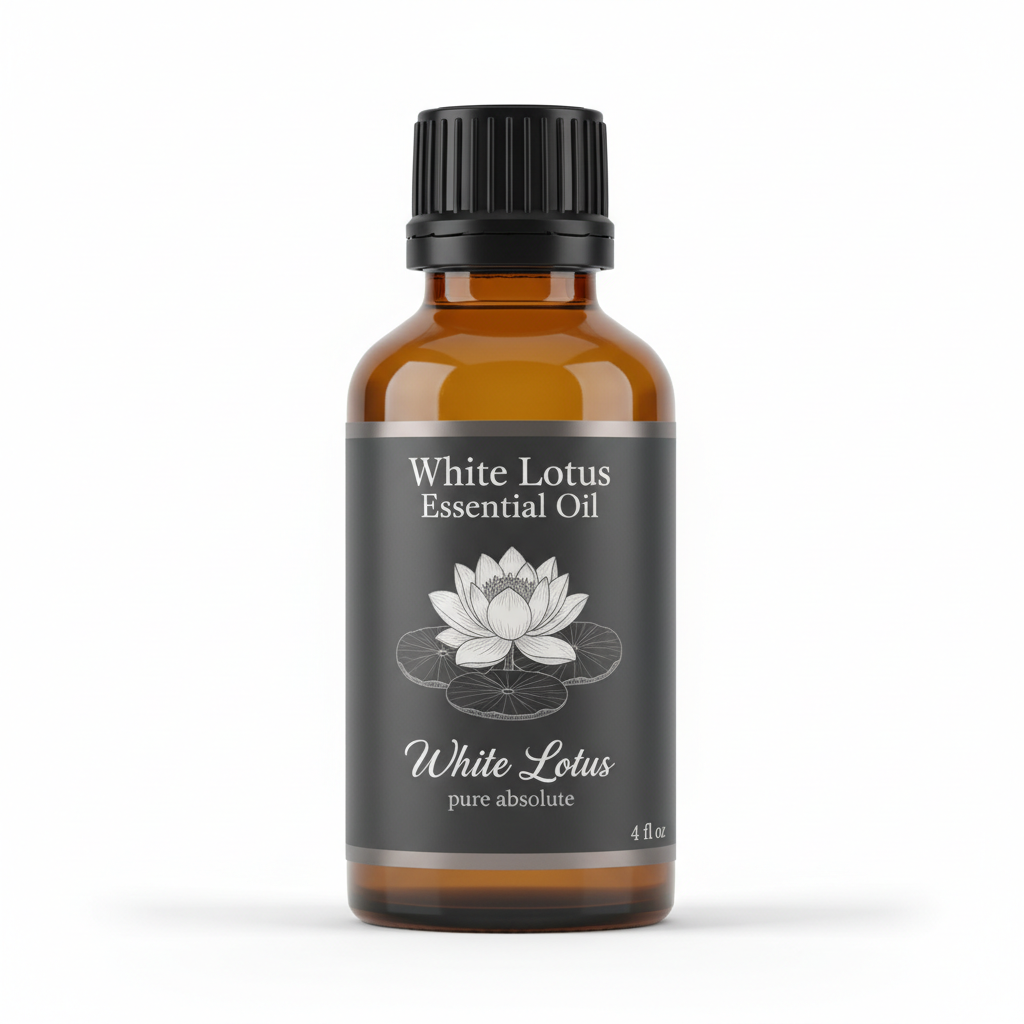
White Lotus Absolute
Our own White Lotus Absolute, in sizes from 0.5 oz to bulk.
From $23.99
Shop Now →This guide covers the complete white lotus blend recipe from ingredient selection through storage, along with three variations to make the formula your own.
Why These Three Ingredients Work Together
A successful lotus sandalwood blend depends on understanding what each note actually does in the bottle, not just on paper.
White Lotus Absolute
White lotus (Nymphaea lotus) absolute is extracted from the flowers of a plant revered along the Nile for thousands of years. Its scent is layered: a green, slightly aquatic opening that dries down into something powdery and warm, with a faint honey undertone. It is a true middle note that anchors a blend without dominating. If you want to understand the full aromatic and historical range of this ingredient, the complete guide to white lotus in perfume and ritual is a good starting point.
Australian Sandalwood (Santalum spicatum)
For this particular blend, we reach for Australian sandalwood rather than Mysore. Its character is drier, slightly smoky, and less overtly creamy than its Indian cousin. That dryness creates space for the lotus to breathe. If the sandalwood were too rich, it would swallow the floral note entirely. Australian sandalwood sits back just enough. It is a committed base note that extends the blend's longevity on skin and in the air.
Bergamot (Citrus bergamia), FCF
Bergamot is the top note, and it serves a specific purpose here: it sharpens the opening so the blend does not read as heavy or soporific. The FCF (furanocoumarin-free) version is essential for any skin application, as the naturally occurring furanocoumarins in standard bergamot can increase photosensitivity. FCF bergamot keeps the citrus brightness while removing that concern for leave-on use.
Full Ingredients List
This recipe makes a 10 ml personal perfume oil at a 15% aromatic concentration, suitable for pulse-point application. The carrier is fractionated coconut oil, chosen for its neutral scent and long shelf life.
| Ingredient | Drops | Milliliters (approx.) | Role |
|---|---|---|---|
| White lotus absolute | 12 drops | 0.60 ml | Heart / signature floral |
| Australian sandalwood EO | 10 drops | 0.50 ml | Base / fixative |
| Bergamot FCF EO | 8 drops | 0.40 ml | Top / brightness |
| Fractionated coconut oil | Fill to 10 ml | ~8.50 ml | Carrier |
Total aromatic drops: 30 drops in 10 ml = approximately 15% dilution.
Step-by-Step Blending Instructions
- Gather your materials. You will need a 10 ml amber glass roller bottle, a glass dropper or pipette for the absolute, a small funnel, and a notebook. Writing down what you actually add (not just what you planned) is the habit that separates good batches from great ones.
- Start with the base note. Add the Australian sandalwood drops first. Heavier molecules benefit from sitting at the bottom of the bottle, and starting with the base gives you a scent reference point before the other notes arrive.
- Add the heart note. White lotus absolute can be viscous, especially in cooler rooms. If it moves slowly through the dropper, warm the bottle briefly in your palm for 30 seconds. Count your drops carefully: 12 drops is the sweet spot. More, and the lotus risks overtaking the sandalwood's structural role.
- Add the top note. Drop the bergamot FCF in last. You will notice the scent immediately brightens in the bottle neck. That is the blend telling you it is alive.
- Fill with carrier. Using your funnel, pour fractionated coconut oil to the shoulder of the bottle, leaving just enough space for the roller ball insert.
- Cap and roll, do not shake. Gentle rolling between your palms integrates the oils without introducing excess air, which shortens shelf life.
- Rest the blend. Set the bottle in a cool, dark spot for at least 48 hours before the first use. Ideally, rest it for 5 to 7 days. The notes need time to marry. The bergamot will settle, the lotus will deepen, and the sandalwood will come forward in a way it cannot on day one.
Dilution Ratios and Safety Notes
The 15% dilution in this recipe is appropriate for a pulse-point perfume oil applied in small quantities to intact, adult skin. It is not appropriate for full-body application or use on sensitive skin areas without adjusting downward.
- For sensitive skin: Reduce total aromatic drops to 15 (a 7.5% dilution) in the same 10 ml carrier volume. Keep the ratios proportional: 6 drops lotus, 5 drops sandalwood, 4 drops bergamot.
- For diffuser use: No carrier is needed. Use 3 drops lotus, 2 drops sandalwood, and 2 drops bergamot in a standard ultrasonic diffuser with water. Do not exceed the manufacturer's recommended total drop count.
- Patch testing: Before first use on skin, apply a small amount of the finished blend to the inside of your wrist or elbow. Wait 24 hours and observe. If you notice any redness, itching, or discomfort, discontinue use and consult a qualified healthcare provider.
- Pregnancy and nursing: Consult a qualified healthcare provider before using any essential oil blend during pregnancy or while nursing.
- Children: This formula is intended for adult use. Different dilution guidelines apply for children, and some oils are not appropriate for young children at all. Seek guidance from a qualified professional before use.
- Photosensitivity: This recipe specifies bergamot FCF specifically to reduce photosensitivity risk. If you substitute standard (non-FCF) bergamot, avoid sun exposure on treated skin for at least 12 hours.
Storage and Shelf Life
Store your finished Nile Dawn Blend in its amber glass bottle, away from heat, humidity, and direct light. A drawer, cabinet, or small decorative box all work well.
Fractionated coconut oil is one of the most stable carriers available, with a shelf life of roughly two years unopened. Once blended with your essential oils and absolute, expect a comfortable working life of 12 to 18 months, provided you store it properly and avoid introducing water into the bottle.
Bergamot is the shortest-lived ingredient in this formula. If the top note begins to smell flat or slightly off before the 12-month mark, that is your cue that the blend has reached the end of its best period. Trust your nose.
Variations on the Nile Dawn Blend
Variation 1: The Deep Dusk Version
Replace bergamot with 8 drops of vetiver essential oil. Vetiver is earthy, smoky, and rooty, which pushes the blend toward evening and gives the lotus an almost resinous quality. This version works beautifully as a bedtime wind-down scent applied to wrists and the back of the neck. It is slower, heavier, and considerably more introspective than the morning original.
Variation 2: The Writing Desk Blend
Reduce sandalwood to 6 drops and add 4 drops of Atlas cedarwood and 4 drops of clary sage. The result has a woody, slightly herbal character that many people find conducive to focused, unhurried work. If you enjoy scenting your workspace or correspondence, the article on scenting paper, ink, and letters with white lotus pairs well with this version.
Variation 3: The Evening Skin Ritual
Lower the total dilution to 10% (20 drops total aromatics in 10 ml) and swap the fractionated coconut oil for rosehip seed oil. Rosehip adds its own faintly rosy, green character that complements the lotus beautifully. Apply a small amount as part of your evening facial routine after cleansing. For more on incorporating white lotus into an evening skin-care ritual, see our guide to white lotus for skin.
A Note on Sourcing
The quality of a white lotus blend recipe depends almost entirely on the quality of the white lotus absolute itself. Because genuine Nymphaea lotus absolute is labor-intensive to produce and sourced primarily from Egypt, the price point is high and the temptation toward adulteration in the supply chain is real. Look for suppliers who can name the country of origin, the extraction method (solvent extraction to absolute), and ideally provide GC/MS testing data on request.
Sandalwood is similarly worth scrutinizing. Australian sandalwood (Santalum spicatum) is more sustainably available than Indian sandalwood, and for this blend its drier aromatic profile is actually preferable. Sourcing from suppliers who work with certified sustainable plantations protects both the ingredient's quality and its long-term availability.
Making It Your Own
The Nile Dawn Blend as written is a starting point, not a prescription. Once you have made the base formula and lived with it for a week, you will have opinions. Maybe the bergamot feels too bright for your skin chemistry. Maybe you want the lotus louder. Adjust in small increments: one or two drops at a time, always noting what you changed. Perfumery rewards patience and records.
This particular combination of white lotus, sandalwood, and bergamot has a quality that is genuinely hard to source in commercial fragrance: it reads as warm and aquatic at the same time. That tension is rare, and worth exploring slowly.