White Lotus for Skin: A Rare Floral in Your Evening Routine
White lotus oil is not a common sight on skincare shelves. It arrives slowly, in small quantities, carried by steam or solvent from flowers that bloom for only a few days each season along the Nile and across South and Southeast Asia. That rarity shapes everything about how you use it: the dilution, the layering, the moment you reach for it in your routine.
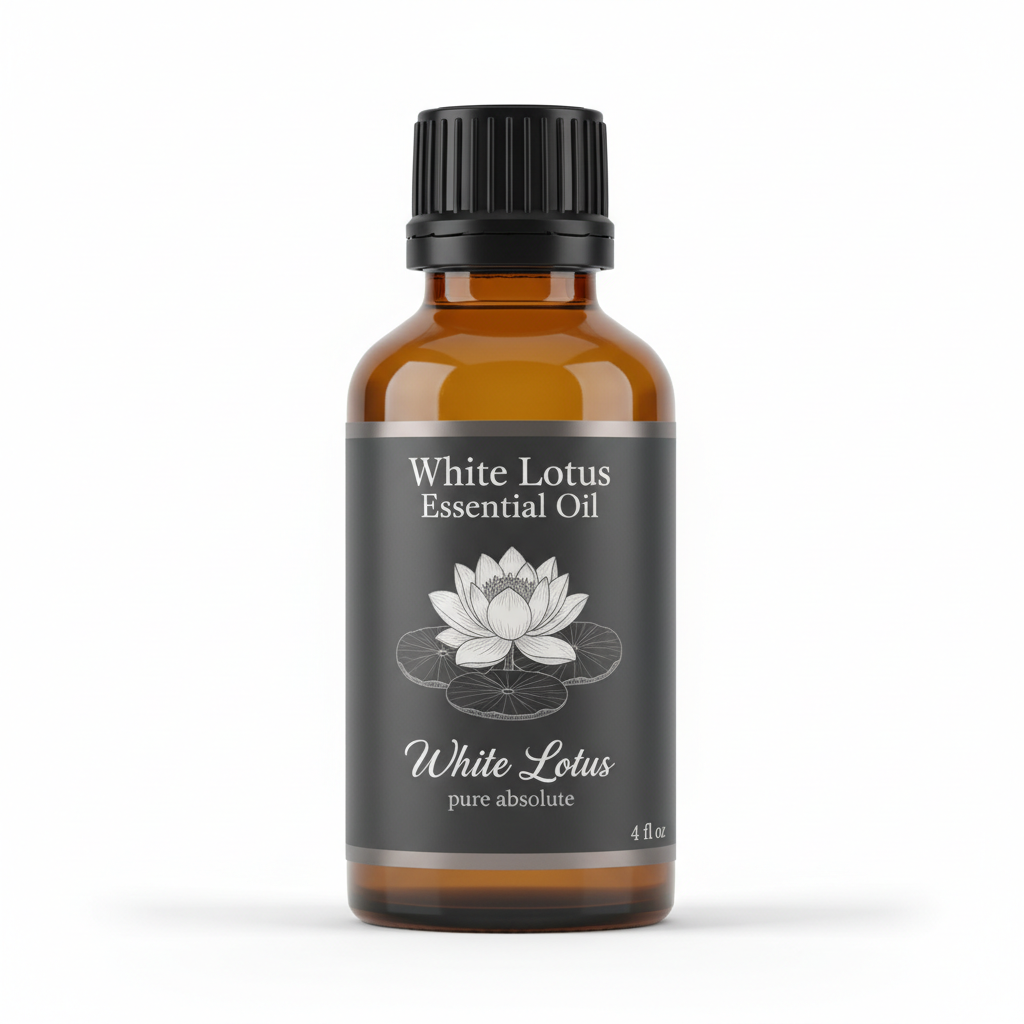
White Lotus Absolute
Our own White Lotus Absolute, in sizes from 0.5 oz to bulk.
From $23.99
Shop Now →This guide focuses on the cosmetic and aromatic applications of white lotus oil for skin, with particular attention to the evening, when the skin is receptive and the day's demands have quieted. You will find clear steps, honest notes on what to expect, and guidance on avoiding the mistakes that shorten a bottle's life or leave skin irritated rather than glowing.
Understanding the Ingredient Before You Apply It
White lotus arrives in two main forms: an absolute and an essential oil. The distinction matters for skin use.
- White lotus absolute: Extracted with solvents, then processed to remove most of the solvent residue. The result is a thick, deeply fragrant concentrate. It carries a richer, more complete floral profile. Some skin-sensitive individuals may find absolutes require extra caution due to trace solvent content, so patch testing is non-negotiable.
- White lotus essential oil (CO2 or steam-distilled): Lighter in texture, cleaner in extraction profile. Often preferred for direct skin blending because the carrier oil integration is more straightforward.
Both forms are highly concentrated. Neither should ever be applied undiluted to the skin. A small amount goes a long way, and respecting that fact is the single most important habit you can build around this ingredient.
For a broader look at how white lotus absolute behaves across different applications, including perfume and ritual use, the complete guide to white lotus in perfume and ritual covers the full picture.
What You Will Need
Before you begin, gather your materials. Working with a rare floral absolute rewards preparation. Scrambling for a carrier oil mid-blend leads to measurement errors.
Essential Ingredients
- White lotus essential oil or absolute (1 small bottle, ideally 1 ml or 2 ml for beginners)
- A carrier oil suited to your skin type (see notes below)
- A 10 ml or 30 ml dark glass roller bottle or dropper bottle
- A digital scale or precise dropper (avoiding guesswork with drops is important at this dilution level)
- A clean mixing rod or toothpick for stirring
- Unscented patch of inner arm skin, clean and dry, for testing
Choosing a Carrier Oil
The carrier oil you choose will affect both skin feel and how the lotus fragrance develops over time. Here are a few well-suited options:
| Carrier Oil | Skin Feel | Notes for Lotus Blending |
|---|---|---|
| Jojoba oil | Lightweight, non-greasy | Neutral scent, absorbs cleanly, extends shelf life well |
| Rosehip seed oil | Dry-finish, nourishing | Adds its own character; use only if you enjoy the combination |
| Squalane | Very lightweight, silky | Excellent scent-neutral base; does not compete with lotus |
| Sweet almond oil | Medium weight | Mild nutty undertone; works well for body application |
For facial use, jojoba and squalane are popular choices because they sit close to skin's natural composition and carry a very faint scent of their own.
Step-by-Step: Building Your Evening Lotus Skincare Blend
Step 1: Decide on Your Dilution
For facial application, use a 0.5% to 1% dilution of white lotus oil. This means roughly 3 to 6 drops of essential oil per 30 ml of carrier oil. For body use (arms, neck, décolletage), a 1% to 2% dilution is appropriate for most adults.
If you are new to floral absolutes, start at 0.5%. White lotus is potent, and a lighter hand at first gives your skin time to show you how it responds. More is not better here.
A note on drop counting: Drop size varies between bottles and dropper types. For the most accurate measurement, use a small scale and weigh the oil rather than counting drops, especially when working with a precious absolute where every drop matters.
Step 2: Patch Test First
This step is not optional, especially with a floral absolute. Apply a small amount of your diluted blend (not the undiluted oil) to the inside of your forearm or the back of your wrist. Leave it uncovered for 24 hours. Watch for any redness, itching, or unusual skin response before applying the blend to your face.
If you have known sensitivities to botanical extracts or to flowers in the Nymphaea family, consult a qualified healthcare provider before adding white lotus to your routine.
Step 3: Mix Your Blend
- Pour your chosen carrier oil into the glass bottle. Fill it to approximately 90% full to leave room for the essential oil and mixing.
- Add white lotus oil carefully, drop by drop, counting as you go.
- Cap the bottle and gently roll it between your palms for 30 seconds. Do not shake vigorously. Slow rolling integrates the oils without introducing excess air.
- Label the bottle with the contents, dilution percentage, and the date. White lotus absolute blends are typically best used within 6 to 12 months. Jojoba-based blends tend toward the longer end of that range.
Step 4: Place It in Your Evening Routine
The evening is ideal for a lotus facial oil for several reasons. Skin renewal activity picks up after sundown. The rich, warm fragrance of white lotus suits a wind-down atmosphere rather than a morning rush. And because you will not be applying sunscreen over the oil (which you would need to do in the morning), the blend can sit undisturbed on the skin overnight.
Here is where the lotus oil fits within a typical layered routine:
- Cleanse the face thoroughly and pat dry.
- Apply any water-based serums you use. Let them absorb for a minute or two.
- Apply 2 to 4 drops of your lotus blend to your fingertips. Press gently onto cheeks, forehead, and neck. Avoid the eye area and mucous membranes.
- If you use a moisturiser, apply it over the oil, or mix one drop of the blend into your evening moisturiser in your palm before applying. Some people prefer oil as the final step; find what your skin prefers.
Tips from Experienced Blenders
On Fragrance Intensity
White lotus has a presence. Even at 0.5% dilution, you will smell it. If you layer it over a scented serum or under a heavily fragranced moisturiser, the combinations can become unpredictable. In an evening routine, simpler is often better. Consider switching to an unscented moisturiser on nights you use the lotus blend.
On Storage
Store your bottle in a cool, dark place. A bathroom cabinet with temperature swings is not ideal. A drawer in your bedroom, away from direct heat, will serve the oil better. Light and heat are the primary enemies of floral absolutes.
On Skin Around the Eyes
Avoid the immediate eye area entirely. Essential oils and absolutes, even well diluted, can cause significant irritation to the delicate mucous membranes near the eyes. Keep application to the outer face and neck.
On Pregnancy and Nursing
If you are pregnant or nursing, consult your healthcare provider before using white lotus oil or any new essential oil in your routine. Many practitioners advise extra caution with concentrated botanicals during this time.
Common Mistakes to Avoid
- Applying undiluted: White lotus absolute applied directly to skin can cause irritation and sensitisation. Always dilute, always.
- Skipping the patch test: Floral absolutes have a more complex chemical profile than many single-compound oils. Patch testing is the only way to know how your skin will respond.
- Overusing it: Two to four drops of a well-diluted blend is sufficient for the full face and neck. Applying more does not increase benefit and may overwhelm sensitive skin.
- Buying without checking sourcing: White lotus oil is expensive and, as a result, frequently adulterated. Look for suppliers who provide batch-specific documentation and can speak clearly about their extraction method and origin. A suspiciously low price is a meaningful red flag.
- Storing in plastic: Essential oils, especially absolutes, can degrade certain plastics over time. Use glass bottles for storage and application.
What to Expect
After consistent evening use of a well-made lotus blend, people report that their skin feels more comfortable and appears more luminous over time. The carrier oils contribute significantly to this experience alongside the lotus absolute itself, so the choice of carrier matters.
The scent experience is equally notable. White lotus has a quality that many find deeply calming in the evening. It is rich without being heavy, floral without the sharpness of some rose or jasmine absolutes. Some people find it becomes an anchor for their bedtime wind-down, signalling to the body that the evening has begun in earnest.
Results vary, and individual skin responses differ widely. White lotus oil is a cosmetic ingredient, not a corrective one, and approaching it as a sensory and skin-nourishing addition to your routine sets the right expectations.
Extending the White Lotus Experience
Skincare is only one avenue for this oil. If you find yourself drawn to the fragrance, it opens up other slow, intentional uses. Writing letters or journaling in the evening pairs beautifully with white lotus, and the guide to scenting paper and letters with white lotus offers a creative practice that complements a fragrant evening ritual.
For those who want to diffuse white lotus in the bedroom as part of the same wind-down window, the process requires a different approach than you might expect from other oils. The article on diffusing white lotus absolutes explains why, and how to do it well without wasting a precious ingredient.
A Closing Note on Rarity and Respect
White lotus oil carries a story in every bottle. The flowers are harvested by hand, often before dawn, in small quantities from waterways where the plant has been cultivated and revered for centuries. Using it in a skincare routine is a small act of connection to that lineage.
That context is worth holding. It shapes how you measure, how you store, and how you apply. When something takes this much care to produce, it rewards care in return. The evening is a fitting time for it. The skin is ready. The day is done. A few drops of white lotus oil, pressed gently into the face, is a fitting way to close it.