
Scenting Paper, Ink, and Letters with White Lotus
There is a quiet revival happening at writing desks everywhere. Fountain pens are back. Wax seals are appearing on wedding envelopes. People are hand-writing notes again, slowly and deliberately, as a small act of presence in an otherwise digital life. And now, the next detail some letter-writers are reaching for is scent.
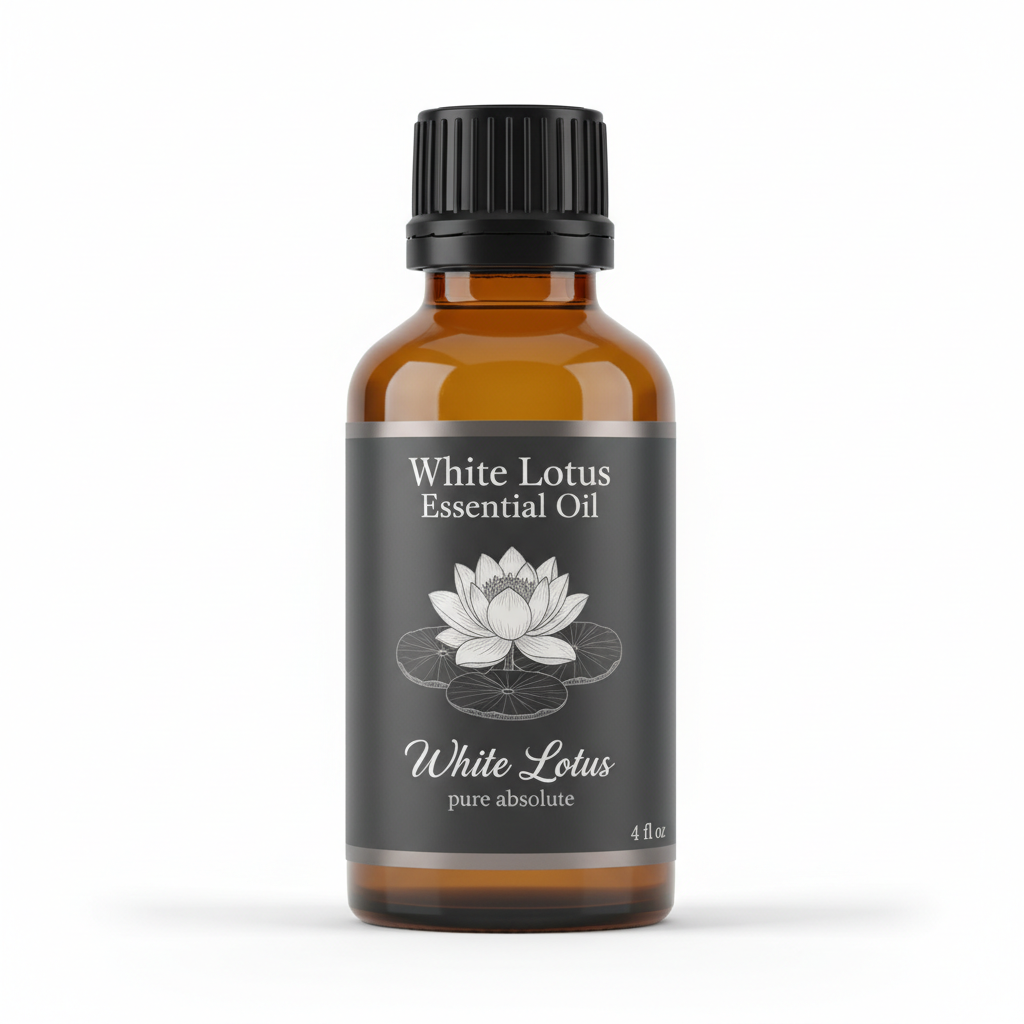
White Lotus Absolute
Our own White Lotus Absolute, in sizes from 0.5 oz to bulk.
From $23.99
Shop Now →Scented stationery has a long and graceful history. Egyptian priests pressed lotus blossoms into papyrus. Victorian correspondents tucked dried violets between folded sheets. Perfumed letters were not merely romantic gestures. They were a way of carrying something of oneself across distance. Today, with white lotus essential oil more accessible than ever, that tradition is easy to revive with a freshness and precision that dried flowers never quite achieved.
This guide covers every practical method: how to scent paper without staining, how to perfume ink, when to apply fragrance, and how to adjust your approach for the season. If you are new to white lotus oil, its profile is worth knowing before you begin. The scent is cool, aquatic, and softly floral, with a green, almost watery depth that sits closer to nature than to a conventional perfume counter. It lingers without shouting.
Why This Moment Is the Right One
Autumn and winter accelerate the letter-writing impulse. Holiday cards, thank-you notes, year-end correspondence, seasonal invitations: paper moves through the postal system in higher volumes between October and January than at any other time of year. At the same time, the slower, candlelit pace of colder months makes a scented writing ritual feel genuinely pleasurable rather than effortful.
White lotus also suits this season particularly well. Its cool, aquatic quality does not compete with the warm spice notes that tend to dominate winter interiors. Instead, it offers a contrast: something clean and still, like a frozen pond at dawn. Layered against a beeswax candle or cedar wood in the background, the lotus note becomes unexpectedly cozy rather than summery.
Spring is an equally natural time to return to this practice. If you are preparing wedding stationery, garden party invitations, or congratulatory notes, lotus scented paper carries a botanical freshness that feels genuinely of the season. For more on how white lotus fits into wedding correspondence and bridal rituals, see our feature on white lotus for a wedding day.
Understanding White Lotus Oil Before You Begin
One clarification matters here: what is sold as white lotus essential oil is almost always an absolute or a CO2 extract, not a steam-distilled oil in the traditional sense. The white lotus flower (Nymphaea lotus and related species) does not yield oil through standard steam distillation in commercial quantities. What you are working with is a concentrated floral extract, often thick and deeply pigmented.
This matters for paper applications because undiluted absolute can stain. It matters for ink applications because viscosity affects how it blends. Understanding this upfront will save you ruined stationery. For a fuller explanation of why lotus absolutes behave differently from steam-distilled oils in diffusion and blending, the guide on white lotus in the diffuser covers the technical reasoning clearly.
Method One: The Drawer Sachet Approach
This is the most forgiving method and the best starting point for anyone new to lotus scented paper. You are not applying oil directly to paper at all. Instead, you are scenting the environment the paper lives in.
- Take a small cotton pad, a piece of unbleached muslin, or even a folded paper towel.
- Add two to three drops of white lotus absolute, diluted in a small amount of fractionated coconut oil or jojoba oil at a ratio of roughly one part absolute to ten parts carrier.
- Place this scented pad inside the drawer or box where your stationery is stored.
- Close the drawer and leave it for at least 48 hours before using the paper.
The result is a subtle, ambient scent on the paper rather than a concentrated spot. It smells like the paper has always belonged to someone who keeps lotus nearby. That subtlety is often more elegant than a direct application.
Refresh the sachet every two to three weeks. In warm months, the absolute may become more fluid and migrate through the carrier material, so check that it is not sitting directly against your best writing paper.
Method Two: Linen Water Mist
A lotus-scented linen water gives you more control over the intensity of the fragrance and lets you scent individual sheets just before use.
- Fill a small glass spray bottle (30 ml works well) with distilled water and a tablespoon of high-proof alcohol such as perfumer's alcohol or unscented vodka.
- Add five to eight drops of white lotus absolute, pre-diluted in a little jojoba. Shake well before each use.
- Mist lightly over the back of a sheet of paper and allow it to dry completely before writing.
The alcohol helps the absolute disperse into the water rather than floating on the surface, and it speeds drying. Never mist the writing side of the paper before writing. Moisture will cause the ink to feather or bleed, particularly with fountain pen inks. Always scent the back, or scent the paper after writing and allow it to dry again before folding.
For envelopes, a single light mist on the inside flap is sufficient. The warmth of the recipient's hands when they open the letter will lift the scent beautifully.
Method Three: Perfumed Ink
This is the most technically demanding method and the one that divides letter-writers most sharply. Done carefully, it produces something genuinely lovely: every word on the page carries a faint botanical signature. Done carelessly, it ruins a pen.
A few firm guidelines before you try it:
- Only attempt this with dip nibs, not with cartridge or converter fountain pens. Essential oil components can gum up internal pen mechanisms and damage rubber seals.
- Use water-based inks, not oil-based or India ink.
- The addition of any oil will alter ink flow and potentially affect archival quality. Scented ink is for letters, not documents intended for preservation.
To make a small test batch, combine one teaspoon of your chosen water-based ink with a single drop of white lotus absolute that has been pre-diluted in alcohol (at a concentration of around 10 percent absolute to 90 percent perfumer's alcohol). Stir gently. Test on scrap paper first. Look for smooth flow, no beading, and clean drying before you use it on good stationery.
The resulting scent on paper is very light. It is not a perfumed letter in the Victorian sense. It is more of a whisper, noticeable when the paper is held close. Some writers find this more sophisticated than a heavier application.
Seasonal Variations Worth Trying
Autumn and Winter: Lotus with Warm Grounding Notes
For drawer sachets or linen water used during colder months, consider blending your white lotus absolute with a small proportion of sandalwood or benzoin resinoid. Both are thick, warm materials that extend and deepen the lotus note without overwhelming it. A ratio of three parts lotus to one part sandalwood in your dilution works well as a starting point.
Spring: Lotus with Green Botanicals
In spring, the fresh and green quality of white lotus pairs naturally with a drop of violet leaf absolute or a single drop of yuzu. The combination reads as garden-adjacent rather than perfumey. For wedding stationery or spring party invitations, this lighter blend suits the season without competing with fresh flowers that may accompany the correspondence.
Summer: Unblended and Cool
In summer, white lotus absolute on its own is enough. Its aquatic character already suggests water, shade, and open sky. Using it unblended (but always diluted before any contact with paper) keeps the scent profile clean and the experience refreshing rather than heavy.
Paper Selection and Compatibility
Not every paper takes scent equally. Heavily coated or glossy papers resist absorption and will not hold fragrance well. Uncoated cotton rag papers, linen papers, and heavier laid papers absorb scent most effectively and release it most gracefully on opening.
Japanese washi papers are a particularly good choice. Their plant-fiber composition is porous and holds scent for longer periods without the oil discoloring the surface, provided dilution is correct.
Avoid applying any oil-based preparation directly to thin or highly acidic papers. The oil can cause yellowing over time, which matters if you intend the letter to be kept.
A Note on Concentration and Safety
White lotus absolute is highly concentrated. Even in paper applications, where skin contact is unlikely, good dilution practice keeps the scent elegant and prevents the absolute from staining. A general working dilution for paper sachets and linen waters is one to two percent absolute in carrier or alcohol. This is lower than typical skin-safe dilutions because paper holds scent well and you are building up exposure gradually over hours or days.
Store your diluted preparations in dark glass. Lotus absolute is photosensitive and will fade or shift in character with prolonged light exposure. A small amber or cobalt bottle kept in a drawer is ideal.
If you are making a blended preparation to share with others, such as a scented ink for a calligraphy class or a drawer sachet as a gift, include a note about what materials were used, particularly for anyone with known sensitivities to floral compounds.
The Ritual Dimension
Part of what makes scented stationery worth the effort is that it asks you to slow down. You are not just writing a note. You are preparing a small experience for someone else, one that engages an additional sense the moment they open the envelope.
White lotus has been associated with careful attention and quiet ritual across many cultures for a long time. Using it in a writing practice feels like an extension of that history rather than a novelty. For readers interested in exploring that wider ritual context, the complete guide to white lotus in perfume and ritual covers the full scope of how this oil has been used across different practices and traditions.
Start with the drawer sachet method. Give your paper 48 hours. Write something by hand and seal it carefully. The person who receives it will notice something different about the letter before they have read a single word.