
A Bridal Scent Story: White Lotus for a Wedding Day
Fragrance is one of the most underplanned details of a wedding. Flowers are chosen months in advance. Menus are tasted and revised. But the scent the bride will carry through the ceremony, the photographs, and the first dance? It often gets decided the week before, or not at all.
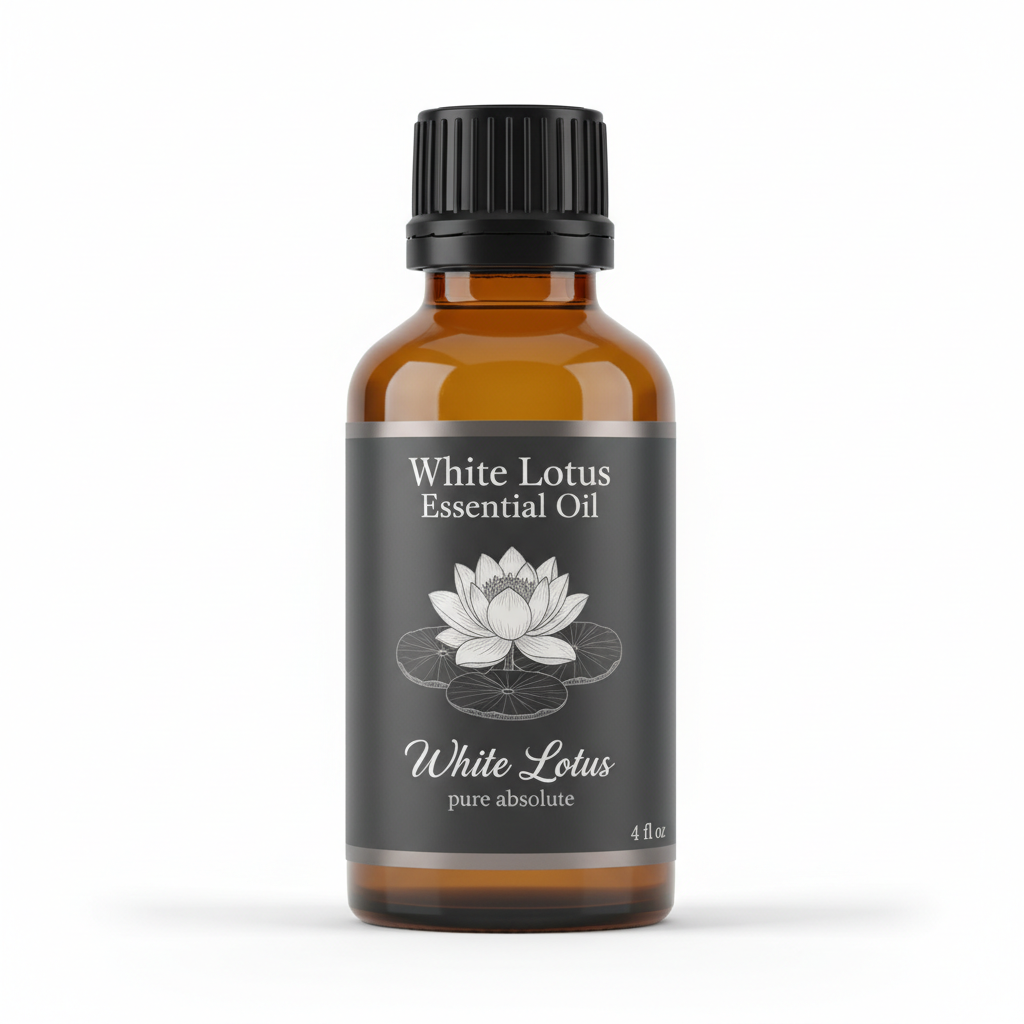
White Lotus Absolute
Our own White Lotus Absolute, in sizes from 0.5 oz to bulk.
From $23.99
Shop Now →This case study follows one bride's approach to building a signature wedding day fragrance around Nymphaea lotus absolute, commonly known as white lotus. Her process was deliberate and unhurried, and the observations she and her florist, her mother, and her partner shared afterward offer a useful framework for anyone exploring white lotus wedding scent as the centerpiece of a bridal fragrance ritual.
The names and identifying details in this piece have been composited for privacy. The scent decisions, ratios, and experiences described are drawn from real consultation notes.
The Context: A Scent With Nowhere to Belong
Our subject, a florist by trade, came to us with a clear and slightly frustrated brief. She had tried three commercial bridal perfumes. All three were beautiful. None of them felt like hers.
The first was a classic white floral, heavy on gardenia and tuberose. She described it as "a perfume that expects applause." The second was a clean musky scent that read as pleasant but forgettable. The third was a rose-forward oriental that she loved in theory but found overwhelming by midday.
She wanted something quieter. Cooler. Something that would feel as much like atmosphere as it did like perfume. She also had a practical constraint: her reception was outdoors in late August, and she was concerned about projection becoming cloying in the heat.
She had been working with white lotus florals in her arrangements for years and already understood the flower's character intuitively. When she asked whether the essential oil might anchor a wearable scent, we began exploring together.
The Approach: Building Around a Single Anchor Note
The decision to lead with a single defining material and build outward from it is a classical perfumery strategy, and it suited her brief well. White lotus absolute has a scent profile that rewards this approach: it is complex enough to carry a fragrance on its own, yet it layers gracefully rather than competing with supporting notes.
For a deeper grounding in how white lotus functions as a compositional element, our guide to white lotus in perfumery and building an aquatic floral heart covers the technical architecture in detail. The short version: white lotus sits at an unusual crossroads. It is floral without being sweet, aquatic without being sharp, and slightly waxy in a way that reads as skin-like rather than synthetic. These qualities made it a natural candidate for a bridal application where the goal was integration rather than performance.
The Initial Trial Blend
We started with a 2% dilution of white lotus absolute in jojoba oil as a skin-application test, applied to the wrist and inner elbow. The goal was simply to observe how the material behaved on her skin over several hours.
Observations from that first session:
- The opening was cool and slightly green, with a faint honey undertone that softened within twenty minutes.
- The mid-period, roughly one to three hours after application, was the most pronounced: a warm aquatic floral with a subtle powdery quality that read as soft rather than dusty.
- By the four-hour mark, the scent had settled into a barely-there skin note that she described as "what I imagine clean water smells like if you could actually smell it."
- There was no noticeable projection beyond arm's length at any point, which aligned with her preference.
The longevity at 2% was modest. For a full wedding day, we knew we would need to think about format and reapplication.
Layering the Scent Profile
After several weeks of skin trials, she arrived at a two-component approach rather than a single blend. This is a strategy worth noting for anyone developing bridal perfume ideas with essential oils: layering two compatible formats often creates better longevity and adaptability than a single application.
Component One: A solid perfume worn on pulse points. Working from the project we document in our DIY white lotus solid perfume guide, she made a small batch using white lotus absolute at 3% in a beeswax and jojoba base. The wax carrier slows the release of the material, which extends the mid-note phase considerably. It also makes reapplication discreet, which matters on a day when you are unlikely to have free hands.
Component Two: A linen and hair mist. A very light dilution of white lotus (0.5%) in a water-and-witch-hazel base, applied to her veil and the fabric of her dress before she put them on. This created a diffuse ambient quality around her rather than a concentrated point-source of scent.
The combination meant that the scent she carried was, in her words, "layered from the inside out." The solid perfume gave it a personal intimacy. The mist gave it an environmental quality that her guests would notice without being able to identify it as perfume.
Safety Notes for DIY Bridal Fragrance
Before going further, a few practical points that any bride building a custom scent should keep in mind.
Patch testing is not optional. Skin sensitivity can change with stress, hormonal shifts, and dietary changes, all of which may be present in the weeks before a wedding. Test any new blend on the inner forearm at least 48 hours before the wedding day, and again a week before if you have introduced any new components.
Keep dilutions conservative for skin application. For adults applying to intact skin on pulse points, a 2 to 3% dilution in a carrier oil or wax base is a reasonable working range for florals like white lotus. The complete guide to white lotus uses in perfume and ritual includes a fuller discussion of dilution principles and application contexts.
Fabric mists require a different calculation. Some essential oil materials can leave marks on light-colored fabrics. Always test any mist on a hidden seam of the actual fabric before using it on the garment. With white lotus absolute at very low concentrations in a witch-hazel base, no staining was observed in this case, but the test should always happen regardless.
If you are working with a perfumer or aromatherapist professionally, share any known skin sensitivities upfront. And consult a qualified healthcare provider if you have any concerns about skin conditions or sensitivities before introducing new materials.
Observations From the Wedding Day
The wedding was held on a Saturday in late August. Outdoor ceremony, late afternoon. Evening reception under string lights in a garden space. The temperature peaked at around 29 degrees Celsius during the cocktail hour.
She applied the solid perfume to her wrists, inner elbows, and the base of her throat about twenty minutes before the ceremony began. The veil and dress had been misted the night before and left to air.
Key observations, gathered from follow-up notes approximately one week after the wedding:
- She reapplied the solid perfume once, during the dinner break, which she described as quick and completely manageable.
- The scent was still perceptible to her at the end of the evening, approximately nine hours after initial application. She rated its presence as "faint but real."
- Several guests asked about her fragrance. Notably, two of them asked whether she was wearing a specific luxury commercial perfume, which suggests the white lotus profile reads as finished and refined rather than homemade.
- Her partner, who had been part of the scent development process, reported that the fragrance read as "just her, but more so." This is perhaps the most useful data point in the whole exercise.
- No skin reactions were observed. No fabric staining was noted on the dress or veil.
The outdoor heat, which had been her primary concern, did not intensify the scent to an unpleasant degree. The low projection profile of white lotus absolute, combined with the slow-release solid wax format, appeared to keep the scent close to the skin rather than amplifying it in warmer conditions.
Key Learnings for Brides Considering a Custom Wedding Day Fragrance
This case study is one person's experience with one material, and individual results will vary considerably based on skin chemistry, climate, and personal preference. That said, several patterns from this process are worth carrying forward.
Start with the material, not the formula
Spend time with white lotus on its own before you try to build around it. Its character shifts meaningfully across the dry-down, and understanding those shifts will tell you what it needs from supporting notes (if anything) and what format suits the phase you love most.
Think in formats, not just blends
The two-component approach (solid perfume plus ambient mist) gave her more control than a single rollerball could have. For a wedding day fragrance that needs to perform across many hours and varied conditions, layering formats is a practical strategy worth exploring.
Give yourself weeks, not days
She started working on her scent four months before the wedding. This allowed time for multiple rounds of skin trials, several reformulations, and a full "dress rehearsal" at a pre-wedding event. Rushed scent decisions are almost always the ones you wish you had revisited.
The goal is integration, not statement
A wedding day fragrance does not need to announce itself. The most moving feedback she received was from her partner, who experienced the scent as an extension of her rather than a layer applied over her. White lotus, with its skin-like and quietly aquatic character, seems particularly well suited to this kind of presence. It does not shout. It simply belongs.