DIY White Lotus Solid Perfume: A Tiny-Batch Luxury Project
A solid perfume fits in your pocket, lasts longer on skin than most sprays, and lets you carry a genuinely complex fragrance without the alcohol that makes many bottled perfumes feel sharp or fleeting. When that fragrance centers on white lotus absolute, the result is something quietly extraordinary: cool, watery, faintly honeyed, with a green depth that no synthetic lotus accord quite replicates.
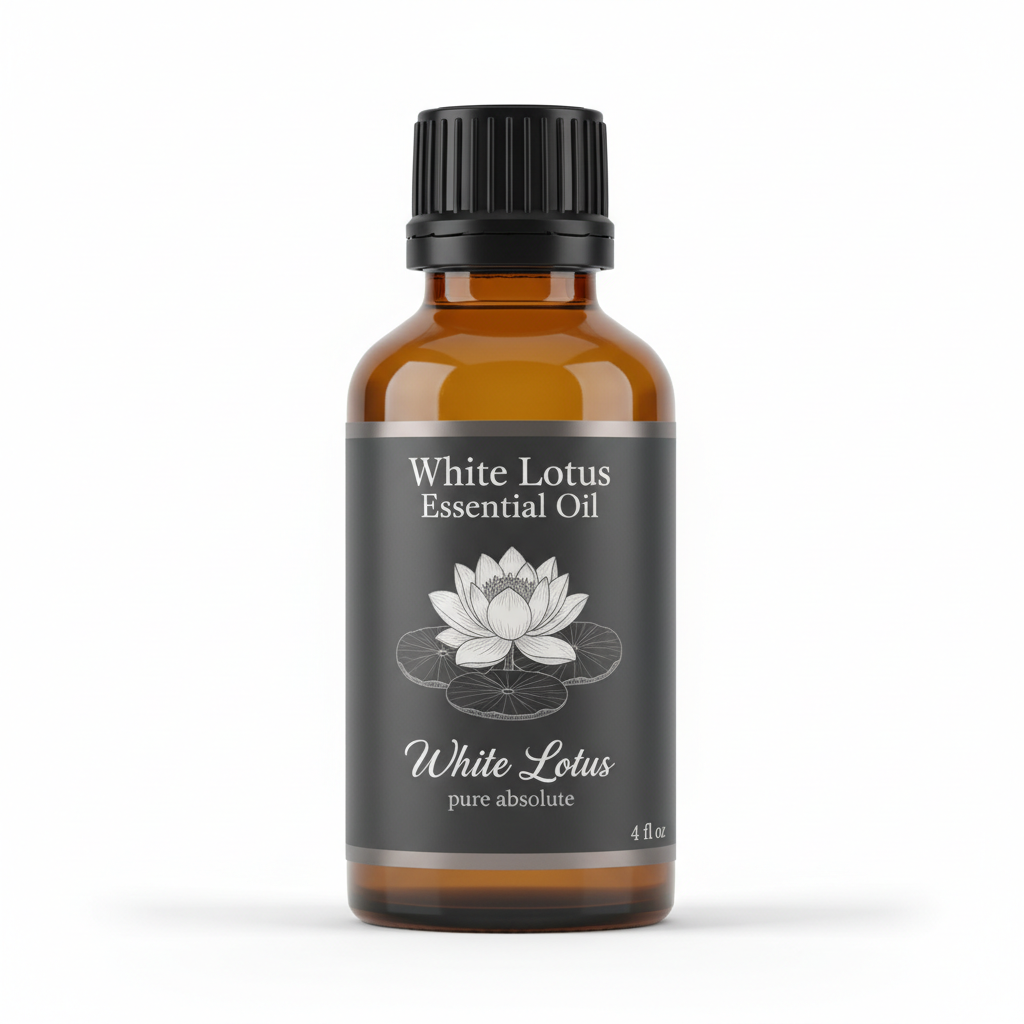
White Lotus Absolute
Our own White Lotus Absolute, in sizes from 0.5 oz to bulk.
From $23.99
Shop Now →This recipe makes two to four small tins, depending on your containers. It is a true tiny-batch project, designed for anyone who wants to understand what goes into a quality diy solid perfume before committing to larger quantities. The process is straightforward, the ingredients are few, and the margin for meaningful customization is wide.
Before You Begin: A Few Honest Notes on White Lotus Absolute
White lotus (Nymphaea lotus or Nelumbo nucifera, depending on the source) is not widely available as a steam-distilled essential oil. What you will find from reputable suppliers is an absolute, extracted with solvents and then carefully refined. The term absolute perfume balm applies specifically to formulas built around absolutes rather than essential oils, and it is worth knowing the distinction.
Absolutes are more concentrated and more fragrant than most essential oils. They also contain trace amounts of solvent residue, which is why skin-sensitivity testing matters more here than it does with simpler base oils. Quality varies considerably between suppliers. Look for a supplier who lists the botanical name, the country of origin, and the extraction method. Egyptian white lotus absolute, drawn from flowers harvested along the Nile Delta, is widely considered the benchmark.
For a deeper look at how white lotus absolute fits into a broader fragrance and self-care practice, see our complete guide to white lotus in perfume ritual.
Difficulty and Time
- Difficulty level: Beginner-friendly, with one step that requires careful attention (temperature control during melting)
- Active prep time: 20 to 30 minutes
- Cooling and setting time: 1 to 2 hours at room temperature, or 30 minutes in the refrigerator
- Yield: Approximately 30 ml total, filling two 15 ml tins or four 7.5 ml tins
Ingredients
| Ingredient | Amount | Notes |
|---|---|---|
| Beeswax pellets (cosmetic grade) | 8 g | Provides structure; pellets melt more evenly than blocks |
| Candelilla wax | 2 g | Optional; hardens the balm slightly for warmer climates |
| Jojoba oil (golden or clear) | 14 ml | Technically a liquid wax; long shelf life, skin-compatible |
| Fractionated coconut oil | 6 ml | Keeps the balm soft and spreadable; does not go rancid quickly |
| White lotus absolute | 0.6 ml (approximately 20 drops) | Core fragrance; use a reputable absolute, not a synthetic |
| Jasmine sambac absolute (optional) | 0.2 ml (approximately 6 drops) | Adds warmth and a floral mid-note bridge |
| Sandalwood essential oil (optional) | 0.1 ml (approximately 3 drops) | Grounds the scent; adds a soft woody base |
| Vitamin E oil (tocopherol) | 2 to 3 drops | Antioxidant; extends shelf life of the carrier oils |
Total fragrance load at this ratio: Approximately 3%, which sits within generally accepted cosmetic guidance for a leave-on balm applied to a small skin area. Do not increase the absolute beyond this percentage without reviewing current industry dilution guidelines for your specific skin type and intended application area.
Equipment
- Small digital kitchen scale (accurate to 0.1 g)
- Double boiler or a heat-safe glass measuring cup set in a saucepan of water
- Glass or stainless steel stirring rod
- Dropper or pipette for measuring absolutes
- Pouring spout or small ladle
- Two 15 ml or four 7.5 ml metal tins with lids (aluminum or brass)
- Isopropyl alcohol in a spray bottle, for sterilizing equipment and tins
Step-by-Step Instructions
-
Sterilize your workspace and containers
Spray all metal tins, the stirring rod, and the inner surface of your pouring vessel with isopropyl alcohol. Let everything air-dry completely before use. This step reduces the chance of introducing contamination into a water-free formula.
-
Set up your double boiler
Fill a small saucepan with about 5 cm of water and bring it to a gentle simmer. Place a heat-safe glass measuring cup or small glass bowl on top. The bottom of the glass should not touch the water.
-
Melt the waxes
Add the beeswax pellets and candelilla wax (if using) to the glass vessel. Stir occasionally as they melt. Beeswax melts at roughly 62 to 65 degrees Celsius (144 to 149 degrees Fahrenheit). Do not rush this with higher heat. Once fully melted and clear, the wax is ready.
-
Add the carrier oils
Pour in the jojoba oil and fractionated coconut oil. Stir gently until everything is fully combined and uniform in color. The mixture will look like pale golden liquid at this stage.
-
Remove from heat and cool slightly
Take the vessel off the heat source. Let the mixture cool until it just begins to look slightly opaque at the edges, around 40 to 45 degrees Celsius (104 to 113 degrees Fahrenheit). This matters. Adding absolutes to liquid that is too hot will cause their delicate volatile compounds to evaporate, and you will lose a significant portion of your fragrance.
-
Add the fragrance
Using your dropper or pipette, add the white lotus absolute, jasmine sambac absolute (if using), sandalwood essential oil (if using), and the vitamin E drops. Stir slowly and thoroughly for one full minute. The goal is an even dispersion of fragrance throughout the wax base.
-
Pour into tins
Work quickly but carefully. Pour the liquid into your prepared tins, filling each to just below the rim. Do not move the tins once poured. Let them sit undisturbed on a flat surface.
-
Allow to set
At room temperature, the white lotus solid perfume will set fully in one to two hours. If you live in a warm climate, move the tins to the refrigerator for 30 minutes. Once fully solid, cap the tins.
Safety Warnings: Please Read Before Use
Patch test required. Before applying to pulse points or any visible skin area, apply a small amount of the finished balm to the inside of your elbow. Wait 24 hours. If you notice any redness, itching, or irritation, discontinue use immediately.
- Dilution: This recipe is formulated at approximately 3% fragrance concentration for a leave-on balm applied to small areas (wrists, collarbone, behind the ears). Do not apply to the face, near the eyes, or to broken or sensitive skin.
- Absolutes and sensitivities: Absolutes contain a broader range of aromatic compounds than essential oils, and some individuals may find them more sensitizing. If you have a known sensitivity to floral compounds, introduce this balm with a careful patch test and start with smaller amounts of absolute in the formula.
- Pregnancy and nursing: Consult a qualified healthcare provider before using products containing floral absolutes if you are pregnant, nursing, or managing a health condition.
- Children: Keep solid perfume tins out of reach of children. This formula is not intended for use on children's skin.
- Sun exposure: Some floral absolutes may increase photosensitivity. Avoid applying this balm to skin that will be directly exposed to strong sunlight, particularly if you are fair-skinned.
- Not for internal use.
This project is a cosmetic skin application. For questions about personal sensitivities or health considerations, always consult a qualified healthcare provider.
Storage Instructions and Shelf Life
Store your finished tins in a cool, dry location away from direct sunlight. A drawer or cabinet works well. Avoid leaving them in a car or bag in warm weather, as the balm will soften significantly above 30 degrees Celsius (86 degrees Fahrenheit).
Expected shelf life: 12 to 18 months when stored properly. The vitamin E tocopherol helps slow oxidation of the carrier oils. If the balm develops an off or rancid scent at any point, discard it and make a fresh batch.
Label each tin with the date of production and the ingredient list. This is good practice for any homemade cosmetic.
Variations and Substitutions
Vegan Version
Replace all beeswax with candelilla wax at a 1:2 ratio (candelilla is denser, so use roughly half the weight). Use 4 g candelilla wax in place of the 8 g beeswax. The finished balm will be slightly firmer, which some people prefer.
Softer Texture for Dry Skin
Reduce the beeswax to 6 g and add 2 g of kokum butter or mango butter to the carrier oil phase. This produces a creamier application that glides more easily on skin that tends toward dryness.
Woody Resinous Variation
Reduce the jasmine sambac absolute and add equal parts frankincense essential oil and vetiver essential oil in its place. The white lotus note lifts the resinous base and creates a perfume profile closer to an oriental fragrance.
Citrus Top Note Addition
Add 3 to 4 drops of bergamot essential oil or yuzu essential oil to the fragrance blend. Note that bergamot contains bergapten, a compound that may increase photosensitivity. Use only bergapten-free (FCF) bergamot if you plan to apply the balm before any sun exposure.
Solo White Lotus Version
If you want to explore the absolute without additional fragrance layering, simply omit the jasmine and sandalwood entirely. Increase the white lotus absolute by 4 to 5 drops to compensate. The result is a study in what genuine white lotus actually smells like: cooler and more aquatic than people often expect, with a quiet sweetness that develops slowly on skin.
How to Wear It
Warm the surface of the balm lightly with a fingertip, then press and glide onto pulse points: inner wrists, the base of the throat, behind the knees. Heat from the skin carries the fragrance upward throughout the day.
Because this is an absolute perfume balm rather than an alcohol-based spray, the scent evolves differently. There is no sharp opening burst. Instead, the fragrance builds gradually and tends to sit close to the skin, projecting softly rather than broadcasting across a room. Many people find this quality more wearable for daytime use.
For ideas on incorporating white lotus into a broader fragrant ritual, including how the scent pairs with stillness and intentional moments in your day, visit our white lotus meditation ritual guide. And if you are curious about using white lotus absolute beyond perfumery, our white lotus facial oil recipe walks through a separate application entirely, with its own dilution and formulation considerations.
A Note on Cost Per Batch
White lotus absolute is among the more expensive botanicals in perfumery, and it is worth acknowledging that honestly. A 1 ml vial of high-quality absolute will cost more than a standard essential oil of similar volume. The reason is the extraction yield: it takes a significant quantity of harvested flowers to produce a small amount of finished absolute.
For this recipe, you use just 0.6 ml as the core note. That fraction goes a long way in a wax base, and the finished tins carry a genuinely noticeable and lasting fragrance. Spread across two or four tins with a shelf life of over a year, the cost per use is quite reasonable for what amounts to a small-batch artisan perfume product.
Making your own also means you control what goes in. No synthetic stabilizers, no mystery fragrance compounds listed simply as "parfum." What you smell is what you measured.