DIY White Lotus Facial Oil: One Precious Drop, Well Placed
Some ingredients earn their place on a beauty shelf through sheer staying power. White lotus essential oil is one of them. Prized in ancient Egyptian and Ayurvedic cosmetic traditions, its scent is quietly complex: floral without being sweet, aquatic without being sharp, and warm in a way that most floral oils are not. Used in a facial oil, it brings that signature depth to your skin ritual while sitting alongside carrier oils that genuinely nourish.
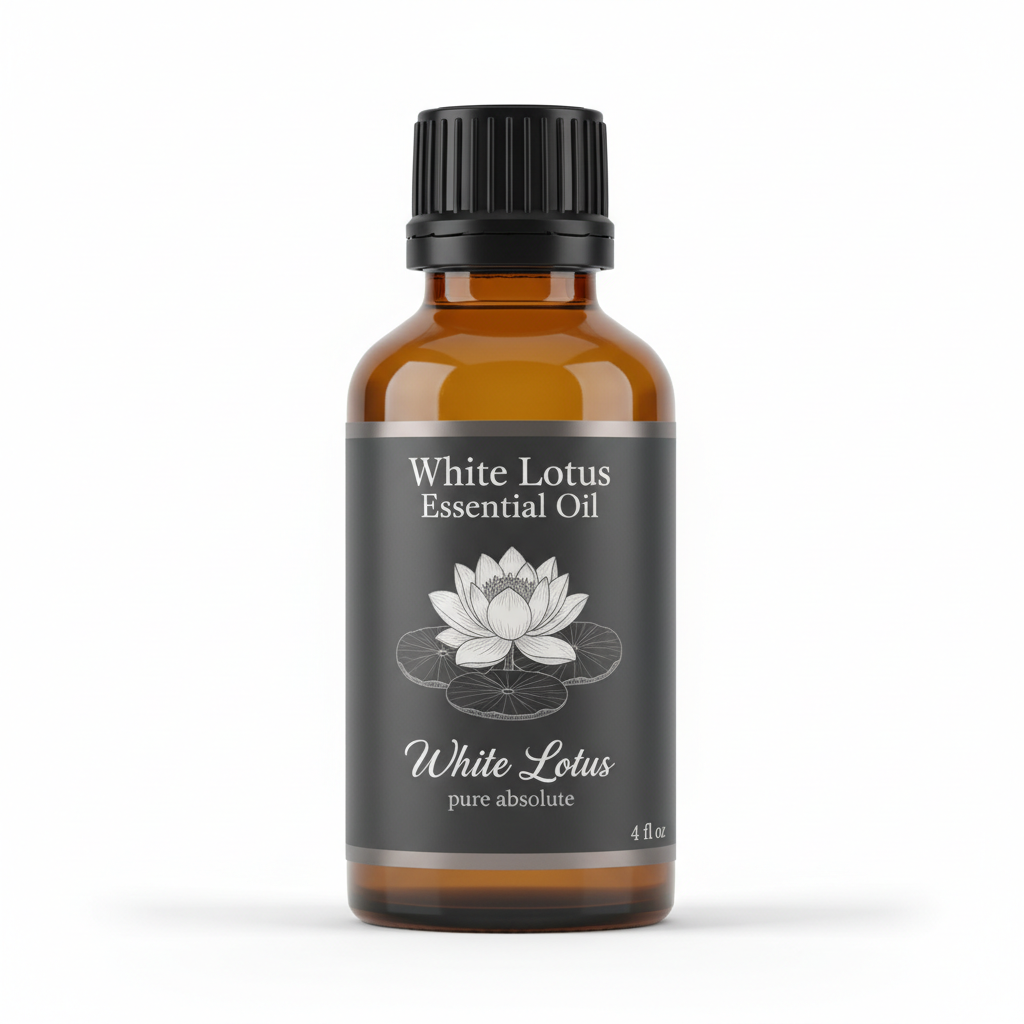
White Lotus Absolute
Our own White Lotus Absolute, in sizes from 0.5 oz to bulk.
From $23.99
Shop Now →This recipe is built for real use. Not a special-occasion bottle you open twice a year, but a lightweight, fast-absorbing white lotus facial oil you can reach for every evening. The formula is simple enough for a first-time blender, and precise enough to get a consistent result.
Before You Begin: A Note on White Lotus Essential Oil Quality
White lotus (Nymphaea lotus) absolute and essential oil vary considerably in quality depending on how they were extracted and from where the flowers were sourced. For a facial oil, quality matters more than usual, because you are applying it directly to skin. Look for oil that specifies its extraction method (CO2 extraction or solvent-free steam distillation are preferable for cosmetic use) and its country of origin. Egyptian-sourced white lotus is generally regarded as the benchmark. For a deeper look at what to check when sourcing this oil, the complete guide to white lotus in perfume and ritual covers the key quality markers in detail.
Recipe Overview
| Detail | Information |
|---|---|
| Difficulty Level | Beginner to Intermediate |
| Active Prep Time | 15 minutes |
| Resting Time | 24 hours (recommended before first use) |
| Yield | 30 ml (approximately 1 fl oz) |
| Dilution Rate | 0.5% to 1% (facial skin; see safety notes) |
| Shelf Life | 4 to 6 months with proper storage |
Ingredients
Carrier Oil Base (total: 30 ml)
- Jojoba oil (golden or clear): 20 ml. Technically a liquid wax, jojoba is exceptionally stable and closely resembles the skin's natural sebum. It absorbs without a heavy residue and extends shelf life considerably.
- Rosehip seed oil: 7 ml. Cold-pressed rosehip is rich in essential fatty acids and has a long history in facial cosmetic formulations. It does have a shorter shelf life than jojoba, which is why it is the smaller portion here.
- Squalane (plant-derived): 3 ml. A refined, odorless oil derived from sugarcane or olives, squalane adds a silky finish and additional stability to the blend.
Essential and Aromatic Oils
- White lotus essential oil: 3 drops. At 30 ml of carrier base, 3 drops gives you approximately 0.5% dilution. This is the appropriate starting point for regular facial use.
- Frankincense essential oil (Boswellia carterii or serrata): 2 drops. A traditional companion to floral oils in cosmetic blending. Its slightly resinous, grounding scent rounds out the lotus without competing with it.
- Neroli essential oil: 1 drop. Optional, but it adds brightness and blends seamlessly with the aquatic character of white lotus. If you prefer a quieter scent profile, leave it out.
Optional Additions
- Vitamin E oil (tocopherol): 3 to 5 drops. Acts as an antioxidant to slow oxidation in the blend, particularly useful given the rosehip content. Not a preservative, but a stabilizer.
Equipment
- One 30 ml amber or cobalt glass dropper bottle (dark glass protects from UV degradation)
- A glass measuring pipette or 1 ml syringes for accurate carrier measurement
- A clean glass stirring rod or small stainless steel funnel
- Labels for dating and identifying your blend
- Disposable nitrile gloves (optional but recommended when handling essential oils neat)
Step-by-Step Instructions
- Sanitize everything first. Wipe your bottle, dropper, and any tools with 70% isopropyl alcohol and let them dry completely before you begin. Contamination shortens shelf life significantly.
- Measure the squalane. Using your pipette, measure 3 ml of squalane directly into your glass bottle. Squalane goes in first because it is the most stable and will not oxidize if it sits in the bottle while you prepare the rest.
- Add the jojoba oil. Measure 20 ml of jojoba and add it to the bottle.
- Add the rosehip seed oil. Measure 7 ml and add it last among the carriers. Because rosehip oxidizes more quickly than the other two, adding it into an already-partially-filled bottle reduces its exposure to air during the process.
- Add the vitamin E oil. If using, add 3 to 5 drops now and swirl gently to incorporate.
- Count your drops carefully. Add the white lotus essential oil (3 drops), frankincense (2 drops), and neroli if using (1 drop). Use a fresh dropper tip for each oil to avoid cross-contamination between your stock bottles.
- Cap and gently roll. Do not shake vigorously. Cap the bottle and roll it slowly between your palms for 30 to 60 seconds. This encourages the essential oils to disperse into the carriers without introducing excess air bubbles.
- Label immediately. Write the date of blending and the contents on your label. Memory is less reliable than you expect when you have multiple bottles on a shelf.
- Rest before first use. Set the bottle in a cool, dark spot for 24 hours. The scent of a fresh blend often smells slightly sharp or unintegrated. After resting, the oils marry and the white lotus character becomes noticeably more rounded.
How to Use Your White Lotus Facial Oil
Dispense one to three drops onto clean fingertips. Press gently into skin using light upward movements rather than rubbing. The oil absorbs best on slightly damp skin, so applying directly after your water-based serum (while it is still a little tacky) gives better results than applying to completely dry skin.
For an evening wind-down ritual that pairs this oil with breathwork and quiet, the meditation ritual with white lotus offers a simple approach to making the application itself feel intentional rather than rushed.
One drop is almost always enough. Start there. You can always add a second, but excess oil on the face tends to sit rather than absorb, which defeats the purpose of a lightweight formula.
Safety Warnings: Please Read Before Blending
Dilution
The recipe as written produces a 0.5% dilution of essential oils in carrier, which is the recommended starting point for regular facial use on adult skin. If you have sensitive skin, stay at 0.5% or below. Do not increase the essential oil drops without recalculating your dilution percentage. As a reference: in a 30 ml base, every 3 drops of essential oil equals approximately 0.5% dilution. Six drops would be 1%, which is the upper limit for daily facial application.
Patch Testing
Perform a patch test before applying this blend to your face. Apply 2 to 3 drops to the inside of your forearm, cover loosely with a bandage, and leave for 24 hours. If you notice redness, itching, or any skin response, discontinue use. Do not apply to broken or compromised skin.
Contraindications
- Avoid use during pregnancy without first consulting a qualified healthcare provider. Several essential oils, including those in this recipe, are not well-studied for safety during pregnancy.
- Keep all essential oils and finished blends away from children and pets.
- This blend is for external cosmetic use only. Do not apply near eyes, mucous membranes, or internally.
- If you are using prescription topical products or have been advised by a dermatologist on your skincare routine, consult them before adding a new oil blend.
- White lotus absolute, particularly solvent-extracted varieties, may cause sensitivity in some individuals. Source carefully and start with the lower dilution.
Storage and Shelf Life
Store your facial oil in its dark glass bottle, away from direct sunlight and heat. A bathroom cabinet that does not get steamy is ideal. A drawer in a cool bedroom is even better. The jojoba base and squalane give this blend good stability, but the rosehip seed oil is the limiting factor: it typically has a shelf life of 6 to 12 months when fresh, and once blended, the combined oil should be used within 4 to 6 months for best results.
Signs that a facial oil has turned: a noticeably sour, crayon-like, or rancid smell (distinct from the natural earthy note of fresh rosehip). If your blend smells off, discard it. Using oxidized oils on facial skin is counterproductive.
Variations and Substitutions
Drier Skin Variation
Replace the squalane with an equal volume of marula oil. Marula is richer and more occlusive, and it pairs particularly well with the warmth of white lotus.
Lighter Texture Variation
Use all jojoba (27 ml) and omit the rosehip entirely. The result is a drier-feeling oil that suits warmer months or oilier skin types.
Scent Variation: Sandalwood Grounding
Substitute the frankincense with 2 drops of sandalwood essential oil (Santalum album). White lotus and sandalwood have a long shared history in South Asian and Egyptian cosmetic traditions, and their combination is notably seamless. Our own Nile Dawn blend explores this pairing in depth if you would like to understand it before committing to a full bottle of sandalwood oil.
Simpler Starter Version
If this is your first time blending and you want to keep it minimal: use only jojoba as your carrier (30 ml) and add 3 drops of white lotus essential oil only. That single-oil blend will let you understand the character of white lotus on your skin before introducing other variables.
A Few Final Notes on the Experience
The scent of white lotus in a facial oil is different from white lotus in a diffuser or a perfume. Carrier oils shift the top notes slightly, slowing the diffusion and allowing the deeper, almost honeyed quality of the lotus to come forward first. It is a quieter experience than wearing the oil as a fragrance, but in some ways more interesting.
This DIY luxury face oil is most rewarding when the application itself gets a moment of attention rather than being rushed between steps. Warm the drops in your palms first. Let the scent reach you before you press the oil to your face. That small gesture changes the quality of the whole ritual, and the floral facial oil recipe you have just made is worth it.