A Meditation Ritual with White Lotus: Stillness in a Single Drop
Scent arrives before thought does. Before we name what we're smelling, the signal has already traveled through the olfactory nerve and brushed the limbic system, the part of the brain most closely linked to memory and mood. This is not a new discovery. It is, in many ways, the oldest knowledge in the world.
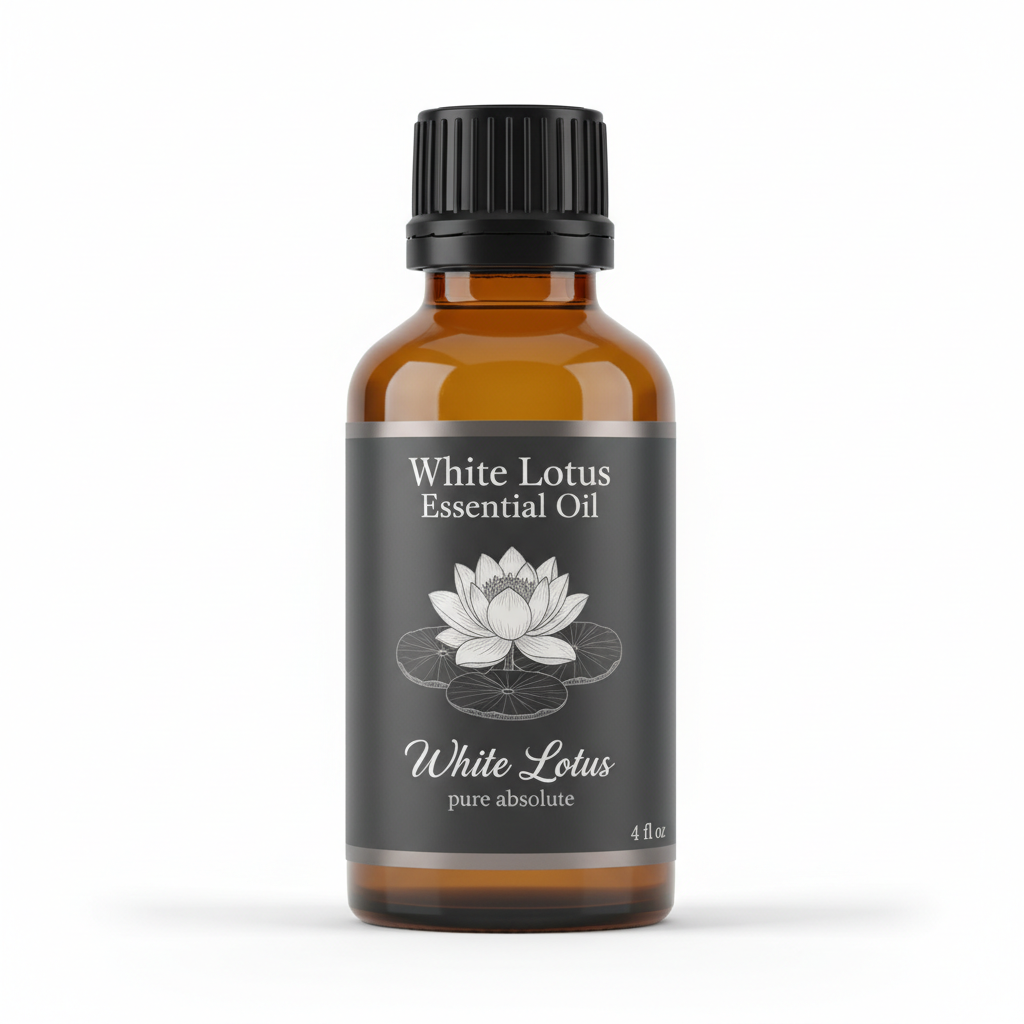
White Lotus Absolute
Our own White Lotus Absolute, in sizes from 0.5 oz to bulk.
From $23.99
Shop Now →White lotus has been part of intentional scent ritual for thousands of years. Egyptian priests used it in temple rites. Ayurvedic texts reference it as an aid to contemplative states. Buddhist iconography places it beneath figures of awakening. And yet for most modern practitioners of meditation, the role of scent in supporting a seated practice is almost entirely overlooked.
This case study follows one practitioner's experience building a structured white lotus meditation ritual using a small-batch anointing oil. It explores what approach was taken, what was observed over several weeks, and what the experience suggests about the relationship between lotus ritual scent and inner quiet. As always, the observations here are personal and educational. They are not medical findings.
The Context: A Practice Without an Anchor
The practitioner in this case study, a writer in her mid-forties, had maintained a morning meditation habit for roughly three years. She sat most mornings for fifteen to twenty minutes. By her own account, she was consistent but not always present.
"I would sit down and my mind would immediately go to the grocery list, the overdue email, whatever I hadn't finished the night before. I was physically still. That was about all."
She had tried several approaches to deepen her practice: guided audio sessions, breath-counting techniques, a brief journaling ritual beforehand. Some helped. None created what she described as a clear signal to the mind that the session had truly begun. She was looking for a sensory cue. Something that told the nervous system: this time is different.
She had read about anointing practices in the context of sacred ritual across multiple cultures. She was drawn to the idea of using scent as a kind of threshold, a deliberate crossing-over from ordinary time into focused, quiet time. She decided to experiment with meditation anointing oil derived from white lotus absolute.
Choosing the Oil: Why White Lotus
The selection of white lotus (Nymphaea lotus) was not arbitrary. White lotus absolute is extracted from flowers harvested at specific stages of bloom, typically pre-dawn or early morning, when fragrance compounds are most concentrated. The scent is unusual: cool and floral at the top, with a green aquatic character that opens into something powdery and faintly earthy at the base. It does not behave the way rose or jasmine behaves. It is quieter, less insistent.
From a purely sensory standpoint, that restraint matters. A scent used for seated practice needs to support stillness rather than compete with it. Heavier florals can feel activating, even distracting. White lotus tends to recede after the initial impression, leaving behind a soft presence rather than a statement.
The practitioner selected a pure white lotus absolute diluted in a jojoba carrier base, formulated specifically for skin application. This is the approach most relevant to meditation anointing oil use: a properly diluted blend at cosmetic-grade concentration, safe for topical use, applied to pulse points before sitting.
For a broader look at how white lotus is used across fragrance and ritual contexts, the complete guide to white lotus in perfume and ritual covers the full range of applications.
The Approach: Building a Sensory Threshold
The practitioner established a simple protocol. Each morning, before sitting, she applied two drops of the diluted white lotus oil to her wrists and one drop to the center of her sternum. She held her wrists briefly near her face, inhaled slowly three times, and then began her session.
The sequence was kept identical every day. Same time. Same location. Same gesture. Same inhalation before beginning.
The reasoning behind this consistency was intentional. Scent memory forms through repetition and association. The more reliably a particular scent precedes a particular state or activity, the more efficiently the brain begins to anticipate that state when the scent is introduced. This is not a medical claim. It is a well-documented feature of how olfactory conditioning works, referenced in sensory psychology literature and familiar to anyone who has ever caught a scent and been transported immediately to a specific memory.
She kept a brief journal, not about her meditation content, but about her experience entering the session. Each entry noted how quickly she felt settled, how intrusive her thinking was in the first few minutes, and whether the transition from ordinary time felt abrupt or gradual.
Observations: Weeks One Through Four
Week One
The primary observation in the first week was novelty. The scent was unfamiliar enough that it drew some conscious attention during the first two or three sessions. She found herself noticing the fragrance rather than simply resting in it. Her journal entries noted the lotus as "present" and "cool" and once as "like water before sunrise."
By the end of the week, the conscious attention to the scent had largely faded. It was present but no longer an object of focus.
Week Two
The most notable shift occurred around day ten. She wrote: "I picked up the bottle this morning and felt something settle before I had even opened it." The anticipation of the scent, before the scent was actually present, appeared to begin priming the shift in attention she was looking for.
This is consistent with how conditioned sensory cues are understood to work. The signal may begin activating an association before the stimulus is fully received.
Weeks Three and Four
By the third and fourth weeks, she reported that the transition into seated stillness felt more immediate. The first few minutes of a session, which had previously felt scattered and effortful, now felt more like stepping into a room that was already quiet rather than trying to quiet a noisy one.
She noted one unexpected observation: on a day when she forgot to apply the oil, she sat down and felt a distinct sense of something missing. The session felt, in her words, "unmoored." She did not consider this a problem. She considered it evidence that the ritual had taken root.
The Role of the Scent Itself
White lotus is not simply a pleasant fragrance chosen at random. Its history in contemplative and sacred contexts spans cultures and centuries. The lotus growing from still water, untouched by the surface it rises through, has long been used as a symbol of clarity and presence. That symbolic resonance may be part of what makes it function so well in ritual contexts.
There is also the matter of the fragrance's character. White lotus does not project in the way some florals do. It creates a kind of intimate atmosphere, a scent that you exist within rather than one that announces itself. For seated practice, where the practitioner is trying to turn attention inward rather than outward, that quality is practical rather than merely aesthetic.
If you are exploring white lotus in a blended format, the Nile Dawn blend pairing white lotus with sandalwood is worth exploring. Sandalwood's woody, resinous base note grounds the cooler aquatic quality of the lotus, creating a profile that some practitioners find especially suited to longer sits.
Key Learnings from This Case Study
- Consistency matters more than intensity. The practitioner used the same oil in the same way at the same time every day. The cumulative effect of that repetition appeared to contribute more to the ritual's function than any single session.
- Scent works best as a threshold, not a destination. The most useful observation was that the oil helped signal the beginning of practice. It was not the practice itself. The distinction is important.
- White lotus supports rather than dominates. The fragrance character of white lotus, cool, restrained, quietly persistent, seems well matched to practices that require inward attention. It is present without demanding presence back.
- Ritual objects accrue meaning over time. By week four, the bottle itself carried associative weight. Holding it was part of the ritual, not just what came out of it.
- Individual response to scent varies. What resonated for this practitioner may not resonate for everyone. White lotus is a starting point, not a universal prescription. Exploration is part of the process.
Practical Notes for Your Own Lotus Ritual
If this approach appeals to you, a few practical considerations are worth noting before you begin.
Dilution and Skin Safety
White lotus absolute in a pure, undiluted form is not intended for direct skin application. Always use a pre-diluted product formulated for topical use, or work with a reputable carrier oil at appropriate cosmetic dilution rates. A standard starting point for a personal anointing blend is one to two percent dilution, meaning one to two drops of absolute per teaspoon of carrier. If you have sensitive skin, conduct a patch test on the inner forearm at least twenty-four hours before regular use.
Storage and Longevity
White lotus absolute is a delicate extract. Store your oil away from direct sunlight and heat. A cool, dark drawer is preferable to a bathroom shelf. Properly stored, a quality diluted absolute should retain its character for a year or more.
Sourcing Quality
The experience of a ritual scent depends entirely on the quality of the material. Synthetic lotus fragrance is common and significantly less complex than a true lotus absolute. Look for sourcing transparency from the producer and, where possible, confirmation that the absolute is derived from Nymphaea lotus rather than a synthetic analog. For those interested in how white lotus performs in a skin-care context outside of ritual use, the white lotus for skin guide offers a closer look at its profile in evening routines.
A Single Drop as a Beginning
The practitioner in this case study did not set out to solve something. She set out to find a doorway. What she discovered was that scent, used consistently and intentionally, may function as exactly that: a sensory threshold that helps the mind recognize when it is being invited to be somewhere other than where it usually is.
White lotus, with its long history in contemplative ritual and its quietly distinctive fragrance, seems particularly suited to that role. It asks nothing of you. It simply arrives, cool and still, and waits.
That may be enough.