White Lotus in Perfumery: Building an Aquatic Floral Heart
There is a reason perfumers have circled back to white lotus for centuries. Nymphaea lotus and its cousin Nymphaea caerulea carry a scent that sits at the precise intersection of two worlds: the cool, green freshness of open water and the lush warmth of a full-blown floral. That duality is what makes white lotus absolute one of the most technically interesting materials in a perfumer's palette, and one of the most instructive to study in depth.
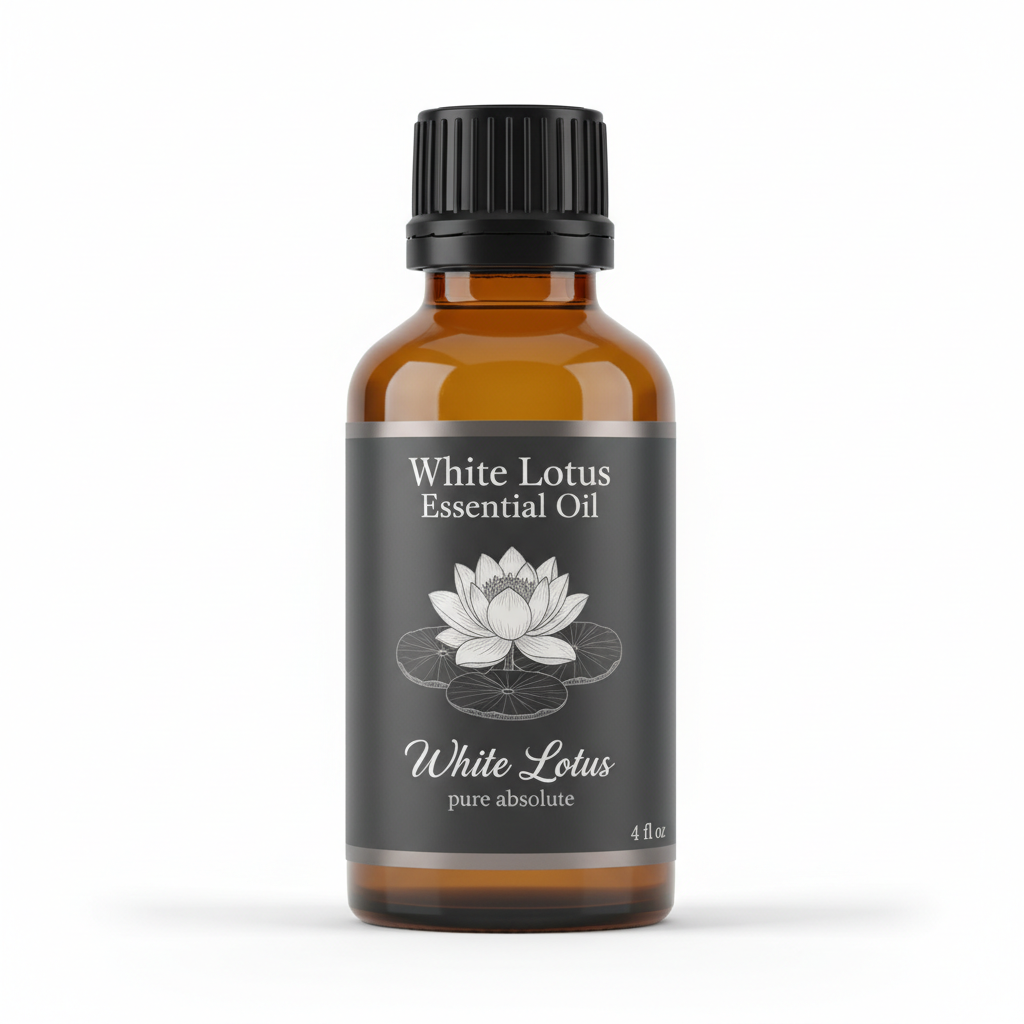
White Lotus Absolute
Our own White Lotus Absolute, in sizes from 0.5 oz to bulk.
From $23.99
Shop Now →This article unpacks the chemistry behind that scent, examines what current research observes about its key compounds, and walks through the practical considerations of sourcing, safety, and construction. If you have ever wanted to understand white lotus perfume from the inside out, this is the place to start.
What Is White Lotus Absolute, and Why Does It Matter in Perfumery?
Essential oils are steam-distilled. White lotus does not survive that process gracefully. The delicate aromatic molecules that give the bloom its characteristic watery-floral profile are partially destroyed by prolonged heat, which is why the commercial fragrance trade relies almost exclusively on solvent extraction to produce a lotus absolute. The result is a dark amber to greenish-brown viscous liquid with a complexity that steam-distilled alternatives simply cannot replicate.
A true absolute contains the full aromatic portrait of the flower: waxes, pigments, and a dense constellation of volatile and semi-volatile compounds. This richness is a technical asset in perfumery. It also means the material behaves differently from lighter, more linear ingredients. It anchors. It evolves slowly on skin. And it bridges the gap between an aquatic top accord and a deeper, more radiant floral base.
For a broader look at how this ingredient moves across different application formats, the complete guide to white lotus uses in perfume and ritual covers the wider landscape in practical terms.
Chemical Composition: The Molecules Behind the Scent
Research into the volatile fraction of Nymphaea species has identified a range of aromatic compounds. Gas chromatography-mass spectrometry (GC-MS) studies conducted on flower extracts suggest the following compound classes are consistently present, though exact percentages shift with geography, harvest timing, and extraction method.
Key Identified Compounds
| Compound | Aromatic Character | Perfumery Role |
|---|---|---|
| Linalool | Soft, lavender-adjacent floral with slight citrus lift | Rounds the heart note, bridges top to mid |
| Benzyl alcohol | Faintly sweet, rose-like, softly balsamic | Adds warmth and smoothness to the floral core |
| Geraniol | Fresh rose, slightly green | Lifts the mid note, supports watery facets |
| Methyl benzoate | Sweet, faintly medicinal-floral, tuberose-adjacent | Contributes the heady, exotic register |
| Isophytol / phytol derivatives | Waxy, green, faintly earthy | Anchors the blend, adds depth and longevity |
| Nonanal / decanal (aliphatic aldehydes) | Clean, watery, slightly fatty | Generates the aquatic impression characteristic of the flower |
| Beta-ionone | Violet, woody, slightly powdery | Provides dry-down character and diffusion |
The aliphatic aldehydes deserve particular attention. Nonanal and decanal are the same class of molecules that Chanel's perfumers employed in N°5 to generate that signature clean-aquatic shimmer. In white lotus absolute, they occur naturally rather than synthetically, which gives the material a softer, more integrated wateriness. Research published in flavor and fragrance journals suggests that the ratio of these aldehydes to the heavier linalool and geraniol content varies significantly between Nymphaea lotus (the Egyptian white) and Nymphaea caerulea (the blue lotus), with the white species tending toward a warmer, fuller floral profile.
The Aquatic Floral Heart: How the Chemistry Creates the Effect
The term aquatic floral heart note is not just poetic description. It points to a specific structural role in a fragrance composition. A heart note must perform two jobs simultaneously: it must maintain the character established by the top notes while beginning to introduce the gravity of the base. White lotus does this with unusual elegance because its compound profile spans both registers naturally.
Geraniol and the light aldehydes carry forward the freshness of an aquatic opening. Benzyl alcohol and methyl benzoate introduce warmth and florality. Beta-ionone begins the gravitational pull toward a woody, powdery dry-down. A single ingredient covering that much aromatic ground is genuinely rare, which is part of why perfumers return to it again and again.
Research Observations: What the Science Currently Suggests
It is important to be clear about what is established and what remains preliminary. Most published research on Nymphaea extracts focuses on the plant's phytochemical composition rather than its aromatic applications specifically. The fragrance research that does exist tends to be proprietary or limited in scope. With that context in mind, here is what the available literature observes.
- Volatile composition variability: Studies comparing cultivated versus wild-harvested specimens suggest that soil mineral content and water quality significantly influence the aldehyde-to-terpenoid ratio. This has direct implications for perfumery: a lotus absolute from nutrient-rich Nile basin soil may smell measurably different from one grown in a controlled hydroponic environment.
- Extraction solvent effects: Research comparing hexane-extracted concretes with ethanol-washed absolutes indicates that the final polarity of the solvent affects which molecular weight fractions are preserved. Ethanol washing tends to remove heavier waxes, producing a slightly thinner but more diffusive absolute.
- Stability observations: Some research suggests that the aliphatic aldehydes in lotus extracts are relatively sensitive to oxidation over time. This supports the practical perfumer's recommendation to store lotus absolute under nitrogen, in dark glass, and at cool temperatures.
- Linalool concentration: Several GC-MS analyses identify linalool as one of the dominant volatile compounds in white lotus flower extract. Some researchers note a potential for linalool to generate skin sensitization responses in individuals with existing sensitivities, which connects directly to the safety considerations below.
Safety Profile and Contraindications
Lotus absolute is a concentrated extract. Responsible use requires understanding its safety parameters before incorporating it into any formula.
Dermal Application Guidelines
The International Fragrance Association (IFRA) publishes usage limits for fragrance ingredients based on available safety data. Lotus absolute does not currently appear as a restricted ingredient on the IFRA standards list, but this should not be read as a green light for undiluted use. Several of its constituent compounds, including linalool and geraniol, carry their own individual IFRA guidelines at high concentrations.
- Recommended dilution: For leave-on skin applications such as perfume oils, a dilution of 0.5 to 1 percent is a conservative and appropriate starting point. Fine alcohol-based fragrances typically use lotus absolute at 0.1 to 0.5 percent of total formula weight.
- Patch testing: Always conduct a patch test before applying any new formula to a larger area of skin. Apply a small amount of the diluted blend to the inner forearm, leave for 24 hours, and observe for any response before wider use.
- Oxidized material: If a lotus absolute has been stored improperly or shows signs of oxidation (a rancid or stale note that was not present when the material was fresh), discard it. Oxidized linalool in particular is associated with increased sensitization potential.
Populations Who Should Exercise Particular Caution
- Individuals with known sensitivities to linalool, geraniol, or benzyl alcohol should approach lotus absolute cautiously and consult a qualified healthcare provider before use.
- Use during pregnancy or while nursing warrants consultation with a healthcare provider, as with all concentrated botanical extracts.
- Keep all concentrated absolutes away from children and pets.
This ingredient overview is educational in nature. It does not constitute medical advice. Please consult a qualified healthcare provider before making decisions about skincare or fragrance use if you have specific health considerations.
Sourcing and Quality Indicators
The lotus absolute market is genuinely difficult to navigate. Adulteration is common. Synthetic imitations and heavily extended materials are frequently sold under the same name as authentic botanical absolutes. Knowing what to look for is essential.
Geographic Origin and Traceability
Authentic white lotus absolute is produced primarily in Egypt, India, and Thailand. Egyptian material sourced from Nile delta cultivation areas has the longest commercial history and is often considered a benchmark for the watery-floral profile associated with the species. Indian production has grown significantly in recent decades and can produce excellent quality, particularly from Bihar and West Bengal.
Suppliers who can provide a specific country of origin, ideally a region or farm, are more likely to be selling an authentic product than those who list only a generic origin. Ask for a certificate of analysis and a GC-MS report. A reputable supplier will provide these without hesitation.
Sensory Quality Markers
A quality lotus absolute should open with a cool, watery floral impression that transitions into a warmer, faintly powdery floral body. If the material smells predominantly of alcohol solvents, or if the floral character is sharp and synthetic-feeling, these are indicators that the extract has been poorly processed or adulterated.
- Color: Genuine lotus absolute ranges from dark amber to olive-green. A very pale or water-clear material is unlikely to be a true absolute.
- Viscosity: It should be moderately to highly viscous at room temperature. Warming it gently in the hands makes it easier to work with.
- Dry-down: On a scent strip, a quality lotus absolute should still show discernible character after four to six hours. Rapid fade suggests a thin or diluted material.
- Solubility: True absolutes dissolve in high-proof perfumer's alcohol (190 proof or equivalent) but may leave a slight waxy residue at high concentrations. This is normal and expected.
Pricing as a Quality Signal
Lotus absolute is labor-intensive to produce. Flowers must be harvested early in the morning when aromatic content is highest, and the yield from solvent extraction is low relative to other botanicals. Genuine material is priced accordingly. If a supplier is offering lotus absolute at the same price point as lavender or sweet orange, skepticism is warranted. This does not mean the most expensive option is automatically the best, but pricing far below market norms is a reliable red flag.
Building with Lotus Absolute: Structural Considerations
Understanding the chemistry makes the construction logic clearer. Because lotus absolute already contains compounds that span aquatic, floral, and soft woody registers, it functions best when the materials surrounding it either emphasize one of those facets or provide contrast to them.
Companions That Work Well
- Aquatic top notes: Calone (used sparingly), violet leaf absolute, and green tea CO2 extend the watery facet of the lotus and create a cohesive aquatic floral opening.
- Soft florals in the mid: Ylang ylang extra (in small proportions), orris absolute, and osmanthus absolute complement without competing.
- Bases that anchor without burying: White musks, sandalwood (Mysore or Australian), and a small percentage of benzyl benzoate extend the lotus into the dry-down without obscuring its distinctive character.
What to Avoid
Heavy resins and dark balsams (labdanum, styrax, heavy benzoin) tend to overwhelm the delicate aldehydic quality that makes lotus unique. Similarly, high concentrations of camphoraceous materials like eucalyptus or rosemary compete with the watery opening rather than supporting it.
For a hands-on project that puts these structural principles into immediate practice, the DIY white lotus solid perfume guide offers a well-scaled formula that works well for first explorations. And if you are interested in extending the lotus accord into a skincare context, the white lotus facial oil project covers formulation at the cosmetic dilution level with appropriate guidance throughout.
A Note on Naturals Versus Reconstructions
Some perfumers work with reconstructed lotus accords built from individual aroma chemicals rather than purchasing the absolute directly. This approach offers cost control and batch consistency. What it does not offer is the full aromatic complexity of the genuine extract, particularly the subtle interplay between the semi-volatile waxy fractions and the lighter volatile top notes. For perfumers who want to understand white lotus as a botanical subject, starting with a quality absolute is the more instructive path, even if reconstructions later become part of the practical toolkit.
The chemistry of white lotus perfume is, in the end, an argument for patience. This is a material that rewards careful study, precise sourcing, and restrained formulation. Its position as an aquatic floral heart note is not accidental. It reflects a genuine molecular architecture that bridges freshness and depth in a way that few single ingredients can manage. The more clearly you understand what is happening at the compound level, the better your compositions built around lotus absolute in perfumery will become.