White Lotus in the Diffuser? Why Absolutes Need a Different Approach
White lotus has a reputation for being one of the most elusive, coveted scents in natural perfumery. People discover it in a luxury candle or a high-end fragrance, fall completely in love, and then go searching for the essential oil to use at home. So far, so understandable.
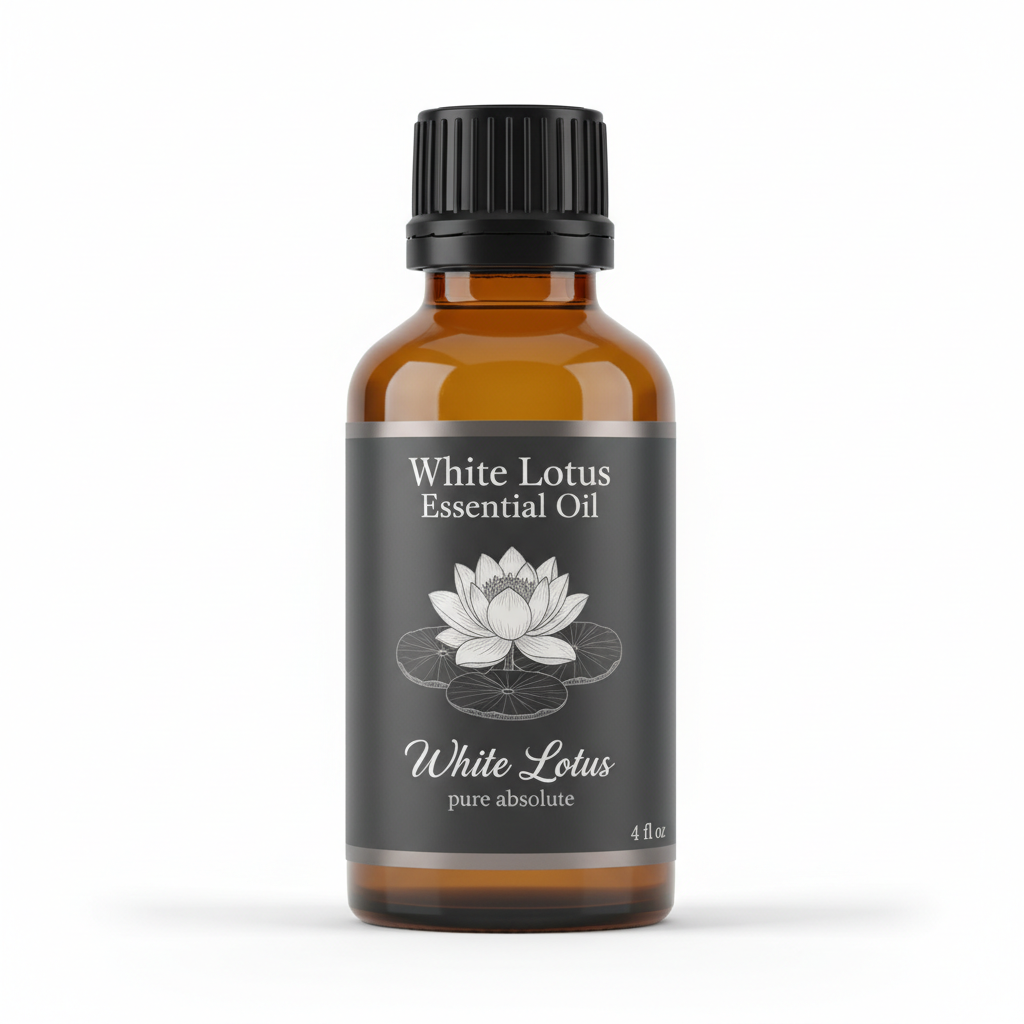
White Lotus Absolute
Our own White Lotus Absolute, in sizes from 0.5 oz to bulk.
From $23.99
Shop Now →Then the confusion begins. They buy a white lotus absolute, drop it into their ultrasonic diffuser, and wonder why nothing quite works the way they expected. The aroma is faint. The diffuser seems clogged. The experience does not match the bottle's promise.
The problem is not the oil. It is a mismatch between the product and the method, and it is fueled by several persistent myths about diffusing absolutes. This article addresses those myths directly, explains the science behind them, and offers practical guidance for getting the best possible experience from white lotus in any form.
First: What Makes White Lotus an Absolute, Not an Essential Oil?
This distinction matters more than most people realize, and it is the root cause of nearly every myth on this list.
True white lotus (Nymphaea lotus or Nymphaea caerulea) does not yield a usable product through steam distillation. The flowers are too delicate. The volatile aromatic compounds are too fragile to survive the heat required for that process. What you typically find sold as white lotus absolute is extracted using a solvent, usually hexane, which pulls a full-spectrum aromatic concentrate from the petals. The solvent is then removed, leaving behind a thick, waxy, deeply pigmented material.
That process captures far more of the flower's complexity than distillation ever could. It also means the resulting product behaves very differently from a standard steam-distilled essential oil. Absolutes are denser, heavier, less volatile, and often contain trace amounts of wax and pigment. These characteristics are features in perfumery. In a diffuser, they become complications.
With that foundation in place, the myths make much more sense to untangle.
Myth 1: "You Can Diffuse White Lotus Absolute Just Like Any Essential Oil"
The Truth
You can attempt it. Calling it a smooth or equivalent experience, however, would be inaccurate.
Ultrasonic diffusers work by creating a fine water mist that carries volatile compounds into the air. The keyword is volatile. Standard essential oils disperse well because their aromatic molecules evaporate readily at room temperature. Absolutes are far less volatile. Their heavier molecular weight means they linger in the water reservoir rather than rising efficiently into the mist. You get a fraction of the aroma projection you would expect, and the residue that remains can coat the ultrasonic membrane over time.
Nebulizing diffusers, which use pressurized air rather than water, handle absolutes slightly better but are not designed for them either. Many manufacturers explicitly advise against using thick absolutes or resins in nebulizers because of clogging risk.
Why This Myth Exists
The aromatherapy market has historically used the words "essential oil" and "absolute" almost interchangeably in product listings and marketing copy. Many buyers do not realize they are purchasing a fundamentally different type of extract until they try to use it the same way. The labeling gap is real, and it does consumers a disservice.
Myth 2: "If the Diffuser Barely Produces Scent, the Absolute Must Be Low Quality"
The Truth
Weak diffuser performance tells you almost nothing about the quality of a white lotus absolute. It tells you a great deal about the mismatch between the product and the diffusion method.
A high-quality white lotus absolute from well-sourced Egyptian or Indian flowers will still perform poorly in a standard ultrasonic diffuser, simply because its molecular structure is not built for that delivery system. Conversely, a thin, pale, cheaply produced absolute might diffuse slightly better because it has been adulterated with carrier oils or synthetic extenders that increase volatility, but that is not a quality indicator worth celebrating.
Quality in an absolute is assessed differently: by the depth and accuracy of the scent profile (white lotus should carry green, watery, faintly honeyed, and lightly floral notes), by the viscosity and color appropriate to the extraction method, and by the sourcing transparency of the supplier.
For a thorough look at how white lotus absolute fits into different applications, the complete guide to white lotus uses in perfume and ritual covers sourcing markers and quality indicators in much greater detail.
Why This Myth Exists
People naturally associate stronger diffusion with higher quality in essential oils, and that association is reasonable in that context. Carrying the same logic over to absolutes leads to a false conclusion. The performance criteria simply do not transfer.
Myth 3: "Warming an Absolute Before Diffusing Solves the Problem"
The Truth
Warming a white lotus absolute does make it less viscous and more workable, and for some applications this is genuinely useful. As a complete solution for diffusing, it falls short.
Gently warming an absolute (placing the sealed bottle in warm water for a few minutes is a common approach) improves its pourability and helps it blend into a carrier more easily. It does not significantly increase the compound's long-term volatility in a water-based diffuser. You may notice a brief, pleasant burst of scent right after adding warmed absolute to a diffuser reservoir, but the underlying physics remain the same. The heavier aromatic molecules still do not aerosolize as efficiently as lighter essential oil constituents.
Where warming genuinely helps: applying the absolute to a personal inhaler, a diffuser bracelet, or blending it with a more volatile carrier before use. These methods take advantage of proximity and body warmth rather than fighting the absolute's natural properties.
Why This Myth Exists
Warming thick materials to improve flow is intuitive and physically logical. It works well enough in some hands-on applications that people assume it solves the diffuser problem too. The improvement is real but partial.
Myth 4: "Absolutes Are Too Impure to Use in Aromatherapy Contexts"
The Truth
This myth conflates solvent extraction with contamination, and the two are not the same thing.
Reputable producers of absolutes use food-grade or cosmetic-grade solvents and employ rigorous removal processes. Third-party testing using gas chromatography can verify that residual solvent levels are within internationally accepted safety limits. A properly produced white lotus absolute from a transparent, quality-focused supplier is not "impure" in any meaningful sense.
The hesitation around absolutes in aromatherapy circles has some legitimate historical roots. Early-stage awareness of solvent extraction raised reasonable questions about residues, and some lower-quality producers were not rigorous about removal. Evidence indicates that reputable suppliers have addressed these concerns with testing protocols that make their absolutes safe for intended cosmetic and aromatic use.
The distinction worth making is between inhalation directly from a diffuser versus topical or personal aromatic use. For diffusing purposes, the performance limitations of absolutes are practical and physical, not a safety matter. Always check with a qualified healthcare provider if you have specific concerns about any aromatic product.
Why This Myth Exists
The word "solvent" carries an understandable negative connotation for people who associate it with industrial chemicals. In the context of professional absolute extraction, the reality is more nuanced, and the final product bears very little resemblance to raw solvent in any practical sense.
So What Actually Works for White Lotus in an Aromatic Setting?
If diffusing absolutes directly is not the ideal approach, several alternatives deliver a much richer experience.
Personal Aromatic Inhalers
These small, portable inhalers with cotton wicks hold absolutes beautifully. You experience the scent at close range, where the absolute's complex depth really shines. This is one of the most effective ways to enjoy white lotus without any diffuser at all.
Blending with a Volatile Carrier
Mixing a small amount of white lotus absolute with a highly volatile essential oil (many perfumers use high-proof alcohol or a lighter citrus or top-note oil as a blending bridge) can improve performance in an ultrasonic diffuser. Research suggests that blending absolutes into a diluted format before adding them to water reservoirs reduces residue buildup and improves aroma release. Start with a very small amount of absolute: a single drop blended into ten drops of a complementary oil is a reasonable starting point for experimentation.
Cosmetic and Skin Applications
White lotus absolute truly earns its place in this category. Properly diluted in a carrier oil (a general cosmetic dilution of 0.5 to 1 percent is commonly cited for absolutes used in skin-contact products, always patch test first), it works beautifully in facial oils, body serums, and perfume blends. This is where its complexity becomes a genuine asset rather than a diffuser liability.
For inspiration on how white lotus absolute performs in scent-focused personal rituals, the piece on white lotus for a wedding day explores some of the most evocative ways this extract can be worn and experienced.
Candle and Wax Melt Blending
Absolutes disperse readily in melted wax. Candle makers and wax melt enthusiasts find that white lotus absolute holds exceptionally well in soy and coconut wax blends, releasing its full aromatic profile slowly as the wax warms. This is arguably the home aromatic format best suited to an absolute's natural behavior.
Room Spray with Alcohol
High-proof perfumer's alcohol solubilizes white lotus absolute effectively. A simple room spray (absolute diluted into alcohol, then water added) gives you a genuine diffusing effect with every spritz, without any diffuser hardware involved at all.
Understanding Absolutes vs. Diffuser Oils: A Quick Reference
| Characteristic | Steam-Distilled Essential Oil | Solvent-Extracted Absolute |
|---|---|---|
| Volatility | High: designed to evaporate readily | Low to moderate: evaporates slowly |
| Viscosity | Thin and pourable | Thick, sometimes semi-solid |
| Aromatic complexity | Good, reflects distillation-stable compounds | Very high, captures full-spectrum flower profile |
| Ultrasonic diffuser performance | Excellent | Poor to moderate |
| Perfumery and cosmetic use | Good | Excellent |
| Candle and wax blending | Good | Excellent |
| Available for white lotus specifically | Rarely, if ever, genuinely available | Yes, this is the standard commercial form |
The Bigger Picture: Working With What White Lotus Actually Is
White lotus absolute is not a compromise version of something else. It is the most complete aromatic expression of Nymphaea lotus that current extraction technology can produce. Its behavior in a diffuser is not a flaw. It is simply a characteristic that calls for a different approach from the one most people are accustomed to using.
For anyone drawn to white lotus for its role in natural perfumery, this reframing changes everything. The question shifts from "why does this not work in my diffuser?" to "what format actually honors what this extract is?" And the answers, whether that is a personal inhaler, a carefully made perfume blend, or a handcrafted candle, are genuinely satisfying.
If you want to go deeper into the perfumery applications of white lotus absolute, the article on building an aquatic floral heart with white lotus is a practical next step, covering blending ratios, complementary notes, and the construction of scent compositions that give this extract the context it deserves.
White lotus rewards patience and the willingness to learn its particular character. Once you stop trying to make it behave like something it is not, it becomes one of the most extraordinary naturals you can work with.