
Why White Lotus Absolute Costs So Much: A Price Guide
If you have ever searched for white lotus oil price and nearly choked on what you found, you are not alone. A single milliliter of genuine white lotus absolute can run anywhere from $25 to well over $80, depending on origin, extraction method, and supplier integrity. That is not a typo. For context, lavender essential oil from a reputable source might cost $3 to $5 per milliliter. So what is going on with lotus?
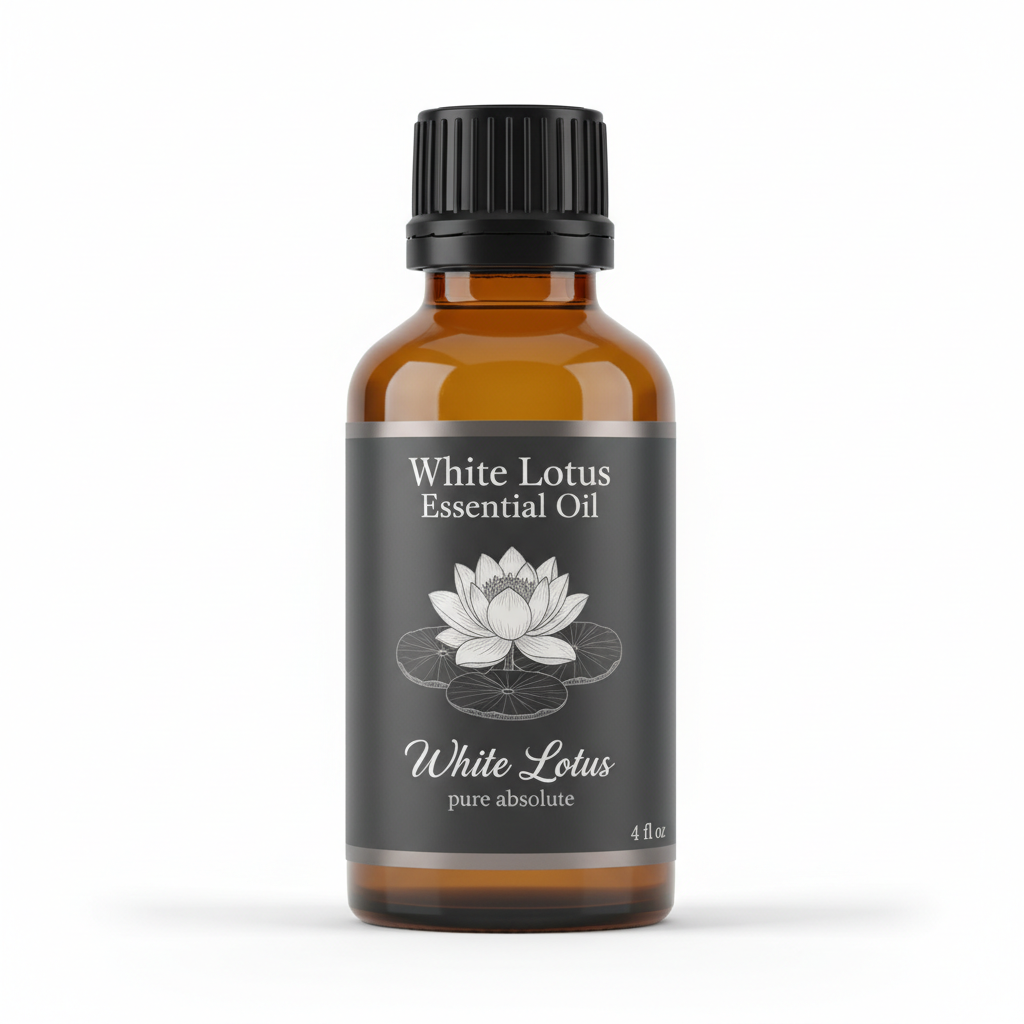
White Lotus Absolute
Our own White Lotus Absolute, in sizes from 0.5 oz to bulk.
From $23.99
Shop Now →This guide breaks down every factor behind the lotus absolute cost, shows you what separates a quality product from a waste of money, and gives you honest picks across a range of budgets.
What Makes White Lotus Absolute So Expensive?
The short answer: almost everything about producing it is inefficient by design. The plant does not cooperate with shortcuts.
Flower Yield Is Shockingly Low
White lotus (Nymphaea lotus or Nymphaea alba, depending on source) flowers for only a few hours each morning. Harvest windows are narrow, sometimes two to three hours at peak bloom. Workers must move quickly, and the flowers must be processed the same day. There is no storing them until next week.
Industry estimates suggest it takes somewhere between 500 and 1,000 kilograms of fresh flowers to produce one kilogram of absolute. At those ratios, even cheap raw material becomes expensive concentrate fast.
Solvent Extraction Is Labor-Intensive
White lotus does not yield well to steam distillation. The delicate aromatic compounds degrade under heat, so producers use solvent extraction to first create a waxy substance called a concrete, and then a further alcohol wash to isolate the absolute. Each step requires equipment, skilled labor, solvent management, and quality control. You are paying for that chain of expertise every time you buy a bottle.
Geography and Seasonal Supply
Most commercial white lotus absolute originates in Egypt, India, or Vietnam. Crop size varies by rainfall, temperature, and political stability of the growing region. A drought year in the Nile Delta can ripple into price spikes felt globally six months later. Supply is genuinely constrained, not artificially so.
Reading the Quality Indicators
Understanding why absolutes are expensive is only half the work. The other half is knowing whether what you are buying justifies the price. Here is what to look for.
Color and Viscosity
Genuine white lotus absolute typically presents as a dark amber to olive-brown liquid with notable viscosity. It is thicker than water and moves slowly in the vial. A product that pours like water at room temperature should prompt questions. Very pale yellow or water-clear products almost certainly contain carrier oil dilution or synthetic extension.
Scent Profile
Authentic white lotus absolute has a complex, layered fragrance: initial green and aquatic top notes, a rich floral heart with slight powdery and honey-like nuance, and a soft earthy base. It is not a clean, linear scent. If a product smells like a department store lotus candle, smooth and linear with no green edge, it has likely been modified or is not genuine absolute.
Latin Name and Botanical Sourcing Transparency
Reputable suppliers specify the Latin name (Nymphaea lotus, Nymphaea alba, or Nelumbo nucifera for the sacred lotus, which is a different plant entirely). They disclose country of origin and, ideally, the extraction method. Vague labeling like "lotus flower oil" with no further detail is a red flag covered in more detail below.
Third-Party Testing
Gas chromatography and mass spectrometry (GC-MS) testing verifies the chemical fingerprint of an absolute. Suppliers who publish or provide these reports on request are signaling confidence in their product. Those who deflect or claim proprietary reasons for not sharing them deserve skepticism. For a deeper walkthrough of how to verify authenticity before you buy, see our complete authenticity guide.
Key Features to Compare When Shopping
| Feature | What to Look For | Red Flag |
|---|---|---|
| Botanical species named | Nymphaea lotus or Nymphaea alba | Just "lotus" with no Latin name |
| Country of origin | Egypt, India, or Vietnam stated clearly | Origin omitted entirely |
| Extraction method | Solvent extraction, absolute noted | Claims of "steam distilled lotus oil" |
| GC-MS report availability | Available on request or published | Refused or unavailable |
| Dilution disclosure | States "100% pure absolute" or lists carrier clearly | Silent on whether it is diluted |
| Bottle type | Dark amber or cobalt glass, dropper or orifice reducer | Clear plastic bottles |
| Price per milliliter | $25 to $80+ for pure absolute | Under $10/mL for claimed pure absolute |
Price Point Breakdown: What Your Budget Gets You
The lotus absolute market segments fairly clearly. Here is an honest look at each tier.
Under $15 Per Milliliter: Proceed with Caution
At this price, you are almost certainly purchasing a diluted absolute, a synthetic fragrance oil, or an extended product without full disclosure. That does not mean every product in this range is fraudulent. Some suppliers sell 10% dilutions in jojoba carrier oil and label them accurately. A properly labeled 10% dilution is a legitimate product, useful for skin application in perfumery or body care, and an economical entry point. The problem arises when the label implies purity it does not deliver.
If your budget starts here, look for products that explicitly state the dilution percentage. If that information is absent, keep shopping.
$20 to $45 Per Milliliter: The Mid-Range Sweet Spot
This range is where most credible suppliers position their standard white lotus absolute. You should expect a pure absolute, sourced from a named origin country, with at least a batch number and ideally access to GC-MS data. Scent quality in this tier varies. Some suppliers in this range prioritize volume over provenance. Comparing scent notes against known references matters here more than anywhere else.
Small-format purchases, often sold by the drop or in 1-milliliter vials, are common in this tier and a smart way to evaluate a supplier before committing to a larger volume. Our breakdown of why this absolute sells by the drop explains why smaller sizes often represent better value than they appear.
$50 to $80+ Per Milliliter: Artisanal and High-Provenance Sources
At the top of the market, you find absolutes with documented single-origin sourcing, sometimes direct relationships with cooperatives in Egypt or specific regions of India. These suppliers often publish detailed crop narratives, harvest dates, and extraction batch records. The scent complexity at this tier is typically noticeably richer, with more pronounced green and honeyed facets.
Perfumers working with natural materials, high-end cosmetic formulators, and serious collectors tend to shop here. If you are building a signature fragrance or a premium product line, the investment is often justified by the aromatic depth you simply cannot replicate with a lower-provenance absolute.
Red Flags to Avoid
Some warning signs are subtle, others are obvious. Here is the consolidated list.
- "Steam distilled white lotus oil" on any label. White lotus does not yield a quality steam-distilled product. This phrasing almost always indicates either a synthetic or a mislabeled product.
- Extremely low price for stated purity. If it claims to be 100% pure absolute and costs $5 per milliliter, it is not what it claims to be. Raw material costs alone make that impossible.
- No botanical species listed. Serious suppliers know their plant. If the species is not on the label or product page, the sourcing is probably opaque for a reason.
- Fragrance oil language mixed in. Phrases like "lotus fragrance" or "lotus scented oil" signal a synthetic fragrance product, not a botanical absolute. These can be fine for certain applications, but they are a completely different product category.
- No batch or lot information. Quality absolutes are produced in batches. Traceability matters. A supplier with no batch system has no quality control system worth trusting.
- Marketplace sellers with no brand identity. Purchasing rare absolutes from anonymous third-party marketplace listings, with no website, no contact information, and no review history, carries meaningful risk of adulteration or outright substitution.
Where to Buy White Lotus Absolute
Specialist Botanical Suppliers
Companies that specialize in natural aromatic materials rather than general wellness products tend to have stronger sourcing relationships and more rigorous testing. Look for suppliers with published GC-MS libraries, detailed botanical sourcing pages, and transparent pricing rationale. These businesses understand that their customers are formulators and professionals who will notice quality problems.
Direct-from-Source or Fair-Trade Cooperatives
Some producers in Egypt and India now sell directly or through curated import partners. These channels can offer the highest-provenance material available, sometimes at prices that undercut the mid-market because the intermediary margin is removed. The tradeoff is that minimum order quantities may be higher. For anyone considering purchasing at scale for a product line, this route is worth investigating. Our guide on wholesale sourcing for white lotus absolute covers this channel in depth.
Reputable Online Natural Perfumery Retailers
Several established online retailers cater specifically to natural perfumers and cosmetic formulators. These shops typically vet their suppliers, publish testing data, and allow sample-size purchases. They are a lower-risk entry point than general marketplaces.
What to Avoid
General large marketplaces with third-party seller structures carry meaningful adulteration risk for rare absolutes. Without direct supplier relationships and independent testing, you have no reliable way to verify what is in the bottle. The white lotus oil price on these platforms often looks attractive precisely because the product is not what it claims to be.
Getting the Most from Your Purchase
Because white lotus absolute is sold in very small quantities, storage matters disproportionately. Keep it in a cool, dark location away from temperature swings. Amber glass with a tight closure is standard for good reason: oxidation and light exposure degrade aromatic compounds over time. A well-stored absolute can maintain its character for several years.
Measure by drop, not by milliliter. The viscosity and potency of a genuine absolute mean that a single drop in a 30-milliliter formula is often sufficient to register clearly. Working this way, even a 1-milliliter purchase extends meaningfully across multiple projects.
If you are new to working with absolutes, starting with a diluted version at a lower price point is a reasonable approach. Evaluate the scent, understand the character, and then decide whether the pure absolute justifies the additional spend for your specific application. The lotus absolute cost at the top of the market is real, and it is earned. But it only makes sense to pay it when you have a clear purpose for the material you are buying.