
How to Buy White Lotus Absolute: The Complete Authenticity Guide
Key Takeaways
- Genuine white lotus absolute is one of the rarest florals in perfumery. Most bottles on the market are diluted, synthetic, or mislabeled.
- True Nymphaea lotus absolute is extracted by solvent extraction from hand-harvested blossoms. No steam-distilled version exists at commercial scale.
- Price is your first signal. Authentic absolute retails at a significant premium over fragrance oils or dilutions.
- Reputable suppliers publish batch-specific GC/MS reports, country of origin, and extraction method. Ask for all three.
- Solvent residue testing, color consistency, and scent evolution are practical at-home checks any buyer can perform.
- Buying by the drop or gram is normal for this material. Volume-based pricing that seems "too good" is a red flag.
White lotus absolute sits in a rare category of botanical materials that perfumers and cosmetic formulators wait months to source. It is precious, deeply aromatic, and produced in quantities so small that genuine supply is perpetually tight. That scarcity creates an obvious commercial temptation: sell something cheaper while calling it the real thing.
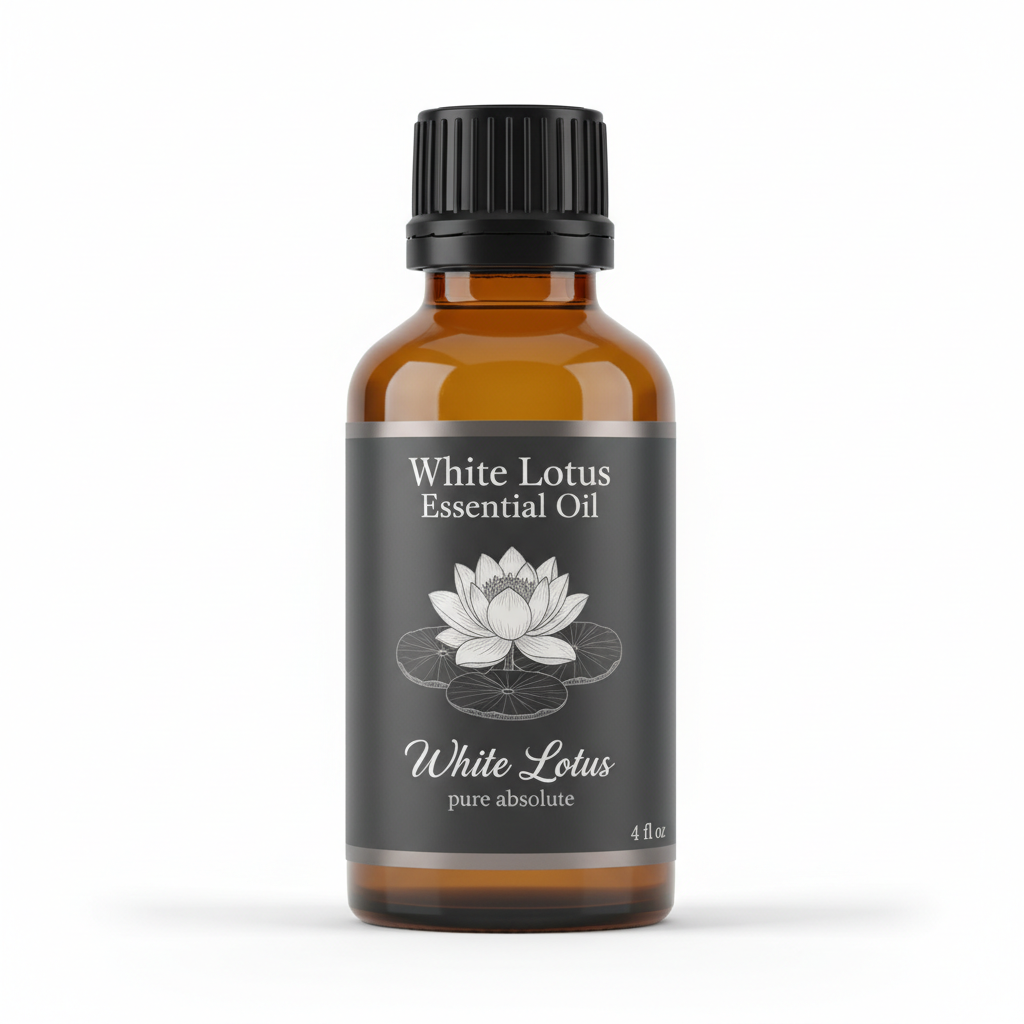
White Lotus Absolute
Our own White Lotus Absolute, in sizes from 0.5 oz to bulk.
From $23.99
Shop Now →If you have ever searched for white lotus oil online, you already know how confusing the marketplace can be. Listings range from a few dollars per ounce to hundreds of dollars per gram, and the label alone tells you almost nothing. This guide exists to close that gap. By the time you finish reading, you will know exactly what to look for, what questions to ask, and how to buy white lotus absolute with genuine confidence.
What Is White Lotus Absolute, Really?
Precision matters here. The common name "white lotus" is applied loosely across the botanical and fragrance worlds, so let us start with the plant itself.
The Botanical Source
True white lotus absolute is derived from Nymphaea lotus, the Egyptian white water lily. It is also sometimes called the white Egyptian lotus or the Nile lotus, and it carries centuries of cultural weight across ancient Egyptian art, Ayurvedic tradition, and South Asian ceremony. A separate species, Nelumbo nucifera, is the sacred lotus of Buddhist iconography. Its flowers are typically pink or white, and its absolute has a distinctly different scent profile. When you search for white lotus oil authenticity, the species name is your anchor. If a supplier cannot tell you which species their material comes from, that is already a problem.
How the Absolute Is Made
White lotus absolute is produced through solvent extraction. Fresh blossoms are collected at peak opening, typically very early in the morning, and immersed in a hydrocarbon solvent such as hexane. The solvent draws out the aromatic compounds along with waxes and pigments, producing a waxy intermediate called a concrete. The concrete is then washed with alcohol to remove the waxes, and the alcohol is gently evaporated to yield the final absolute: a viscous, highly concentrated aromatic material.
You will sometimes see the phrase "white lotus essential oil" used on product listings. In strict technical terms, an essential oil is produced by steam distillation or cold pressing. Because white lotus blossoms are delicate and yield almost nothing under steam distillation, the material you want for perfumery and cosmetic use is always an absolute. When a listing says "essential oil" but shows a price consistent with absolute, verify the extraction method before purchasing. For a deeper look at how the two production methods diverge, see our guide on white lotus absolute vs. lotus fragrance oil.
Scent Profile: What Genuine Absolute Smells Like
Authentic white lotus absolute has a scent that unfolds in stages. The opening is aquatic and green, sometimes described as a cool, slightly leafy freshness that recalls still water rather than a flower shop. As it warms on skin or blotter paper, a soft floral heart emerges: powdery, slightly sweet, with a faint fruity undertone. The dry-down lingers with a subtle earthy, almost musky depth.
This complexity is important. If a product smells like a straightforward floral from first sniff to last, it is almost certainly a fragrance compound or a heavily blended dilution. Real absolute is subtle at first and rewards patience. Perfumers often describe it as one of the quieter florals, which surprises buyers who expect an immediate blast of flower. The restraint is actually a sign of quality.
Why Authenticity Is So Hard to Find
Understanding why fakes exist in such numbers makes it much easier to recognize them. The problem is structural, not just a matter of a few dishonest vendors.
The Yield Problem
White lotus blossoms are extraordinarily low-yielding. Producing a single kilogram of absolute requires an enormous volume of fresh flowers, hand-harvested at the correct moment in a narrow daily window. Most of that global supply flows directly to niche perfume houses and specialty cosmetic manufacturers who purchase on contract. What reaches the open retail market is a small fraction of an already small production run.
This supply constraint creates a straightforward economic incentive. A company that buys a fragrance oil formulated to approximate the scent of white lotus can sell it at a much higher margin than an authentic absolute, especially if buyers do not know the difference. To understand more about the economics that drive this dynamic, our white lotus price guide breaks down the full cost chain from flower to bottle.
Labeling Conventions Are Not Standardized
Unlike food products, aromatic materials sold in the fragrance and cosmetic supply sector are not subject to strict labeling requirements around the distinction between absolute, fragrance oil, dilution, and reconstruction. A seller can legally call a product "white lotus" without specifying that it is a synthetic approximation. The INCI (International Nomenclature of Cosmetic Ingredients) name for the genuine material is Nymphaea Lotus Flower Extract, but even that designation is not always present on small-quantity retail listings.
The Dilution Spectrum
Not all inauthenticity is outright fraud. Many suppliers offer white lotus absolute diluted in a carrier oil at 3%, 5%, or 10% concentration, which is a perfectly legitimate product for certain cosmetic applications. The problem arises when those dilutions are sold without clear disclosure of the concentration, or when the price suggests a pure absolute but the bottle contains a diluted product. Always confirm whether you are buying a pure absolute or a dilution before completing your purchase.
Price as a Quality Signal: What You Should Expect to Pay
Price will not tell you everything, but it will tell you a great deal. Genuine white lotus absolute does not have a fixed global price; it fluctuates with harvest quality, seasonal yields, currency exchange rates, and supplier margins. However, there are floors below which authentic material simply cannot be sold at a profit.
| Product Type | Typical Price Range (per gram or per mL) | What It Signals |
|---|---|---|
| Synthetic fragrance oil labeled "white lotus" | $0.10 to $0.80 per mL | Not an absolute. Aromatic compound blend. |
| Diluted absolute (3% to 10% in carrier) | $1 to $8 per mL of product | Legitimate if disclosed. Verify concentration. |
| Genuine pure absolute, commercial grade | $15 to $50+ per gram | Consistent with authentic sourcing costs. |
| Small artisan-batch absolute, traceable origin | $40 to $100+ per gram | Premium quality, often with full documentation. |
These ranges shift based on where you buy. Bulk specialty chemical suppliers may offer lower per-gram pricing for larger quantities; retail perfume supply shops carry higher margins for small quantities. Neither situation is inherently suspicious if the documentation holds up. What is suspicious is pricing that falls well below the commercial grade floor while claiming to be a pure absolute. For a fuller understanding of why white lotus absolute commands such pricing, see our detailed price breakdown.
It is also worth noting that this material is routinely sold by the drop or by fractions of a gram. If a supplier sells only by the ounce or larger volume at prices suggesting a pure absolute, ask pointed questions about their supply chain. Our guide on why white lotus absolute sells by the drop explains the sizing conventions that reputable suppliers follow.
Red Flags and Common Fakes: How to Spot an Inauthentic Product
Recognizing a questionable product before you purchase saves money and frustration. The signals cluster into a few categories.
Scent Red Flags
Immediately strong and linear. Genuine absolute is complex and evolves. A product that smells fully formed and "finished" from the first sniff is almost certainly a synthetic aromatic compound. These materials are engineered to project, whereas real absolute is restrained and layered.
Sweet or "perfumey" from the start. Synthetic florals tend to lead with sweetness or a familiar perfume-counter quality. Authentic white lotus absolute opens green and aquatic. If your first impression is of a floral bouquet rather than a still pond, be cautious.
Uniform from top to dry-down. Apply a small amount to a blotter strip and check it at five minutes, thirty minutes, and two hours. A synthetic material will smell essentially the same throughout. Real absolute shifts noticeably. The evolution is part of what makes it so valued in natural perfumery.
Visual and Physical Red Flags
Water-clear liquid. Genuine white lotus absolute is typically a pale yellow to amber, slightly viscous material at room temperature. It may thicken noticeably in cooler conditions and loosen with gentle warmth. If a product pours as freely as water and is completely colorless, it is either very heavily diluted or not an absolute at all.
"Ready to use" concentration for a very low price. Absolutes require dilution before most applications. A product marketed as ready to use at perfume or body oil strength (1% to 5% concentration) should cost proportionally less per bottle than a pure absolute, and the label should say so clearly.
Documentation Red Flags
No GC/MS report available. Gas chromatography / mass spectrometry testing is the standard analytical tool for verifying the chemical composition of an aromatic material. Any supplier selling genuine white lotus absolute should be able to provide a batch-specific GC/MS report on request. If they cannot, or if they offer a generic report not tied to your specific lot, that is a meaningful gap.
No country of origin. Authentic white lotus absolute is primarily produced in Egypt and India. Some smaller production also occurs in Thailand and Sri Lanka. If a supplier lists the origin simply as "Asia" or declines to specify, push for more detail.
No extraction method stated. The listing should clearly state "solvent extraction" or "absolute." If it says "steam distilled" and claims to be a white lotus essential oil at typical absolute pricing, verify carefully. Steam-distilled white lotus material can exist in very small experimental quantities, but it is not the standard commercial offering.
Seller Behavior Red Flags
A reputable supplier answers specific questions readily. If you ask for a GC/MS report and receive a deflection, a generic brochure, or a claim that their product is "proprietary," that is informative. Sellers of genuine material have nothing to hide from analytical documentation and tend to be proud of it.
Also consider the platform. Marketplace sites that host thousands of independent sellers with no vetting process are higher-risk environments for rare botanicals than a dedicated specialty supplier with a verifiable physical address and industry memberships (such as NAHA or IFPA for aromatics, or cosmetic ingredient associations).
Quality Documentation Every Reputable Supplier Should Provide
When you buy white lotus oil from a serious supplier, documentation is not a bonus. It is a baseline expectation. Here is what to ask for and what each document tells you.
GC/MS Report (Gas Chromatography / Mass Spectrometry)
This is the most important document. A GC/MS report identifies and quantifies the individual chemical constituents present in the sample. For white lotus absolute, you would expect to see a range of compounds including various aldehydes, alcohols, and esters that collectively produce the characteristic scent profile. The report should include the batch or lot number, the date of analysis, and ideally the name of the laboratory that conducted it. A third-party laboratory report carries more weight than an in-house one.
Reading a GC/MS report does not require a chemistry degree. What you are looking for is specificity: named compounds with percentage values. A report that lists only vague categories or that shows a composition identical to a published synthetic approximation is worth questioning.
Certificate of Analysis (COA)
The COA documents physical and quality parameters: appearance, color, specific gravity, refractive index, and in some cases solvent residue levels. For a solvent-extracted absolute, the solvent residue data matters. Reputable suppliers test to confirm that residual hexane or other extraction solvents fall within accepted limits for cosmetic use. The International Fragrance Association (IFRA) and ISO standards provide reference points for acceptable residue thresholds.
Material Safety Data Sheet (MSDS / SDS)
The Safety Data Sheet provides handling, storage, and safety information. It is a standard document for any cosmetic ingredient and should accompany any professional-grade purchase. Its presence signals that the supplier operates at a level of commercial seriousness consistent with selling genuine material.
Origin Declaration and Supply Chain Transparency
Beyond documents, the best suppliers can describe their supply chain in plain language. Where are the flowers grown? Who harvests them? Is the extraction done at origin or after export? Are the farmers working under fair trade or fair-price agreements? These questions matter both ethically and as quality indicators, because fresh flowers extracted quickly at source produce a finer absolute than flowers that have been transported long distances before processing.
For buyers sourcing larger quantities, our guide on wholesale white lotus absolute sourcing covers supply chain verification in more depth.
At-Home Authentication: Practical Checks Before You Commit
Professional laboratory testing is the gold standard, but there are practical checks you can run yourself, either on a sample you have already received or on a sample you have requested before committing to a larger purchase.
The Blotter Evolution Test
Apply a very small amount (one drop or less) to a perfumer's blotter strip or an unscented paper strip. Note the scent immediately, then again at ten minutes, thirty minutes, one hour, and two hours. Record your impressions at each stage. Authentic white lotus absolute will shift noticeably, particularly between the opening and the thirty-minute mark. The aquatic, green opening should soften into the floral heart as the lighter volatile compounds dissipate.
Compare your notes to the scent profile description from a supplier you trust. If the product smells static throughout all stages, it is almost certainly a synthetic aromatic compound.
The Viscosity Check
Genuine absolute is viscous, particularly in cooler temperatures. If your sample arrives in cold weather and is barely pourable, that is a good sign. Gently warm the closed bottle in your hands or in a bowl of warm water for a minute, and the material should loosen. If the product is as fluid as a light carrier oil at room temperature in any weather, it is likely either a diluted product or not an absolute.
The Carrier Oil Detection Test
Drop a tiny amount onto blotter paper and let it dry fully over several hours. A pure absolute will leave a faint aromatic residue with minimal oily stain. A product diluted in a carrier oil will leave a distinct oily ring that persists. This test is not definitive, because some genuine absolutes do carry enough natural wax content to leave a slight mark, but a pronounced oil stain on blotter paper is a reasonable indicator of a carrier oil-based dilution.
Requesting a Sample
Before placing a significant order, ask the supplier for a small paid sample. Reputable suppliers of rare botanicals routinely offer samples precisely because they understand buyers need to verify quality before committing. A supplier who refuses to provide any sample option for a premium material is worth approaching with caution. Expect to pay for the sample at the per-gram rate; this is standard practice and not a red flag in itself.
Community Cross-Referencing
The natural perfumery and aromatic formulation communities are active and knowledgeable. Forums, specialty social media groups, and professional organizations such as NAHA (National Association for Holistic Aromatherapy) and the Natural Perfumers Guild maintain community knowledge about supplier reputations. If a supplier has been discussed in these spaces, you will often find candid assessments from experienced buyers who have already done their own testing.
Choosing the Right Supplier: Questions to Ask Before You Buy
Armed with the knowledge above, the supplier selection process becomes much more structured. Here is a practical framework for evaluating any vendor who claims to sell real white lotus absolute.
The Essential Pre-Purchase Questions
- What is the botanical species? The answer should be Nymphaea lotus (or occasionally Nelumbo nucifera if selling sacred lotus absolute, which is a different product). Any vague response should prompt follow-up.
- What is the country of origin? Egypt and India are the primary sources. Thailand and Sri Lanka produce smaller quantities. A specific country and ideally a region or farm is the answer you want.
- What is the extraction method? Solvent extraction. The intermediate product is a concrete, and the final product is an absolute. If the answer describes steam distillation as the primary method, verify carefully.
- Can you provide a batch-specific GC/MS report? Yes, on request or available for download, is the right answer. "Our products are high quality" is not an answer.
- Is this product a pure absolute or a dilution? Either is acceptable as long as the answer is clear and the price reflects the concentration accurately.
- Do you offer samples? For a premium material, yes should be the answer.
- What is your return or dispute policy if the material does not match its description? A supplier confident in their product will have a clear policy.
Evaluating Supplier Categories
Specialty aromatic ingredient suppliers. Companies that focus specifically on naturals for perfumery and cosmetic formulation are generally the most reliable source. They stake their business reputation on material accuracy and are more likely to maintain rigorous documentation practices. Examples include established North American and European botanical ingredient houses that have been operating for a decade or more.
General essential oil retailers. Some are excellent; many are not equipped to source and verify rare absolutes. The white lotus absolute on a shelf next to hundreds of other oils at uniform price points is worth scrutinizing. The best general retailers are transparent about which items they purchase from specialty distributors and which they source directly.
Direct-from-origin producers. Occasionally a producer in Egypt or India sells directly to international buyers. These relationships, when they are genuine, often yield exceptional quality and price, but they require more due diligence on the buyer's end. Import documentation, currency of origin certificates, and quality assurance processes need to be verified rather than assumed.
Marketplace listings from individual sellers. High risk for a material this specialized. Without the institutional accountability of an established business, quality assurance falls entirely on the individual seller's knowledge and honesty. If purchasing from a marketplace, look for verified purchase reviews that specifically address authenticity, not just scent preference.
Comparing Across Florals to Calibrate Your Expectations
If you are new to rare floral absolutes, it helps to build comparative context. Jasmine absolute and rose absolute are more widely available and somewhat more forgiving to source, which makes them useful reference points. Once you understand how a reputable supplier handles documentation and sampling for those materials, you have a baseline for evaluating their white lotus offering. Our comparison guides on white lotus vs. jasmine absolute and white lotus vs. rose absolute walk through the sourcing and quality distinctions between these florals in detail.
Using Your Absolute Wisely: Application, Dilution, and Storage
Once you have sourced genuine white lotus absolute, using it correctly ensures you get the full value from a material that deserves careful handling.
Dilution Guidelines for Cosmetic and Aromatic Use
Safety Note: White lotus absolute is a concentrated aromatic material. It should always be diluted before skin contact. Perform a patch test before broader application: apply a small amount of the diluted product to the inner forearm, wait 24 hours, and check for any reaction. People with known sensitivities to floral compounds should approach new materials with particular care. Consult a qualified healthcare provider if you have questions about individual sensitivities.
For most cosmetic applications, the following starting dilution rates are commonly used as reference points. These are formulation starting points, not prescriptions. Your specific formula may require adjustment based on the other ingredients present.
| Application | Suggested Dilution Rate | Notes |
|---|---|---|
| Personal fragrance (perfume oil) | 2% to 5% in carrier oil | Start low. The scent is potent and complex. |
| Facial serum or facial oil | 0.1% to 0.5% | Patch test essential. Keep away from eye area. |
| Body oil or lotion | 0.5% to 1% | Follow cosmetic formulation standards for your region. |
| Bath product (dispersed in base) | 0.1% to 0.5% | Always disperse in a bath dispersant or solubilizer, not directly in water. |
| Natural perfumery (blending) | Varies widely by formula | Begin with 1 drop per 10 mL of formula and adjust up slowly. |
Because genuine white lotus absolute is priced by the drop, precision measuring tools are worth investing in. A digital milligram scale accurate to 0.001g is useful for professional formulation. For more informal aromatic use, a glass dropper or pipette allows controlled single-drop application.
Storage to Protect Your Investment
Proper storage extends the usable life of an expensive aromatic material significantly. Follow these practices from the moment your absolute arrives.
- Use amber or dark glass containers. Light degrades aromatic compounds over time. If your absolute arrives in clear glass, transfer it promptly or store the bottle in a dark box or drawer.
- Keep it cool and stable. A consistent temperature between 10 and 15 degrees Celsius is ideal. A dedicated mini-fridge for aromatics works well for serious collectors. Avoid storing near heat sources, radiators, or windows.
- Minimize air exposure. Oxygen oxidizes aromatic compounds. If you are working from a larger quantity, consider transferring the working amount into a smaller vial and keeping the bulk supply sealed. This reduces the number of times the main container is opened.
- Label clearly with the date of receipt and batch number. When you have documentation tied to a specific batch, keeping that number on the bottle allows you to cross-reference the GC/MS report if you ever have a question about the material months later.
Getting the Most from a Small Quantity
First-time buyers of white lotus absolute are sometimes surprised by how far a small quantity goes. A single gram of pure absolute, used at a 2% dilution rate in a 10 mL roller bottle, produces an estimated 50 milliliters of finished fragrance oil. That context changes the economics considerably.
For buyers who are still weighing how much to purchase initially, our guide on the best purchase sizes for white lotus absolute walks through the math in detail and helps you match quantity to your intended use.
Blending Notes for Aromatic Formulators
White lotus absolute is a middle-to-base-note material in natural perfumery terms. It blends exceptionally well with other aquatic and floral notes, and it has a particular affinity for woods and resins that share its soft, slightly earthy dry-down. Sandalwood, vetiver, orris root, and ambrette seed are frequently cited companion materials by natural perfumers. Lighter florals like neroli or ylang ylang can lift the white lotus without overwhelming it.
Because of its cost, white lotus absolute often functions as a keynote in a blend rather than a volume ingredient. A small percentage carrying the signature character of the oil is the more common approach, with supporting materials building out the structure around it.
A Note on Shelf Life
Well-stored white lotus absolute can maintain its quality for several years. Unlike some cold-pressed oils that oxidize within months, absolutes produced through solvent extraction are more stable. However, "stable" does not mean indefinite. If you notice a significant shift in scent character, particularly a flat or musty quality replacing the original complexity, the material may have oxidized or degraded. GC/MS testing on older stock can confirm the composition if you have any doubt.
For buyers sourcing this material for professional cosmetic formulation, the batch date and stability data from your COA provide the documented shelf-life parameters for your production records.
Building Your Sourcing Relationship Over Time
Rare floral absolutes reward ongoing supplier relationships. Once you find a source that consistently delivers verified, quality material, maintaining that relationship has real practical value. You get advance notice of new harvests, first access to limited batches, and the kind of frank conversation about quality variation between seasons that only comes with a trusted partnership.
Annual harvest quality does vary. An unusually dry growing season, a late monsoon, or flooding during harvest can affect both yield and scent character. A supplier with direct producer connections will be honest with you about these variations, while one operating several steps removed from origin may not even know.
For buyers with volume needs or professional formulation businesses, the logistics of building reliable access to a consistent supply are covered in our wholesale sourcing guide.
Real white lotus absolute rewards the buyer who does the work upfront. The documentation questions, the sample request, the blotter test: these are small investments of time that protect a significant investment of money. Once you have held the real thing and experienced its scent evolution, the difference between genuine absolute and a synthetic approximation becomes immediately clear. The search for white lotus oil authenticity is not about suspicion. It is about respecting a material that takes remarkable care and skill to produce, and making sure your purchase reflects that.
Summary: Your Authenticity Checklist
- Confirm the botanical species: Nymphaea lotus for white Egyptian lotus absolute.
- Verify the extraction method: solvent extraction producing an absolute, not steam distillation.
- Check the price against realistic production costs. Pricing well below the commercial grade floor is a significant warning sign.
- Request a batch-specific GC/MS report and a Certificate of Analysis before purchasing.
- Ask for the country of origin. Egypt and India are the primary sources.
- Perform the blotter evolution test on any sample you receive. Real absolute changes over time.
- Check viscosity. Genuine absolute thickens in cool conditions and is not water-clear.
- Evaluate the supplier's willingness to answer specific questions directly and promptly.
- Store your verified absolute in dark glass, in a cool and stable environment, with the container well sealed.
- Dilute before any skin application, patch test first, and consult a qualified healthcare provider with any individual concerns.