
Wholesale White Lotus Absolute: Sourcing a Rare Floral in Bulk
White lotus absolute is not a commodity ingredient. It sits at the top of the natural fragrance hierarchy alongside rose otto and oud, and its supply chain reflects that status. For formulators, perfumers, and cosmetic brands looking to purchase wholesale white lotus oil in meaningful quantities, the sourcing process requires more scrutiny than almost any other botanical material. This guide walks you through every stage of that process: what quality actually looks like, which specifications to compare, how to spot a dishonest supplier, and where credible purchasing options exist at different investment levels.
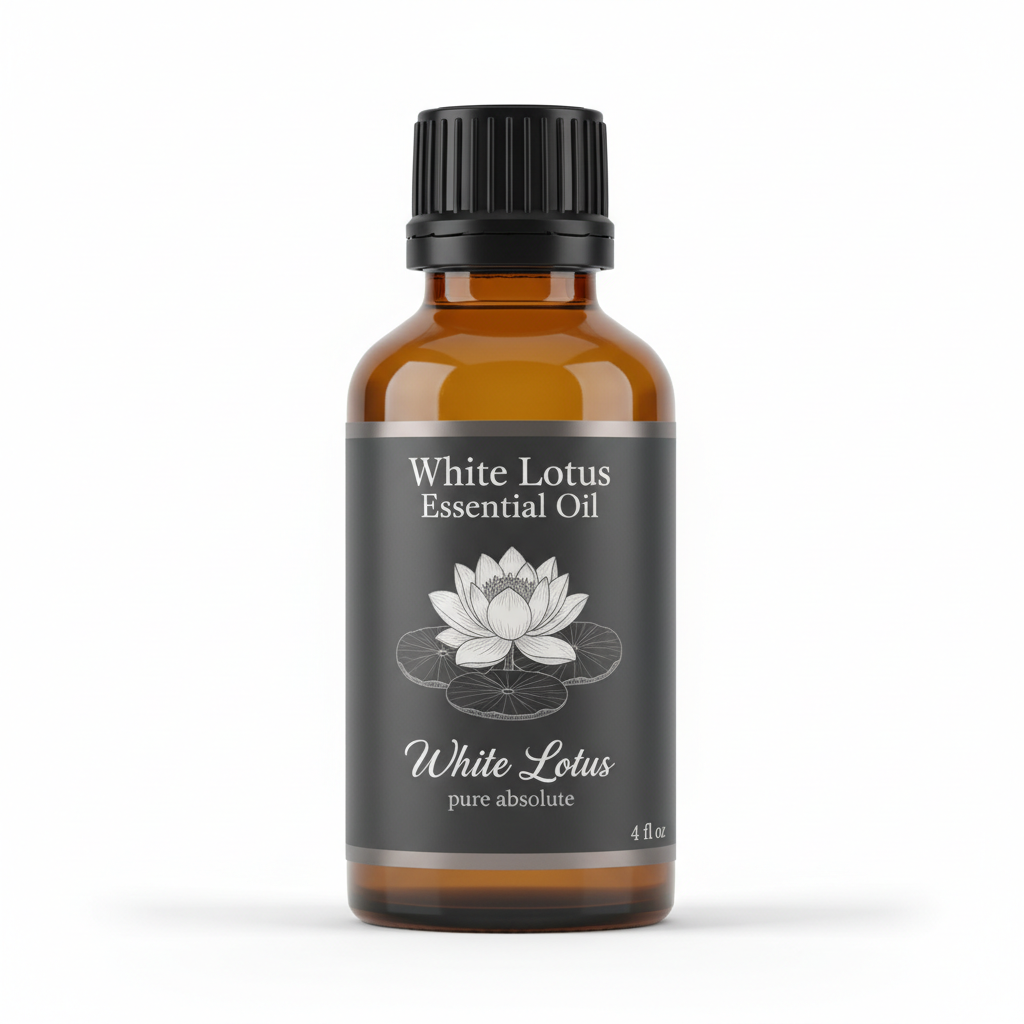
White Lotus Absolute
Our own White Lotus Absolute, in sizes from 0.5 oz to bulk.
From $23.99
Shop Now →Understanding What You Are Actually Buying
Before comparing suppliers, it helps to be precise about terminology. "White lotus absolute" refers to the solvent-extracted aromatic concentrate derived from Nymphaea lotus or, in some catalogues, Nymphaea ampla. The extraction process uses food-grade hexane or ethanol to pull the full aromatic profile from the fresh or dried flowers, yielding a thick, intensely fragrant material.
This is categorically different from a white lotus fragrance oil, which is a synthetic or blended product formulated to approximate the scent. If you are purchasing for natural perfumery, fine cosmetics, or artisan candles marketed as "natural," only a genuine absolute will serve your needs. The price difference between the two is dramatic, and that gap is one of the first quality signals worth understanding. For a more detailed breakdown of the distinction, see our article on white lotus absolute vs. lotus fragrance oil.
Quality Indicators: What to Look For Before You Commit
Color and Viscosity
Genuine white lotus absolute is typically a deep amber to olive-brown color, often appearing nearly opaque in larger quantities. Its viscosity is notably high at room temperature. A supplier offering a pale yellow, free-flowing liquid at a suspiciously low price deserves immediate skepticism. Some slight variation in color exists between harvests and between Egyptian and Indian-sourced material, but the overall profile should remain rich and resinous.
Odor Profile
The scent of authentic bulk lotus absolute is complex. Expect a watery-green top note that opens into a creamy, slightly powdery floral heart, with a warm, faintly earthy dry-down. The aquatic quality is delicate, not sharp or chemical. If a sample smells primarily sweet or musky without the green-watery lift, or if it has an alcohol-forward character that fades quickly, something has been adulterated or blended.
Request a free sample before placing any bulk order. Any reputable lotus absolute supplier operating at a professional level will accommodate this request for qualified buyers.
Documentation
Quality documentation for bulk botanical purchases should include:
- A Gas Chromatography/Mass Spectrometry (GC/MS) report specific to the batch you are purchasing, not a generic certificate
- Country and region of origin clearly stated
- Extraction method and solvent disclosure
- Lot number for full traceability
- Safety Data Sheet (SDS) and, where applicable, an IFRA conformance note
- Residual solvent levels, particularly if you are formulating for leave-on skin applications
If a supplier cannot produce a batch-specific GC/MS report upon request, that alone is sufficient reason to look elsewhere. For a thorough guide to reading and interpreting these documents, our article on how to buy white lotus absolute: the complete authenticity guide covers the process step by step.
Key Specifications to Compare Across Suppliers
| Specification | What to Ask | Why It Matters |
|---|---|---|
| Botanical origin | Nymphaea lotus, N. ampla, or other species? | Species affects odor profile and regulatory status |
| Country of origin | Egypt, India, or elsewhere? | Egyptian material is most prized; Indian can be excellent; provenance affects pricing |
| Extraction solvent | Hexane or ethanol? Residual levels? | Critical for cosmetic compliance and labeling |
| Minimum order quantity (MOQ) | What is the smallest bulk unit available? | MOQs vary from 100g to 1kg or more at the wholesale tier |
| Pricing structure | Is there a volume discount at 500g, 1kg, 5kg? | Determines actual cost-per-gram for your production scale |
| Shelf life and storage specs | Recommended storage temperature and expected shelf life? | Absolutes degrade with heat and light; poor storage guidance signals inexperience |
| Lead time | Is stock held, or is the material ordered on demand? | Rare florals are seasonal; consistent supply depends on inventory management |
Price Tiers: What to Expect at Each Level
White lotus absolute is genuinely expensive, and significant deviations from market pricing in either direction are a signal worth examining. As of current market conditions, expect rough price ranges in the following tiers. Note that these figures fluctuate with harvest quality and currency movement, so treat them as relative benchmarks rather than fixed targets.
Entry-Level Wholesale (100g to 250g)
At this quantity, you are still at the lower boundary of wholesale pricing. Expect to pay somewhere in the range of $80 to $150 per 100g for verified authentic material, depending on origin and supplier overhead. This tier suits small-batch perfume houses or cosmetic brands testing a formula before scaling. The documentation expectations are identical to larger purchases; do not accept less just because the order is smaller.
Mid-Range Bulk (500g to 1kg)
This is where meaningful volume discounts begin. Pricing in the $60 to $120 per 100g range (billed per kilogram) is realistic for quality Egyptian or Indian-origin material from an established supplier. At this level, you should expect a direct account relationship, not just a web storefront checkout. A supplier worth working with long-term will assign a dedicated contact and offer to discuss your formulation needs.
Large-Scale Industrial (5kg and above)
At this volume, pricing negotiation is standard practice. You are typically sourcing directly from a distillery partner or a primary importer. Contracts, harvest scheduling, and quality hold agreements become relevant considerations. If your production demands this volume consistently, establishing a relationship with an Egyptian or Indian cooperative or export house directly is worth exploring, though it requires significant due diligence and the ability to manage international shipping and customs documentation independently.
Red Flags: When to Walk Away
The market for rare florals attracts a disproportionate share of adulterated or mislabeled product. Here are the warning signs that should prompt you to stop and reconsider.
- Price that seems too good to be true. Authentic white lotus absolute cannot be produced cheaply. A price dramatically below the market average almost always indicates dilution with a carrier oil, adulteration with synthetic aromachemicals, or outright mislabeling of a fragrance oil as an absolute.
- No batch-specific GC/MS report. A generic certificate without a lot number is not a verification document. It is a marketing document.
- Vague origin labeling. "Floral absolute, origin: Asia" is not acceptable for a purchase at this price point. Demand specificity.
- Unwillingness to provide a sample. Established wholesale suppliers routinely send samples to qualified buyers. Refusal suggests either limited stock or confidence issues about the product quality.
- Claims that read as medical or quasi-medical benefits. A supplier using language around specific health outcomes is either uninformed about regulations or deliberately misleading. Neither is a characteristic you want in a long-term ingredient partner.
- Suspiciously low viscosity or pale color in photos. If the product image shows a thin, bright liquid, ask hard questions before ordering.
Where to Buy: Sourcing Channels Worth Considering
Specialty Natural Fragrance Distributors
Companies that focus specifically on natural aromatic materials, such as Eden Botanicals, Hermitage Oils, or Enfleurage in the US market, maintain strong quality standards and supplier relationships. They typically stock vetted material with full documentation and are accustomed to working with professional formulators. MOQs are often accessible for mid-size brands, and customer service tends to be knowledgeable about the material itself.
Direct Import from Origin Cooperatives
For buyers with the volume and infrastructure to manage it, sourcing directly from Egyptian or Indian producer cooperatives offers the most transparency and the best pricing at scale. Organizations like the Egyptian Export Council for Agricultural Products can sometimes facilitate introductions to verified exporters. This route requires comfort with international trade logistics, but it eliminates several layers of markup.
Vetted Online Wholesale Platforms
Platforms like Alibaba can connect buyers with producers, but they require significantly more verification work on the buyer's side. Always request third-party lab verification of any sample before placing a bulk order through these channels. Cross-reference supplier claims against independent GC/MS analysis if your purchase volume justifies the testing cost.
Trade Shows and Industry Events
Events like Esxence in Milan, World Perfumery Congress, and the Society of Cosmetic Chemists annual meetings bring vetted ingredient suppliers together with qualified buyers. Meeting a supplier in person, evaluating their samples on-site, and discussing sourcing practices directly is often the most efficient path to finding a trustworthy long-term partner for a material as rare as white lotus absolute.
A Note on Comparisons: White Lotus in Context
If you are weighing white lotus absolute against other rare florals for a formulation, understanding how it sits within the broader luxury floral category is useful. Its aromatic character occupies a distinct space compared to jasmine absolute, with a cooler, more aquatic quality that jasmine's indolic richness does not replicate. For a side-by-side look at how these two materials compare in a formulation context, see our piece on white lotus vs. jasmine absolute: two night-blooming luxuries.
Before You Place Your First Bulk Order
Start with a sample. Have it evaluated by your nose and, if budget allows, by a third-party lab. Ask for the batch-specific GC/MS report and compare the listed compounds against published reference profiles for authentic Nymphaea lotus absolute. Build a relationship with a supplier before committing to volume. White lotus is expensive enough that a rushed decision at the ordering stage costs far more than the time spent on proper qualification.
The suppliers worth working with long-term will welcome that scrutiny. They know what they have is rare, and they understand that professional buyers know it too.