
White Lotus vs Jasmine Absolute: Two Night-Blooming Luxuries
Both white lotus and jasmine release their richest scent after dark. Both demand painstaking hand-harvesting. Both carry price tags that reflect genuine botanical rarity. And yet, if you place a drop of each on a smelling strip, the differences become immediately clear. One is cool, watery, and almost otherworldly. The other is warm, indolic, and unmistakably familiar.
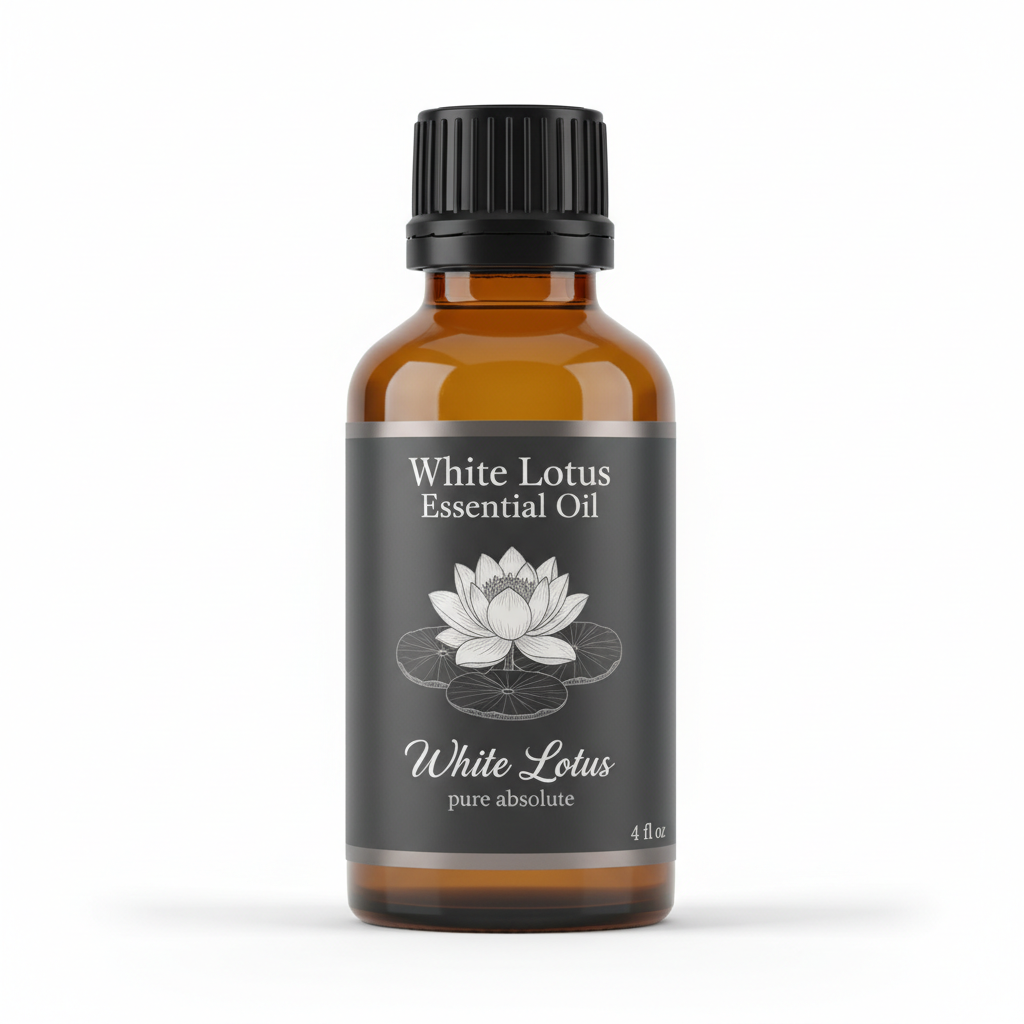
White Lotus Absolute
Our own White Lotus Absolute, in sizes from 0.5 oz to bulk.
From $23.99
Shop Now →This white lotus vs jasmine comparison is written for buyers who are deciding where to invest their budget, blenders who want to understand how each absolute behaves in a formula, and curious enthusiasts who simply want to know what separates two of the most celebrated luxury floral absolutes in the world. We will look at sourcing, scent character, cosmetic applications, blending behavior, and cost, giving each oil its fair due along the way.
Where Each Flower Comes From
White Lotus (Nymphaea lotus and Nymphaea alba)
White lotus absolute is produced primarily in Egypt, where the Nile Delta provides the precise combination of warm days, cool nights, and mineral-rich water that the plant needs. Flowers are harvested in the pre-dawn hours, before heat begins to degrade the delicate volatile compounds. Because the petals are too fragile for steam distillation, the aromatic material is extracted using solvent extraction, producing first a concrete and then an absolute. Yields are exceptionally low. It can take several hundred kilograms of fresh flowers to yield a single kilogram of finished absolute, which explains its position at the upper end of the floral absolute market.
Adulteration is a real concern. If you are new to buying this material, the guide how to buy white lotus absolute: the complete authenticity guide is worth reading before you place an order. Reputable suppliers will provide GC/MS documentation without hesitation.
Jasmine Absolute (Jasminum grandiflorum and Jasminum sambac)
Jasmine absolute comes primarily from two species. Jasminum grandiflorum, the Spanish or royal jasmine, is grown extensively in Grasse (France) and in India, particularly around Mysore and Madurai. Jasminum sambac, sometimes called sambac or Arabian jasmine, originates mainly in India, Egypt, and parts of Southeast Asia. Both require hand-picking at night or very early morning, as the flowers lose fragrance quickly once the sun rises.
Jasmine absolute is expensive, but it is also more widely produced than white lotus. Its supply chain is more established, which means more options at more price points. That availability is both an advantage and a sourcing caution: diluted or synthetic jasmine absolute circulates more freely than many buyers realize.
Scent Profile: A Side-by-Side Reading
Scent is subjective, but trained evaluators consistently describe these two absolutes in ways that reflect their botanical differences.
White lotus absolute opens with a cool, aquatic quality that has no real parallel among floral absolutes. Beneath that watery top note sits a soft, slightly powdery floral heart with faint green undertones. There is a translucent quality to it. Some evaluators detect a hint of cucumber or melon. The dry-down is warm and faintly sweet, but it never becomes heavy. The overall impression is serene and meditative.
Jasmine absolute is richer and more assertive. Its opening is intensely floral, almost heady, with a characteristic indolic quality that gives it depth and a faint animalic warmth. Grandiflorum tends toward a honeyed, slightly fruity richness. Sambac leans more green and tea-like. The dry-down on both is warm, tenacious, and deeply sensual. Jasmine does not whisper. It announces itself.
Comparison Table: Key Attributes at a Glance
| Attribute | White Lotus Absolute | Jasmine Absolute |
|---|---|---|
| Primary origin | Egypt (Nile Delta) | India, France, Egypt |
| Extraction method | Solvent extraction (absolute) | Solvent extraction (absolute) |
| Scent character | Aquatic, cool, powdery floral, translucent | Rich, indolic, warm, honeyed, tenacious |
| Longevity on skin | Moderate (4 to 6 hours) | Strong (6 to 10 hours) |
| Blending character | Subtle modifier, easily overpowered | Dominant note, blends broadly |
| Typical usage rate (fine fragrance) | 0.5% to 2% | 0.5% to 3% |
| Rarity | Very high | High |
| Adulteration risk | Very high | High |
| Relative cost | Premium to ultra-premium | Premium |
| Cosmetic use compatibility | Facial serums, luxury body oils, perfume | Perfume, hair care, body products |
| Cultural associations | Ancient Egypt, South and Southeast Asia, Buddhism | South Asia, Mediterranean, Middle East |
Cosmetic and Aromatic Applications
White Lotus in Formulation
White lotus absolute works beautifully in leave-on products where its delicate scent can unfold slowly. Facial serums and facial oils are natural fits. At 0.1% to 0.5%, it contributes a distinctive aromatic signature without overwhelming other ingredients. In perfumery, it functions best as a heart note modifier rather than a standalone soliflore, because its scent can be masked by heavier base notes if not carefully balanced.
Its aquatic and slightly powdery quality makes it a useful bridge between green or citrus top notes and warmer florals or musks. Blenders who work with white lotus often describe the experience as trying to frame something gossamer. You need light hands and restraint.
Jasmine Absolute in Formulation
Jasmine absolute has anchored fine fragrances for centuries. It blends across nearly every fragrance family: oriental, floral, chypre, green, and woody compositions all accommodate it readily. Its tenacity means it performs well as a heart note with true staying power.
In cosmetic formulation, jasmine absolute is used in hair serums, body butters, and luxury creams. Its warmer, richer character means it can hold its own against heavier carrier oils and butters in a way that white lotus cannot. At standard dilution rates, it contributes perceptible fragrance even in rinse-off products.
Pros and Cons
White Lotus Absolute
- Pro: Genuinely rare and distinctive. Very few absolutes offer that cool, aquatic floral quality.
- Pro: Carries profound cultural and historical resonance across multiple traditions.
- Pro: Exceptionally versatile as a blending modifier in fine fragrance work.
- Pro: Well-suited for facial and prestige skincare formulations where restraint is valued.
- Con: Moderate longevity. It may need fixative support in perfume compositions.
- Con: Very high adulteration risk. Authentication requires GC/MS documentation. See reading a lotus absolute GC/MS report: authenticity checks before you buy for a detailed walkthrough.
- Con: Ultra-premium pricing limits batch experimentation for smaller formulators.
- Con: Its subtlety can be a drawback in bold or heavily spiced compositions where it disappears.
Jasmine Absolute
- Pro: Exceptional longevity and sillage. It performs reliably across product types.
- Pro: Broader supply chain means more vetted suppliers to choose from at varying price points.
- Pro: Blends easily across fragrance families, making it one of the most versatile floral absolutes available.
- Pro: Strong cultural cachet in perfumery. Many consumers already associate it with luxury.
- Con: Its indolic quality can be polarizing. Some find it too heady or overpowering at higher concentrations.
- Con: Adulteration with synthetic jasmonates is common at lower price points. Sourcing diligence still matters.
- Con: Less distinctive than white lotus in crowded floral fragrance markets. Many compositions already feature it.
- Con: Its dominance in a blend can make it difficult to use alongside other strong florals without one overwhelming the other.
Best For: Recommendations by Use Case
Fine Fragrance Creation
Both absolutes belong in a serious perfumer's palette, but they serve different roles. Reach for white lotus when you want to build something ethereal, meditative, or quietly aquatic. Reach for jasmine when you want presence, projection, and warmth. If budget allows, they layer beautifully together: jasmine provides the structure and jasmine carries the composition forward, while white lotus adds a translucent, almost luminous quality to the heart.
Prestige Facial and Body Skincare
White lotus has the edge here. Its cool, powdery floral note reads as sophisticated and restrained in serums and facial oils, product categories where a heavy, indolic scent can feel out of place. Jasmine absolute is excellent in body products, hair serums, and richer creams where its warmth complements heavier textures.
Evening Ritual and Atmospheric Blending
Both flowers are deeply associated with nighttime rituals and evening wind-down moments. White lotus brings a meditative, cool stillness that suits quiet, introspective routines. Jasmine brings sensuality and warmth, making it a natural fit for romantic or celebratory atmospheres. Your choice here is genuinely personal.
Budget-Conscious Luxury Formulation
Jasmine absolute offers more flexibility. Its wider supply chain and slightly lower entry price mean you can experiment with larger batches without the same financial risk that white lotus carries. If you are deciding between the two as your first luxury floral absolute purchase, jasmine is the more forgiving starting point.
Signature or Niche Positioning
White lotus wins on distinctiveness. Jasmine is beloved precisely because it is familiar, but familiarity cuts both ways. A product built around authentic white lotus absolute occupies genuinely uncommon territory. For brands or independent formulators who want to stand apart in the jasmine absolute comparison landscape, white lotus offers a more original story to tell.
A Note on Comparing Value, Not Just Price
Sticker price alone does not determine value in the luxury floral absolute market. White lotus is almost always more expensive per gram, but a lower usage rate means a small quantity goes a surprisingly long way in a well-balanced formula. Jasmine, while priced lower per gram in many cases, may be used at higher concentrations to achieve the desired effect, which affects the real cost per batch.
For a broader look at how white lotus stacks up against another celebrated floral, the piece on white lotus vs rose absolute: choosing your precious floral offers useful context on navigating the luxury floral absolute category as a whole.
The Verdict
These are not competing products. They are complementary ones that happen to share a nocturnal harvest window and a position at the top of the floral absolute market.
Jasmine absolute is the more versatile, more accessible, and more immediately recognizable of the two. If you need a luxury floral that performs consistently across a wide range of formulas and product types, jasmine earns its reputation without argument.
White lotus absolute is rarer, quieter, and harder to source with confidence. But it offers something jasmine cannot: a scent that is genuinely unfamiliar to most consumers, rooted in one of the world's oldest botanical traditions, and capable of lifting a composition into something that smells like nothing else on the market.
The better question is not which one is superior. It is which one serves the intention you are bringing to your work. Both reward careful sourcing, patient formulation, and the kind of attention that rare botanical materials deserve.