
Reading a Lotus Absolute Report: Authenticity Checks Before You Pay
A certificate of analysis sitting in a supplier's downloads folder sounds reassuring. In practice, most buyers glance at the pass/fail summary, see a green checkmark, and move on. That habit is expensive. Lotus absolute testing exists precisely because this material is one of the most adulterated florals on the market, and a surface-level read of a report tells you almost nothing about what is actually in the bottle.
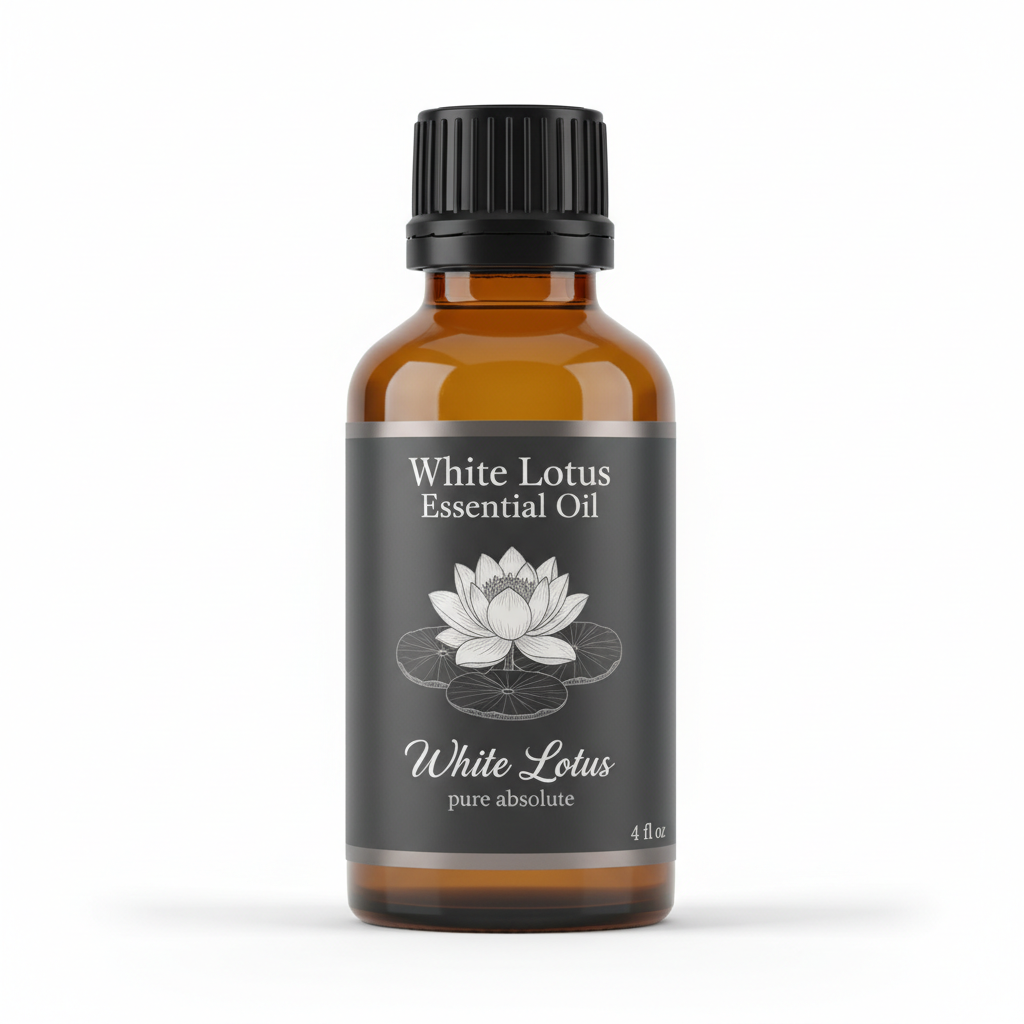
White Lotus Absolute
Our own White Lotus Absolute, in sizes from 0.5 oz to bulk.
From $23.99
Shop Now →This guide walks you through each section of a GC/MS (gas chromatography-mass spectrometry) report for a white lotus absolute, explains what genuine profiles look like, and gives you a practical checklist to run through before you commit to a purchase. You do not need a chemistry degree. You need to know which numbers matter, which omissions are suspicious, and how to ask the right follow-up questions.
What You Will Need
- The supplier's GC/MS report (PDF or digital copy, not a screenshot)
- The supplier's Certificate of Analysis (CoA), if issued separately
- A reference database: the NIST Chemistry WebBook is free and useful for cross-checking compound names
- A blank checklist (a simple notes app works fine)
- The supplier's stated botanical name, origin country, and extraction method
- Optional: access to a trusted third-party lab comparison, such as those discussed in our guide to buying white lotus absolute with full authenticity verification
Step 1: Confirm the Botanical Name and Extraction Method
Before reading a single peak on the chromatogram, check the header information. A legitimate report for white lotus absolute should state the botanical name Nymphaea lotus or Nelumbo nucifera (depending on whether the supplier distinguishes Egyptian white lotus from sacred lotus). These are not interchangeable plants, and their chemical profiles differ noticeably. If the report simply says "lotus" with no Latin name, ask for clarification before going further.
The extraction method matters too. A true absolute is solvent-extracted, usually with hexane to produce a concrete, which is then washed with ethanol to yield the absolute. If the report describes a steam-distilled essential oil, you are looking at a different product entirely. Steam distillation of lotus petals produces very little material and is rarely used commercially for white lotus. A mislabeled extraction method is a red flag worth pausing on.
Step 2: Check the Report's Provenance
Who ran the analysis? The lab name, accreditation number, and date of analysis should appear clearly on the document. Reports issued by the supplier's own in-house team carry less independent weight than those from an accredited third-party laboratory. Look for ISO 17025 accreditation or an equivalent national standard.
Check the date. A GC/MS report from four years ago, attached to freshly bottled stock, does not tell you about the current batch. Reputable suppliers issue batch-specific reports. Ask for the batch number on your invoice to match against the report's batch reference.
Step 3: Understand the Chromatogram Peak List
The bulk of a GC/MS report is a table of chemical compounds with their percentage composition. For a white lotus absolute, you are looking for a specific cluster of marker compounds. The following table shows typical ranges cited in published botanical literature for genuine Nymphaea lotus absolutes. Use these as orientation points, not rigid pass/fail thresholds, because natural variation across harvest seasons and growing regions is real.
| Compound | Typical Range (%) | Role in Profile |
|---|---|---|
| 1-Hexadecanol (cetyl alcohol) | 8 to 18% | Waxy, floral anchor note |
| Hexadecanoic acid (palmitic acid) | 5 to 15% | Fatty-floral base character |
| Phytol | 4 to 12% | Green, slightly earthy modifier |
| Benzyl benzoate | 3 to 10% | Soft balsamic sweetness |
| Linalool | 1 to 6% | Light floral lift |
| Geraniol / Nerol | 0.5 to 4% | Rose-adjacent brightness |
| Nonanal / Decanal | Trace to 3% | Waxy-citrus nuance |
A genuine profile is complex. White lotus absolute typically shows thirty or more identifiable compounds. If a report lists only eight to twelve peaks, that is a sign the analysis may be incomplete, the material may be a synthetic reconstruction, or the document may have been simplified for marketing purposes. Ask for the full, unedited output.
Step 4: Spot the Adulterant Signals
This is where absolute authenticity checks earn their value. Common adulterants in commercial lotus absolute include dilution with carrier oils, blending with cheaper floral absolutes (rose, jasmine, ylang-ylang), and outright synthetic fragrance compounds. Each leaves distinct fingerprints.
Carrier Oil Dilution
Look for unusually high levels of triglycerides or fatty acid esters that do not match the typical lotus profile. Jojoba, fractionated coconut, and similar carriers will introduce compounds that cluster around C12 to C18 saturated fatty acids at atypically high concentrations. Compare the total fatty acid fraction against reference data. If palmitic acid or stearic acid exceeds 25 to 30% without explanation, ask the supplier directly whether the product is a diluted absolute rather than a neat one.
Synthetic Fragrance Markers
Synthetic musks, dihydromyrcenol, or isolated terpene fractions appearing in large quantities are not part of a natural lotus profile. Similarly, an unusually dominant single compound (say, linalool at 35%) suggests the material has been "boosted" with an isolate. Natural florals do not behave that way. Their profiles spread across many compounds in more balanced proportions.
Cross-Contamination from Other Florals
Benzyl alcohol and methyl benzoate can appear naturally in lotus at low levels, but if indole, methyl anthranilate, or cis-jasmone appear at significant percentages, jasmine absolute may have been blended in. Similarly, high damascenone or beta-ionone suggest rose absolute addition. These compounds do have natural presence in lotus at trace levels, so the key word is "significant": anything above 2 to 3% for these markers warrants a question.
For a broader look at how cutting and dilution practices work across cheap lotus products, our article on dupes and diluted drops covers the sourcing side in detail.
Step 5: Cross-Reference the Optical Rotation and Physical Data
Most CoA documents include physical constants alongside the GC/MS data. For white lotus absolute, pay attention to these:
- Appearance: Genuine white lotus absolute is typically a viscous, brownish-green to golden-amber semi-solid or thick liquid at room temperature. A water-clear product should prompt questions about processing or dilution.
- Specific gravity: Usually falls in the range of 0.940 to 0.980 g/mL for neat absolute. Higher values can indicate adulteration.
- Refractive index: Typically between 1.470 and 1.490. Ask if this is missing from the CoA.
- Solubility: True absolutes dissolve fully in ethanol at standard dilution ratios. Cloudiness or separation in ethanol can indicate carrier oil content.
Step 6: Ask the Five Supplier Questions
A good report answers most questions on its own. A good supplier fills in the gaps without hesitation. Once you have reviewed the document, send these five questions if anything is unclear:
- Is this report batch-specific, and does the batch number match my current order?
- Which accredited third-party laboratory conducted this analysis?
- Is the product a neat absolute, or has it been pre-diluted in a carrier?
- What is the harvest origin by region, and what season was this material extracted from?
- Can you provide the full, unedited GC/MS output rather than a summarized compound list?
Hesitation, redirection, or vague answers to any of these are informative in themselves. Suppliers who handle genuine, traceable material answer these questions readily because they have the documentation.
Common Mistakes to Avoid
Treating a Single Compound as a Pass/Fail Test
It is tempting to check for one "signature" compound and stop there. Natural absolute profiles are more nuanced. One compound in range does not confirm authenticity if the surrounding profile looks wrong. Read the whole table.
Accepting Marketing PDFs Instead of Lab Reports
Some suppliers attach beautifully designed product sheets that include a handful of compound percentages alongside fragrance wheel graphics. These are not GC/MS reports. A genuine analysis comes from lab software and lists every detected compound with retention times and identification confidence percentages.
Skipping the Date Check
Reusing old reports for new stock is a common shortcut. A document dated before your batch was even produced cannot verify your batch. Always match dates to inventory.
Assuming "Natural" Means "Unadulterated"
All compounds in an adulterated lotus absolute may well be natural in origin. Jasmine absolute is natural. Palmarosa is natural. The question is not whether individual compounds are natural, but whether the composition matches the species you paid for.
What a Passing Profile Looks Like
A convincing, well-documented white lotus absolute will show a GC/MS report from a named, accredited lab with a batch reference, a date within the product's current production cycle, and a compound table with thirty or more peaks. The dominant compounds will cluster around the wax-fatty-floral character described in Step 3. Physical constants will fall within published reference ranges. The supplier will answer your five questions clearly and provide the unedited lab output on request.
That combination is not rare among quality suppliers. It is, however, specific enough to exclude most of the cheaper options circulating on commodity marketplaces. If you are considering white lotus absolute as part of a luxury gifting purchase, our rare floral gift guide covers how to present and pair verified-quality absolutes for meaningful occasions.
A Note on Pricing as Context
GC/MS floral absolute analysis is not magic. It is chemistry, and chemistry takes time and cost. Genuine white lotus absolute from traceable Egyptian or South Asian sources commands a price that reflects the labor-intensive extraction process and small annual yields. A price that seems dramatically below market rate is itself a data point. Pair it with your report review rather than treating low cost as a bonus find.
Reading these documents carefully takes perhaps twenty minutes the first time. After two or three reviews, the patterns become familiar and the process speeds up considerably. The skill compounds. So does your confidence in knowing exactly what you are purchasing.