
White Lotus vs Rose Absolute: Choosing Your Precious Floral
Two flowers. Both steeped in centuries of perfumery lore. Both extracted in tiny quantities at extraordinary cost. And yet, white lotus absolute and rose absolute are remarkably different in character, sourcing, and the kind of maker they tend to attract. If you are weighing which precious floral oil deserves space in your collection, this comparison will give you a clear, honest look at both.
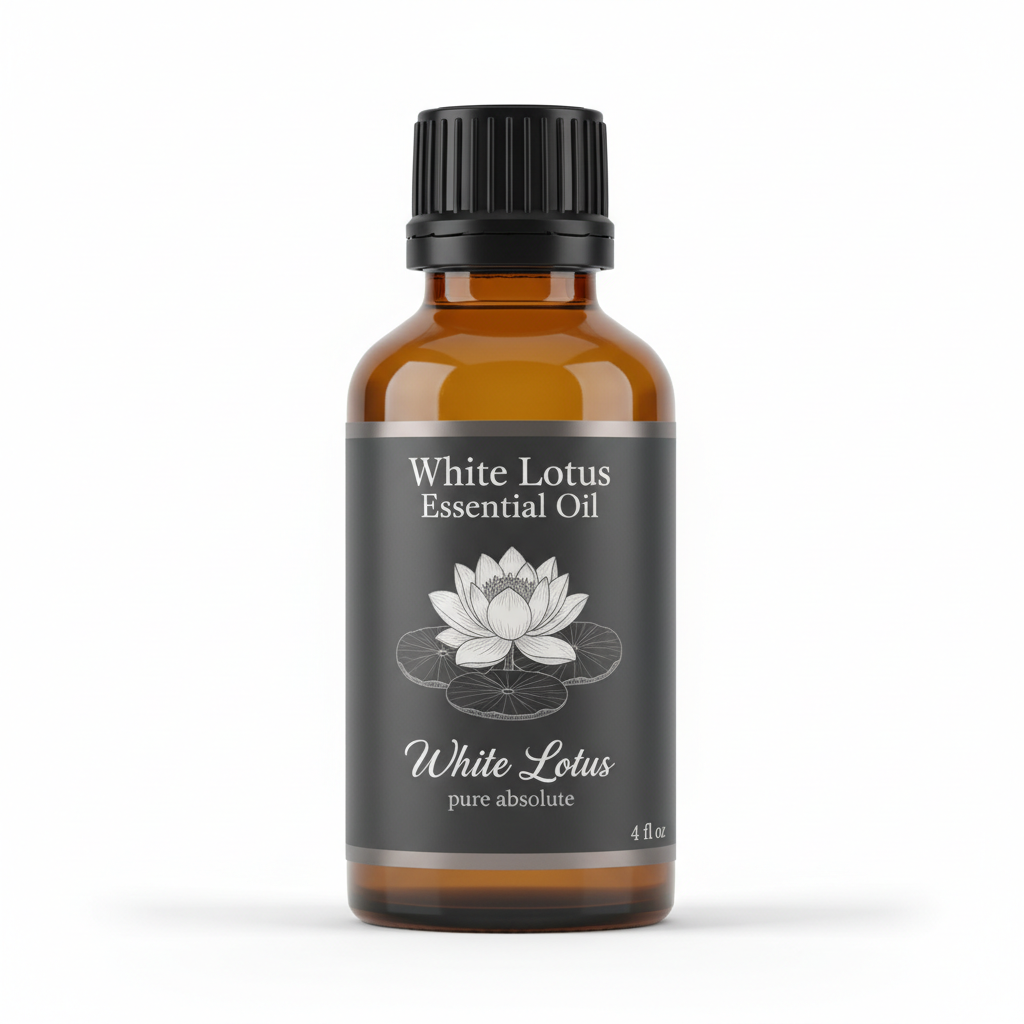
White Lotus Absolute
Our own White Lotus Absolute, in sizes from 0.5 oz to bulk.
From $23.99
Shop Now →This is not a popularity contest. Rose absolute is one of the most beloved fragrance materials in the world, with a deep commercial and artisan history. White lotus absolute is rarer, quieter in the market, and still building its audience in Western perfumery and cosmetics. Each earns its price tag for different reasons. The question is which one earns it for you.
A Quick Portrait of Each Oil
White Lotus Absolute (Nymphaea lotus / Nelumbo nucifera)
White lotus absolute is extracted from the blossoms of sacred water flowers, most notably Nymphaea lotus (Egyptian white lotus) or Nelumbo nucifera (Asian sacred lotus), depending on the producer. Extraction uses solvent processing followed by alcohol washing to yield a highly concentrated absolute. The result is a thick, often pale golden material with a scent that sits somewhere between a warm floral, fresh green water, and a subtle powdery sweetness. Yields are very low. The flowers are delicate, bloom briefly, and must be harvested by hand at peak opening. That combination keeps supply genuinely constrained and prices high.
Want to go deeper on what separates a genuine lotus absolute from a stretched or adulterated product? Our guide on how to buy white lotus absolute covers every key checkpoint before purchase.
Rose Absolute (Rosa damascena / Rosa centifolia)
Rose absolute is extracted primarily from Rosa damascena (Damask rose, sourced largely from Bulgaria and Turkey) or Rosa centifolia (May rose, from Grasse, France). Like lotus, it is solvent-extracted. The scent is rich, honeyed, and deeply floral with waxy and slightly spiced undertones. Bulgarian rose absolute tends toward deeper, more complex warmth. Grasse centifolia is softer and more delicate. Both are well-documented in fragrance literature and supported by a large network of quality producers, independent testing labs, and industry standards.
White Lotus vs Rose Absolute: Side-by-Side Comparison
| Attribute | White Lotus Absolute | Rose Absolute |
|---|---|---|
| Primary species | Nymphaea lotus, Nelumbo nucifera | Rosa damascena, Rosa centifolia |
| Extraction method | Solvent extraction (absolute) | Solvent extraction (absolute) |
| Scent profile | Aquatic-floral, powdery, faintly green, warm base | Rich, honeyed, waxy floral, spiced undertone |
| Colour | Pale golden to amber | Deep orange-brown to reddish amber |
| Viscosity | Semi-viscous, may solidify when cool | Semi-viscous to solid at room temperature |
| Main sourcing regions | Egypt, India, Southeast Asia | Bulgaria, Turkey, France (Grasse) |
| Market availability | Limited, niche suppliers | Widely available, established supply chain |
| Typical cost range | Very high (often higher than rose) | Very high |
| Adulteration risk | High (limited testing standards) | Moderate (well-documented GC/MS benchmarks) |
| Perfumery role | Heart, bridge note | Heart, signature note |
| Common cosmetic uses | Facial serums, luxury creams, solid perfumes | Facial oils, serums, perfumes, body products |
| Blending style | Subtle, integrating, enhances other florals | Bold, centre-stage, can anchor a whole formula |
Scent Character: What Actually Reaches Your Nose
Rose absolute is expansive. A single drop on a scent strip will announce itself immediately and evolve over hours, moving from bright top facets into that characteristic honeyed, slightly beeswax richness. It is a confident material. It knows what it is.
White lotus absolute is more reticent. It opens with a green, aquatic lift, almost watery, then settles into a warm, powdery floral that sits close to the skin. It rarely overpowers a blend. Instead, it adds dimensionality to whatever surrounds it, a quality that perfumers sometimes describe as making other ingredients smell more like themselves.
Neither scent is objectively superior. They serve different emotional registers. Rose is celebratory, romantic, and immediately recognizable. White lotus is meditative, soft, and slightly mysterious. Your preference often comes down to the atmosphere you are trying to create.
Sourcing and Authenticity: Where Caution Applies
Rose absolute has a significant advantage in this department. Decades of commercial production have produced reliable GC/MS fingerprints for both Bulgarian and Grasse varieties. Reputable suppliers can provide batch-specific testing. Adulteration still happens in the rose market, but buyers have real tools to spot it.
White lotus is more complicated. The market is newer in Western aromatics, production volumes are smaller, and industry-wide testing standards are still developing. This means the gap between an authentic lotus absolute and a product stretched with carrier oil, synthetic fixatives, or cheaper floral materials can be much harder to identify without careful documentation review.
If you are investing in white lotus absolute, supplier documentation matters enormously. Our detailed walkthrough on reading a lotus absolute report shows exactly what to look for in a GC/MS or other authenticity documents before you commit to a purchase.
Pros and Cons at a Glance
White Lotus Absolute
- Pro: Genuinely rare and distinctive. Offers a scent profile that rose cannot replicate.
- Pro: Works beautifully as a bridge note, connecting aquatic, green, and powdery floral elements in a formula.
- Pro: Carries significant cultural and botanical storytelling for brands and artisan makers.
- Pro: Presents a point of difference in a market saturated with rose-forward products.
- Con: Supply is inconsistent. Quality can vary significantly between producers and even between harvests.
- Con: Authenticity verification requires more effort and supplier due diligence.
- Con: Lighter sillage means it may feel less impactful to buyers accustomed to bolder florals.
- Con: Price per millilitre is often higher than rose, with less standardization across the market.
Rose Absolute
- Pro: One of the most universally beloved scents in perfumery. Broad consumer recognition and appeal.
- Pro: Well-established supply chains make consistent quality more achievable.
- Pro: Strong GC/MS benchmarks mean authenticity is easier to verify.
- Pro: Works as a centrepiece note in finished formulas. Does not need much support to make an impression.
- Con: Precisely because it is so familiar, it can feel expected rather than distinctive in the current market.
- Con: Still expensive. Bulgarian rose absolute prices have risen sharply over the past decade.
- Con: Blending requires care. Rose can dominate a formula and overwhelm more delicate ingredients.
- Con: Adulteration with geranium oil, synthetic phenylethyl alcohol, or other extenders remains common in lower-tier supply.
Best For: Use-Case Recommendations
Choose White Lotus Absolute If:
- You are creating a meditation or evening wind-down ritual product where a soft, contemplative scent suits the mood.
- Your brand story centres on rarity, sacred botanicals, or Egyptian and South Asian floral traditions.
- You want a signature scent that most consumers will not immediately recognize but will find compelling and distinctive.
- You are building a complex floral blend and need a material that lifts and integrates without competing.
- You are creating a gift product where rarity is part of the value proposition. Our white lotus gift guide offers more ideas on positioning lotus as a luxury offering.
Choose Rose Absolute If:
- You are formulating for a broad consumer audience where immediate floral recognition is important.
- You want a centrepiece note that can carry a finished product with minimal supporting cast.
- Supply consistency and authenticity verification are priorities for your production process.
- Your product line leans into classic, romantic, or bridal positioning where rose resonates deeply.
- You are new to working with precious floral absolutes and want a better-documented starting point.
Consider Using Both If:
- You are creating a layered floral accord for a signature perfume or luxury body product.
- The two oils complement each other well at low usage rates. Rose provides the recognizable warmth while lotus adds depth and an aquatic lift that keeps the blend from reading as conventional.
The Verdict
There is no single correct answer here, which is genuinely useful information. Rose absolute and white lotus absolute solve different creative problems.
Rose is the safer investment from a supply and verification standpoint. Its scent is proven and beloved, and if you are formulating for broad market appeal or building your first precious floral collection, it is a logical starting point. The challenge is differentiation. Rose is everywhere, and standing out in a crowded rose-forward market takes real formulation skill.
White lotus rewards patience and due diligence. Finding a genuinely authentic source takes effort. But the payoff is a material with a scent profile that most consumers have never consciously encountered, which means it carries real potential as a signature ingredient. Its subtlety is not a weakness. In skilled hands, it is exactly what makes a formula feel considered rather than obvious.
If your goal is a product that smells immediately recognizable and universally appealing, start with rose. If your goal is a product that makes people lean in and ask what that scent is, white lotus is your answer.
Many serious makers keep both on the shelf. That is, in the end, the most honest verdict of all.