White Lotus Facial Oil: A Gram-Based Formulation
Facial oils reward precision. White lotus absolute is thick and concentrated, a drop of it is an imprecise unit, and the face is a place where a gentle rate matters. The good news is that the arithmetic is easy once you work in grams, and a scented facial oil is a pleasant thing to make.
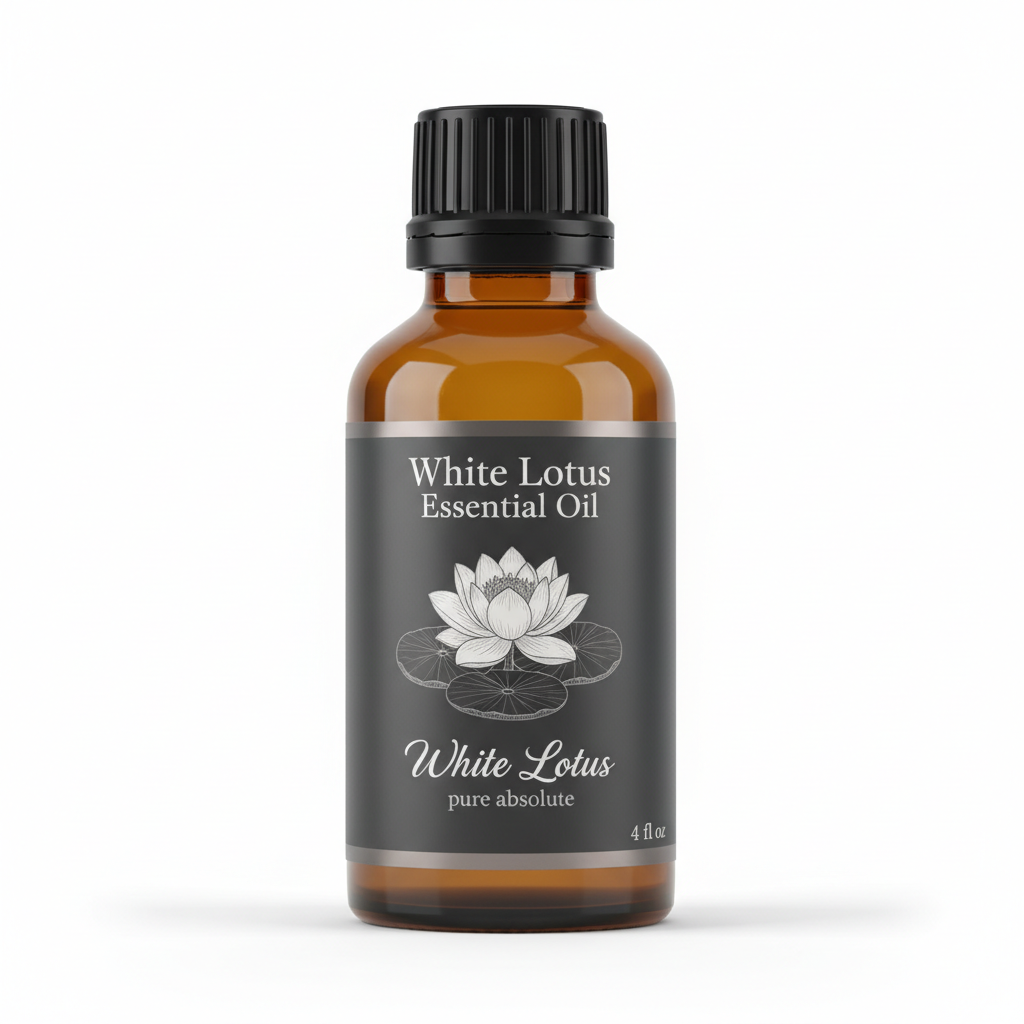
White Lotus Absolute
Our own White Lotus Absolute, in sizes from 0.5 oz to bulk.
From $23.99
Shop Now →Start with the percentage
Our dilution guidance for the absolute is 0.5% to 2% in a carrier with a patch test first. For the face we use the bottom of that range. Tisserand Institute dilution guidance lists 0.5-1.2% for facial cosmetics and deodorants, and 0.2-1% where skin is sensitive or impaired (Dilution for essential oils). So our 2% top figure sits above the facial range, and we suggest 0.5% for a first batch. It is inside that range and leaves room for small weighing errors. If your skin is sensitive or you use a prescribed topical, ask a dermatologist before adding any fragrance material to a face product.
We make no skin claims for this oil. The reason to make it is the aroma, which our shop describes as aquatic and honeyed, with watery green florals over a warm sweetness. At 0.5% it will be soft and close.
The carrier
We name jojoba and fractionated coconut oil as carriers. Either works for a light facial oil, and we do not sell carriers, so look to a cosmetic supplier. Buy a bottle with a date, keep it closed, cool and dark, and if you have a nut allergy choose a carrier that suits you and ask an allergist if you are unsure.
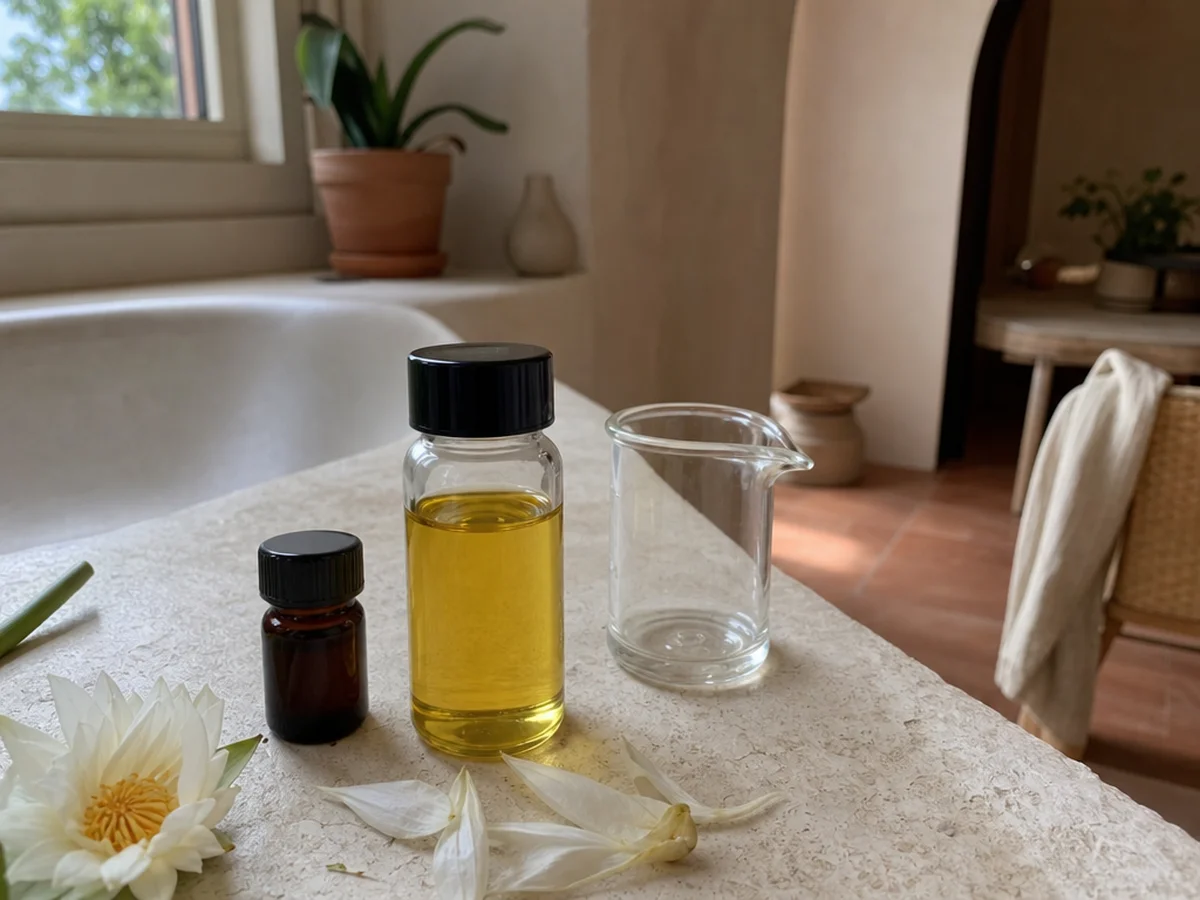
The formulation, in grams
Use a scale that reads to 0.01 g, and weigh rather than counting drops. The example makes 26 g of finished oil, about a 30 ml bottle's worth of a typical liquid carrier, as an easy round number. The densities are from the one batch on our certificate (relative density 0.985) and a rough 20 drops to the millilitre.
| Rate | Absolute in 26 g | About drops |
|---|---|---|
| 0.5% | 0.13 g | 3 |
| 1% | 0.26 g | 5 |
| 1.2% (top of the facial range above) | 0.31 g | 6 |
| 2% (our top figure, not for the face) | 0.52 g | 11 |
Counting three drops of a thick liquid is hard: if each drop runs 20% large you are already near 0.6%. A stock solution is easier. Weigh 1.00 g of absolute into 9.00 g of carrier to make a 10% stock, warming the closed jar gently if it will not pour, and label it as a concentrate not for skin. For a 0.5% oil, weigh 1.3 g of stock with 24.7 g of carrier, which gives 0.13 g of absolute in 26 g. For 1%, use 2.6 g of stock and 23.4 g of carrier. That is the same arithmetic in either direction, and weighing 1.3 g is far easier than counting three drops.
Make a small batch first
If this is your first facial oil, make a smaller amount than the table suggests, even if that means working from a stock solution. A little bottle you finish is better than a big one that sits. Write the date on it, and keep the rest of your ingredients closed and cool while you work.
Method
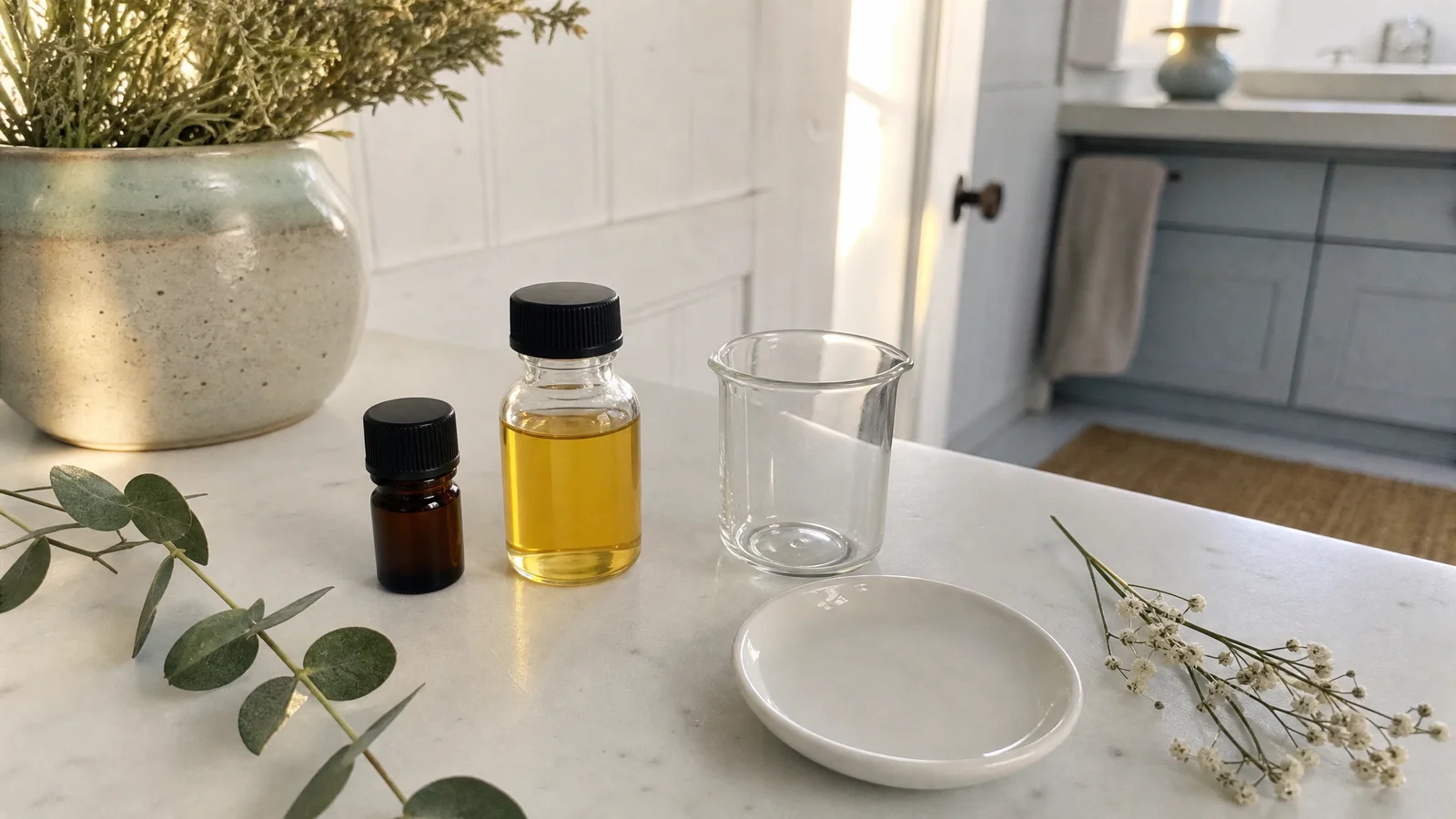
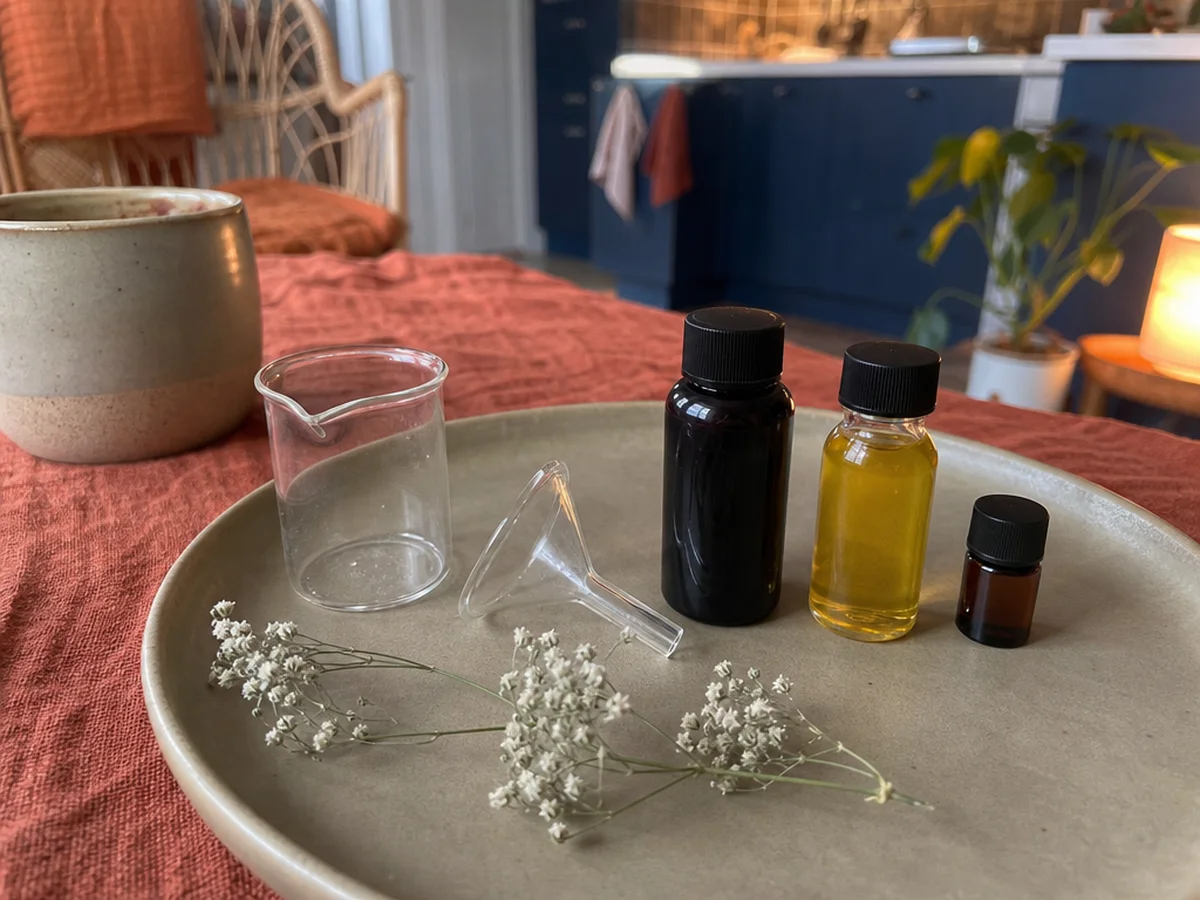
- Clean the bottle, funnel and stirring rod with alcohol and let them dry.
- Weigh the carrier and then the stock into the final amber glass bottle on the scale.
- Cap and swirl for a minute, then rest it for a day in a cool, dark place before judging the scent.
- Label it with the percentage, the date and the ingredients.
Keep water out of it. Without water, an oil avoids the preservative questions that lotions raise, and a dropper or pump bottle is better than a jar for keeping fingers out. Keep batches small and use them within a sensible time, as we have no stability data for the finished blend.
A bottle you will enjoy using
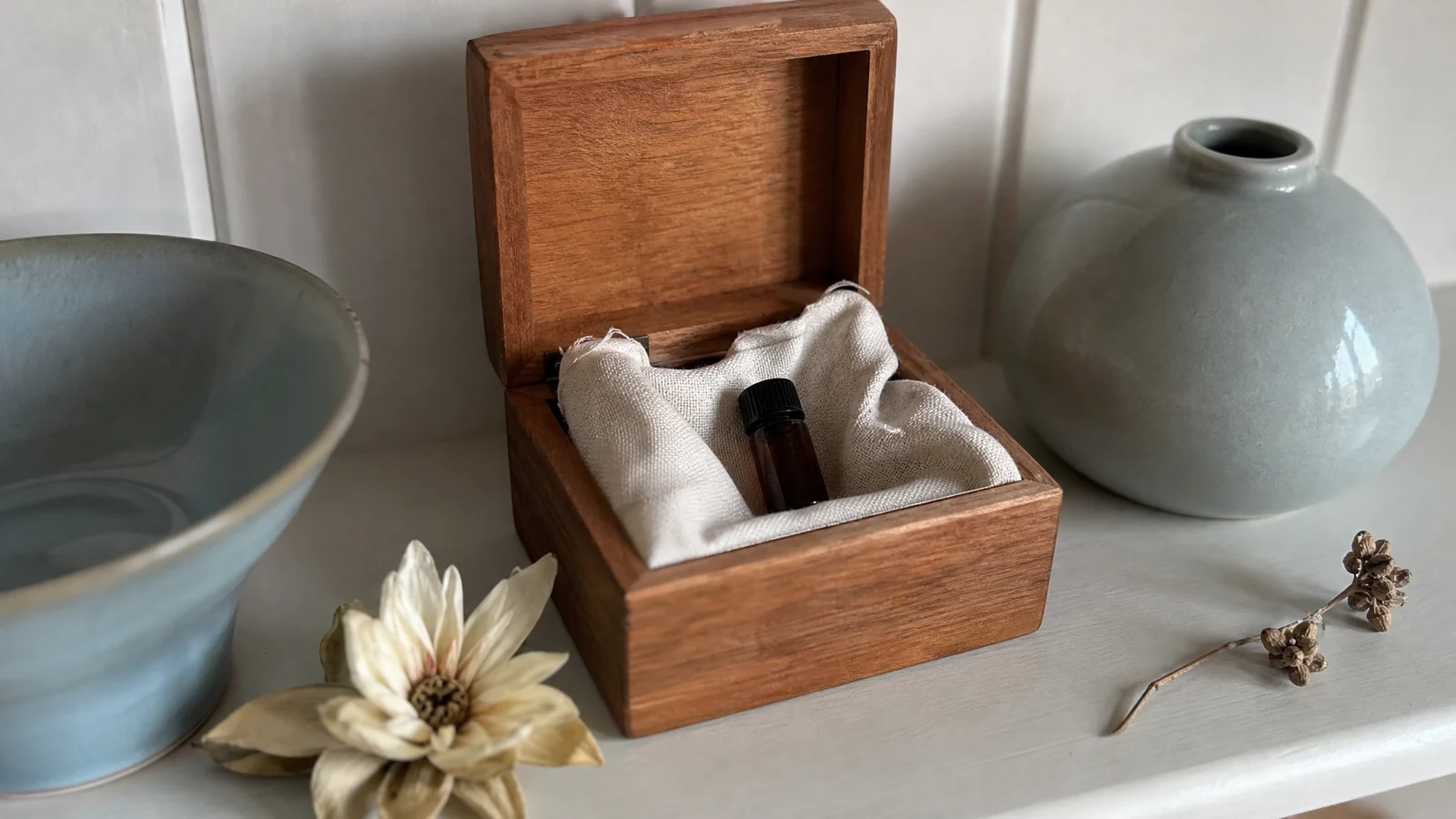
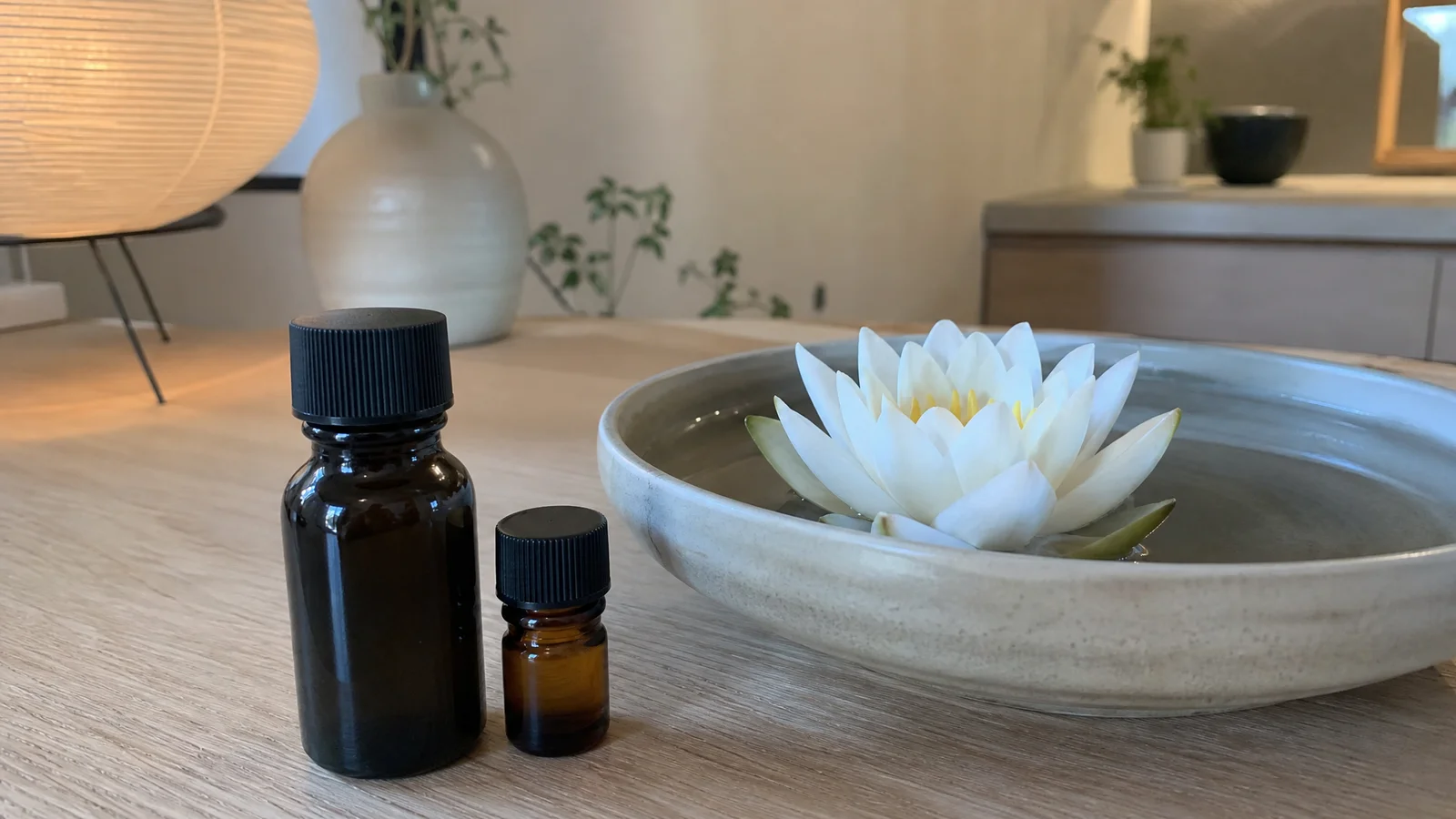
Part of a good facial oil is the little ritual of it. A dropper or pump bottle in dark glass looks lovely on a shelf and keeps your fingers out of the oil. Label it clearly so nobody in the household mistakes it for something else, and keep it away from a sunny window and the heat of a radiator.
Smell the finished oil on a day when you have not been wearing any other fragrance. The aroma we describe, aquatic and honeyed, is soft at 0.5%, and your nose will read it more fairly when it is not competing with shampoo or coffee.
Patch test, then use
Put a little of the finished oil on the inner forearm and watch it as we advise. Floral absolutes can sensitise a small share of people. In a large German, Austrian and Swiss patch-test series, jasmine absolute produced positive reactions in 1.8% of 10,930 clinic patients (Contact sensitization to essential oils: IVDK data of the years 2010-2019). That is a different plant and a clinic population, and we found no patch-test data for lotus, so your own test is the best information you have. Keep the oil away from the eyes and broken skin, and keep the bottle where children and pets cannot reach it.
If you would rather scent the body, our body butter formulation covers a richer jar, and our safety basics walk through the patch test step by step. For a fragrance to wear, try the solid perfume formulation.
A few grams of absolute, a clean bottle and a steady scale are all it takes. Start small, and let the scent set the pace.
White Lotus Absolute
White Lotus Absolute from our own shop, in sizes from 0.5 oz to bulk.
From $23.99
Shop Now →