Blending White Lotus Absolute: Ratios and Common Slips
Two numbers decide every blend you will ever make, and they are easy to mix up. One is the ratio between your materials, such as 1 part lotus to 3 parts sandalwood. The other is the strength of the finished bottle, such as 0.5%. Keep them separate, and the arithmetic is simple.
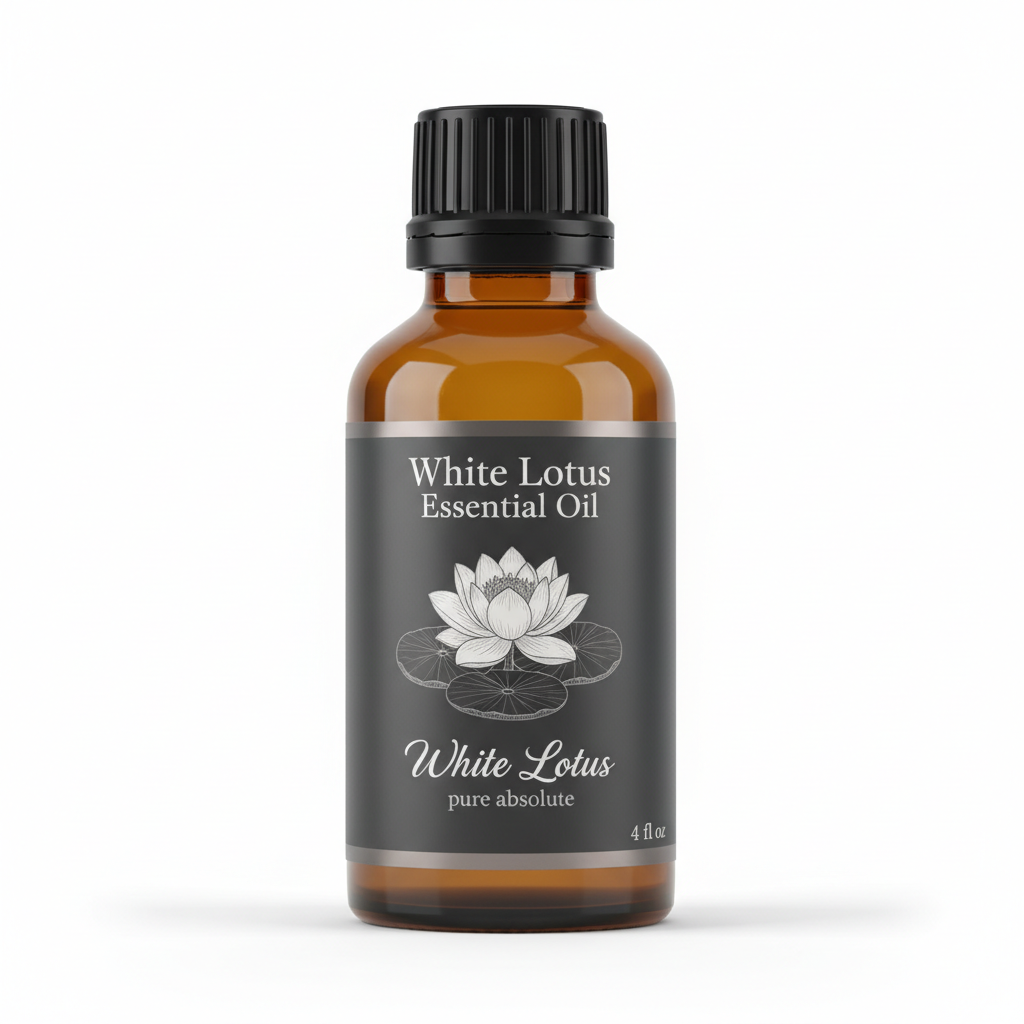
White Lotus Absolute
Our own White Lotus Absolute, in sizes from 0.5 oz to bulk.
From $23.99
Shop Now →The ratio and the strength are different questions
The ratio describes how the aromatic materials relate to each other and has nothing to do with how strong the blend will be. The strength is the share of the finished product that is aromatic material. A 1:3 blend can be 0.5% or 5%; the ratio is the same either way. Choose the strength first, because it is the one with safety consequences, and split it among your materials second.
Our dilution guidance for white lotus absolute is 0.5% to 2% in a carrier oil, with a patch test first, and we suggest starting at 0.5%. No safe maximum is documented for this absolute and its composition is not published. The Tisserand Institute, writing about essential oils, lists 0.5% to 1.2% for facial cosmetics and 1% to 3% for body oils (Dilution for essential oils). Where an authority's figure is below ours, we start at the lower number.
A worked example
Say you want 50 g of body oil at 0.5%, with three materials in a 2:3:5 ratio. The total aromatic material is 0.5% of 50 g, which is 0.25 g. The ratio has 2 + 3 + 5 = 10 parts, so one part is 0.025 g.
| Material | Parts | Weight |
|---|---|---|
| Lotus absolute | 2 | 0.05 g |
| Middle partner | 3 | 0.075 g |
| Base partner | 5 | 0.125 g |
| Carrier oil | 49.75 g |
Those weights are too small for a kitchen scale, which is where a stock solution earns its keep. Make a 10% stock of each material and the figures become 0.5 g, 0.75 g and 1.25 g of stock, plus 47.5 g of carrier. The method is in How to Dilute White Lotus Absolute by Weight.
Why not just count drops
Drops are a rough guide for thin liquids. An absolute is thick, so a drop runs large and uneven. The Certificate of Analysis we publish for one batch gives a relative density of 0.985, so 1 ml weighs about 0.985 g, and the usual convention is around 20 drops to a millilitre. That makes 0.05 g about 1 drop, and 0.125 g about 2 or 3. Those numbers show why drops are blunt: a single drop more or less changes a ratio by a third. Weigh instead.
Slips worth avoiding
- Forgetting that partners count. If lotus is at 0.5% and you then add a base at 0.5%, the blend is at 1%, not 0.5%. Work from the total.
- Mixing weight and volume. Percent in this article means percent by weight of the finished blend. A recipe in drops or millilitres will not match unless you convert.
- Raising strength to fix a weak smell. Change the ratio first. A blend that smells thin is often missing a base, not more of everything.
- Skipping the patch test because the blend is "mostly carrier". In a large clinic study of 10,930 patients, 8.3% reacted to at least one of 12 essential oils tested, with jasmine absolute at 1.8% (Contact sensitization to essential oils: IVDK data of the years 2010-2019). Those were people already being seen for dermatitis, and lotus is a different plant, so read it as a reason for care, not a forecast. Our skin and patch test guide covers the steps.
- Making a big batch first. Start with 10 g or 30 g so a miss costs little.
Where the materials come from
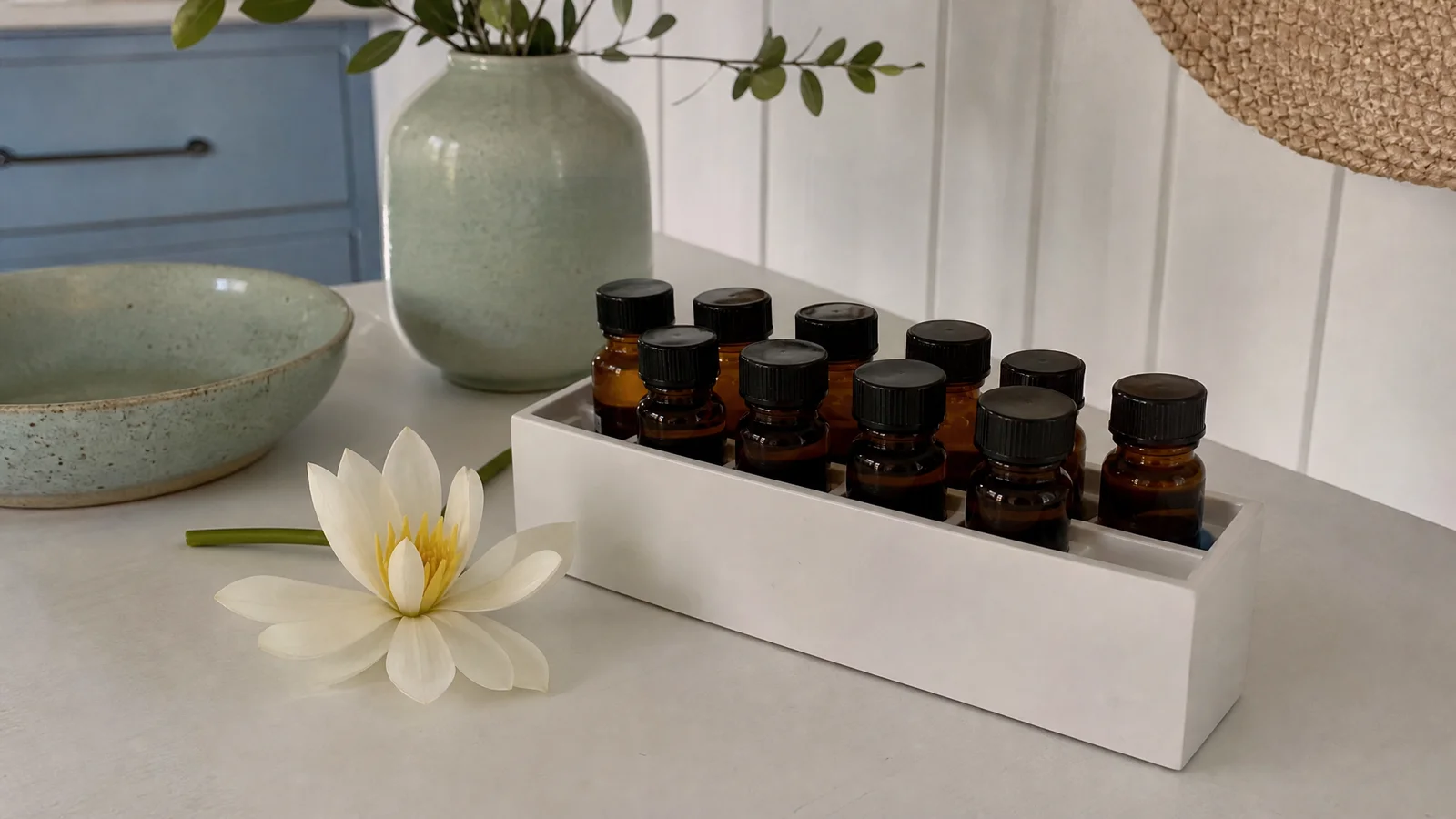
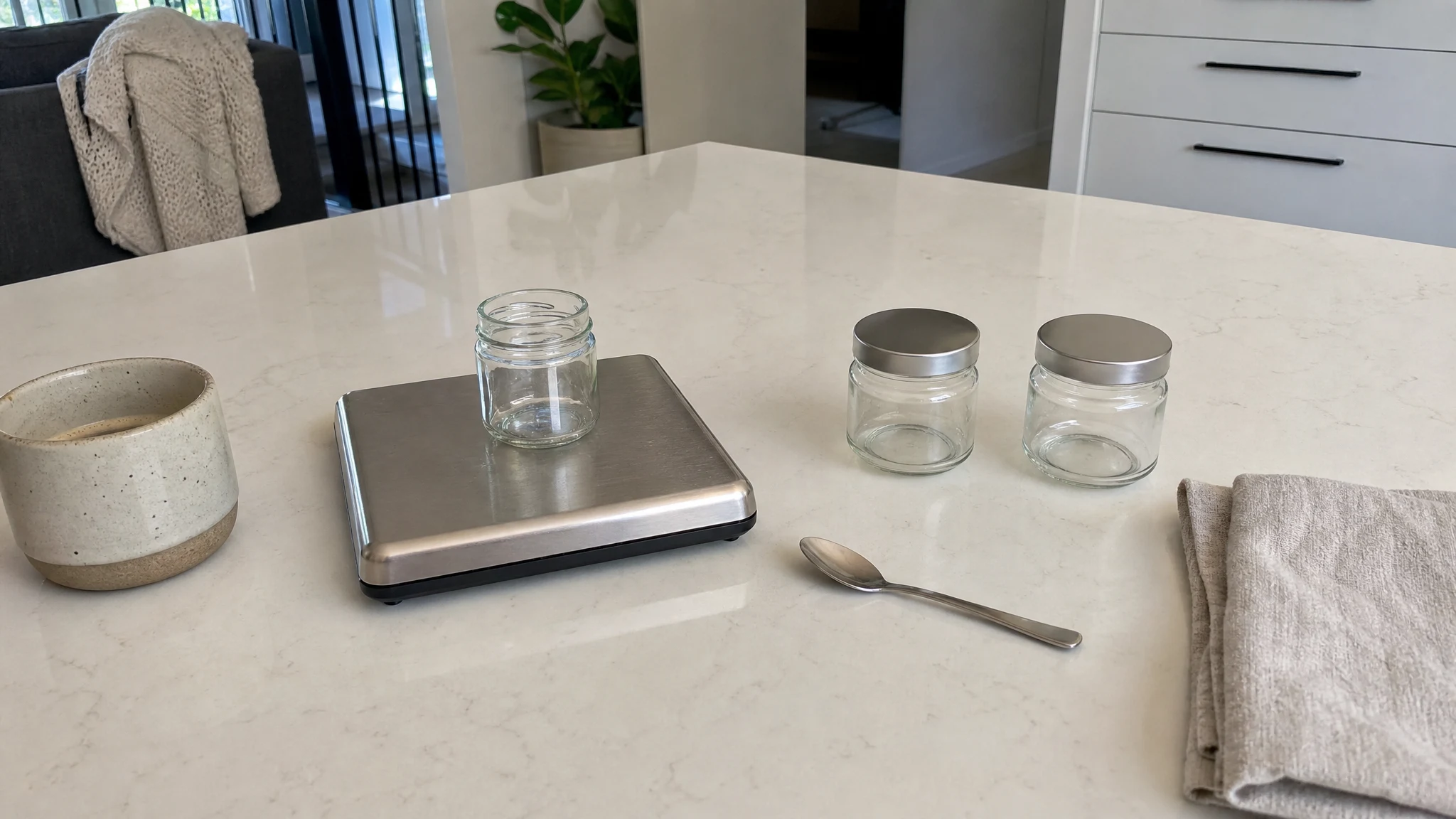
Carrier oils such as jojoba or fractionated coconut, small jars, a scale that reads to 0.01 g and the partner materials are all things you find at a craft or cosmetic-supply shop. Check each partner's own limits with its supplier and the IFRA standards before you set the total. For ideas about partners, see White Lotus in Perfumery and Solid Perfume with White Lotus Absolute.
The nicest thing about blending in grams is that a good result can be repeated exactly, and a disappointing one can be fixed by changing one number.
White Lotus Absolute
White Lotus Absolute from our own shop, in sizes from 0.5 oz to bulk.
From $23.99
Shop Now →